
Travel to Russia in 2026: Is It Safe? The Practical Guide for Planning Your Trip
 By Irena Domingo
Updated on
In This Article
Are you turning over the idea of traveling to Russia now and not quite sure whether it’s a good idea, whether it’s safe, or even whether you can go at all with the war in Ukraine in the background? I get it. The short answer is: yes, you can, and yes, for a tourist it’s safe. The long answer is this guide, where I walk you through everything you need to plan your trip with confidence.
I’ve been traveling to Russia for years and have family and friends living there, so I write what I see and what they tell me on the ground, not what makes the headlines. Daily life in Moscow, St. Petersburg, Kazan, Sochi or Vladivostok carries on as usual: people working, cafés full, the metro running like clockwork, and museums busy with Russian and foreign tourists. What has changed is the logistics: how you fly, how you pay, how you get online and what paperwork you need. That part does need an update, and I’ll walk you through it step by step.
Once you’ve decided to go, follow my guide to planning a trip to Russia in 10 steps.

Whether you’re reading this from the United States, the United Kingdom, Canada, Australia or anywhere else, this guide is built for you. Spoiler: if you’re a US, UK, Canadian, Australian or New Zealand citizen, you’ll need a regular visa (the eVisa is not available for you yet); if you’re from most EU countries, you can apply for the eVisa online; and if you hold a passport from Cuba, Argentina, Brazil, Chile, Colombia, Peru, Venezuela, Serbia, Thailand, Hong Kong or several other countries, you don’t need a visa at all for short tourist stays. I’ll break it all down below.
And you won’t have to take my word for it: since July I have been publishing the chronicles of readers who have just come back from Russia, and there are thirty-five of them already. I quote them throughout this guide, because what they say about borders, money and phones is worth more than any theory.
1. Can You Travel to Russia Now?
Yes, you can travel to Russia now, completely normally, despite the war and international sanctions. Consulates are issuing visas without issue (both electronic and regular), tourist borders are open, and daily life in the major cities runs like always: hotels open, restaurants packed, museums crowded, public transport spotless and markets bustling.
That said, the picture isn’t quite the same as 2019. What has changed comes down to four things:
- Fewer Western tourists, so you’ll hear less English in the iconic spots. The upside: shorter queues, and Russians are genuinely happy to see a foreign traveler.
- No direct flights from Europe or North America: you have to connect through Istanbul, Belgrade, Yerevan, Dubai or other hubs.
- Foreign Visa, Mastercard and American Express cards don’t work in Russia. You need to bring cash or get a Russian MIR card on arrival.
- Several Western apps and websites are blocked (Facebook, Instagram, YouTube, X). WhatsApp has been blocked since February 2026 and Telegram has been patchy since that same week, so you’ll need a VPN installed before you enter.
Despite all of the above, plenty of people keep traveling to Russia: travelers with family or friends there, Trans-Siberian dreamers, ballet and opera lovers, backpackers, pilgrims, business travelers and, increasingly, tourists who simply want to see Moscow and St. Petersburg without the crowds of years past. In 2026 there’s a clear uptick in Western visitors in the major cities: in the past two months alone I have published thirty-five chronicles from readers who had just got back, and I summarise them in section 3.

2. Is It Safe to Travel to Russia, or Is It Dangerous?
This is the question I get most by email, so I’ll be direct: for a tourist traveling for leisure who stays away from the regions bordering Ukraine, the risk is very low. Life in Moscow, St. Petersburg, Kazan, Sochi, Yekaterinburg, Vladivostok or any of the cities on the classic tourist circuit goes on completely normally.
Yes, the conflict in Ukraine is still active, and there are border regions like Kursk, Belgorod, Bryansk or Rostov that have been hit fairly regularly. There have also been isolated drone incidents in Moscow, but they’re sporadic events that don’t affect day-to-day life in the city. My friends who live there carry on with their normal routines: work, school, metro, restaurants, weekend plans. If an airport closes for a few hours because of an incident, it’s news on TV, not something that lands on your own street.
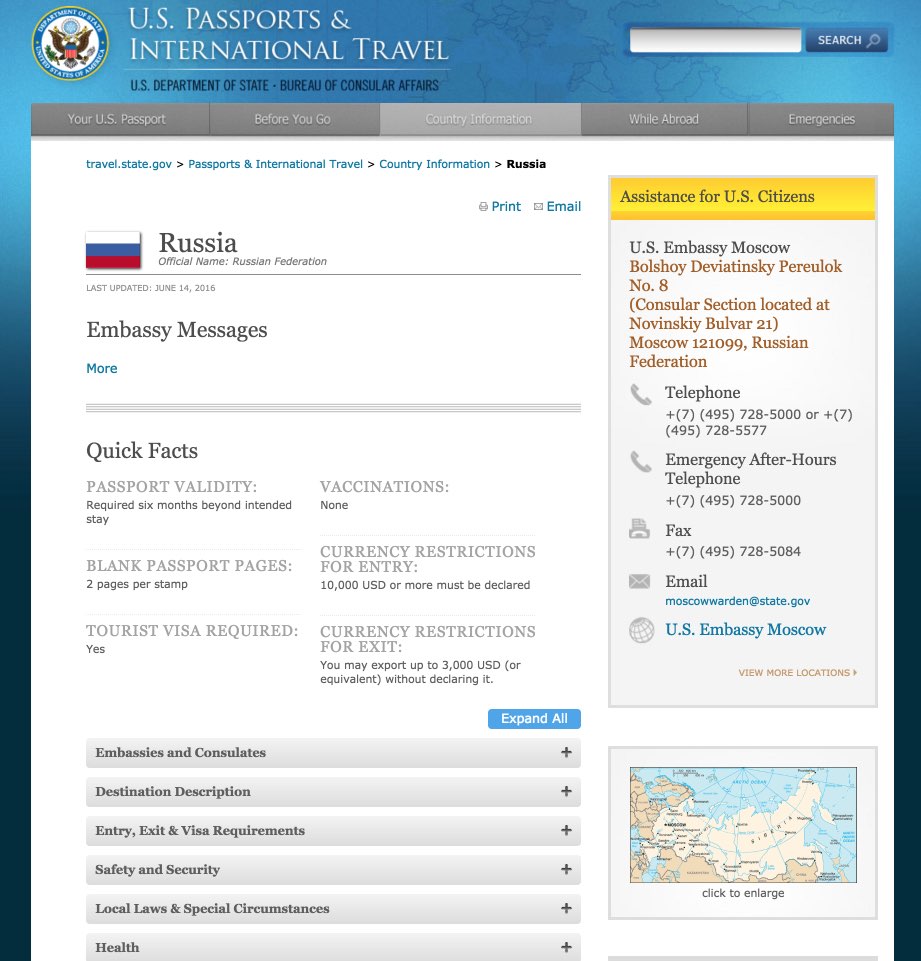
It’s true that many foreign ministries advise against traveling to Russia. In practice, that warning is better understood as a political stance and a consular protection measure (Western embassies have less staff and less ability to help) than as an alert based on real risks for tourists. Read the advisory, get good insurance, travel sensibly — but don’t treat it as a hard veto.
The takeaway I want you to keep is this: for a tourist, Russia is a quiet country. The streets of Moscow or St. Petersburg are safer than those of many European capitals, Russians are warm once you break the ice, and the general feeling in any tourist city is of being in a normal place, with its routines and its people. I go into the whole picture, with data, in the article on whether Russia is a safe country to visit.
2.1 The “Arbitrary Detentions” Question
You’ve probably seen news about foreigners being detained in Russia on alleged espionage charges or for criticizing the army. The vast majority of those cases involve people with sensitive profiles: journalists, activists, dual Russian nationals living abroad, people with professional ties to intelligence services, or those with a very public record of opposition to the Kremlin. For a tourist arriving with a valid visa, a return ticket, a hotel booking and a clearly touristic profile, this isn’t the norm.
That said, a few sensible precautions are in order — the same any prudent person would take in a country with political tensions:
- Stay away from protests, demonstrations or political gatherings of any kind, even if they look peaceful.
- Don’t post content critical of the Russian army or the war on social media while you’re there. Russian law penalizes it, even for foreigners.
- If you’re asked about the war, answer politely and don’t get drawn in. Most Russians prefer not to discuss it with strangers.
- Review your Telegram subscriptions before you travel: there are Russian opposition channels and independent outlets labeled “extremist” in Russia, and although it sounds odd, it doesn’t matter that you only followed them out of curiosity.
2.2 Will They Search Your Phone at the Border?
Since July 2025, Russian border guards can examine electronic devices on entry and exit, but in practice the checks are very selective. For a European, American or Latin American tourist traveling with a valid visa, return ticket and hotel booking, having your phone searched is the exception, not the rule. If you want the legal detail and who tends to get checked, I cover it in the article on whether Russian border guards can search your phone.
In the chronicles I receive, the thorough search shows up at land crossings rather than at airports, and with travellers carrying long visas: Саймон spent twelve hours at the Mamonovo border coming in from Poland, while Alican cleared passport control in two minutes at Pulkovo airport. That gap says more than any rule.
3. Who Is Travelling to Russia Right Now? 35 Readers Who Just Got Back
The best proof that you can travel to Russia isn’t anything I tell you. Since July I have been publishing the chronicles of readers who come back from the country, in their own words, and there are already thirty-five of them. These are trips made between February 2025 and September 2026, by people from the United States, the United Kingdom, South Africa, New Zealand, Denmark, Singapore, the Czech Republic, Turkey, France, Italy and Spain.
Not one of them reports a security problem inside the country. Every bit of friction they describe sits in three places: the border, the money and the phone. Exactly what this guide is about. Here are ten of the most recent:
| Who and when | How they got in | What you learn from their trip |
|---|---|---|
| John (United States), 2025 and 2026 | Regular tourist visa, by air | Two trips on a US passport, including almost a month in Moscow for surgery at a private clinic. He is precise about the part that worries every American: the border. |
| Bonnie (Bath, UK), September 2025 | Regular visa, by air | Everyone warned her she would be arrested just for entering. She went at nineteen, spent two weeks in Moscow and St Petersburg, and has been back twice since. |
| Jacobus (South Africa), June 2026 | Visa-free, by air, with his wife and three teenagers | Two weeks with a family: what worked at the border, which payment method held up and what teenagers actually enjoy in Moscow. |
| Bente (Denmark), several summers | Regular visa, by air, travelling solo | Moscow solo at 85, one metro ride at a time. The best read if you are older, travelling alone or both. |
| Sophia (Singapore), New Year | eVisa applied for entirely online | Two weeks in Moscow on cash alone: her foreign cards were useless and so was the Russian card she had opened, because nobody told her about the biometric registration. |
| Natálie (Czech Republic), since 2023 | Nine entries: bus from Riga, Gdańsk to Kaliningrad, on foot at Narva | Nine trips in three years, first on a paper visa and then on the eVisa. Probably the widest first-hand experience of land borders on the blog. |
| Neil (Glasgow), July 2026 | Ferry from South Korea into Vladivostok | The Russian Far East by air, leaving by a fifteen-minute boat across the Amur into China. Kamchatka, Magadan, Khabarovsk. |
| Rajendra & Jayshree (Auckland), May 2025 | Regular tourist visa, everything booked in advance | A full month from Moscow to Vladivostok in their late sixties, via Kazan, Yekaterinburg, Irkutsk and Lake Baikal. |
| Alican, June 2026 | Regular tourist visa, by air | Two minutes at passport control in St Petersburg. He lists everything that worried him before flying and what actually happened, point by point. |
| Саймон (United States), Christmas | Overland from Gdansk into Kaliningrad | Twelve hours at the Mamonovo border instead of the few he had planned for, and a harder time getting back out than getting in. |
| Philippe, June 2026 | Flight via Istanbul, regular visa | Three weeks on the Trans-Siberian to Vladivostok. The bank refused half his euros because of the state of the banknotes. |
Read one after another, four things come up again and again:
- The hard part is the border, not the country. By air it is often over in minutes (two, in Alican’s case); overland it can be five hours in the Narva queue or twelve at Mamonovo. If you can choose, fly.
- Money works, but you have to sort it out from home. Spotless banknotes (worn ones get handed back) and, if you can, a Russian card. Sophia’s story is the warning: opening a Russian card is not enough on its own if you skip the biometric registration.
- Connectivity is the most unreliable part. The same eSIM works for one traveller and not for the next, so carry a backup and install your VPN before you enter.
- The feeling on the ground is always the same: clean, orderly, excellent transport and people pleased to see a foreigner. Several of them say they felt safer than at home, and Bonnie went back twice after being told she would be arrested.
You’ll find them all in the Experiences section, and I quote them throughout this guide where they actually add something. If you have already been, tell me about it: you can send me your chronicle here. I publish it in your own words and with your own photos.
4. Visa: eVisa, Regular Visa or Visa-Free
The first thing to sort out is whether you need a visa and, if so, which type makes sense for you. The answer depends on your nationality and your trip plan, so let me break it down.
4.1 Electronic Visa (eVisa): The Quick, Affordable Option
The Russian electronic visa is the most convenient option for travelers from eligible countries. It allows stays of up to 30 days, single entry, and is processed online without a single visit to a consulate. It’s available for more than 50 countries, including the entire European Union, Mexico, and many Asian nations.
Important for English-speaking readers: if you’re a US, UK, Canadian, Australian or New Zealand citizen, the eVisa is not available for you. You’ll need to apply for the regular consular visa (covered in the next section).
- How to apply: through the official Russian eVisa website, by filling out an online form and uploading your passport and photo.
- Cost: AED 238 (about US$65 / €58), shown in full before you pay.
- Processing time: roughly 4 business days.
- Validity: once approved, you have 120 days to enter Russia, and from the date of entry you can stay up to 30 days.
- Mandatory travel insurance: you have to prove you have a policy with coverage in Russia. I explain how to get one further down.
The eVisa covers about 95% of typical tourist plans: two weeks between Moscow and St. Petersburg, a quick visit to see the Hermitage or the Kremlin, a getaway to Sochi or Kazan. If you want to plan your application and avoid common mistakes, take a look at the guide on the most common mistakes when applying for the Russian eVisa and the eVisa frequently asked questions.
Limitations worth knowing: the eVisa doesn’t work for entry through the Storskog border (Norway-Russia), it doesn’t allow you to use the Russia-Belarus single-visa agreement, and it isn’t accepted at all land crossings. If you want to enter overland from Estonia, Latvia, Georgia or Kaliningrad, most tourist crossings do accept it, but check the official list before booking your ticket.
If you’d rather not wrestle with the form yourself and would prefer to delegate the process to someone who does it every day, you can use a specialized eVisa application service that reviews everything and sends you the result.
4.2 Regular Visa (Consulate or Visa Center)
You’ll need the regular consular visa if:
- Your stay will exceed 30 days.
- You need multiple entries (for example, a combined Russia-Belarus-Russia trip).
- You’re from a country that isn’t on the eVisa list, including the United States, United Kingdom, Canada, Australia, New Zealand.
- You’ll be entering through Storskog (Norway) or some other land crossing that only accepts a consular visa.
The regular visa is processed at the Russian Visa Center in your country or at the consulate. You’ll need a valid passport, two photos, the consular application form, travel medical insurance with coverage in Russia, and a letter of invitation. The invitation is obtained online in a matter of minutes — and you don’t need a real host: it’s issued by agencies accredited by the Russian government.
Approximate costs (these include consular fee and visa center processing for non-urgent applications; figures vary by country):
- Single-entry visa: around USD 110-160
- Double-entry visa: around USD 160-220
- Multi-entry visa: around USD 270-400
Urgent processing (2-3 days instead of 2 weeks) costs more. US citizens have a unique benefit: a 3-year multi-entry tourist visa available only to American passport holders. Each Russian consulate sets its own fees based on bilateral agreements, so it’s best to check the visa center website that applies to you. I keep a complete list of Russian embassies, consulates and visa centers worldwide.
If your residence country differs from your nationality, take a look at where to apply for a Russian visa if you live abroad.
4.3 Visa-Free Travel for Latin American and Other Citizens
Good news for several countries: most Latin American passports have a visa-waiver agreement with Russia and can enter visa-free for tourist stays of up to 90 days in any 180-day period. The main ones are:
- Argentina (up to 90 days)
- Chile (up to 90 days)
- Colombia (up to 90 days)
- Cuba (up to 90 days)
- Ecuador (up to 90 days)
- Peru (up to 90 days)
- Venezuela (up to 90 days)
Other passports also benefit from visa-free travel under specific conditions, including Thailand, Serbia, Hong Kong, Jamaica and South Africa.
Just because you don’t need a visa doesn’t mean you arrive paperwork-free: since June 2025, all visa-free travelers entering Russia must register in advance through the official RuID app, upload personal data, take a real-time selfie and authorize their entry at least 72 hours before traveling. Authorization is free and done from your phone, but you have to do it correctly. The system is still in its testing phase. I walk through it step by step in the guide on the electronic travel authorization to Russia and the RuID app.
And even though you don’t need a visa, you do need travel medical insurance for any unexpected event. Russian healthcare for uninsured foreigners can get expensive fast.
Mexicans: your situation is special. Mexico doesn’t have a visa-free agreement with Russia, so you do need a visa, but you can apply for the eVisa, which is the fastest and cheapest option. You can also go for the regular visa if you’re staying longer or need multiple entries. I cover it in the dedicated guide on how to get the Russian visa from Mexico.
4.4 Russia-Belarus Unified Visa
Since January 2025, Russia and Belarus signed a mutual visa recognition agreement: with a regular Russian visa (not the eVisa) you can also enter Belarus, and vice versa. This opens up some interesting combined routes — for example, fly into Moscow, take the train to Minsk, return to Moscow and fly home. Regular trains and land border crossings are operating.
Watch out for a very common mix-up: entering Belarus visa-free does not let you continue into Russia, and the Russian eVisa is not valid for that route either. It is worth checking before you book anything.

5. How to Get to Russia: Flights and Land Borders
Before you think about visas, it helps to have a clear picture of how you actually get into the country. There are three main routes: flying with a connection, land borders, and (formerly) cruises (currently not operating). You’ll find a full overview in the Russia borders guide, but here’s the gist.
5.1 Flying to Russia: Connection Hubs
Since 2022, European and Russian airlines have been banned from each other’s airspace. That means that from the United States, the United Kingdom, the European Union, Canada, Australia or anywhere else in the West, there are no direct flights to Russia: you have to connect through a country that maintains air links with Moscow. The most-used hubs are:
- Istanbul (Turkey): the most practical hub for travelers from Europe, North America and Australasia. Turkish Airlines and Pegasus link with Moscow (Sheremetyevo, Vnukovo, Domodedovo), St. Petersburg (Pulkovo) and other Russian cities. From New York, London, Sydney or Toronto, combining a flight to Istanbul with an Istanbul-Moscow segment is often the cheapest path.
- Belgrade (Serbia): Air Serbia operates direct flights to Moscow several times a week.
- Yerevan (Armenia): a major hub for Aeroflot and FlyOne, with multiple daily frequencies to Moscow and St. Petersburg.
- Dubai or Abu Dhabi (UAE): Emirates, Etihad and flydubai run regular routes — useful for travelers from Australia, the UK and the US East Coast.
- Doha (Qatar), Baku (Azerbaijan), Tashkent (Uzbekistan): alternatives with fewer frequencies but sometimes attractive prices.
The Russian airports open to international flights are Moscow-Sheremetyevo (SVO), Moscow-Vnukovo (VKO), Moscow-Domodedovo (DME), St. Petersburg-Pulkovo (LED), Sochi (AER), Kazan (KZN) and a handful more in tourist regions.
The problem with flights isn’t finding them — it’s paying for them: many Western search engines have removed routes to Russia, and Russian airlines’ official websites don’t accept foreign cards. The most practical approach is to book your flight to Russia with a foreign card through intermediaries that do accept Visa or Mastercard from outside Russia.

5.2 Crossing by Land: The Open Borders
Crossing into Russia by land is increasingly popular among European travelers who want to save on flights or who are already on a northern route. Here are the operational land crossings in 2026:
- Estonia: three crossings open (Narva, Koidula and Luhamaa). It’s the most-used route to St. Petersburg. Narva has been closed to vehicles since February 2024 (pedestrians only); Koidula and Luhamaa accept vehicles. Since 15 June 2026 all three are open only from 7am to 7pm, so crossing late in the day is no longer an option, and in summer the Narva queue can run past 24 hours.
- Latvia: mostly used via direct Riga–St. Petersburg buses, one of the cheapest ways in.
- Lithuania and Poland (to Kaliningrad): the Russian enclave of Kaliningrad is reached overland, and from its airport there are daily flights to Moscow and St. Petersburg. A budget gateway.
- Norway (Storskog): the only Schengen-Russia crossing in Scandinavia. Requires a paper consular visa: the eVisa is NOT accepted here. Useful for traveling to Murmansk and the Russian Arctic.
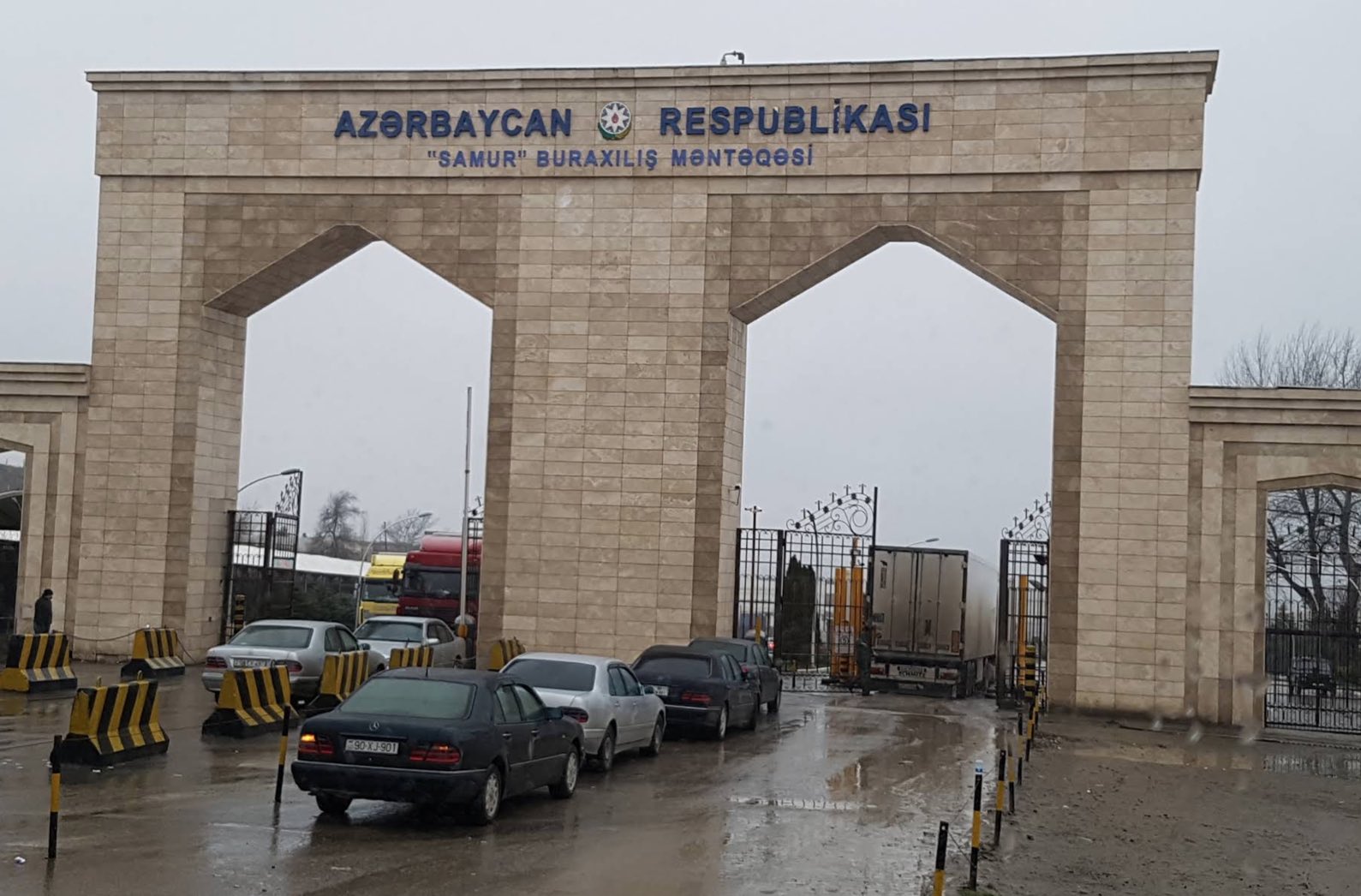
- Georgia (Upper Lars): the Caucasus border. Open but unpredictable (can close in winter due to snow), so check close to your travel date.
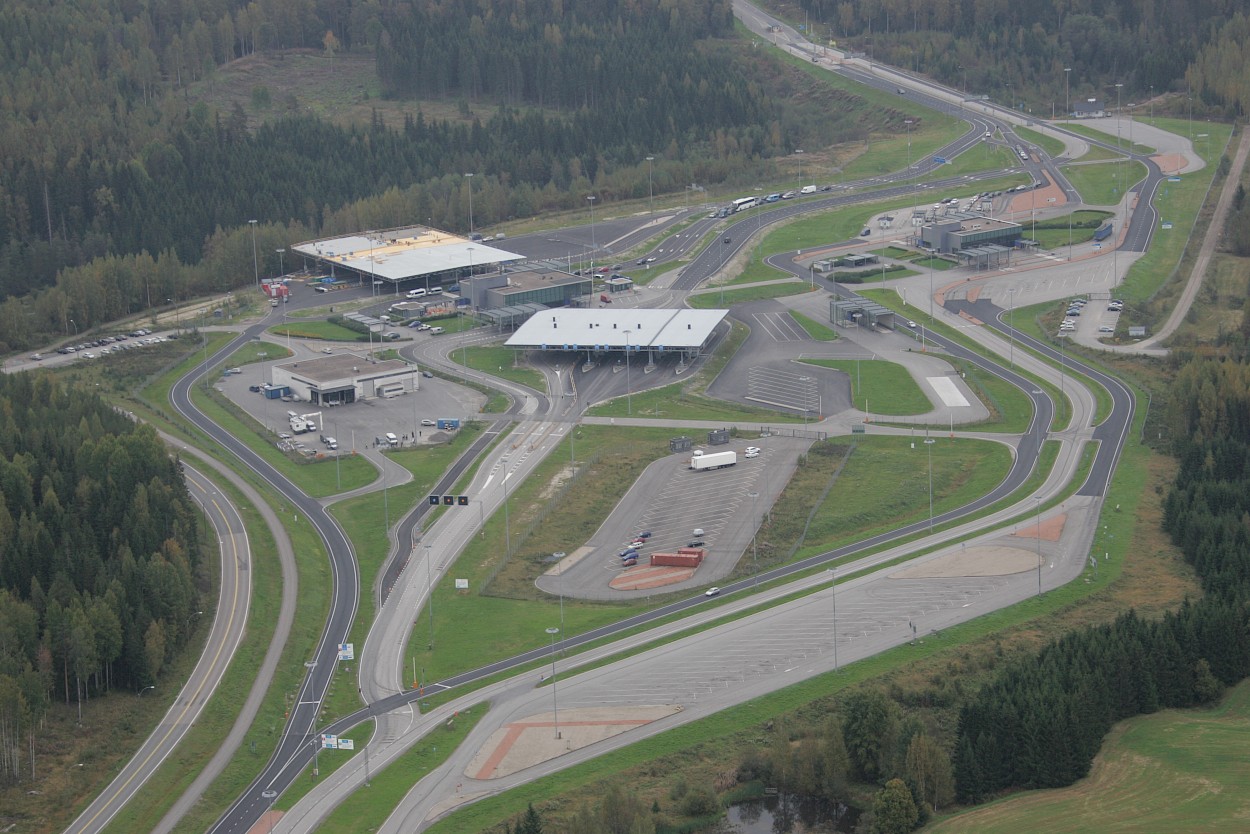
- Finland: closed indefinitely since December 2023. If you’re in Helsinki and want to cross, the most practical option is a cheap flight or bus to Tallinn and entering through Estonia.
- Belarus: now also an option for foreigners thanks to the Russia-Belarus unified visa signed in January 2025.
Border queues vary widely by crossing, season and time of day. Official websites are slow to update; what works in real time are the Telegram groups of travelers crossing daily, where people in line share how much they have left.
To give you an idea of what you might run into, this is what my readers have actually faced: five hours in the Narva queue on foot in September 2025, twelve hours at Mamonovo at Christmas, and more than five hours at Kaliningrad customs arriving by bus from Poland. Nobody regrets the trip, but they all say the same thing: leave yourself plenty of margin, and bring water, food and a charged phone.

If you’re crossing in your own vehicle (car, motorcycle or motorhome), check out the guide on the visa to enter Russia by car, motorcycle or motorhome. Before you set off, also check where things stand with the fuel shortage, which has caused problems in some regions in 2026. And if you want proof it can be done, John drove in from Norway in a 1991 Cadillac and Miki drove from Girona to Sarapul in the dead of winter.
5.3 Cruises and Ferries: Currently Not Operating
There used to be a brilliant option: visiting St. Petersburg by cruise visa-free for 72 hours if you joined an organized excursion. The major Baltic cruise lines no longer include St. Petersburg in their routes, and international ferries have ceased.
6. What Happens When You Arrive in Russia: Airport, Customs and Registration
When you step off the plane there are several routine procedures to handle. Here’s the rundown in order so you arrive calm, with the full breakdown in the guide on arriving at a Russian airport step by step.
6.1 Passport Control and Migration Card
After passport control, you’ll be handed or printed the migration card. It’s a small slip (increasingly digital) with your details, entry and exit dates and the purpose of your visit. Don’t lose it: you’ll be asked for it at hotel check-in, when registering as a foreigner, and when leaving the country. If you lose it, you have to apply for a duplicate at the migration office.
Passport control itself is routine. They’ll likely ask you a few basic questions (purpose of visit, where you’re staying, how long). Answer calmly and briefly. People with valid visas almost never get turned away.

6.2 Biometric Check and Digital Profile
Since December 2024, Russia has been rolling out a mandatory digital profile for foreigners that combines personal data, facial photo and fingerprints. The idea is to modernize and centralize migration control. In practice, that means:
- If you enter through Moscow’s airports (Sheremetyevo, Domodedovo, Vnukovo, Zhukovsky) or the Mashtakovo land crossing (with Kazakhstan), they’ll take your photo and fingerprints at the border.
- If you’re from a visa-free country, you have to register in the RuID app beforehand and your digital profile is created before you travel.
- If you’re traveling on an eVisa or a paper consular visa, you don’t need to register in advance (your data was submitted when you applied for the visa), but they may still take fingerprints and a photo on arrival.
Don’t be put off by the name: it’s similar to the European EES or the US-VISIT system, which have been running for years. It adds a couple of extra minutes at the border and, once registered, speeds up future entries.
6.3 Customs: Cash and What You Can Bring
The key customs detail is cash. You can enter Russia with up to USD 10,000 (or equivalent) per person without declaring it. If you bring more, you have to declare the amount on arrival.
Heads up if you’re crossing through Estonia: the issue isn’t Russian customs, it’s leaving the EU. Estonia confiscates euro banknotes in any amount (also Swedish and Danish kronor, Polish zloty, Hungarian forint, Romanian lei, Bulgarian lev and Czech koruna). The US dollar is allowed at all crossings, so if you’re bringing a lot of cash and entering by land, exchange to dollars or rubles beforehand, or enter by air or via Kaliningrad. I cover it in detail here: Russia customs — what you can and can’t bring.
6.4 Foreigner Registration at Your Accommodation
Foreigner registration is mandatory if you stay more than 7 days in the same region. In hotels and hostels it’s automatic at check-in: they ask for your passport and migration card, give you a stamp or slip, done. In private apartments, the host must handle it (some don’t know how or don’t want to; here’s what to do if your accommodation doesn’t register you).
7. Travel Medical Insurance: A Mandatory Requirement
For any Russian visa, eVisa or regular, you need to prove you have travel medical insurance with coverage in Russia. This is one of the points where there’s the most confusion, so let me clear it up:
- Western insurers (Allianz, AXA, World Nomads, Cigna, Aetna, Bupa, IATI, Mapfre…) no longer cover Russia, even when their policies advertise “worldwide” coverage. Sanctions prevent it, whether or not it’s spelled out in the fine print. If something happens in Russia with one of these policies, your insurer can’t pay the Russian hospital or reimburse you. Check this article to see whether your current insurance covers Russia.
- The solution is Russian insurers: some have adapted to the situation and accept payments with foreign Visa, Mastercard or American Express cards. They meet the consular requirements, deliver the policy as a PDF in minutes, and are valid for both the eVisa and the regular visa.
I explain how the purchase works and the minimum coverage required by the consulate on the Russia travel medical insurance page. If you want to compare options (annual vs. per-day, adventure sports, different companies), there are dedicated articles on the best travel insurance for Russia and on whether to go with annual coverage or pay by the day.

Even if you travel visa-free, you still need insurance. Russian public healthcare for foreigners is paid, and an unexpected event without coverage can be very expensive. Regulations require medical insurance for certain nationalities, but I’d recommend it in any case.
8. Letter of Invitation: Only for the Regular Visa
For the regular visa you need a letter of invitation. It’s a document (increasingly electronic) issued by a Russian agency accredited by the Russian Ministry of Foreign Affairs, listing your name, dates and travel purpose.
You don’t need a real host in Russia or anyone in particular to invite you: accredited agencies generate it online in a few hours, send it by PDF, and you submit it at the consulate alongside the rest of the documents. I cover the process, prices and recommendations on the Russia letter of invitation page.
One important note: the eVisa does not require a letter of invitation. It’s only needed for the regular visa. With an eVisa, your insurance and your passport are enough.
9. Money, Payments and Cards: How It Actually Works
This is the section that keeps you up at night before traveling and, in reality, the one that resolves quickest once you know how. The summary: your foreign card doesn’t work, and there are three reasonable ways to have money in Russia. I expand on it in the guide on how to pay in Russia.
9.1 Why Western Cards Don’t Work
Since March 2022, the Visa and Mastercard networks suspended their operations in Russia. That means a Visa or Mastercard issued outside of Russia doesn’t work at point-of-sale terminals or ATMs in the country, regardless of the issuing bank. The same applies to American Express. Chinese UnionPay cards work at some specific ATMs and shops, but not everywhere, so they’re not a reliable solution.

9.2 The Options That Do Work
Here are the options:
- Bring cash in dollars or euros and exchange them for rubles in Russia. The simplest option, and the one almost everyone uses. You can enter with up to USD 10,000 (or equivalent) without declaring, and exchange offices give a better rate than airports. Two things that catch people out at the counter: your notes have to be spotless (a folded corner, a stain or an old series is enough for them to hand it back, as happened to Philippe with half his euros), and above 40,000 rubles per transaction the bank is required to identify you and will ask for your passport. I cover it all in why Russian banks reject your banknotes, plus where and how to exchange and where to buy rubles before traveling.
- Order a MIR card before you travel. With YooMoney you verify yourself remotely with your passport and they post the physical MIR card to your home (it takes 2 to 6 weeks, so order it well ahead). Watch out with Pay in Russia, the virtual card you open from home in minutes: since August 2026 it no longer accepts top-ups with Visa or Mastercard, only with USDT (on the verified version) or with Chinese methods such as WeChat and Alipay.
- Get a Russian MIR card on arrival. The MIR card is the Russian equivalent of Visa or Mastercard, works at every point-of-sale terminal and ATM in the country, and foreigners can get one. I cover the whole process step by step in the article on how to get a MIR card as a foreigner in Russia, and there’s also a dedicated guide for the T-Bank card for foreigners, the most popular option. If you’d rather have a card before you fly, check out the YooMoney MIR card you can get from abroad. One caveat worth knowing: Sophia opened a Russian card and still couldn’t use it, because nobody had told her she needed a biometric registration first.
- Send money before traveling. There are services that let you send money to a Russian account or payment alias, pick it up in cash at a branch, or load it onto a MIR card already in Russia. They work whether or not you have a contact there. Check the guide on how to send money to Russia in 2026 with the options that are working today.
If you want to dig deeper into specific methods, there are dedicated articles on sending money with cryptocurrencies and on using Volet and SwapCoin.
9.3 How Much Does Russia Cost
The ruble moves a lot, so the first figure to check is the rate on the day: right now it is around 84 rubles to the dollar and 97 to the euro, against 80 and 83 back in June, which means your money stretches noticeably further than it did a few months ago. That said, Russia is no longer the bargain it once was: cumulative inflation since 2021 is above 40% and central hotels and museum tickets have risen sharply, while transport, groceries and set lunches remain clearly cheaper than in the US or Western Europe. There’s a full breakdown in prices in Russia 2026. Some indicative prices, converted at today’s rate:
- Bed in a central hostel: 1,200-2,000 rubles ($14-24).
- Double room: 3,500-5,000 rubles ($41-59) in a simple hotel or apartment; 7,000-12,000 rubles ($83-142) in a well-located 3-4 star.
- Set lunch (biznes-lanch): 400-700 rubles ($5-8) on weekdays.
- Dinner for two at a mid-range restaurant: around 5,000 rubles ($59) in Moscow, 3,000-4,000 ($36-47) in St. Petersburg.
- City ride with Yandex Go: 400-700 rubles ($5-8).
- Metro: 75 rubles with the Troika card in Moscow, 66 with the Podorozhnik in St. Petersburg.
- Overnight train, third class (platzkart): from 2,500 rubles.
- Overnight train, kupé (4-berth compartment): from 4,000 rubles.
10. Internet, Mobile and Social Media
Getting online in Russia is a bit more involved than it used to be, but there’s a workaround. Here’s the essentials.
10.1 The Russian SIM: Tricky for Tourists
It used to be easy: you’d walk into an MTS, MegaFon or Beeline shop, show your passport, and walk out with an active SIM. That changed in 2025: now every mobile line has to be tied to a Gosuslugi account (Russia’s unified government services portal) and an SNILS number (the Russian equivalent of a Social Security number). For a tourist, in practice, getting a local Russian SIM is complicated, unless you go through long bureaucratic procedures or a Russian friend lends you one.
10.2 The International eSIM: The Most Practical Solution
The option I recommend to everyone is to get an international eSIM with coverage in Russia before leaving home. You activate it on your phone in minutes, you get data the moment you land, and you don’t depend on any Russian paperwork.
Not every eSIM works, though, and this is where the chronicles are blunt: two travellers with the same eSIM in the same month report opposite results. Saily and Airalo are not working in Russia, so always carry a second option. I keep a list of the ones that have actually worked, with the date of each trip, in the best eSIMs for Russia.
One important caveat: since October 2025 the Russian government applies restrictions to foreign SIMs and eSIMs that, in principle, last 24 hours after arrival, although providers usually send a link by SMS to lift this restriction as soon as you arrive. I explain how to lift it, step by step, in the guide on removing Russia’s 24-hour internet block with a foreign eSIM.

10.3 VPN: Install It Before You Travel
Facebook, Instagram, X (Twitter) and YouTube have been blocked in Russia for years, and WhatsApp joined the list in February 2026; Telegram has been patchy since that same week and FaceTime has been blocked since December 2025. If you want to keep using your usual apps, read Western news sites or watch Netflix on your own account, you’ll need a VPN. If what you need is to call someone who is in Russia, I cover what works today in the guide on video calls with Russia, and it’s worth knowing what MAX is, the Russian messaging app the government wants to turn into the replacement for WhatsApp and Telegram. There are also new restrictions on mobile internet to be aware of.
Critical tip: download and install it before you land in Russia. Once you’re there, many VPN provider websites are blocked and the download gets significantly harder. I’ve put together the full guide on which VPN to use in Russia.
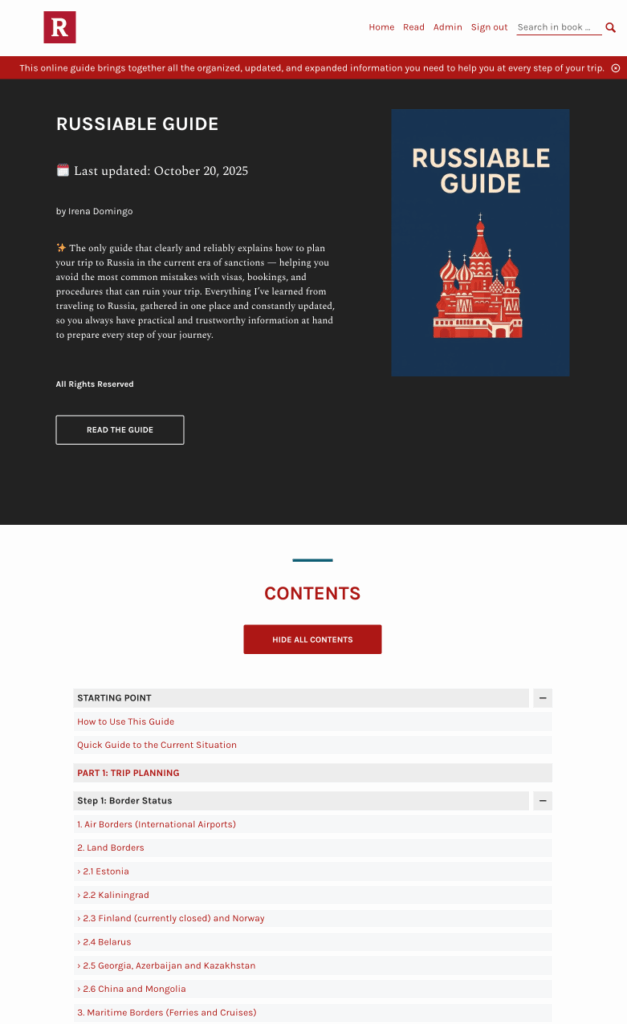
Planning the whole trip, not just this bit?
Everything in one place: visas, borders, paying for things, trains, apps and what to do when one of them stops working, plus day-by-day itineraries for Moscow and Saint Petersburg. I update it every time something changes in Russia.
Read it on your phone or your laptop: PDF, ePub and online version. One payment, future updates included.
See what’s inside11. Getting Around Russia
Russia is huge: from the Baltic to the Pacific there are 11 time zones. The distances between cities are Siberian (literally), so combining transport is part of the trip. Here are your options.
11.1 Trains: The Classic Must-Do
Train travel in Russia is an experience in itself. Whether you do the full Trans-Siberian or just want to go from Moscow to St. Petersburg on the Sapsan high-speed train (4 hours) or take an overnight sleeper, Russian railways are punctual, comfortable and far cheaper than in Western Europe.
The catch, as ever, is buying the ticket: the official Russian Railways website doesn’t accept foreign cards. For that, you can use an intermediary that does take Visa or Mastercard from outside, issues your e-ticket, and you board with your passport. My guide: how to buy Russian train tickets online.
11.2 Domestic Flights: For the Long Distances
To cover the Siberian distances, the plane is the most practical option. Aeroflot, S7, Ural Airlines and Pobeda run frequent routes between Moscow, St. Petersburg, Sochi, Kazan, Yekaterinburg, Vladivostok, Murmansk and many more. Domestic flights are surprisingly cheap. Booking goes through the same channels as international flights: an intermediary that accepts a foreign card. I cover it all in the guide to booking flights to Russia with a foreign card.
11.3 Taxis and Transfers
Russia’s Uber equivalent is Yandex GO (formerly Yandex Taxi), an excellent, cheap and widely-used app. The only catch is that to register with Yandex GO you need a Russian mobile number, so if you arrive without a local SIM, the app won’t work for you.
The alternative for airport pickups, station transfers or one-off rides without a Russian SIM is to book your transfer in Russia with a foreign card before you fly. You request the car, lock in the price, the driver waits at the arrivals exit holding a sign with your name, and you pay from home with your usual Visa. This is what I recommend if you land in Moscow at 2 AM after a long layover: zero stress.

11.4 Metro and Urban Transport
The Moscow metro is one of the most beautiful in the world (literally — some stations look like palaces) and one of the most efficient. The St. Petersburg metro is simpler but just as functional. Tickets are bought at the counter with cash, at machines, or with a Russian MIR card. The tourist Troika card (Moscow) or Podorozhnik (St. Petersburg) make daily life much easier and are cheap.
12. Accommodation: How to Book with a Foreign Card
Booking.com and Airbnb stopped operating in Russia in 2022, so the usual Western platforms aren’t available. The good news is that there are websites where you can search and book hotels, apartments and hostels in Russia with a foreign card: they have the full former catalog (from budget hostels to five-star hotels), accept Visa and Mastercard from outside, and are just as easy to use as the Western sites.
If you live in the European Union or the United Kingdom, you may need a VPN to access some of these sites (they sometimes block EU IPs), but the booking itself is straightforward. If you’d rather have an apartment than a hotel, I explain how to rent apartments in Russia with a foreign card.

13. Guided Tours and Excursions
A question I get a lot: do I need to go with a guide? No, not at all. Moscow and St. Petersburg are perfectly walkable on your own if you have a map and some patience with Cyrillic (metro signs are in Latin script too). But if you want to get the most out of your visit, skip the queues at iconic spots like the Hermitage or the Kremlin, or have someone explain in English what you’re looking at, guided tours in Moscow and guided tours in St. Petersburg with a private guide are an excellent option and, in a small group, work out at a very reasonable price. Catherine did exactly that in June 2026, halfway between a package tour and an independent trip, and she describes it in detail.
14. Language, Culture and Practical Tips
Beyond the paperwork, here are some practical things that will make your trip easier.
- Language: Russian is the language of Russia, and English is much less widespread than you might think. In chain hotels and in the most touristic parts of Moscow and St. Petersburg you’ll be understood, but in neighborhood restaurants, taxis or shops, not always. Learning half a dozen words (“hello”, “thank you”, “sorry”, “how much”) and a few phrases on a translator app handles 90% of situations. Yandex Translator works great for scanning menus and signs. There are more tricks in the guide on how to communicate in Russia without speaking Russian.
- Cyrillic: spend ten minutes before your trip familiarizing yourself with the Cyrillic alphabet. The letters are closer to Latin than you’d think, and suddenly you start recognizing “RESTORAN”, “METRO”, “BANK”… It changes the whole experience.
- Tipping: not mandatory but appreciated. In restaurants, 5-10% if the service was good.
- Clothing: Russia is a vast country with very diverse climates. Moscow in January hits -15 °C (5 °F); Sochi in August reaches 30 °C (86 °F). Check the actual forecast for your dates and pack sensibly (real winter gear if you’re going in winter: parka, hat, gloves and good-soled boots).
- Churches: if you’re entering an Orthodox church, women cover their heads with a scarf and men remove their caps. Don’t take photos during services.
- People: the average Russian has a reputation for being serious, and first impressions back that up. But the moment you break the ice — a smile, a question, a poorly pronounced “spasibo” — they become some of the warmest, most hospitable people you’ll meet. They’ll invite you for tea, tell you the history of their neighborhood, and recommend where to eat best.
15. What to See: Itineraries and Destinations
If it’s your first time, the classic Moscow + St. Petersburg over a week or ten days remains the best introduction to the country. If you have more time or already know the two capitals, Russia has a lot more to offer.
- Moscow: Red Square, the Kremlin, the metro, Tretyakov, Moscow City. Check the complete Moscow travel guide and the hour-by-hour itineraries for 1, 2, 3, 4 or 5 days in Moscow.
- St. Petersburg: the Hermitage, the imperial palaces (Peterhof, Catherine), Church of the Savior on Spilled Blood, the White Nights in summer.
- Golden Ring: Suzdal, Vladimir, Yaroslavl… a route of medieval towns a couple of hours from Moscow.
- Trans-Siberian: the dream route. From Moscow to Vladivostok, with stops in Kazan, Yekaterinburg, Irkutsk and Lake Baikal. Rajendra and Jayshree took a month over it; Kira did it as a solo trip.
- Kazan: the Tatar capital, where an Orthodox kremlin and a mosque sit side by side, one night by train from Moscow (or an hour and a half by plane).
- Yekaterinburg: the gateway to the Urals, with the Romanov story in the background. Iñigo went on his own in March 2026.
- Russian Caucasus: Sochi and the climb up Mount Elbrus, the roof of Europe.
- The Arctic: Murmansk for the northern lights, the Kola Peninsula. Neil went even further east: Kamchatka, Magadan and Khabarovsk.
- Off-the-beaten-path: if you have an adventurous streak, Russia’s closed cities are a story all their own.
For a complete overview of regions and routes, check the Russia destinations page and the six Russia itineraries based on the days you have.
16. To Wrap Up: Is Russia Worth Visiting Now?
If you’ve made it this far, you have nearly everything you need to decide. My take, after many trips and with family and friends living there, is clear: yes, it’s worth it. Russia is one of those countries that shifts the perspective of anyone who visits: the scale, the blend of Europe and Asia, the historical depth, the culture, the food, and above all, the people.
It’s true that traveling now takes a bit more preparation than in 2019. You have to organize the visa, get Russian insurance, plan how to handle money, download the VPN, book accommodation through new channels… but none of that is complicated once you know where to look. This guide and the articles I link from here walk you, step by step, up to the moment you board the plane.
And, from the other side, I can tell you the payoff is worth it. The feeling of strolling Red Square at dusk with St. Basil’s domes lit up, of having hot tea on a train crossing Siberia, of eating pelmeni at a neighborhood canteen where nobody speaks English and everyone smiles at you, of stepping off a plane in Sochi in midsummer and sunbathing with the Caucasus as a backdrop — there’s almost nothing like it.
If you have specific questions I haven’t covered here, write to me. I keep updating this article whenever something important changes so it’s always the best starting guide. Have a great trip.
And if you have already been? Tell me about it: you can send me your chronicle here. I publish it in your own words and with your own photos, and it helps the next traveller enormously.
Frequently Asked Questions About Traveling to Russia Now
Can you travel to Russia now with the war in Ukraine?
Yes, you can travel to Russia now completely normally. Russian consulates are issuing visas (eVisa and regular), tourist borders are open, and life in cities like Moscow, St. Petersburg, Kazan or Sochi carries on as usual. What has changed is the logistics: there are no direct flights from Europe or North America (you have to connect through Istanbul, Belgrade, Yerevan or Dubai), and foreign Visa and Mastercard cards don’t work inside the country.
Is it dangerous to travel to Russia as a tourist?
For a tourist traveling for leisure who stays away from the regions bordering Ukraine, the risk is very low. Life in Moscow, St. Petersburg, Sochi, Kazan or any tourist city is normal: hotels open, restaurants packed, public transport running. The detentions of foreigners that make the news mostly involve journalists, activists or people with politically sensitive profiles, not tourists with valid visas.
What visa do I need to travel to Russia from the US, UK, Canada or Australia?
US, UK, Canadian, Australian and New Zealand citizens are not eligible for the Russian eVisa, so you’ll need to apply for the regular consular visa at the Russian Visa Center in your country. The cost is around USD 110-160 for a single entry, USD 160-220 for double, and USD 270-400 for multiple entries (including consular fees and processing). You’ll need a valid passport, two photos, travel medical insurance with Russia coverage, and a letter of invitation. US citizens can also apply for a special 3-year multi-entry tourist visa.
Can EU citizens get a Russian eVisa?
Yes. Citizens of all 27 EU member states can apply for the Russian eVisa online. It allows stays of up to 30 days, single entry, costs AED 238 (about US$65 / €58) and is processed in about 4 business days. You apply on the official site (evisa.kdmid.ru) and need a valid passport, a digital photo and travel medical insurance covering Russia.
Which countries can travel to Russia visa-free?
More than 60 countries have visa-waiver agreements with Russia. The main ones include all of Latin America (Argentina, Brazil, Chile, Colombia, Cuba, Ecuador, Peru, Venezuela), as well as Serbia, Thailand, Hong Kong, Jamaica, South Africa and several others. Stays are typically up to 90 days. Since June 2025, visa-free travelers must register in advance through the official RuID app and authorize their entry at least 72 hours before traveling.
Can I use my Visa or Mastercard in Russia?
No. Visa, Mastercard and American Express cards issued outside Russia haven’t worked in the country since March 2022, neither at point-of-sale terminals nor at ATMs. The options that do work are: bring euros or dollars in cash and exchange them for rubles there, order a YooMoney MIR card before you travel and have it posted to you, get a T-Bank MIR card on arrival, or send money to Russia before your trip with services that still operate (SendNow, Volet, SwapCoin or cryptocurrencies).
What travel insurance works for the Russian visa?
Western insurers (Allianz, AXA, World Nomads, Cigna, IATI) no longer cover Russia due to sanctions, even when their policies advertise worldwide coverage. You need a Russian insurer adapted to the situation that accepts payment with a foreign card, meets the consulate’s requirements, and issues the policy on the spot. It’s valid for both the eVisa and the regular visa.
How do I get internet in Russia if I can’t buy a local SIM?
The most practical option is to get an international eSIM with coverage in Russia before leaving home: you activate it on your phone in minutes and have data the moment you land. Since October 2025 there are restrictions on some foreign eSIMs during the first 24 hours, so pick one that’s working well in the country. Buying a local Russian SIM as a tourist has been complicated since 2025 because it requires linking to the Russian Gosuslugi portal.
Do I need a VPN in Russia?
Yes, if you want to use Facebook, Instagram, X (Twitter), YouTube or WhatsApp, which has been blocked in Russia since February 2026. Telegram has been patchy since that same date. The critical tip is to download and install it before you land in Russia: many VPN provider websites are blocked from inside the country and the download gets significantly harder.
How do I book a hotel if Booking.com doesn’t work in Russia?
Booking.com and Airbnb stopped operating in Russia in 2022. Alternative websites maintain the full catalog (hostels, hotels, apartments), accept Visa and Mastercard from outside, and work in English. If you live in the EU or the UK, you may need a VPN to access them, but the booking itself is straightforward.
Are there direct flights to Russia from the US, UK or Australia?
No. Since 2022 the airspace between the EU and Russia is closed, and no Western airline flies directly to Moscow or St. Petersburg. You have to connect through a third country. The most-used hubs are Istanbul (Turkish Airlines, Pegasus), Belgrade (Air Serbia), Yerevan (Aeroflot, FlyOne) and Dubai (Emirates, flydubai). Istanbul is usually the cheapest with the most frequencies.
How much does a one-week trip to Russia cost?
On a tight budget you can travel for around USD 45-60 a day (hostel bed, set lunches, public transport). With a mid-range hotel, eating out and museums, count on USD 85-125 a day. Add the connecting flight (from USD 500-800 depending on origin and date) and the visa plus insurance (around USD 150-200 with an eVisa, more for the regular visa). A week in Russia typically runs USD 1,500-2,500 per person, with the ruble at about 84 to the dollar.
Is anyone actually travelling to Russia in 2026?
Yes. Between July and September 2026 alone I published thirty-five chronicles from readers who had just come back, covering trips made between February 2025 and September 2026. They came from the United States, the United Kingdom, South Africa, New Zealand, Denmark, Singapore, the Czech Republic and across Europe, and they entered on eVisas, regular visas or visa-free: by air via Istanbul, overland from Estonia and Latvia, through Kaliningrad, by ferry from South Korea and even by bicycle. Not one of them reports a security problem inside the country: the difficulties they describe are border queues, cash and internet access.
In This Article
Was this useful? I'll tell you when something changes in Russia
One short email a month with what has changed for travellers (visas, payments, border crossings, apps), based on what readers report to me from Russia. More than 4,000 of us already. No spam: if you ever lose interest, unsubscribing is one click.
Irena DomingoAbout Me
I was born in Russia. I grew up between two worlds: my father was Russian, my mother Spanish — a descendant of the "Children of Russia", the Basque children evacuated to the USSR during the Spanish Civil War. I've worked as a translator, interpreter and Russian teacher for over 30 years, and since 2013 I've been writing this blog to help travelers discover Russia with practical, always up-to-date information. Author of the Russiable Guide. If this blog has helped you plan your trip, you can buy me a coffee ❤️.
 Crossing the Azerbaijan-Russia Border (2026): What You Need to Know
 Land Border between Finland and Russia: Current Situation and Alternative Routes
 Is Russia a Safe Country to Visit? The Real Situation in 2026