Getting to Murmansk isn’t complicated, but it pays to know your options before you start booking. The fastest way is to fly to Moscow or Saint Petersburg and connect with a domestic flight to Murmansk (2–2.5 hours). If you have time on your hands, the overnight train from Moscow or Saint Petersburg is a beautiful journey that cuts across the whole of Karelia. And if you’re coming from the Schengen area and want to enter overland, the closest land gateway to the Russian Arctic is the Storskog–Borisoglebsk border crossing, between Kirkenes (Norway) and Murmansk.
Land crossings via Estonia work too, but they drop you in the south (Saint Petersburg, Pskov or Moscow), so to reach Murmansk you’ll still need to combine the crossing with a train or a domestic flight. I’ll walk you through each option with concrete data: airlines, frequencies, ballpark prices and the things you need to watch out for when you’re traveling with a foreign passport and a foreign card.
The fastest way: international flight + domestic flight
Murmansk has an international airport (code MMK), but because of sanctions there are no direct flights from Western Europe or America. The realistic option for almost every traveler is to enter Russia through Moscow or Saint Petersburg and, once inside, take a domestic flight up north.
International flight to Moscow or Saint Petersburg
From Europe there are now several hubs with daily connections to Moscow: Istanbul (Turkish Airlines, Pegasus), Belgrade (Air Serbia), Yerevan (Aeroflot, FlyOne Armenia), Dubai (Emirates, flydubai), Baku (AZAL) and Tashkent (Uzbekistan Airways), among others. There are fewer direct flights to Saint Petersburg from outside Russia, but going via Istanbul or Dubai works too.
The problem isn’t finding a flight, it’s paying for it: Western search engines (Skyscanner, Kayak, Momondo) don’t show flights to Russia, and many Russian airlines don’t accept foreign Visa or Mastercard on their websites. The solution is to use international intermediaries that do accept Western cards. I explain it in detail in the guide on how to book flights to Russia with a foreign card and on the flights to Russia booking page.
Domestic flight to Murmansk (MMK)
Once you’re in Moscow or Saint Petersburg, there are daily flights to Murmansk operated by several Russian airlines: Aeroflot, Pobeda (the low-cost arm of the Aeroflot group), Smartavia (formerly Nordavia, based in Arkhangelsk with lots of frequencies to the north) and Red Wings. The practical details:
- Moscow → Murmansk: 2 hours 30 minutes. Departures from Sheremetyevo (SVO), Domodedovo (DME) and Vnukovo (VKO).
- Saint Petersburg → Murmansk: 2 hours. Departures from Pulkovo (LED).
- Price: between 4,000 and 12,000 rubles one way (€40–120) depending on season and how far in advance you book.
- Frequency: several daily flights on both routes, more during aurora season (October–March).
The same card block applies here: the websites of Aeroflot, Pobeda and the rest don’t accept foreign Visa/Mastercard. To book the domestic leg, the workarounds are the same as for the international one — international intermediaries that do take Western cards.
Apatity, the small airport (alternative for the Khibiny mountains)
If your plan includes the Khibiny mountains or the Kirovsk ski resort, here’s a detail most travelers miss: there’s a second airport in the region, Khibiny / Apatity (KVK), near Kirovsk, with direct flights from Moscow (Sheremetyevo) operated by Aeroflot and Smartavia. You land much closer to the mountains, save yourself 4 hours of car or train from Murmansk, and prices are similar to MMK. The downside: fewer frequencies (no daily flights year-round, so check the calendar), and there’s no regular bus from Apatity to Murmansk city, so it only makes sense if the Khibiny is your actual destination.
By train from Moscow or Saint Petersburg
If you have time and you enjoy overnight train journeys, this is a stunning experience. The route crosses the whole of Karelia and you watch the landscape change as you head north: coniferous forests, frozen lakes, tundra. Two main options:
- Train no. 16 “Arktika” Moscow–Murmansk: the classic. Leaves from Leningradsky station in Moscow and takes around 35 hours. It’s overnight, with berths in platzkart (open-plan) or kupé (4-berth compartments). Prices from 7,000–8,000 rubles in platzkart up to 9,000–15,000 rubles in kupé.
- Saint Petersburg–Murmansk: around 26–28 hours. Leaves from Ladozhsky station. Also overnight with berths, daily frequency and prices similar to the Arktika.
To buy tickets with a foreign card, the official RZD (Russian Railways) website hasn’t worked since 2022. You need to use an intermediary; I explain how the process works in the guide on how to buy train tickets in Russia from abroad.
Overland from Norway: Storskog–Borisoglebsk
This is the most direct land route from the Schengen area to Murmansk. The Storskog–Borisoglebsk border crossing, 15 km east of Kirkenes (Norway), is currently the only operational land gateway between Norway and Russia — and indeed between the EU/Schengen area and northwest Russia, since the Finnish crossings have been closed since December 2023.
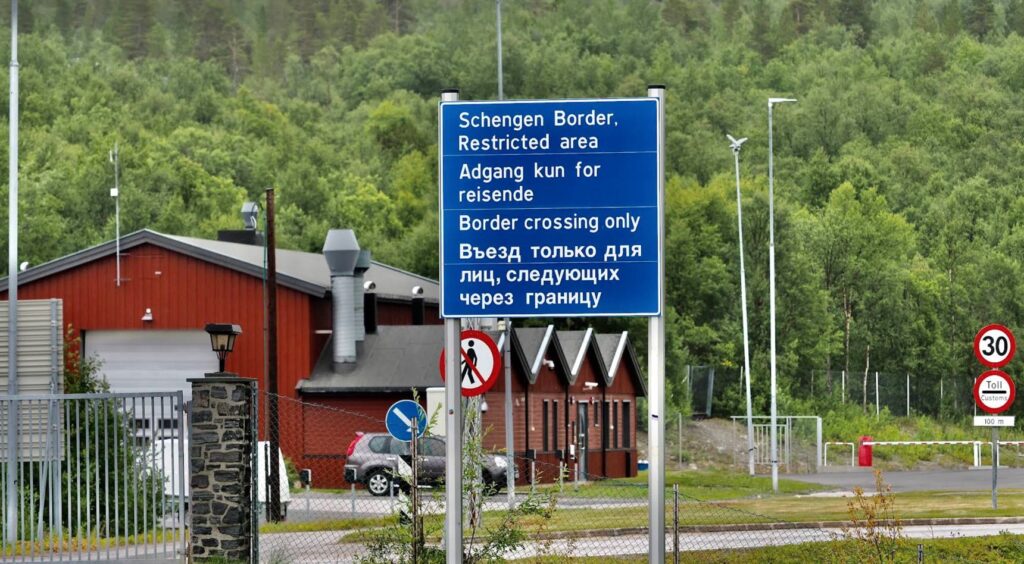
The usual itinerary is to fly first to Kirkenes (KKN) via Oslo with SAS, Norwegian or Widerøe (~2h 15m from Oslo, from about €100 if you book in advance), and from Kirkenes take a direct minibus to Murmansk with Borodin Bus or Avtoekspress (AE51). The Kirkenes–Murmansk ride takes 3.5–5 hours including the border crossing and costs between €50 and €72 one way. These are 8–12 seat minibuses, so book 1–2 days ahead.
Watch out with your visa: the Borisoglebsk crossing does not accept the eVisa. You need a regular paper visa, arranged in advance at a Russian consulate or visa center. The land crossings with Europe that do accept the eVisa are those in Estonia, Latvia, and the Kaliningrad crossings with Poland and Lithuania.
A few more key facts: the crossing operates from 08:00 to 15:00 Norwegian time every day of the year, you can’t cross on foot (you must be in a vehicle) and actual waiting times are usually short (about 30 minutes total). All the details, requirements and real travelers’ experiences in the Storskog–Borisoglebsk crossing guide.
Overland from the Baltics
The land crossings via Estonia are still open, but they drop you in the south of Russia (Saint Petersburg, Pskov or Moscow). To reach Murmansk from there you’ll need to combine the crossing with a domestic flight or the overnight Arktika train. It’s not the most direct route, but it makes sense if you’re already doing a tour of northern Europe or you want to add Moscow or Saint Petersburg to your itinerary anyway.
Via Estonia (Narva, Koidula or Luhamaa) → Saint Petersburg → Murmansk
Estonia keeps three border crossings open with Russia: Narva–Ivangorod, Koidula–Pechory and Luhamaa–Shumilkino. The usual ways to cross are:
- By international bus Tallinn (or Riga)–Saint Petersburg, via Narva. Operated by Lux Express, Baltic Shuttle/SCS Auto and Ecolines. They drop you on one side of the border, you cross the Narva bridge on foot and another bus from the same company picks you up in Ivangorod to continue to Saint Petersburg.
- By car via Koidula or Luhamaa (Narva is closed to vehicles due to construction work). You need to book a slot in advance through the GoSwift system.
All three Estonian crossings accept the Russian eVisa, but queues at Narva can be extreme in peak season (4–12 hours in summer). Once in Saint Petersburg, you connect with a domestic flight (2 hours) or the Arktika train (26 hours) to Murmansk. All the information on waiting times, luggage and money restrictions, and a comparison between crossings, in the Estonia–Russia border crossing guide.
Before heading to any of these crossings, the Telegram groups about Russia’s borders are the best source of real-time information.
From MMK airport to central Murmansk
Murmansk airport is about 24 km south of the city center, 30–40 minutes by car. Three options:
- Bus no. 106: the cheapest option, around 110 rubles. It connects the airport with the central bus station in just under an hour. It runs almost all day with regular frequencies.
- Taxi: about 1,500–2,000 rubles (€15–20) to the city center. The Yandex Go app (the Russian equivalent of Uber) works fine in Murmansk. If you don’t have a Russian MIR card, just pay the driver in cash, in rubles.
- Marshrutka (minibus no. 106к): a faster version of bus 106, similar price. It stops at the main stops along the way to the center.

Which option suits you best
Quick summary to help you decide:
- If you want to visit Moscow or Saint Petersburg first: international flight to Moscow or Saint Petersburg + domestic flight to MMK (or the overnight Arktika train).
- If you want to get there fast and enjoy the full Arctic overland experience: flight to Oslo + flight to Kirkenes + minibus to Murmansk via Storskog. You’ll need a regular paper visa (the eVisa won’t work).
- If you’re looking for the cheapest route: cross via Estonia and connect with a domestic flight or train. You save the cost of an international flight, but it takes longer.
Before you book anything, double-check the visa requirements for your nationality (eVisa for 30 days, or a regular paper visa for longer stays or for crossing via Norway), get travel insurance valid in Russia (mandatory under Russian law and required to validate your visa), and think ahead about how you’ll pay inside the country: foreign Visa, Mastercard and Amex cards haven’t worked in Russia since 2022, so plan on carrying cash or getting hold of a Russian MIR card for foreigners.
And if your main reason for heading this far north is the northern lights, you’ll find everything you need to know — when to travel, where to see them, what to pack and which tours are worth it — in the guide to the northern lights in Murmansk.
Frequently asked questions
Are there direct flights to Murmansk from Europe?
No. Because of sanctions, no European airline operates direct flights to Murmansk or to any other Russian airport. The realistic way to get there is to fly first to Moscow or Saint Petersburg via an intermediate hub (Istanbul, Belgrade, Yerevan, Dubai) and connect with a 2–2.5 hour domestic flight.
How much does the domestic flight from Moscow or Saint Petersburg to Murmansk cost?
Between 4,000 and 12,000 rubles one way (€40–120) depending on season and how far in advance you book. Operated by Aeroflot, Pobeda, Smartavia and Red Wings. The flight takes 2 hours 30 minutes from Moscow and 2 hours from Saint Petersburg.
Can I enter Russia at Storskog–Borisoglebsk with an eVisa?
No. The Borisoglebsk crossing (Norway) is not on the list of border points that accept the eVisa. You need a regular Russian paper visa, arranged in advance at a consulate or visa center. The land crossings with Europe that accept the eVisa are those in Estonia and the Kaliningrad crossings with Poland and Lithuania.
How long does the Moscow–Murmansk train take?
Train no. 16 Arktika takes around 35 hours from Leningradsky station in Moscow. It’s an overnight train with berths in platzkart (open-plan carriages) or kupé (4-berth compartments). Prices range from 7,000–8,000 rubles in platzkart up to 9,000–15,000 rubles in kupé. From Saint Petersburg (Ladozhsky station) the trip takes 26–28 hours.
Is there a direct bus between Kirkenes and Murmansk?
Yes. Two Russian companies run daily minibuses across the Storskog–Borisoglebsk border: Borodin Bus and Avtoekspress (AE51). The journey takes 3.5–5 hours including the crossing and costs €50–72 one way. They’re 8–12 seat minibuses, so book 1–2 days ahead.
Will my Visa or Mastercard work in Murmansk?
No. No Visa, Mastercard or American Express card issued outside Russia has worked at Russian ATMs or card terminals since 2022. The alternatives are to bring cash (euros or dollars) and exchange it for rubles at exchange offices, open a Russian MIR card on arrival, or order one with home delivery before your trip.