
Moscow Public Transport: Troika Card, Tickets and How to Get Around
 By Irena Domingo
Updated on
In This Article
The easiest and cheapest way to get around Moscow is still public transport: metro, bus, electrobus, tram, MCD suburban trains, electric river boats on the Moskva and a couple more urban giants on top. Everything runs on the same card, the Troika, which you can buy at any metro ticket window in under a minute for a 150-ruble deposit.
As a foreign tourist, there is one critical point you need to be clear about from the start: since March 2022, Visa and Mastercard cards issued outside Russia no longer work, neither at metro turnstiles nor at ticket windows nor at vending machines. Apple Pay, Google Pay and Samsung Pay are out too. The realistic way to pay for transport in Moscow is with a Troika topped up in cash or with a Russian MIR card if you managed to get one before your trip. In this article I’ll walk you through what kinds of transport you have, which ticket or pass fits you best depending on how long you’ll be in town, and how to actually pay for it all in practice.

What kinds of public transport you’ll find in Moscow
Moscow moves more than 16 million passengers a day and has one of the best public transport networks in the world: integrated and cheap. The good news for tourists is that the same ticket or Troika card works for almost everything: metro, central circle (MCC), radial commuter lines (MCD), buses, electrobuses, trams and, since 2023, the electric river boats. Only the Aeroexpress to the airport, the Vorobyovy Gory cable car and the river boats have their own separate fare (although you can also pay for them with the balance on your Troika).
Moscow Metro, MCC and Monorail
The Moscow Metro is fast, cheap, safe and stunningly beautiful. It has more than 15 lines, more than 250 stations and runs from 5:30 in the morning to 1:00 at night. During peak hours trains pass every 90 seconds. The busiest times are 7 to 10 and 17 to 20, so avoid those slots if you can.
Alongside the conventional metro, there are two surface lines you’ll see on the map:
- The MCC (Moscow Central Circle, line 14), the surface ring that loops around the centre and connects with a long list of metro stations. Don’t confuse it with line 5, the Circle Line, which is underground.
- The Monorail, an elevated line of just over 4 km in the northeast, right next to VDNH park. Don’t count on it: it closed for good in June 2025, and the city is turning it into an elevated park due to open in 2027.
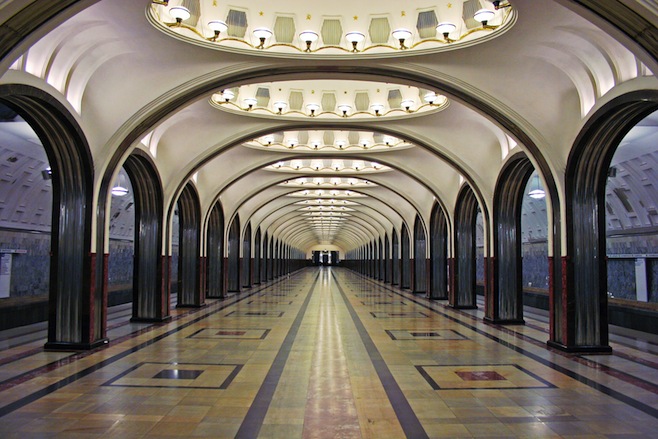
If you want to understand how to actually use the metro and which stations are worth visiting just for their architectural beauty, I cover all of that in this separate guide to the Moscow Metro.
MCD: commuter trains integrated into the system
The MCD (Moscow Central Diameters) are commuter lines that cross Moscow from end to end with metro-style frequencies. Right now there are four operational lines (D1, D2, D3, D4) with more under construction. For a tourist, what matters is that within the “Central zone” you pay exactly the same as a metro ride with the Troika. Only if you head further out, into the “Пригород” (suburban) zone, does the price jump to 102 rubles.

Bus, electrobus and tram
The metro doesn’t reach everywhere. In areas further from the centre you’ll depend on surface transport, run by the public company Mosgortrans. These days you’ve got three options:
- Bus: the densest network, especially in the outskirts.
- Electrobus: fully electric buses that have replaced the old trolleybuses. Moscow has the largest electrobus fleet in Europe, with more than 2,700 units in service.
- Tram: makes up a small share of total transport but is still active in several areas and very useful in specific neighbourhoods.
If you check older guides about Moscow you’ll see references to the trolleybus. The truth is that Moscow’s trolleybus stopped operating in August 2020 after almost 90 years of service. Only one ceremonial museum line remains, near Komsomolskaya Square. If you happen to spot it, take a photo, but don’t expect to use it as actual transport.

Electric boats: the new addition on the Moskva River
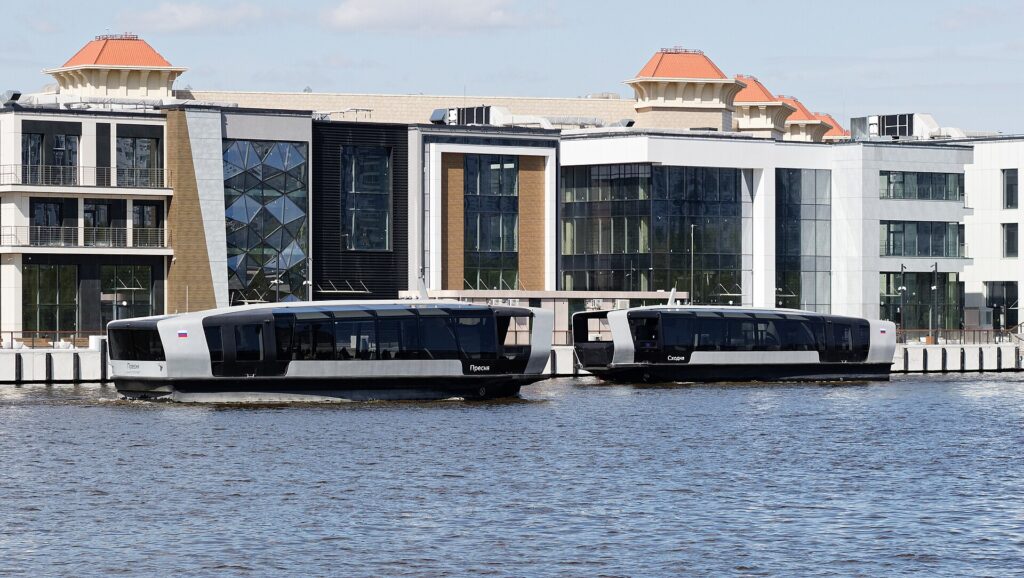
Since 2023, Moscow has had a network of regular electric boats on the Moskva River that work as just another line of the city’s public transport. There are 31 modern vessels named after small Moscow rivers (Sinichka, Serebryanka, Businka) that run daily from 7:00 to 23:00 on fixed schedules. There are 24 piers spread across the city.
The interesting part is that you pay for the ride the same way as in the metro: with your Troika (including the virtual one), with a Russian MIR bank card, via SBP (the Russian fast payment system) or with biometric face payment. Electric river boats have their own seasonal fare: in summer 2026 (1 May to 30 September) a ride with the Troika cost 330 ₽ on weekdays and 500 ₽ at weekends, and with the winter fares in force since October 2026 it costs from 100 ₽ on weekdays and from 155 ₽ at weekends, depending on the route and how you pay. If you’ve got an Edinyi pass of 30, 90 or 365 days, boats are included at no extra cost.
Four routes are currently in service: Kievsky – Fili Park, ZIL – Pechatniki, Novospassky – ZIL and Luzhniki – Kievsky. I’d recommend riding at least one stretch: the views of the centre from the water are worth the effort and, since it’s integrated into the network, you can get off at any pier and connect with metro or other transport.
Aeroexpress, cable car and taxi
Three transport modes that aren’t part of the unified ticket. You can pay for the first two with your Troika balance, but not for a taxi:
- The Aeroexpress trains connecting the centre with the Moscow airports. A standard ticket costs 700 rubles (there are sometimes cheaper weekend offers) and each station has its own ticket window and vending machine.
- The Vorobyovy Gory cable car, which links the Luzhniki Stadium with the viewing platform crossing the river. Optional and expensive (the fare changes by day), but the views are spectacular.
- Taxi: Western apps like Uber or Bolt don’t work in Russia. The realistic option is Yandex Go (the Russian app) or booking your transfer in advance. You can see my recommendations on this page about transfers in Russia with a foreign card.

Fare zones: only on the MCD
If you read older guides you’ll see Moscow split into two fare zones, A and B. That’s history: zone B (the Troitsky district, in the far south of the city) was abolished in September 2021, and today a ride on the metro, bus or tram costs the same anywhere in Moscow. Red Square, Kremlin, Arbat, VDNH, Gorky Park and everywhere else you’ll go as a tourist: one fare.
The only split that still matters is on the MCD (commuter lines): it’s called “Central zone” and “Пригород” (suburban) zone. The standard Edinyi pass only covers the Central zone; if you go further you’ll need an Edinyi MCD MO or to pay the difference with Troika balance.
The Troika card: your best ally in Moscow
The Troika card (Тройка) is the reloadable contactless card used to pay for public transport in Moscow since 2013. It’s hands down the most convenient and cheapest option for tourists. It works with NFC technology: tap the card against the reader on the turnstile or bus and you’re through.
- It costs 150 rubles as a deposit. You get that deposit back if you return the card in good condition at any ticket window.
- It’s sold at metro ticket windows, vending machines, kiosks and Aeroexpress ticket offices.
- It works on the metro, MCC, MCD (central and suburban zones), bus, electrobus, tram, electric boats, Aeroexpress, cable car, bike rental and even for entry to the zoo, museums and the VDNH ice rink.
- The balance loaded on the card doesn’t expire until 5 years after the last use.
- It also exists as a keychain, bracelet, ring and phone case in different designs.

There’s also a virtual Troika managed through the official “Метро Москвы” app using a QR code. It works on any smartphone, but it comes with a big problem for tourists: the app isn’t available on the Apple App Store or Google Play (they pulled it because of sanctions) and registering normally requires a Russian phone number. On Android you can download it from RuStore, but it’s far from practical. My advice: forget the virtual one and buy the physical card at the ticket window.
The Troika only works in Moscow and its region (MCD suburban trains and some buses into the region). If you’re also travelling to St. Petersburg, the equivalent card there is called Podorozhnik.
What tickets and passes you can load onto the Troika
The card itself is just the “container”. You load the type of ticket that best matches your usage onto it. There are four main options and, for tourists, in 99% of cases it comes down to choosing between Kosheliok (wallet) or a daily Edinyi pass.
1. Kosheliok (wallet) — pay-as-you-go single rides
This is the “electronic wallet” mode. You load balance (between 10 and 10,000 rubles) and it gets deducted per ride. The fare automatically picks the cheapest option. These are the current rates:
- Metro, MCC, MCD Central zone or surface transport: 75 ₽ per ride.
- MCD Пригород zone (suburban): 102 ₽ per ride.
- “90-minute” fare: 112 ₽ for one metro or MCC ride plus unlimited surface transfers within 90 minutes. It activates automatically if you make the transfer within that window.
For most tourists this is the winning option: load 500–1,000 rubles when you arrive, ride as much as you like and top up if you run low. It has no practical expiry date.
2. Edinyi (Единый) — unlimited pass by days
The “Unified” pass gives you unlimited rides on metro, MCC, MCD Central zone, bus, electrobus, tram and, with the 30-, 90- and 365-day passes, electric boats. These are the rates in rubles:
| Duration | Price (₽) | Cost per day |
|---|---|---|
| 1 day | 415 ₽ | 415 ₽ |
| 3 days | 800 ₽ | 266 ₽ |
| 30 days | 3,460 ₽ | 115 ₽ |
| 90 days | 8,450 ₽ | 94 ₽ |
| 365 days | 24,900 ₽ | 68 ₽ |
The 1-day and 3-day Edinyi start counting from the first tap at the turnstile (not from purchase), so you can buy it the day before with no issue. You have up to 10 days from purchase to activate it.
Important note: the old 60-ride Edinyi was discontinued in January 2025, so it’s no longer an option.
3. Edinyi MCD MO — same as above but with suburban commuter trains
Same coverage as the standard Edinyi but extended to the Пригород zone of the MCD lines. Only worth considering if you’re planning trips outside Moscow on commuter lines (Sergiev Posad, Kolomna, etc.) via the MCD network.
- 30 days: 4,450 ₽
- 90 days: 11,400 ₽
- 365 days: 33,200 ₽
4. TAT — surface transport only
The TAT acronym comes from the Russian Троллейбус, Автобус, Трамвай (trolleybus, bus, tram). It’s a pass designed for people who only use surface transport and never set foot in the metro. As a tourist it’s not for you, but I’m mentioning it so you know it exists:
- 30-day TAT: 2,250 ₽
- 90-day TAT: 5,950 ₽
- 365-day TAT: 18,400 ₽
Which ticket suits me as a tourist?
Straight answer, no detours. To work it out properly you have to think about two things: how many days you’ll be in Moscow and how many rides you’ll take each day. A typical tourist staying in the centre usually makes between 3 and 5 rides a day.
| Days in Moscow | Ride pattern | Recommended option | Approx. cost |
|---|---|---|---|
| 1 day | 2–3 rides | Kosheliok (load 250 ₽) | 225 ₽ |
| 1 day | 6+ rides | Edinyi 1 day | 415 ₽ |
| 2 days | 3–4 rides/day | Kosheliok (load 600 ₽) | ~600 ₽ |
| 3 days | 5+ rides/day | Edinyi 3 days | 800 ₽ |
| 3–5 days | 3–4 rides/day | Kosheliok (load 900–1,200 ₽) | ~1,000 ₽ |
| 5–7 days | 4+ rides/day | Kosheliok (load 1,500 ₽) or Edinyi 30 days if you move around a lot | 1,500–3,460 ₽ |
| 2+ weeks | Any | Edinyi 30 days | 3,460 ₽ |
My default recommendation for tourists staying 3 to 7 days: Kosheliok. It’s flexible, doesn’t expire, automatically picks the cheapest fare and, if you have balance left, you save it for your next visit or use it at the airport on the Aeroexpress.
I’d only go for a full-day Edinyi if you’re certain you’ll be taking lots of metro rides to far-flung places. For the Kremlin–Arbat–Gorky Park tourist, paying per single ride works out cheaper.
How to pay for transport in Moscow: what works and what doesn’t
This is the most important part for any foreign tourist. The Russian payment system changed radically in March 2022 with the international sanctions. What worked four years ago no longer works.
What DOES work for foreign tourists
- Cash at the ticket window or vending machine: the most universal option. Bring rubles in small bills (100 or 500 ₽); don’t try to feed 5,000 ₽ bills into machines as they sometimes won’t accept them.
- Physical Troika card: the recommended option. Once you have it, you stop worrying about the problem altogether.
- Russian MIR bank card: if you’ve managed to get one before or during your trip. You tap straight through the turnstile and 83 ₽ is deducted per ride, a little more than the 75 ₽ of Kosheliok. If you need one, check how to get a Russian MIR card as a foreigner.
- Fast Payment System (SBP) via QR: 83 ₽ per ride. But it only works if you have an account at a Russian bank with the app installed. Not a realistic option for short-stay tourists.
What does NOT work since 2022
- Visa and Mastercard cards issued outside Russia (contactless or at the ticket window).
- Apple Pay, Google Pay and Samsung Pay with foreign cards.
- American Express, JCB and similar cards.

Other methods that require registration in Russia
- Virtual Troika on your smartphone via the Метро Москвы app. Usually requires a Russian phone number for registration and the app isn’t on Western stores.
- Face Pay (biometric facial payment at metro turnstiles). It works, but you have to register in person at a service centre in Moscow with your linked MIR card. Pointless for a short stay.
How and where to buy the Troika card
Where you can buy it
- Ticket windows at any metro station. The easiest option and my number one pick. Even if the clerk doesn’t speak English, every single one of them knows what “Troika” means.
- Automatic vending machines at stations. They have an English interface and accept cash (rubles) and MIR cards. They do not accept Visa, Mastercard or Apple Pay.
- Aeroexpress ticket windows at the airports. If you arrive on the Aeroexpress, you can buy it right there.
- Authorised newsstands (look for ones with the Troika logo).

How to buy it, step by step
- Get to the ticket window with rubles in cash. If you don’t have any, withdraw them first from an ATM at the airport or change money at an exchange office.
- Say “Troika” and, if you want, add the amount you’re loading. For example: “Troika, 500 rubles” or “Troika, 1,000 rubles”.
- Pay the total. For a Troika with 500 rubles of balance you’ll hand over 650 rubles (150 ₽ deposit + 500 ₽ balance).
- They give you the card already loaded and ready to use.
Practical tip: if you’re not comfortable speaking Russian, jot down “Тройка + 1000 ₽” (Troika with 1,000 rubles balance) on a piece of paper. Show it at the ticket window and you’re sorted. Much faster than trying to explain it verbally.
How to use the Troika and the basic rules
On the metro and MCC: tap the card on the circular reader at the turnstile. The screen shows the remaining balance or days left, and the gate opens. At MCD stations you tap both when entering and exiting, so the system knows which zone you’ve used.
On bus, electrobus, tram and boat: there are validators next to the doors. Tap the card and wait for the green light. On buses you usually only validate when boarding.

To check your balance, there are yellow terminals in metro lobbies: tap your Troika and it shows balance and loaded passes. You can also do this on the Метро Москвы app if you’ve gone to the trouble of installing it.
Can the Troika be shared between several people?
Technically, each passenger should have their own ticket. The fine for travelling without a valid ticket is 5,000 rubles. That said, in practice:
- With Kosheliok (balance): the turnstile deducts each time, so technically you can pass two people through with the same card paying two rides. Accepted on the metro but risky on buses (inspectors can fine you).
- With Edinyi for 1 or 3 days: cannot be shared. There’s a 20-minute lockout between taps to prevent exactly this.
- With Edinyi for 30, 90 or 365 days: cannot be shared. 7-minute lockout between taps.
My advice: if there are two or more adults travelling, get one Troika each and load them in Kosheliok mode.
Getting your deposit back at the end of the trip
When you leave Moscow you can return the Troika at any metro ticket window and get back the 150-ruble deposit. Conditions: the card must be in good condition (no cracks or visible damage) and handed in no later than 5 years after purchase. Unused balance is not refunded, so it’s worth using it all up.
Many travellers prefer to keep the card as a souvenir. Metro kiosks sell special designs (limited editions for museums, events, twin cities).
Useful apps for getting around Moscow
Although the Troika doesn’t need any app to work, there are a couple of apps that will save your trip:
- Yandex Maps: the “Russian Google Maps”. It works very well in Moscow and gives you public transport routes in real time (with timetables and the recommended line).
- Yandex Metro: specifically for the metro, with the map and a travel-time calculator between stations. Handy for downloading the offline map.
- 2GIS: a Russian alternative with detailed offline maps (including business hours). Essential if you’re going to lose mobile coverage.
- Метро Москвы / Московский транспорт: the official apps. Needed for advanced features (virtual Troika, Face Pay, managing passes), but a Russian account is required for many functions.
Practical summary: step by step for tourists
- Arrive in Moscow with rubles in cash (exchange or withdraw at the airport).
- Go to the ticket window at any metro station on arrival (or at the Aeroexpress) and buy a Troika with balance. For 3–4 days, 1,000 rubles of balance is fine.
- If you’re staying for more than two weeks and taking lots of rides, consider loading a 30-day Edinyi (3,460 ₽) instead of Kosheliok.
- Forget about Apple Pay, Google Pay and your foreign Visa/Mastercard. They haven’t worked on Russian transport since 2022.
- If you have balance left at the end of the trip, use it on the Aeroexpress back to the airport and hand the card in at the ticket window to recover the 150 ₽ deposit.
And if you get the hang of all this, I’d recommend dedicating half an afternoon to getting lost in the Moscow Metro on a route around its most beautiful stations. It’s one of the most impressive architectural museums you’ll ever see in your life, and with your Troika you can hop off wherever the mood takes you.
Frequently asked questions about public transport in Moscow
How much does the Troika card cost?
The card costs 150 rubles as a deposit, which you get back if you return it in good condition at any metro ticket window. On top of the deposit, you have to load balance or a pass onto it before you can use it.
Do Visa or Mastercard cards work on the Moscow Metro?
No. Since March 2022, Visa, Mastercard, American Express and JCB cards issued outside Russia stopped working across the entire Russian payment system due to international sanctions. Apple Pay, Google Pay and Samsung Pay don’t work either. The only options for a tourist are cash, a Troika card topped up in cash, or a Russian MIR card.
How much does a single metro ride in Moscow cost?
With the Troika in Kosheliok (wallet) mode it costs 75 rubles in the Central zone. If you pay with a paper ticket at the ticket office, it costs 90 rubles.
How much is a one-day pass on the Moscow Metro?
The 1-day Edinyi pass with unlimited rides on metro, MCC, MCD Central zone and surface transport costs 415 rubles. The 3-day version costs 800 rubles and the 30-day one is 3,460 rubles. They start counting from the first tap at the turnstile, not from purchase.
Does the Troika also work in St. Petersburg?
No. The Troika only works in Moscow and its region. In St. Petersburg there’s an equivalent card called Podorozhnik.
Can I use the Troika to get to the airport on the Aeroexpress?
Yes. The Kosheliok balance on the Troika can be used to pay for the Aeroexpress, the fast train connecting Sheremetyevo and Domodedovo airports with central Moscow (the Vnukovo trains were cancelled in July 2024). A standard ticket costs 700 rubles, so make sure you have enough balance loaded.
How do I return the Troika at the end of the trip?
Go to any metro or MCC ticket window, hand in the card and they’ll refund the 150-ruble deposit. The card must be in good condition, without mechanical damage. Be aware: any unused Kosheliok balance is not refunded, so it’s worth spending it down first (for example on the Aeroexpress back to the airport).
In This Article
Was this useful? I'll tell you when something changes in Russia
One short email a month with what has changed for travellers (visas, payments, border crossings, apps), based on what readers report to me from Russia. More than 4,000 of us already. No spam: if you ever lose interest, unsubscribing is one click.
Irena DomingoAbout Me
I was born in Russia. I grew up between two worlds: my father was Russian, my mother Spanish — a descendant of the "Children of Russia", the Basque children evacuated to the USSR during the Spanish Civil War. I've worked as a translator, interpreter and Russian teacher for over 30 years, and since 2013 I've been writing this blog to help travellers discover Russia with practical, always up-to-date information. Author of the Russiable Guide. If this blog has helped you plan your trip, you can buy me a coffee ❤️.
 Zaryadye Park in Moscow: A Practical Guide for Your First Visit
 Russian Circus in Moscow: The 3 Must-See Shows and How to Buy Tickets
 Official Tourist Maps of Moscow in PDF – Free Download