
Travelling to Russia as a Muslim: Mosques, Halal Food, Prayer, Ramadan and What Not to Bring
 By Irena DomingoUpdated on The essentials in 1 minute
In this article
Russia is not usually the first country that comes to mind for a Muslim traveller, but it should be on the list: Islam has been part of the country for more than a thousand years, there are millions of Muslims living here, and in a city like Kazan halal food is the norm rather than the exception. Moscow and St Petersburg have great mosques, finding halal food is not difficult, and you can pray in mosques, in prayer rooms at some airports or in your hotel.
There are also a few things you should know before you go: Russian cuisine uses a lot of pork, prayer times change a lot through the year at these latitudes, and some Islamic books that are freely available in other countries are banned in Russia. Here I explain all of it, with the official sources checked in November 2026.
The essentials
- Mosques: the Cathedral Mosques of Moscow and St Petersburg and the Kul Sharif mosque in the Kazan Kremlin welcome visitors.
- Food: pork is common in Russian cuisine (pelmeni, sausages, kholodets). Ask for «без свинины» (bez svininy, without pork) or look for «халяль» (halal). In Kazan, most restaurants in the centre are halal.
- Prayer: the qibla is almost due south from Moscow. Use the schedule of the local mosque: times change a lot between summer and winter.
- Ramadan 2027: expected from around 8 February, with short winter days, and Eid al-Fitr around 9 March.
- Books: the Qur’an is protected by law, but the Russian translations of Said Nursi’s Risale-i Nur are on the list of banned materials. Don’t bring them, printed or on your phone.
- Headscarf: it is common and I have found no restriction on it. Face coverings (niqab) are another matter: see below.
Islam in Russia in a few lines
Islam reached the Volga in the year 922, when the Volga Bulgars adopted it as their state religion, long before the Russian state existed in its present form. Today Russian law names it, together with Christianity, Buddhism and Judaism, among the religions that are «an inseparable part of the historical heritage of the peoples of Russia» (preamble of the 1997 law on freedom of conscience).
There is no official census of religion. The muftiates’ own estimates speak of about 25 million Muslims in the country (Ravil Gaynutdin, head of the Spiritual Administration of Muslims of the Russian Federation, in 2018), and of three to four million in Moscow alone (the same mufti, in 2019). They are concentrated in Tatarstan and Bashkortostan, on the Volga, in the North Caucasus (Chechnya, Dagestan, Ingushetia…) and in the big cities, where there are also many Muslims from Central Asia and Azerbaijan.
For a traveller, this means that in Moscow, St Petersburg and Kazan you will see women in headscarves, mosques full on Fridays and halal restaurants, and that nobody will find it strange that you pray or ask whether a dish contains pork.
Mosques worth visiting
- The Moscow Cathedral Mosque, next to Prospekt Mira, with room for 10,000 people and a small museum. There are official tours in English every day except Friday. Everything is in the guide to the Moscow Cathedral Mosque.
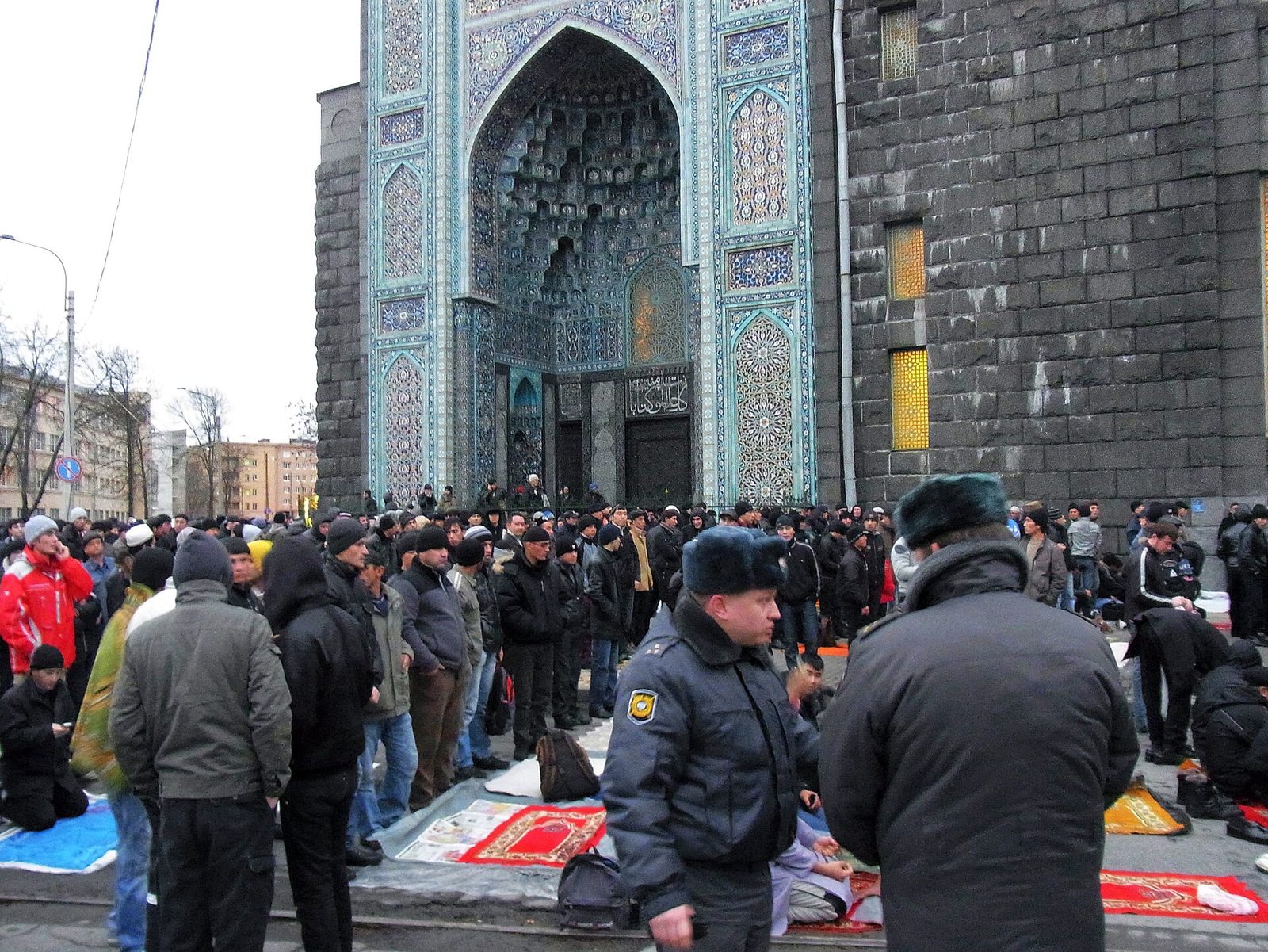
- The St Petersburg Cathedral Mosque, opposite the Peter and Paul Fortress, a copy of the Gur-e Amir mausoleum in Samarkand. See the guide to the St Petersburg mosque.
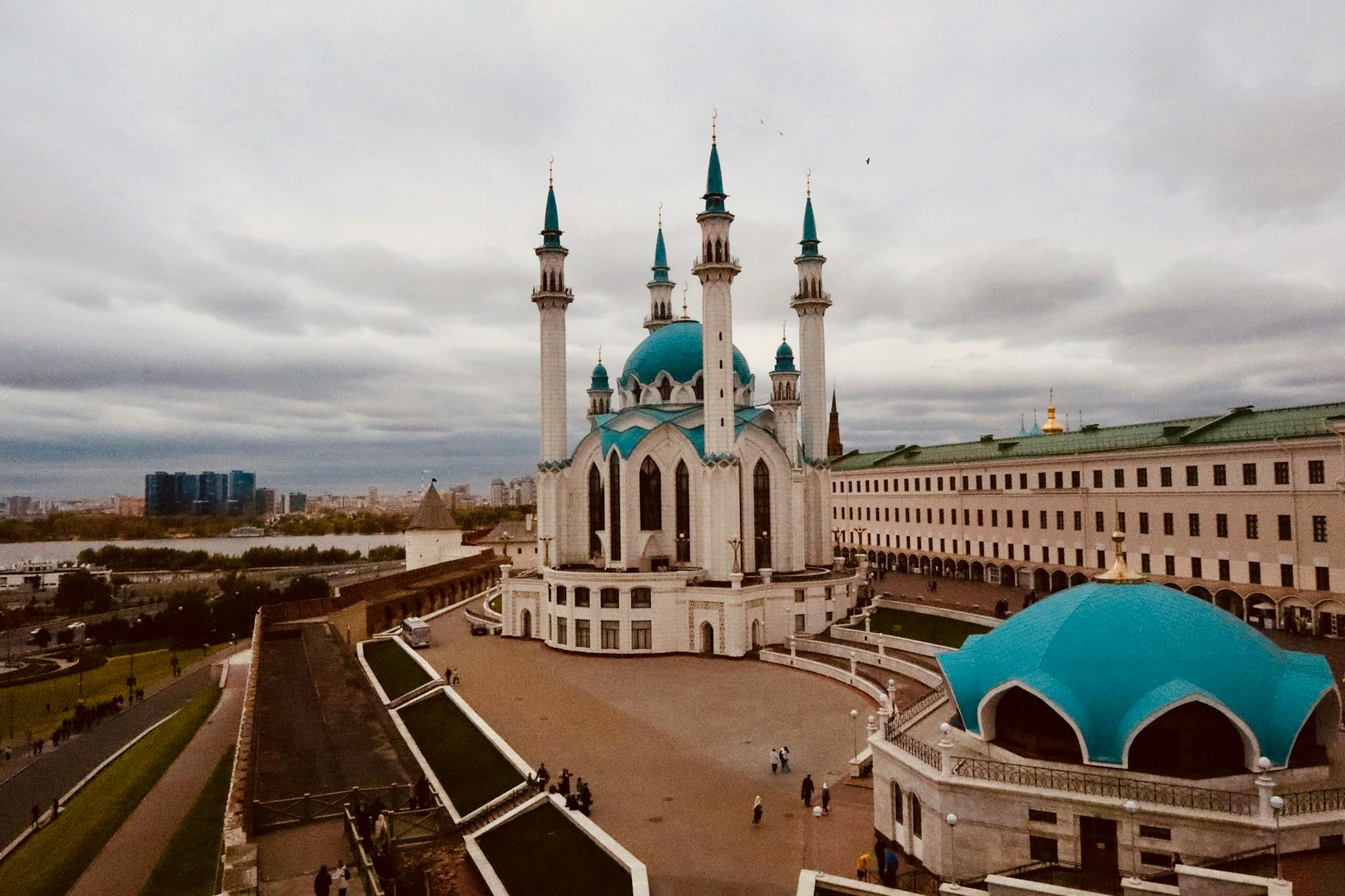
- The Kul Sharif mosque, inside the Kazan Kremlin, with eight minarets and a Museum of Islamic Culture. On Fridays it closes to tourists from 11:30 to 13:15 for the Friday prayer. Details in the guide to the Kazan Kremlin.
- The Marjani mosque, in the Old Tatar Quarter of Kazan, built in 1768 with the permission of Catherine the Great. See what to see in Kazan.
- Bolgar, 180 km south of Kazan, the old capital of the Volga Bulgars, where Islam was adopted in 922. UNESCO describes it as a place that «remains sacred and a pilgrimage destination» for Tatar Muslims. It keeps the world’s largest printed Qur’an, weighing 500 kilos, and every year it hosts a festival commemorating the adoption of Islam, with a festive prayer that brings together tens of thousands of people, according to the Tatarstan tourism website.
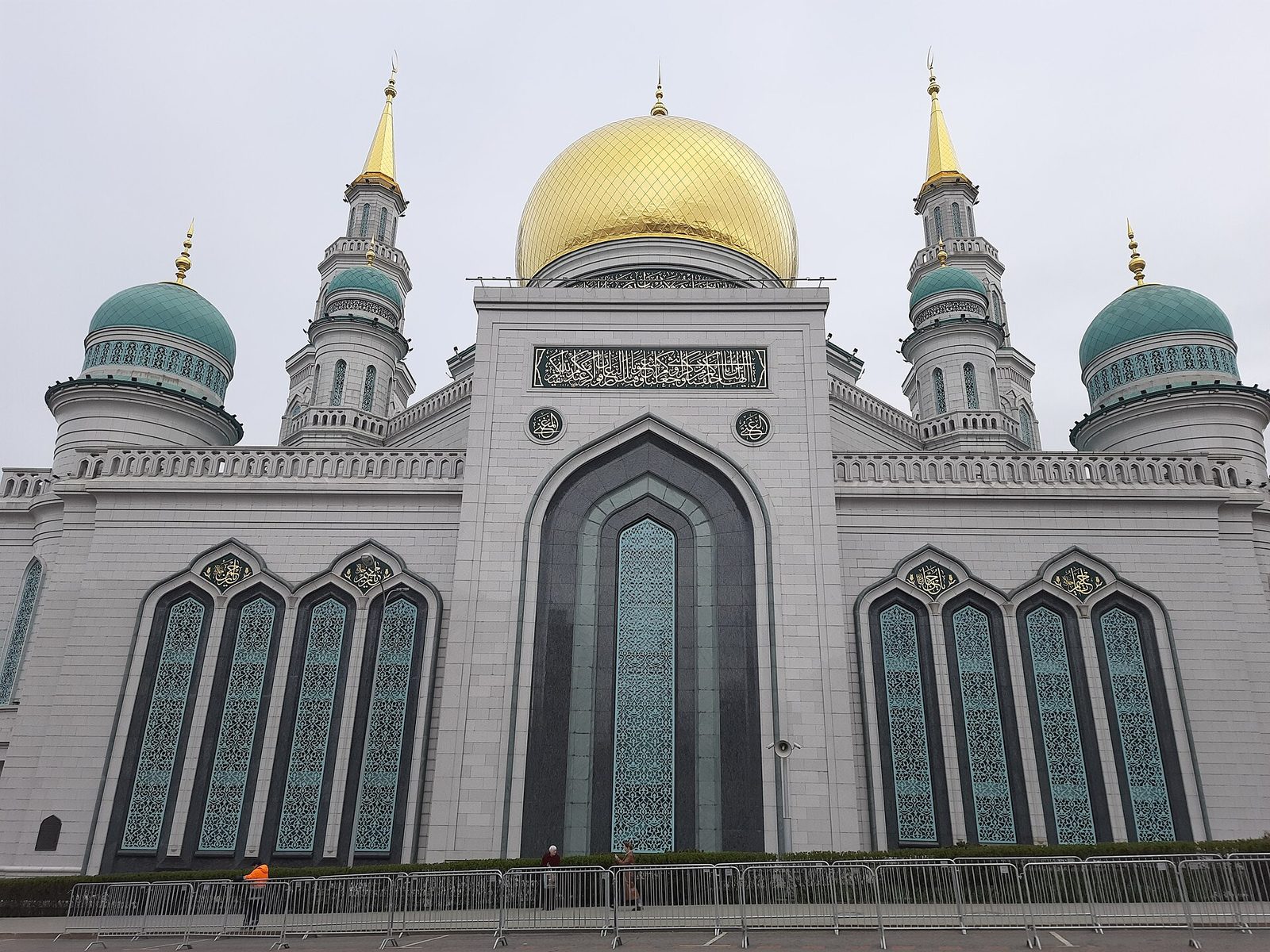
The rules for visitors are the same in all of them: shoes off, clothes covering arms and legs, and a headscarf for women (they are usually lent at the entrance). Avoid Friday at midday if you are going as a tourist, and never photograph people praying.
Halal food in Russia
What to watch out for in Russian cuisine
Classic Russian cuisine uses a lot of pork, sometimes where you wouldn’t expect it:
- Pelmeni: the classic filling is a mix of beef and pork.
- Kholodets (meat in aspic): the broth is usually made from pork.
- Salo: cured pork fat, eaten as a snack.
- Sausages and cold cuts, in breakfasts and sandwiches: ask before you eat them.
Two words will help you a lot: «без свинины» (bez svininy, without pork) and «халяль» (khalyal, halal).
How to recognise halal products
Russia has two main halal certifiers, each linked to a muftiate:
- The Halal standardisation and certification centre of the Spiritual Administration of Muslims of the Russian Federation, in Moscow (halalcenter.ru, with a map of certified companies).
- The Halal Standard Committee of the Spiritual Administration of Muslims of Tatarstan, in Kazan (halalrt.ru, where you can check a certificate by its number).
The Moscow centre itself advises checking that the packaging shows the composition of the product and the mark of a body authorised by a recognised Muslim organisation, and notes that in shops that sell only halal products the risk of fakes is much lower. If in doubt, look up the certificate number in the registry.
Where to eat halal
- Kazan: the easiest city in Russia. Tatar cuisine doesn’t use pork and most restaurants in the centre are halal; the company that runs the Tübätäy chain, for example, has valid certificates from the Tatarstan committee. What to order is in the guide on what to eat in Kazan.
- Moscow and St Petersburg: Tatar, Uzbek, Azerbaijani and Caucasian restaurants are the usual choice. The quickest way to find one near you is to search for «халяль» in Yandex Maps, which shows reviews and opening hours; I explain how to use it with a foreign phone in the guide to Yandex. At the Moscow Cathedral Mosque there is a halal food shop.
- Supermarkets: some chains sell halal meat; the VkusVill chain, for example, has its own halal section in its online shop.
Praying in Russia
Prayer times
Russia is far to the north, and that changes prayer times a lot through the year: in Moscow in late November the afternoon prayer is at about 13:50 and the sunset prayer at about 16:20, and in June the night is very short. In St Petersburg, during the White Nights, the sky never gets fully dark. I have not found an official rule from the Russian muftiates for those weeks, so the safest thing is to follow the schedule of the local mosque:
- Moscow: the times are published every day on the home page of the Cathedral Mosque, mihrab.ru.
- St Petersburg: the yearly schedule of the Spiritual Administration of St Petersburg, on dum-spb.ru.
Qibla direction
From Russia, Mecca is to the south. Approximately: 176° from Moscow (almost due south), 166° from St Petersburg (south-southeast) and 195° from Kazan (south-southwest). Any qibla app on your phone works offline with the compass.
Prayer rooms at airports
- Moscow Sheremetyevo: prayer rooms open 24 hours in Terminals C and D, on the ground floor, in the public area (before security).
- Moscow Domodedovo: a mosque on the intermediate floor, between check-in islands 2 and 3, open from 10:00 to 18:00 and also before the morning prayer.
- Kazan: separate rooms for men and women in Terminal 1 (3rd floor) and Terminal 2 (2nd floor), open 24 hours, with facilities for ablution.
- Vnukovo (Moscow) and Pulkovo (St Petersburg): I have not found a Muslim prayer room on their official websites.
Friday prayer
Friday is a normal working day in Russia, but the main mosques are full for the Friday prayer, at the time of the midday prayer. Arrive early if you want a place inside, and if you are going only as a tourist, choose another day.
Ramadan and Eid in Russia
The dates of Ramadan move about eleven days earlier every year, and in Russia that makes a big difference:
- Ramadan 2027 is expected to begin around 8 February. In Moscow, the sun rises at 8:10 and sets at 17:17 on 8 February, and at 7:01 and 18:19 on 9 March: short winter days. In summer Ramadans, on the other hand, the fast in St Petersburg lasted 21 to 22 hours, according to a member of the city’s muftiate quoted by the newspaper Mail & Guardian in 2015.
- Eid al-Fitr (Uraza Bayram in Russia) is expected around 9 March 2027, and Eid al-Adha (Kurban Bayram) around 16 May 2027. The exact day depends on the moon.
The Eids are not national holidays, but each region can declare them days off. In 2026 they were days off in Tatarstan, Bashkortostan, Chechnya, Dagestan, Ingushetia, Kabardino-Balkaria, Karachay-Cherkessia, Adygea and Crimea. In Moscow and St Petersburg they are working days, but on the morning of the festive prayer the streets around the mosques are closed and some metro stations restrict entry: thousands of people pray outside. I explain the details in the guides to the Moscow and St Petersburg mosques.
Flights and trains
- Turkish Airlines: its meals are prepared according to Islamic dietary laws, and special meals can be requested up to 24 hours before the flight. I explain the routes to Russia in the guide to flights to Russia.
- Aeroflot: it used to offer Muslim meals (without pork, gelatine or alcohol) on economy flights over three hours, ordered at least 36 hours ahead. In August 2025, after a cyberattack on the airline, passengers reported that special meals could not be ordered, and I have not found confirmation that the service is back: check when you book.
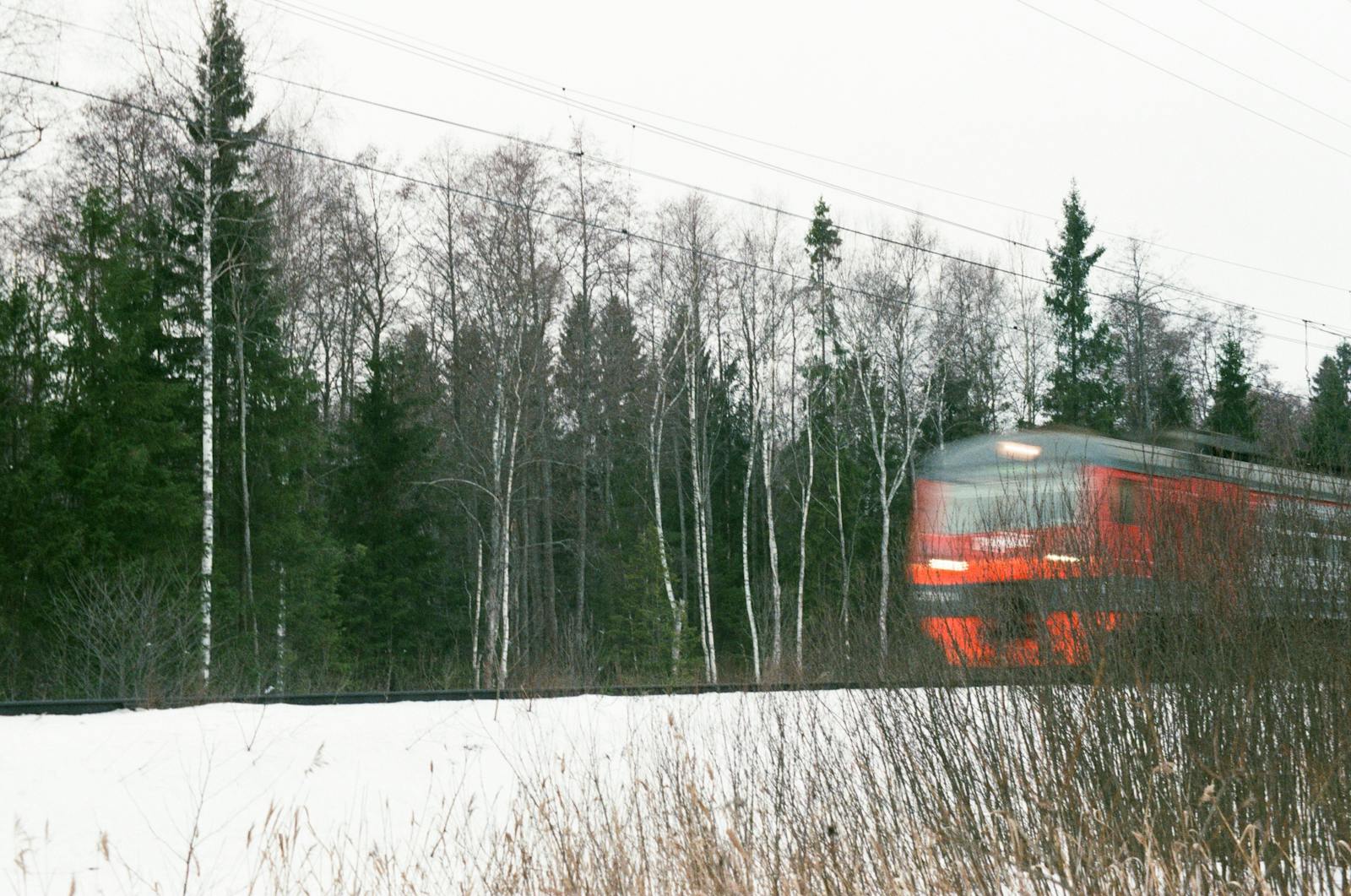
- Trains: I have not found any halal option on Russian Railways today. On long journeys, bring your own food or ask for dishes without pork in the dining car. How to buy tickets is in the guide to train tickets in Russia.
Hotels
Any hotel will do, but in Tatarstan there is also a «Muslim Friendly» certificate from the Tatarstan muftiate’s Halal Standard Committee, which also covers hotels and requires an annual inspection. If it matters to you, check the hotel in the registry on halalrt.ru or ask the hotel directly.
Headscarf, niqab and visa photos
- Headscarf: it is common in Moscow, St Petersburg and Kazan, and I have not found any rule that restricts it.
- Niqab: in July 2024 the muftiate of Dagestan declared a temporary ban on wearing it (a religious decision, not a law). In February 2026 a group of Communist Party deputies submitted a bill to the State Duma to fine the wearing of clothing that covers the face; as of November 2026 I have not found that it has been passed.
- Visa photos: for visas applied for at the Russian visa centres run by VFS Global, their rules accept a head covering worn for religious reasons, as long as the photo matches the passport. For the e-visa, the photo requirements are shown inside the application form: read them before you upload yours.
Religious books: what not to bring
This is the point most often overlooked, especially by travellers from Turkey. Russia keeps a federal list of extremist materials, published by the Ministry of Justice, and it includes some Islamic books that are freely sold in other countries:
- The Qur’an is protected: since 2015, Russian law says that the Bible, the Qur’an, the Tanakh and the Kangyur, their content and quotations from them cannot be declared extremist.
- Said Nursi’s Risale-i Nur: 14 Russian-language titles were banned by a Moscow court in 2007 (Koptevsky District Court), and other courts added more later. In 2018 the European Court of Human Rights ruled that the ban violated the Convention, but the books are still on the list.
- Banned organisations: «Nurcular» (Supreme Court, 2008) and Tablighi Jamaat (2009) are banned as extremist, and Hizb ut-Tahrir as terrorist (2003). In 2023, six people were sentenced in Moscow to up to 6.5 years in prison for studying Nursi’s books, according to Mediazona.
The law punishes the mass distribution of materials on the list, or keeping them in order to distribute them. For a foreigner the penalty is expulsion from Russia. I have not found cases of tourists punished for carrying a personal copy, but it isn’t worth the risk: don’t bring these books, printed or as files on your phone, and don’t share them in chats. Phones are sometimes checked at the border; I explain how and why in the article on phone checks at the Russian border. And for everything else you can bring, see the guide to Russian customs.
Frequently asked questions
Is Russia a good destination for Muslim travellers?
Yes. Islam is one of Russia’s traditional religions, millions of Muslims live in the country, and Moscow, St Petersburg and especially Kazan have great mosques and plenty of halal food. The things to watch are pork in Russian cuisine and some Islamic books that are banned in Russia.
Is it easy to find halal food in Moscow?
Yes. Look for Tatar, Uzbek, Azerbaijani or Caucasian restaurants, or search for «халяль» in Yandex Maps. In shops, check the certificate of a recognised halal body. In Kazan, most restaurants in the centre are halal.
Which direction is the qibla in Moscow?
Almost due south: about 176°. From St Petersburg it is about 166° (south-southeast) and from Kazan about 195° (south-southwest).
Where can I find prayer times in Moscow?
On the home page of the Moscow Cathedral Mosque, mihrab.ru, updated every day. In St Petersburg, on dum-spb.ru.
Can I bring a Qur’an to Russia?
Yes. Russian law protects the Qur’an: it cannot be declared extremist. What you should not bring are books on the federal list of extremist materials, such as the Russian translations of Said Nursi’s Risale-i Nur.
Is Eid a public holiday in Russia?
Not nationally. It is a day off in several regions, such as Tatarstan, Bashkortostan, Chechnya and Dagestan. In Moscow and St Petersburg it is a working day, with streets closed around the mosques in the morning.
Is there a prayer room at Moscow airports?
Yes at Sheremetyevo (Terminals C and D, 24 hours, before security) and Domodedovo (a mosque between check-in islands 2 and 3). I have not found one at Vnukovo.
You’ve finished this stop 3. Preparations
Russia travel itineraries: 6 routes based on the days you have (with maps)
Step 1 of planning your trip: Deciding on the itinerary
Go to step 1Back to the start of this stage: Preparations
Was this useful? I'll tell you when something changes in Russia
One short email a month with what has changed for travellers (visas, payments, border crossings, apps), based on what readers report to me from Russia. More than 4,000 of us already. No spam: if you ever lose interest, unsubscribing is one click.
Irena DomingoAbout Me
I was born in Russia. I grew up between two worlds: my father was Russian, my mother Spanish — a descendant of the "Children of Russia", the Basque children evacuated to the USSR during the Spanish Civil War. I've worked as a translator, interpreter and Russian teacher for over 30 years, and since 2013 I've been writing this blog to help travellers discover Russia with practical, always up-to-date information. Author of the Russiable Guide. If this blog has helped you plan your trip, you can buy me a coffee ❤️.
More on Restrictions for travel to Russia
 Preparations · Train & busHow to Buy Train Tickets in Russia Despite the SanctionsFive ways to buy Russian train tickets in 2026: RussianTrain, Tutu and RW.by with a foreign card, RZD.ru with MIR, or the ticket office in Russia.10 min read
 Preparations · InternetYandex for Travellers in Russia: Go, Maps, Translate, Mail and Every Service ExplainedYandex Go, Maps, Metro, Translate and Mail for tourists: what works with a foreign phone and card, what works offline, and why to skip Gmail for the eVisa.
 Preparations · InternetHow to Make Video Calls with Russia: Alternatives to WhatsApp and TelegramWhatsApp is blocked in Russia and Telegram barely works. The options that actually work: VPNs, browser video calls and Russian apps.