
The Kazan Kremlin: A Practical Guide for the Perfect Visit
 By Irena Domingo
Updated on
In This Article
The Kazan Kremlin has been a UNESCO World Heritage Site since 2000 and, in my opinion, one of the most surprising corners of Russia. It’s the only Tatar kremlin in the country and a place where, within barely 100 metres, the huge Kul Sharif mosque coexists with the Orthodox Cathedral of the Annunciation. Entrance to the grounds is free and the main gate (the Spasskaya Tower) is open 24 hours a day. In this guide I’ll tell you what to see, how much museum tickets cost in 2026, how to plan the visit and where to start so you don’t miss the essentials.

The essentials in 30 seconds
- Entry to the grounds: free, 24 hours (through the Spasskaya Tower).
- Museum tickets: from 200 to 450 ₽ each. There’s a combined ticket for 1,500 ₽ that covers them all.
- Free days for everyone: the first Tuesday of every month and 18 May (International Museum Day).
- Under 18s: free admission to almost all museums on individual visits.
- Kul Sharif mosque and Cathedral of the Annunciation: the mosque opens from 8:30 to 21:00 and the cathedral from 9:00 to 19:00 (shorter hours in winter).
- Recommended time: 2 hours for a quick walk around, half a day if you visit 2–3 museums.
- Getting there: “Kremlevskaya” metro station (3 minutes on foot).
- Official website: kazan-kremlin.ru
1. What is the Kazan Kremlin and why visit it?
The word “kremlin” in Russian simply means fortress or walled citadel. More than 20 are still preserved across Russia, and the most famous one is the Moscow Kremlin, but the Kazan Kremlin has something unique: it’s the only Tatar kremlin still standing and the northernmost point in the world where Islamic culture blends so naturally with Orthodox Christianity.
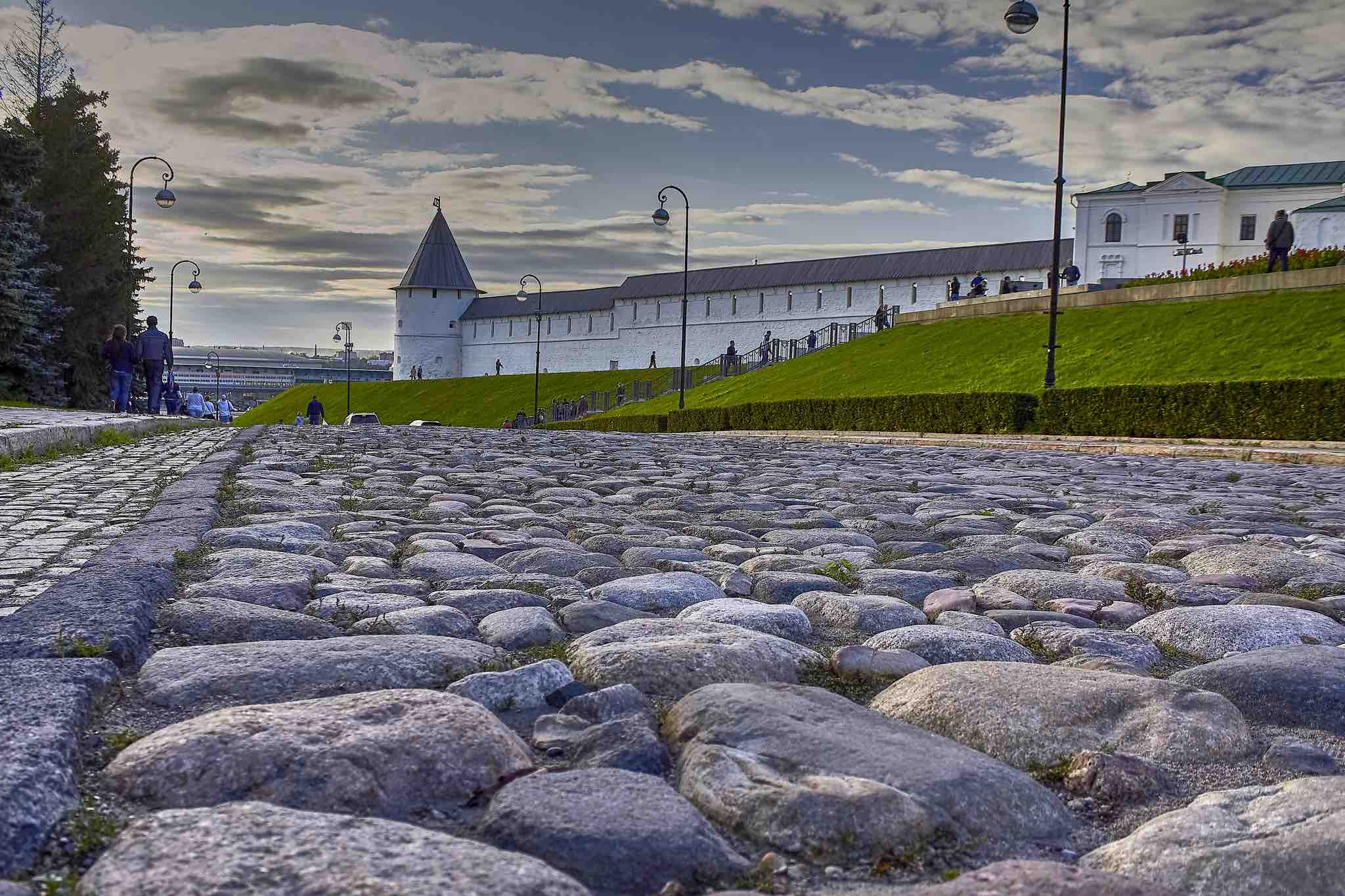
Its white limestone walls date back to the 16th and 17th centuries and enclose a complex where a gigantic mosque, a 16th-century Orthodox cathedral, a leaning tower (yes, like the one in Pisa), the palace of the head of state of Tatarstan and nine museums all share the same ground. It sits right in the centre of Kazan, at the confluence of the Volga and Kazanka rivers, and welcomes around 3 million visitors a year.
It was built from 1556 onwards by order of Ivan the Terrible on top of the ruins of the old fortress of the khans of Kazan, although the history of the site goes back much further: as early as the 10th and 11th centuries the Volga Bulgars had raised a citadel here. In 1994 it was declared a museum-reserve and in 2000 it was added to the UNESCO World Heritage list.
Something I found striking when I visited: half the population of the Republic of Tatarstan is Muslim and the other half Orthodox Christian, and mixed families are common here. That’s why Kazan is called “the Istanbul of the Volga”, and why the city is officially twinned with Istanbul.
2. How to get to the Kazan Kremlin
The Kremlin sits right in Kazan’s historic centre, so getting there is very easy:
- By metro: “Kremlevskaya” station (red line, the only line in the city). When you exit the metro the Kremlin is literally in front of you. It’s the fastest and cheapest option.
- By bus: lines 6, 15, 29, 35, 37, 47, 74 and 75 stop at “Tsentralnyi stadion” (Central Stadium), 5 minutes’ walk away.
- By trolleybus: line 2 also stops at “Tsentralnyi stadion”.
- On foot: from Bauman Street, the main pedestrian street in Kazan, it’s a 10-minute walk up Kremlevskaya Street.
- By car: there’s a paid municipal car park very close by. It’s free on weekends and public holidays. Official site: parkingkzn.ru.
Clicking loads Google Maps, which may set cookies. Open in Google Maps
3. Opening hours: when you can enter
The Kremlin grounds have two entry gates and each one has its own opening hours:
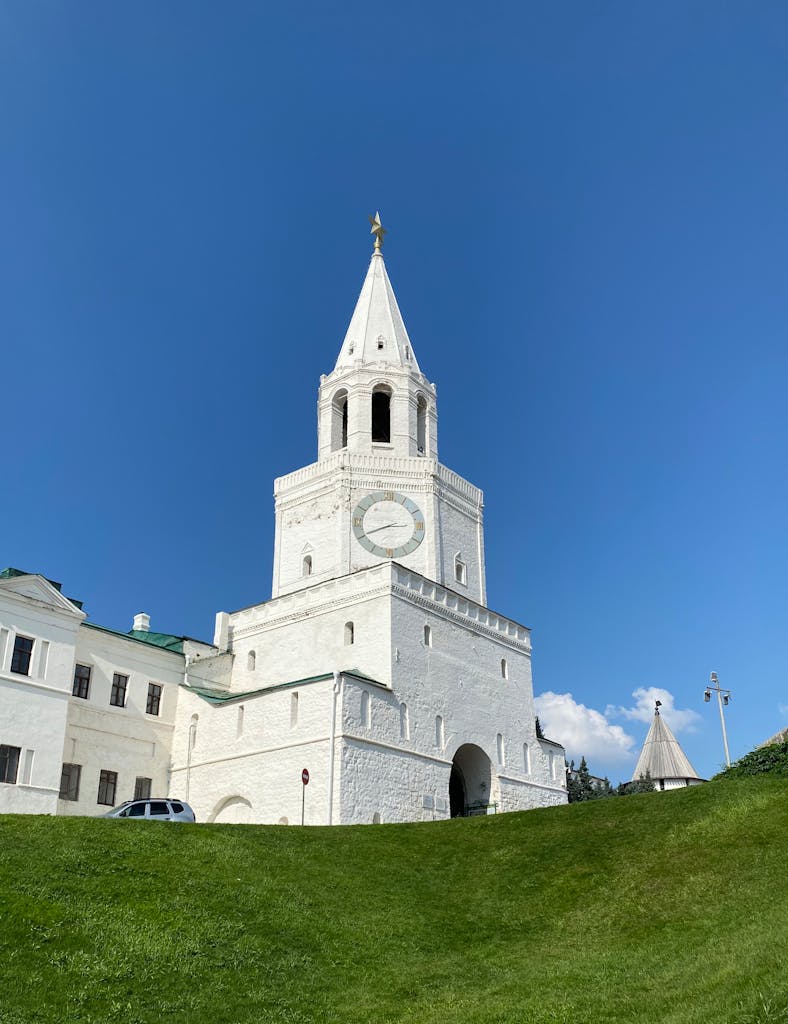
- Spasskaya Tower (main entrance, south): open 24 hours, every day of the year. It’s the white tower with the illuminated clock, right at the end of Kremlevskaya Street.
- Tainitskaya Tower (north entrance, next to the Kazanka River): from 1 October to 30 April open 6:00 to 20:00, and from 1 May to 30 September open 6:00 to 22:00.

My tip: enter through the Spasskaya Tower, walk through the complex from south to north all the way to the rear viewpoint (next to the Cathedral of the Annunciation and the Söyembikä Tower) and exit through the Tainitskaya Tower. That way you head down to the Kazanka River and can easily link the visit with a riverside stroll or a walk along Bauman Street.
Opening hours of the buildings and museums
- Kul Sharif Mosque: 8:30 to 21:00 (from 11 November to 24 December and from 12 January, 8:00 to 19:00; from 25 December to 11 January, 8:00 to 20:00). On Fridays it closes to tourist visits between 11:30 and 13:15 (Friday prayer). Every day, the visitor balconies are also closed between 11:45 and 12:25 for the midday prayer.
- Cathedral of the Annunciation: 9:00 to 19:00, with the same winter hours as the mosque.
- Preobrazhenskaya Tower (viewpoint): 8:30 to 19:30, only from 1 May to 1 October.
- Museums (most of them): from October to April they’re closed on Mondays. Tuesday to Thursday and weekends, 10:00 to 18:00. Fridays, 11:00 to 20:00.
- Museum of Islamic Culture (inside the Kul Sharif mosque): open every day from 9:00 to 19:30, no closing day.
- Kremlin ticket offices: every day from 8:00 to 20:00.
⚠️ If you travel between October and April, avoid going on a Monday: that’s the day almost all museums close (except the Museum of Islamic Culture). You can still walk around the grounds, but you won’t get inside the buildings. In summer (May–September) the museums open all week.
4. Tickets and updated prices
Walking around the Kremlin grounds is free. You only pay if you want to enter the museums. These are the official 2026 prices published by the Kremlin administration:
| Museum / space | Adults | Students and pensioners |
|---|---|---|
| Combined ticket (all museums) | 1,500 ₽ | — |
| Hermitage-Kazan Centre | 450 ₽ | 350 ₽ |
| Tatarstan Natural History Museum | 450 ₽ | 350 ₽ |
| Spasskaya Tower Museum | 400 ₽ | 300-350 ₽ |
| Cannon Yard Museum (Pushechny Dvor) | 300 ₽ | 200 ₽ |
| Manezh (art space “Kommunalka”) | 250 ₽ (200 ₽ online) | 200 ₽ (150 ₽ online) |
| Museum of Islamic Culture | 250 ₽ | 200 ₽ |
| Tatarstan History Museum | 200 ₽ | 150 ₽ |
| History Museum of the Cathedral of the Annunciation | 200 ₽ | 150 ₽ |
| Prisutstvennye Mesta Exhibition Halls | Free (individual) | Free |
Under 18s enter free to almost all museums when visiting independently (not on guided group tours). Large families and disabled visitors are also free upon presentation of documentation.
Tickets are sold at the Kremlin’s own ticket offices (Spasskaya Tower, Tainitskaya Tower and Visitor Centre) or, much more conveniently, online on the official website: tickets.kazan-kremlin.ru. Buying online really pays off in July and August, when there are queues at the ticket windows. You’ll need a Russian card.

Free admission days for everyone
If you want to save the ticket price, there are days when all the Kremlin museums open free to the general public:
- The first Tuesday of every month.
- 18 April (International Day for Monuments and Sites).
- 18 May (International Museum Day).
If your trip lines up with these dates, don’t think twice. That said, they’re also the busiest days, so it’s best to arrive first thing in the morning.
Audio guides
If you’re visiting on your own and want to understand what you’re seeing, it’s worth renting the official Kremlin audio guide. It costs 400 ₽ and includes the device, headphones and a map. Pick it up at the ticket offices (Spasskaya Tower, Tainitskaya Tower or Visitor Centre) and leave a 2,000 ₽ deposit or an ID document (not your passport). Available in Russian, English and Tatar.
5. What to see inside the Kazan Kremlin
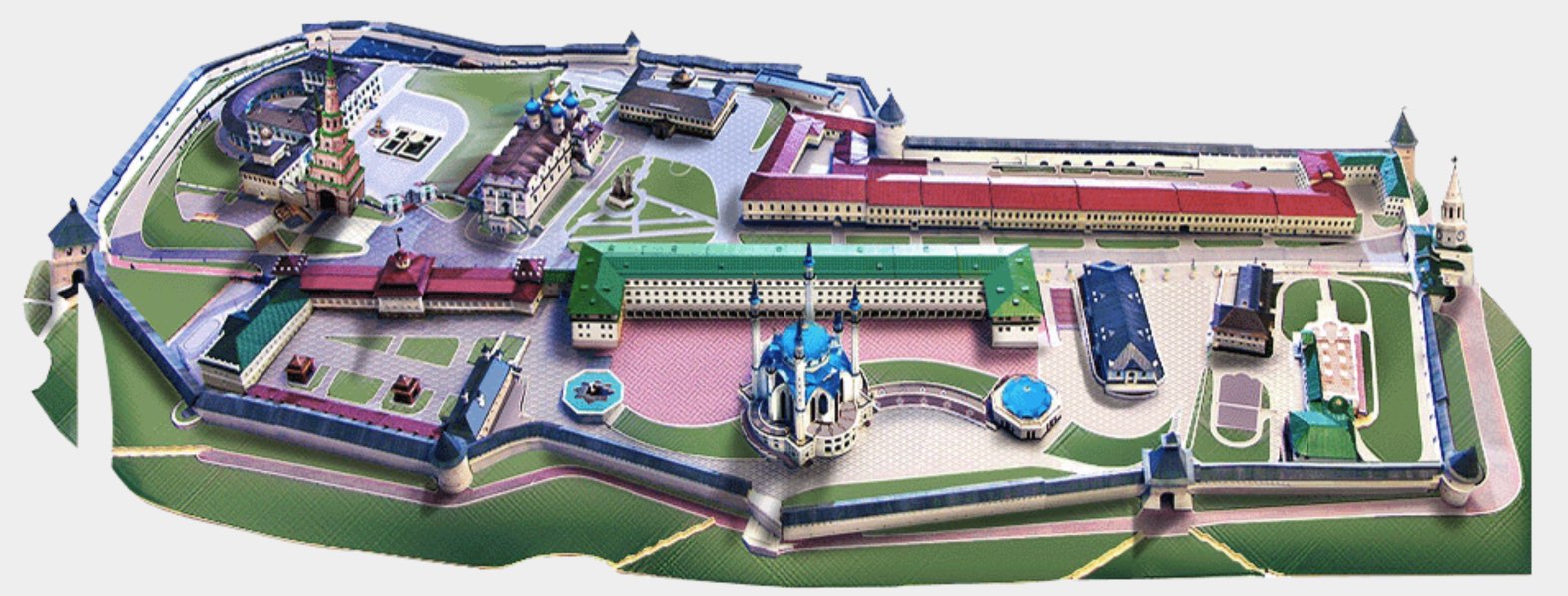
The outer wall is 1.8 kilometres long and between 8 and 12 metres high, with 13 towers preserved (8 of which are still standing, depending on how you count). The inner grounds are an open-air museum worth exploring slowly. Here’s the map:
5.1. The Spasskaya Tower (main entrance)
The Spasskaya Tower is the main entrance and the first building you’ll see. It was built between 1556 and 1562 by architects Postnik Yakovlev and Ivan Shiryai, the same two who signed off on Saint Basil’s Cathedral on Moscow’s Red Square. It stands 46 metres tall and since 1963 has had an electric clock that, after sunset, marks the hours with bursts of crimson light. The Spasskaya Tower Museum, dedicated to the history of the fortress, has been opened inside in recent years.
Fun fact: the Kazan Kremlin has only been militarily besieged once in its entire history, in 1774, during the Pugachev rebellion. The defenders held out for two days and repelled the attack. It was never taken again.
When you cross the arch of the Spasskaya you walk straight onto Sheinkmana Street, the main avenue of the Kremlin, with the Kul Sharif mosque on your left and the row of official buildings on your right.
5.2. The Kul Sharif Mosque
This is the building you’ll see in every postcard of Kazan and, probably, the most photogenic mosque in Russia. It has 8 minarets, capacity for up to 8,000 worshippers and an evening lighting system that turns it into something else entirely after dark.
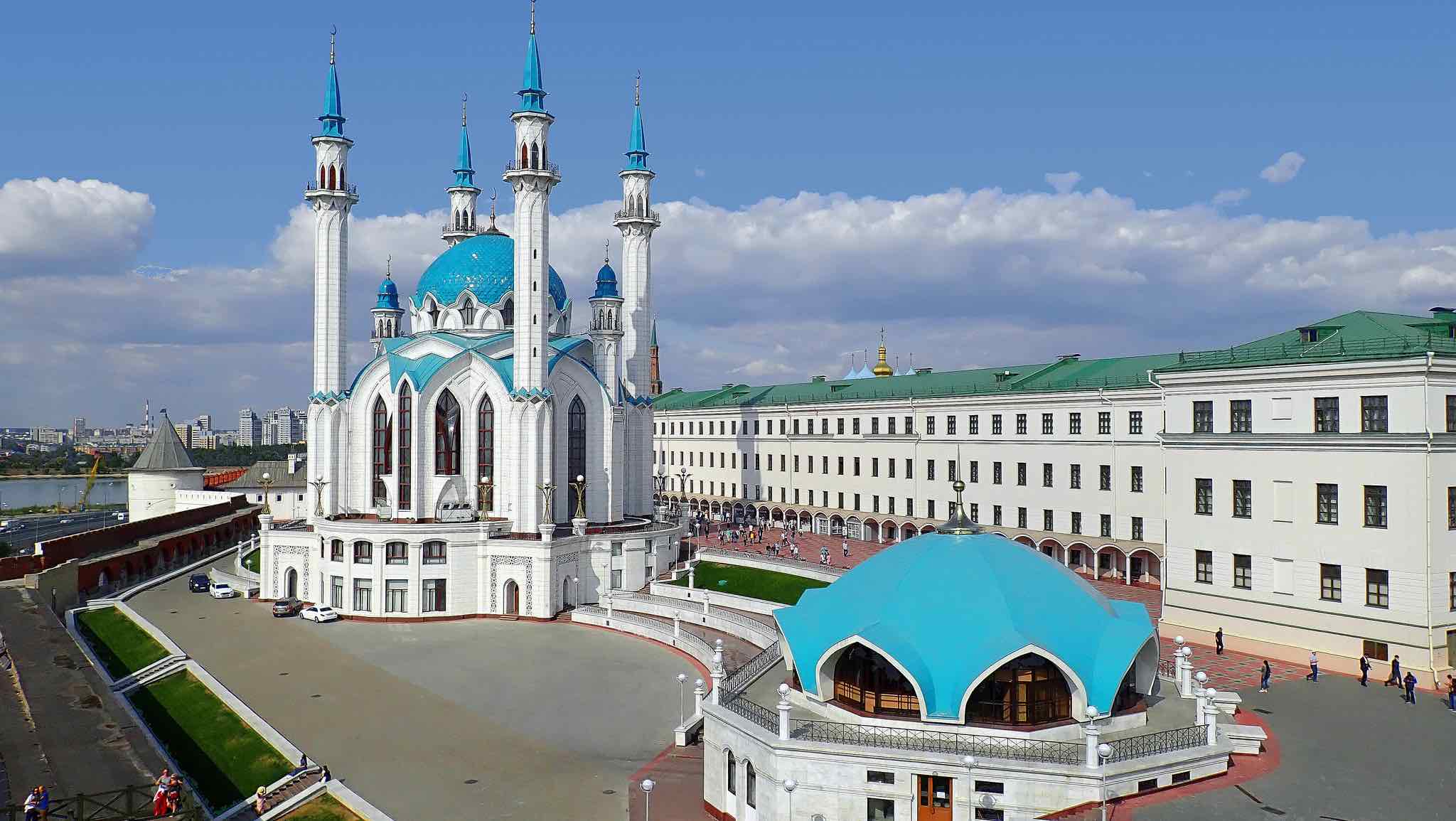
The current mosque is a reconstruction. The original was razed in 1552 by the troops of Ivan the Terrible along with its imam, Kul Sharif, who died defending it with his students. The new one was built between 1996 and 2005, partly financed by Saudi Arabia and the United Arab Emirates, and was inaugurated to coincide with the millennium of the city (Kazan was founded in 1005).
In the basement there’s a modern, well-curated Museum of Islamic Culture, with an interactive Quran, a 3D visualization of the Kremlin through the centuries and reconstructions of a madrasa classroom. It’s one of the museums I enjoyed the most.

To enter the mosque: women must cover their heads (they’ll lend you a scarf at the entrance if you don’t have one) and wear a long skirt or trousers. Men, long trousers. You have to take off your shoes. On Fridays at midday the mosque closes to tourism (between 11:30 and 13:15).
5.3. The Cathedral of the Annunciation
Barely 100 metres from the mosque is the Cathedral of the Annunciation, the oldest building in the Kremlin (16th century). Curiously, it was designed by the same architects as Moscow’s Saint Basil’s Cathedral: Ivan Barma and Postnik Yakovlev.
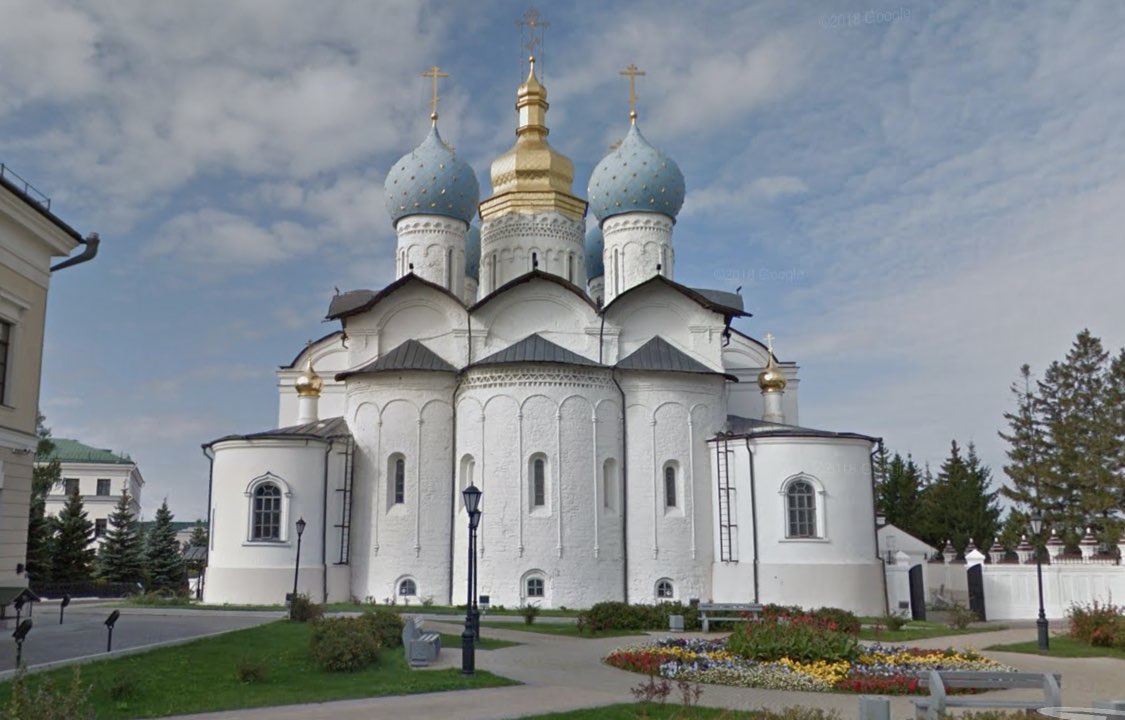
It has survived several major fires (1742 and 1842) and the 1918 Red Army bombardment, which blew off all five of its domes. The restoration took decades and the last major intervention (1995–2005) completely overhauled the interior, with new icons and a new iconostasis.
Inside there’s a small museum on the history of the cathedral with more than a hundred pieces: icons, manuscripts, liturgical vestments, silver objects. The staff of Kazan’s first archbishop, Guriy, is on public display here for the first time.

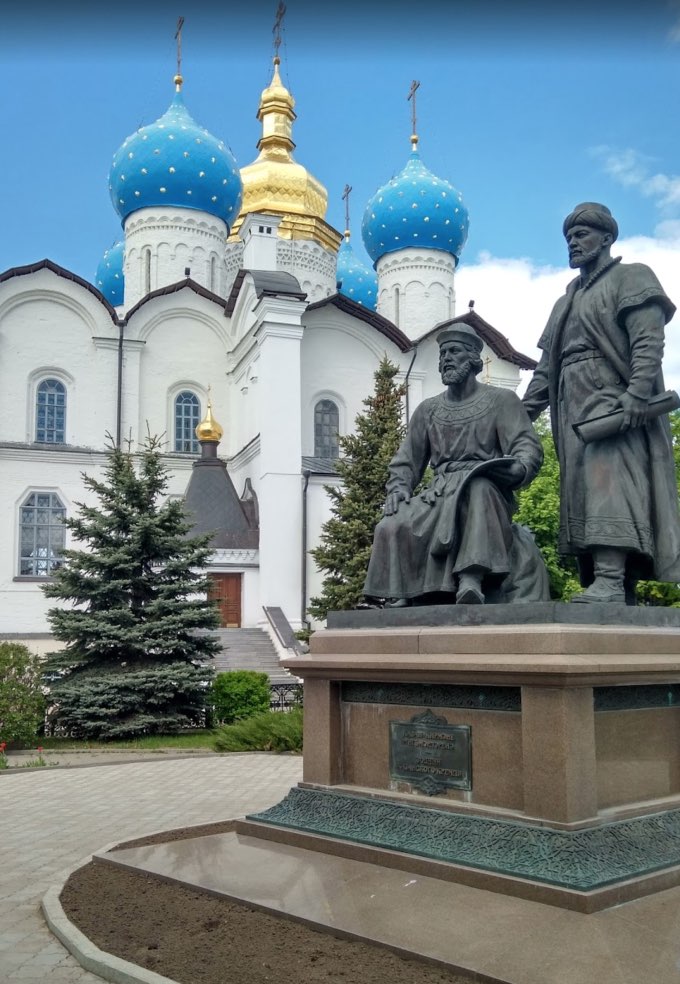
Next to the cathedral there’s a monument to the architects of the Kremlin, inaugurated in 2003. Two figures: a Russian architect seated, in medieval dress, holding a plan of the Kremlin in his hands, and a Tatar architect standing next to him, in the traditional dress of the khanate. It’s a pretty direct metaphor for the spirit of the city itself.
5.4. The Söyembikä Tower
If the mosque is the postcard, the Söyembikä Tower is the symbol. 58 metres high, seven tiers that taper as they rise, red brick and a tilt of 1.98 metres off vertical: it’s officially on the list of the 40 leaning towers of the world, alongside the one in Pisa. The consolidation work of recent years has fixed the tilt, so it’s not going anywhere anymore.

It was built between the 17th and 18th centuries (the exact date is still debated) and owes its name to the last queen of the Kazan Khanate, Söyembikä, a cultured and respected woman who lived here before the conquest. Local legend says that if you touch its walls with your hand and make a wish, it will come true. Russians find this very amusing, but they all do it anyway.

Beneath the tower lie the remains of the old mausoleum of the khans, discovered in 1977 during construction work. Several khans of Kazan from the 15th and 16th centuries are buried there.
5.5. The Presidential Palace
The reddish neo-Russian building you’ll see right next to the Söyembikä Tower is the Presidential Palace. It was commissioned by Nicholas I between 1845 and 1848, on the site where the palace of the Kazan khan once stood. It’s clearly inspired by the Grand Kremlin Palace in Moscow.

Today it’s the official residence of the Rais (head of state) of Tatarstan, as well as the seat of the republic’s government offices. You can’t visit inside, but the facade and the wrought-iron gate can be admired perfectly well from outside.
5.6. The viewpoints of the Kremlin
Something many travellers miss: the Kremlin has three viewpoints with spectacular views over the Kazanka River and the new city:
- Behind the Cathedral of the Annunciation: wide views towards the river and the Farmer’s Palace (a new, very photogenic building on the other bank).
- Next to the Söyembikä Tower: the best postcard view of the river.
- Behind the Kul Sharif Mosque: views to the other side, with the Kazan Family Centre (the famous building shaped like a cauldron).
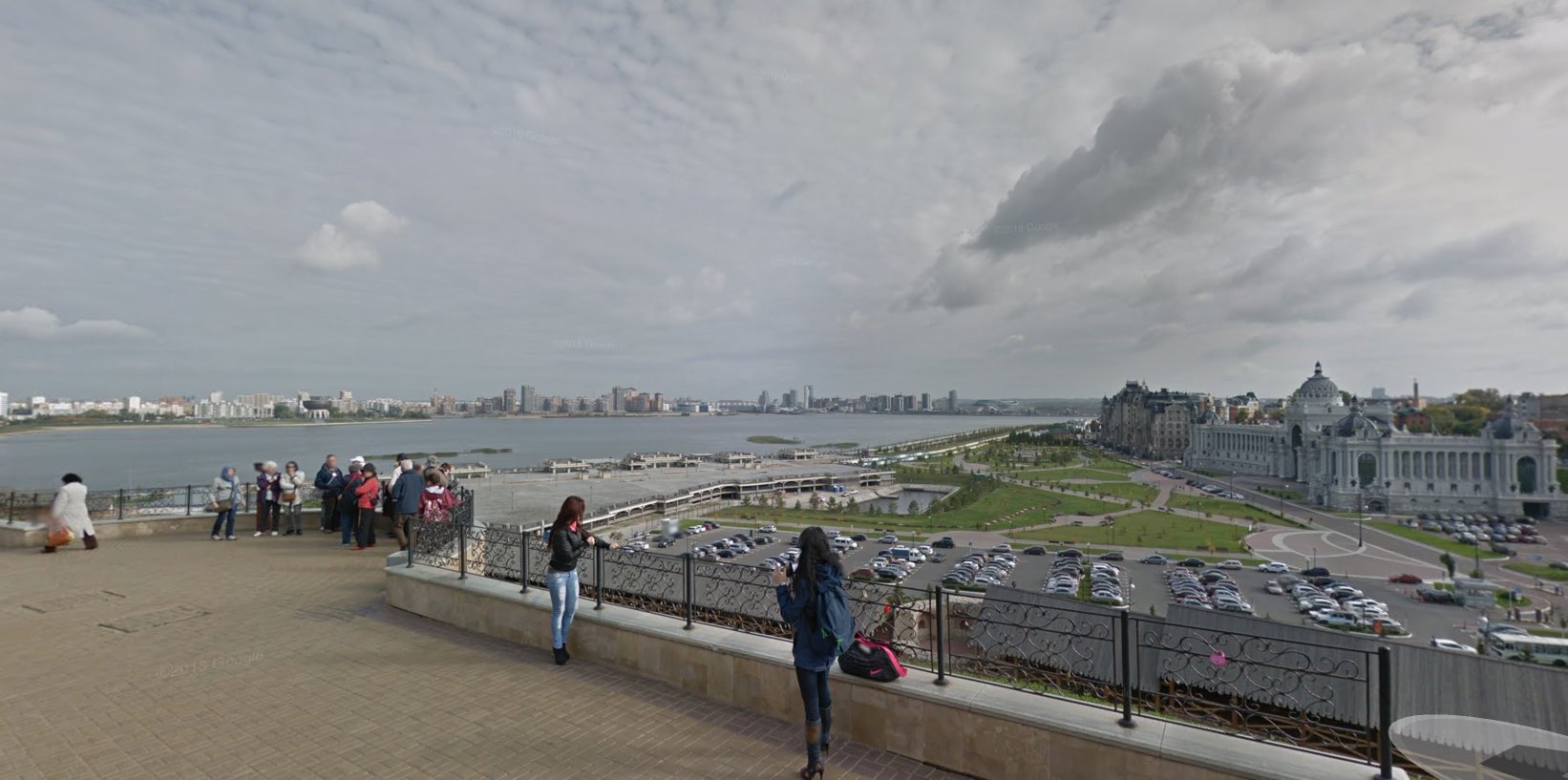
In addition, in summer (1 May – 1 October) the Preobrazhenskaya Tower opens as a high viewpoint. It costs very little and the views are the best you’ll get of Kazan.
6. The 9 museums of the Kremlin
Inside the grounds there are nine official museums (the inventory was expanded in recent years with the opening of the Spasskaya Tower Museum and the refurbishment of the Prisutstvennye Mesta halls). Seeing them all in one visit is impossible, so I’d recommend picking 2 or 3 according to your interests:
6.1. Hermitage-Kazan Centre
An official branch of the Hermitage of Saint Petersburg in Kazan, housed in the former Cadet School. It hosts top-tier temporary exhibitions with pieces from the Hermitage. In 2026 you can see “The Yusupovs. Luxury through the centuries” (until July 2026), a spectacular collection from the wealthiest family of the Russian Empire. If you enjoyed the Hermitage in Saint Petersburg, this is the place for you.

6.2. Museum of Islamic Culture
I mentioned it already: it’s in the basement of the Kul Sharif mosque. It’s the only museum in Russia dedicated to the history of Islam in the Volga and the Urals. It has an interactive Quran, a 3D projection showing how the Kazan Kremlin evolved between the 15th and 21st centuries, and a reconstruction of a traditional madrasa classroom. For me, an absolute must.
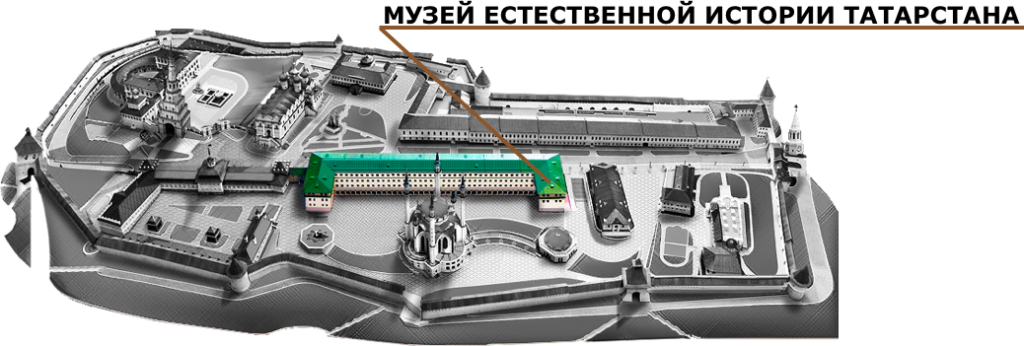
6.3. Tatarstan Natural History Museum
The most popular one if you’re travelling with kids. Two floors dedicated to the geological evolution of the Earth: dinosaur skeletons, meteorites that fell in the region, Jurassic fossils, a hall dedicated to the Sea of Kazan, interactive workshops and telescopes. It has several guided programmes designed for families.
6.4. Cannon Yard Museum (Pushechny Dvor)
Dedicated to the military history of the region: edged weapons, cannons, armour, uniforms. The current exhibition (“Secret weapons from the 18th to the 20th century”) is interesting even if military history isn’t your thing. It’s in the southern courtyard of the Kremlin, right next to the Manezh.
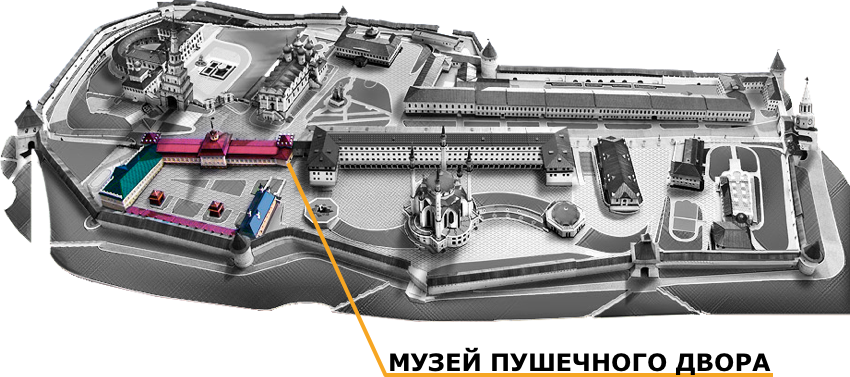
6.5. Manezh Exhibition Hall
An old military riding school turned temporary exhibition space. Chagall, Picasso and Kandinsky have all shown here. Right now it houses the art space “Kommunalka”, an immersive installation about everyday life in the Soviet communal apartments. Very photogenic and curious.

6.6. Museum of the History of the State of Tatarstan
In the building of the former Palace Church. It traces the history of the Tatars from the ancient Turkic peoples through to today’s republic. Original documents, rare photographs, objects from the khanate. If the Russian “national question” interests you, this is one of the densest but also one of the most rewarding museums.

6.7. Spasskaya Tower Museum
One of the newest museums. It’s installed inside the Spasskaya Tower itself and tells the story of the fortress, medieval defence techniques and the trades of its soldiers. Small but very well put together. It also has an escape-room–style experience (“Quest”).
6.8. Museum of the History of the Cathedral of the Annunciation
It’s inside the cathedral itself. It gathers more than a hundred pieces: liturgical books from the 16th to the 20th century, icons, vestments, the staff of Archbishop Guriy and a replica of the carriage the city gave to Catherine the Great. There are workshops on old Russian calligraphy if you fancy trying it out.
6.9. Prisutstvennye Mesta Exhibition Halls
The Kremlin’s old government offices have been turned into exhibition halls. Right now (until the end of 2026) they’re hosting “The Kazan Volga: images of folk culture”, free if you visit individually. A very pleasant surprise.
7. Guided tours of the Kazan Kremlin
If you’d rather have someone explain everything to you instead of reading panels, there are several options:
- Kremlin’s own group tours (sborniyye): they leave every day at 10:45, 13:15 and 15:00. They cost 350 ₽ on weekdays and 400 ₽ on holidays. They’re in Russian.
- Private Kremlin tour in English: 4,000 ₽ for a group of up to 5 people (then 400 ₽ per additional person). You have to book in advance by calling +7 (843) 567-81-42 (official Visitor Centre).
- Private city tour including the Kremlin: this is the option I personally recommend if you don’t speak Russian fluently. There are local guides in English and other languages who know the site inside out.
Civitatis and GetYourGuide no longer operate in Russia since 2022 because of the sanctions, so don’t bother trying to book tours there. What does work, and what I use myself, is the Russian platform Sputnik8, which connects tourists with local agencies in Kazan and across Russia. It has several practical advantages:
- You can book many activities online without needing a foreign card and pay on the day of the activity at the location (Western Visa and Mastercard cards don’t work in Russia).
- Immediate booking confirmation by email.
- Free cancellation up to 24–48 hours in advance on most activities.
- There are tours in English and, in some cases, in other languages.
- Real reviews from previous travellers.
On the guided tours in Russia page you’ll find an updated selection of tours for Kazan and other cities across the country. For the Kremlin specifically, the most popular one is the “Panoramic visit to Kazan with entrance to the Kremlin”, which combines a walk through the historic city and entrance to the grounds, at around 1,600–1,900 ₽ per person.
8. How much time do you need to visit it?
It depends on what you want to fit into the visit:
- Quick walk through the grounds + a look at the mosque and the cathedral: 1.5–2 hours.
- Full tour of the grounds + 2–3 museums: half a day (4–5 hours).
- In-depth visit to all the museums: a full day (from 10:00, when the museums open).
My recommendation: if you only have half a day in Kazan, enter through the Spasskaya Tower, spend an hour walking around and taking pictures, give half an hour to the Kul Sharif mosque (including the Islamic Museum in the basement) and, if you still have time, another half hour to the Cathedral of the Annunciation. Exit through the Tainitskaya Tower and head down towards Bauman Street for lunch.
9. Where to eat inside the Kremlin
This has changed a lot in recent years. Before, there was practically nowhere to eat inside the grounds; now there are seven official cafés and restaurants, almost all serving Tatar or Volga regional cuisine. These are the ones worth your time:
- Chirem: made it into Russia’s top 50 restaurants list. Tatar cuisine reinvented by chef Artiom Laptev. Average bill: 1,500 ₽. Hours: 12:00–23:00.
- TATAR by Tubetey: a modern take on traditional Tatar cuisine. Average bill: 1,500 ₽.
- Timerkhan: a new restaurant, large dining room, Tatar and Volga cuisine. Average bill: 1,000 ₽. Hours: 10:00–19:00.
- Alan Ash: the most affordable. Tatar cuisine, democratic prices and a robot waiter (seriously). Average bill: 550 ₽.
- Pushechny Dvor: the old café in the Cannon Yard Museum, Tatar and European cuisine, kids’ menu. Average bill: 350 ₽.
- Aulak: a café with all-day breakfasts and Tatar pastries. Ideal for a quick stop. Average bill: 500 ₽.
If you want to try serious Tatar cuisine, my vote goes to Chirem or TATAR by Tubetey. If you’re in a hurry or travelling with kids, Alan Ash does the job. And if you just want tea and a slice of cake (the Tatar chak-chak is mandatory), Aulak is perfect.
You can also leave the Kremlin and head down Bauman Street, Kazan’s main pedestrian artery, where there are dozens of restaurants at all price points.
10. Final practical tips
- Best time of day: first thing in the morning (from 8:00) or late afternoon, when the lights come on and the heat drops. If you want to visit the museums, keep in mind they open at 10:00.
- Best time of year: from May to September, with all the attractions open and the most comfortable weather. Winter is beautiful too (especially around New Year, with the lights), but it’s very cold and most museums close on Mondays.
- Language: information panels are in Russian and English. The mosque and the main museums also have material in English.
- Wi-Fi: free public wi-fi is available inside the grounds. Mobile coverage outside works normally if you have a Russian SIM or an eSIM with coverage in Russia.
- Accessibility: the grounds have ramps at the main entrances and most museums are accessible. The Söyembikä Tower cannot be climbed.
- Photos: allowed throughout the grounds and in almost all the museums (no flash indoors).
- Official Telegram channel: @kzn_kremlin. They post extraordinary closures, events and news in Russian. There’s also an information bot: @kazkremlin_bot.
- Bring your passport or a copy: for any discounted ticket purchase (student, pensioner) and for the audio guide.
Frequently asked questions
Is it free to enter the Kazan Kremlin?
Yes, entry to the Kremlin grounds is completely free and the site is open 24 hours through the Spasskaya Tower. You only pay if you want to visit the museums inside or the Kul Sharif mosque (prices range from 200 to 450 ₽ per museum, with a combined ticket for all of them at 1,500 ₽).
How much is the combined ticket for all the museums?
The combined ticket costs 1,500 ₽ in 2026 and gives you access to all nine museums of the Kremlin. It’s much more cost-effective than buying individual tickets if you plan to visit three or more. You can buy it at the ticket offices or online at tickets.kazan-kremlin.ru.
How much time do you need to visit the Kremlin?
For a walk through the grounds, a look at the Kul Sharif mosque from outside and the Cathedral of the Annunciation, allow 1.5–2 hours. If you want to visit 2 or 3 museums, better set aside half a day (4–5 hours). Visiting all the museums takes a full day.
Are there days when entry to the museums is free?
Yes. All the Kremlin museums open free on the first Tuesday of every month, on 18 April (International Day for Monuments and Sites) and on 18 May (International Museum Day). These are the busiest days, so it pays to arrive first thing in the morning.
Are the museums closed on any day of the week?
From October to April, almost all museums close on Mondays (except the Museum of Islamic Culture, which opens every day). From May to September the museums open all week. The Kul Sharif mosque closes to tourism on Fridays between 11:30 and 13:15 for the Friday prayer.
How do I get there from the centre of Kazan?
The fastest way is the metro, “Kremlevskaya” station (red line). When you exit the metro the Kremlin is 3 minutes’ walk away. Several buses also stop nearby (6, 15, 29, 35, 37, 47, 74, 75) and trolleybus 2 at the “Tsentralnyi stadion” stop.
Do you have to take off your shoes in the Kul Sharif mosque?
Yes. Both men and women take off their shoes when entering. Women also need to cover their heads and wear a long skirt or trousers; scarves are provided at the entrance if you don’t have one. Men need long trousers. Access to the visitor balconies is restricted between 11:45 and 12:25 every day for the midday prayer.
Do Civitatis or GetYourGuide offer tours of the Kazan Kremlin?
No. Neither platform operates in Russia anymore since 2022 because of the sanctions. To book guided tours in Kazan you need to use Russian platforms like Sputnik8, which keep working normally and connect travellers with local agencies and guides.
In This Article
Was this useful? I'll tell you when something changes in Russia
One short email a month with what has changed for travellers (visas, payments, border crossings, apps), based on what readers report to me from Russia. More than 4,000 of us already. No spam: if you ever lose interest, unsubscribing is one click.
Irena DomingoAbout Me
I was born in Russia. I grew up between two worlds: my father was Russian, my mother Spanish — a descendant of the "Children of Russia", the Basque children evacuated to the USSR during the Spanish Civil War. I've worked as a translator, interpreter and Russian teacher for over 30 years, and since 2013 I've been writing this blog to help travellers discover Russia with practical, always up-to-date information. Author of the Russiable Guide. If this blog has helped you plan your trip, you can buy me a coffee ❤️.
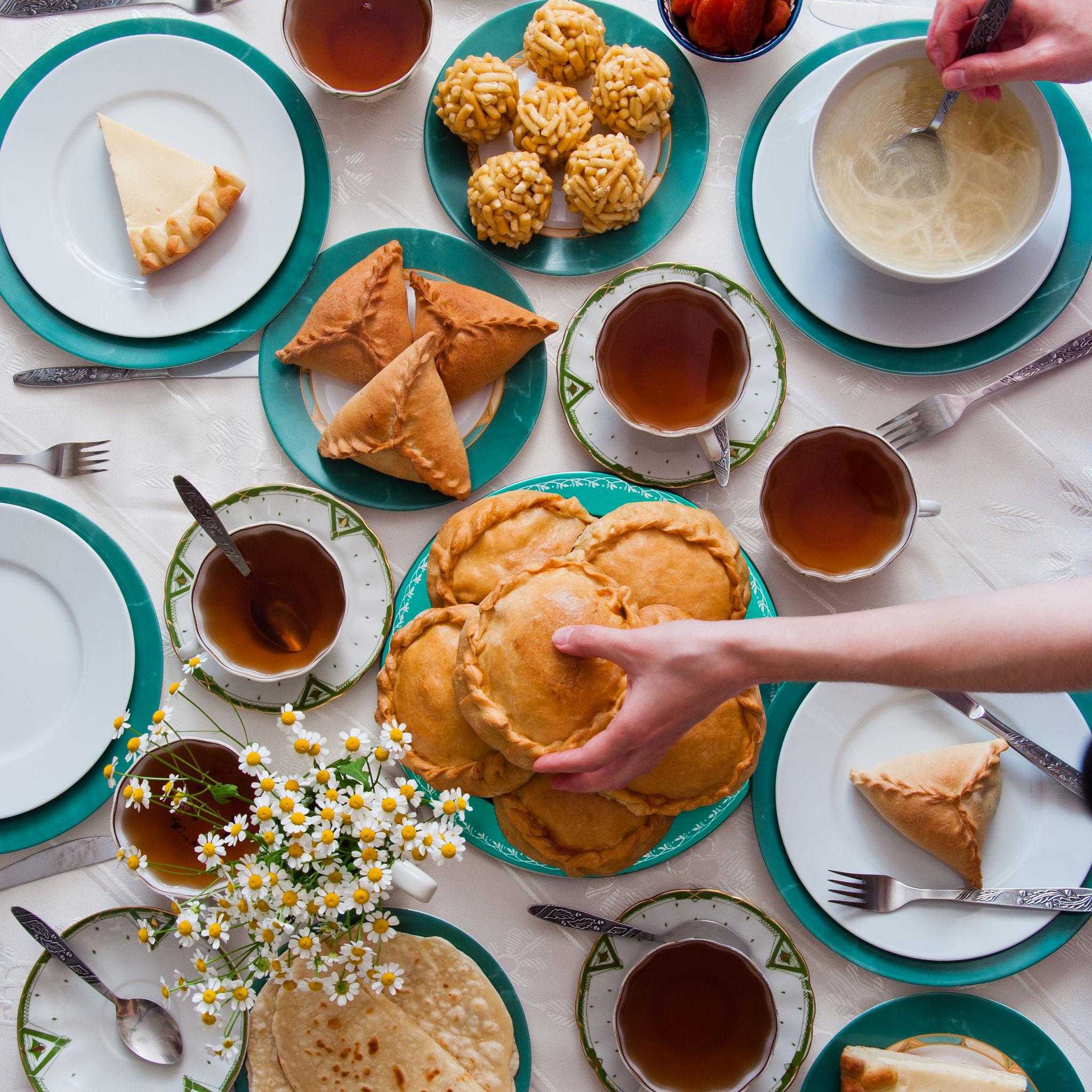 What to Eat in Kazan: 10 Tatar Dishes You Must Try
 Moscow to Kazan by Train, Plane, Car or Bus
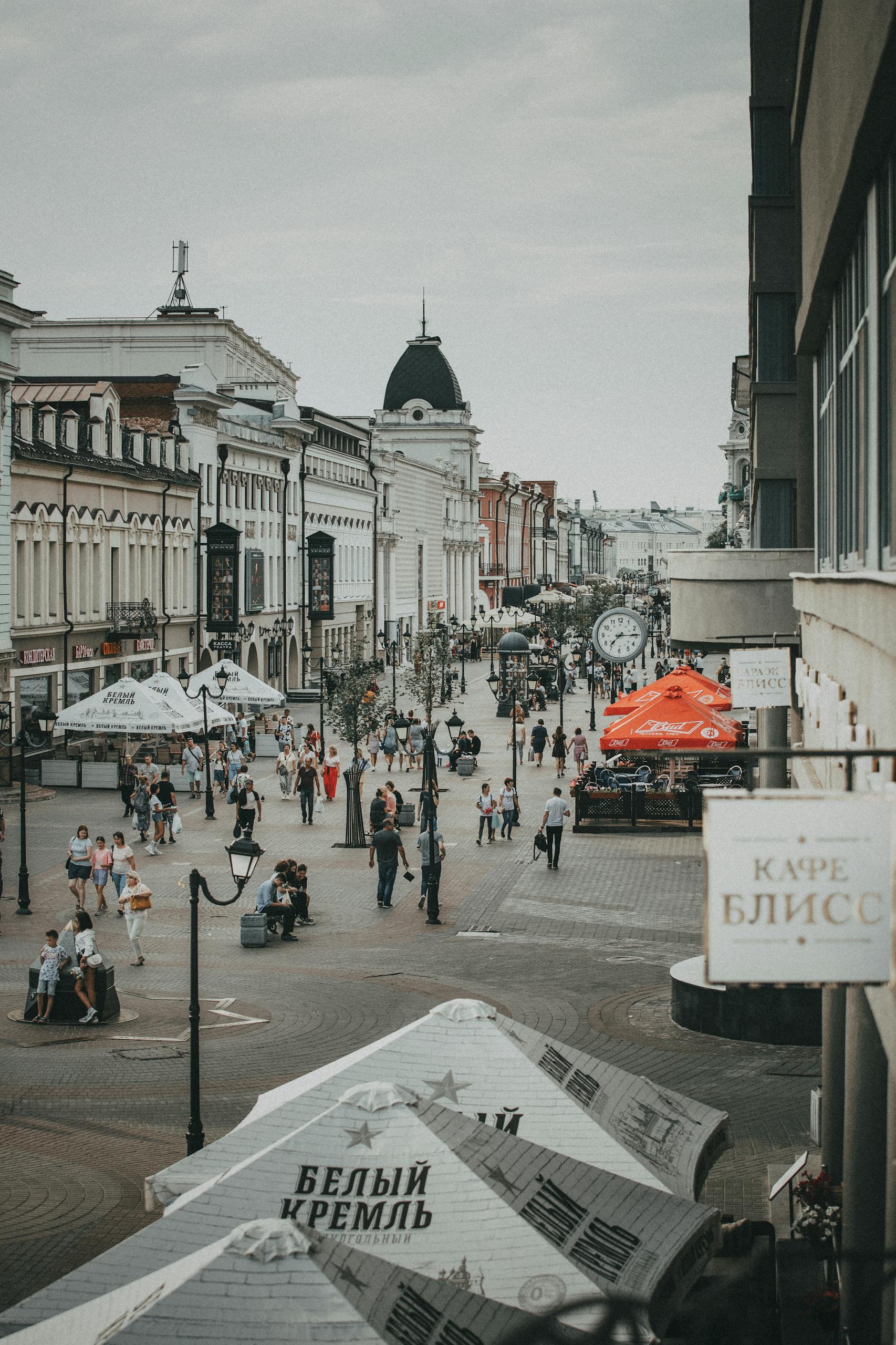 Things to Do in Kazan: 18 Must-See Places (with Map)