
The Moscow Cathedral Mosque: Tours in English, Prices, Dress Code and Friday Prayers
 By Irena DomingoUpdated on 10 min read
In this article
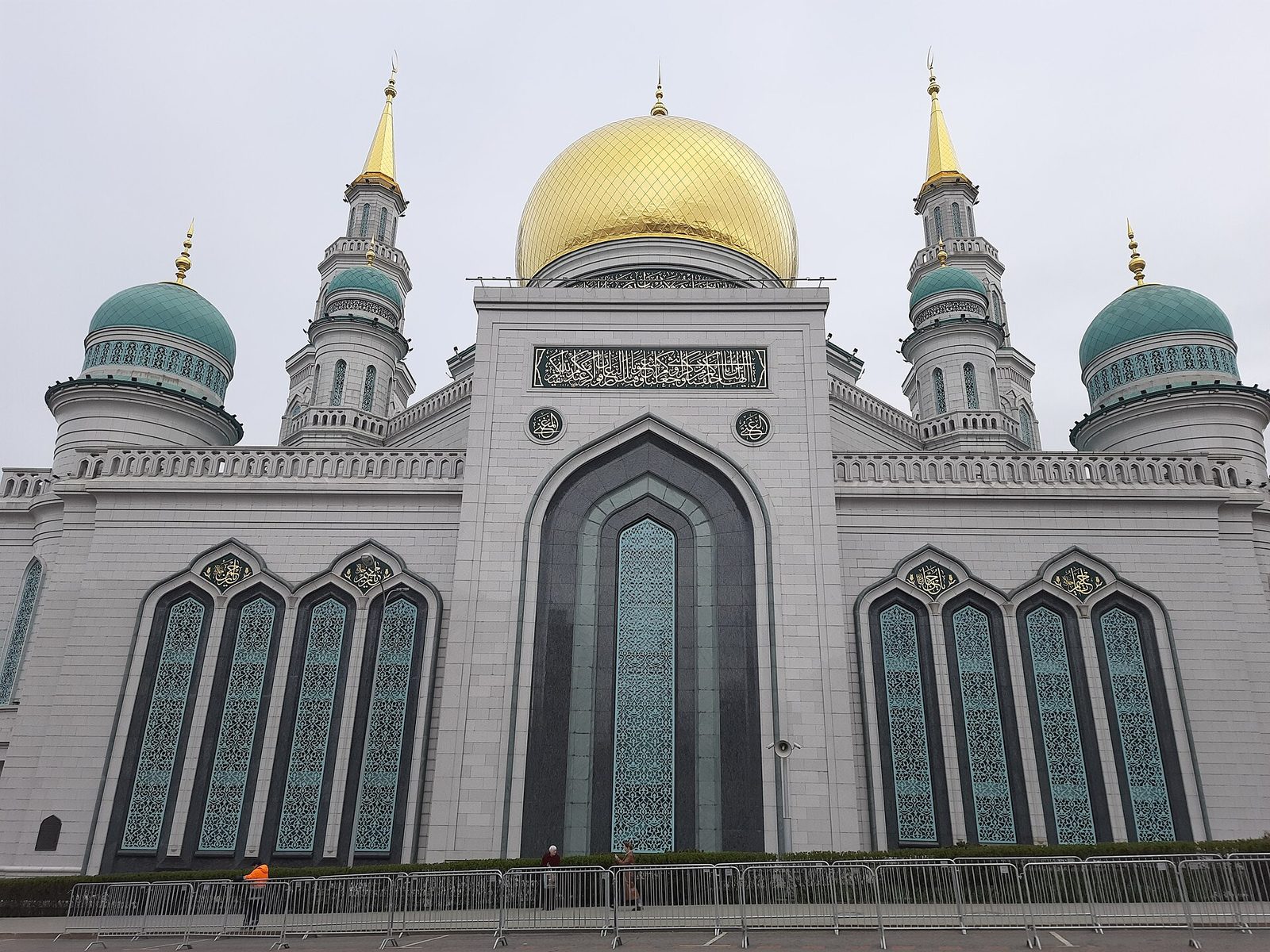
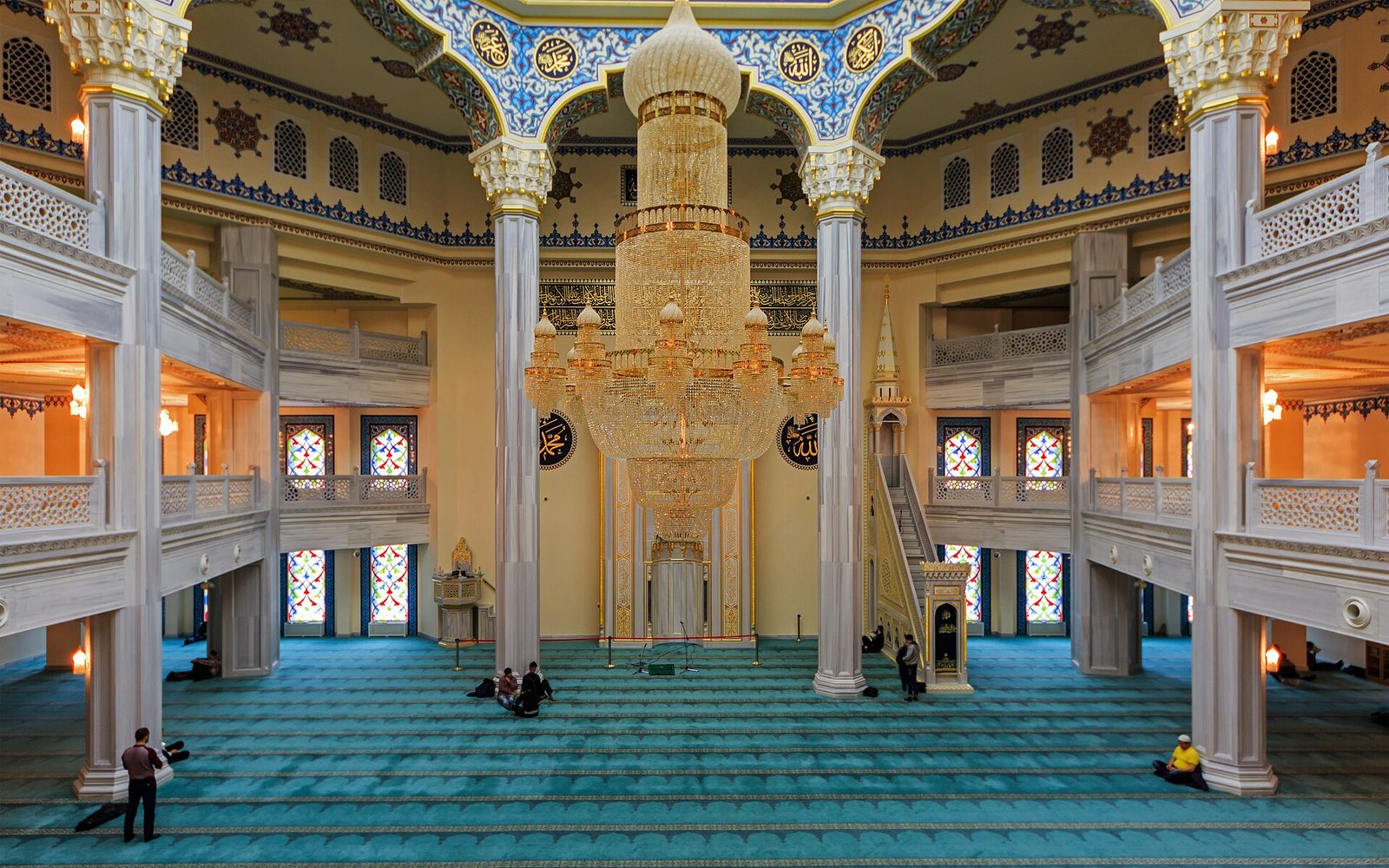
With its gilded dome and slender minarets next to Prospekt Mira, the Moscow Cathedral Mosque is the main mosque in the Russian capital and one of the largest in Europe: it holds up to 10,000 worshippers. Rebuilt from scratch and opened in 2015 on the site of the old mosque from 1904, it is a working place of prayer, but also a building you can visit with a guide, with a small museum of Islam inside.
Here I explain how to visit it whether you are Muslim or not: the official tours (also in English), prices, the dress code, when it’s better not to go, and what to expect if you come to pray, including Friday prayers and Eid. The information comes from the mosque’s official website (mihrab.ru), the Moscow press and other sources I cite in each section, checked in November 2026.
The essentials
- Address: Vypolzov Pereulok 7, a few minutes from Prospekt Mira metro station (exit towards the Olimpiysky sports complex).
- Guided tours: every day except Friday, from 10:10 to 17:00, about an hour, in Russian or English (Arabic on request), with advance booking.
- Price: according to the official website in English, 550 roubles per person for the group tour in English. Bring cash in roubles: the Russian version of the website says cards are not accepted.
- Dress code: covered clothes, shoes off inside the mosque; if your clothes don’t meet the rules, you can borrow a gown at the entrance.
- Photos: never of the guide or of people praying.
- Avoid as a tourist: Friday (no tours) and the mornings of the two Eids, when the area is closed to traffic and the metro station is closed for entry.
Why it’s worth a visit
Few visitors to Moscow think of the Cathedral Mosque, but it is one of the most striking modern buildings in the city, and it tells a part of Moscow’s history that is rarely explained: the capital has a large Muslim community, Tatar for centuries and today also from the Caucasus and Central Asia. Some figures, according to Interfax and the Russian Wikipedia:
- It holds up to 10,000 people at prayer, and its total area is about 19,000 m², against roughly 1,000 m² for the old mosque.
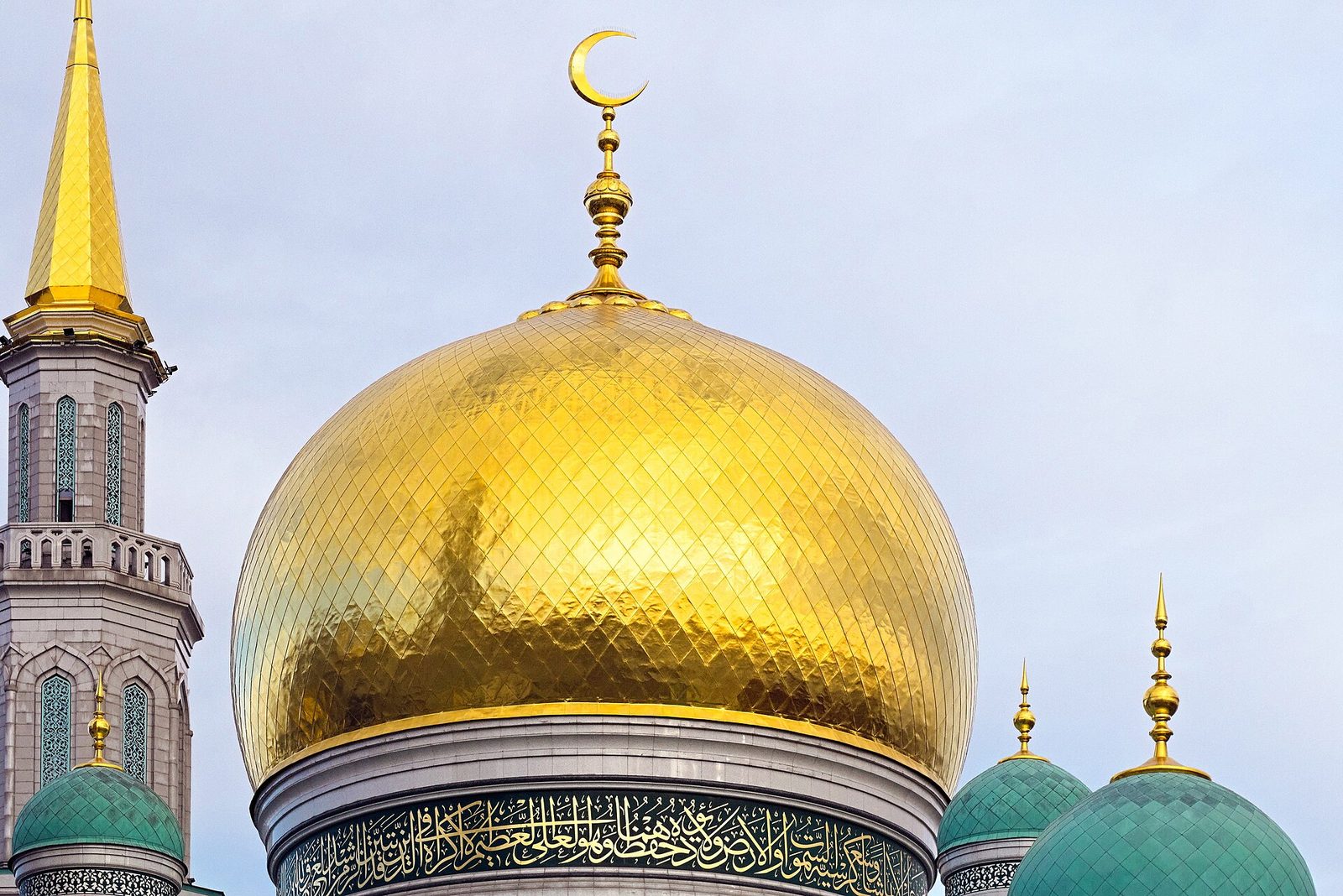
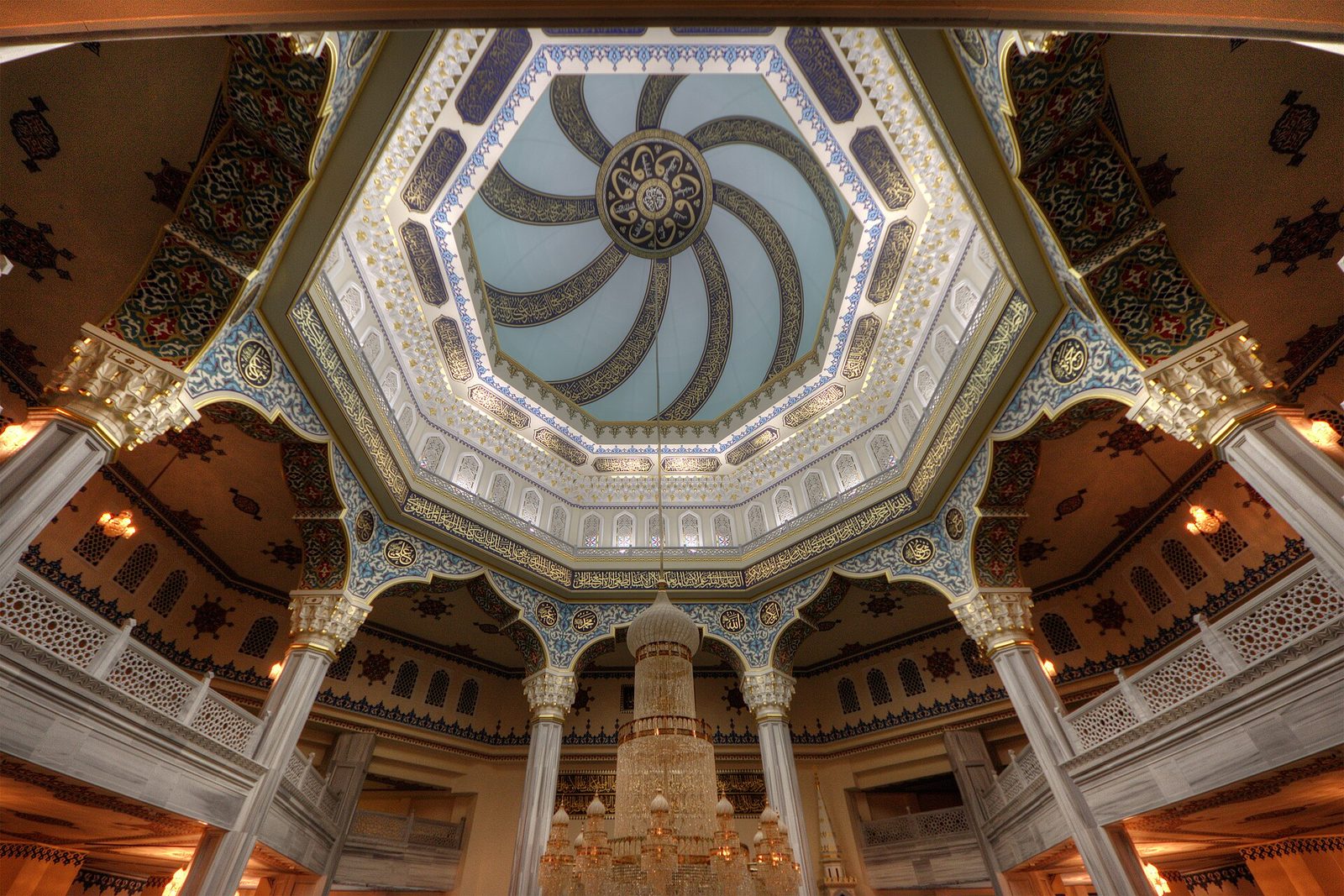
- The main dome is 46 metres high and 27 metres across, and it is covered in gold leaf.
- It has two large minarets, a small one and four towers. Their shape recalls the Spasskaya Tower of the Moscow Kremlin and the towers of the Kazan Kremlin.
- The reconstruction cost about 170 million dollars.
A short history: from 1904 to the new mosque
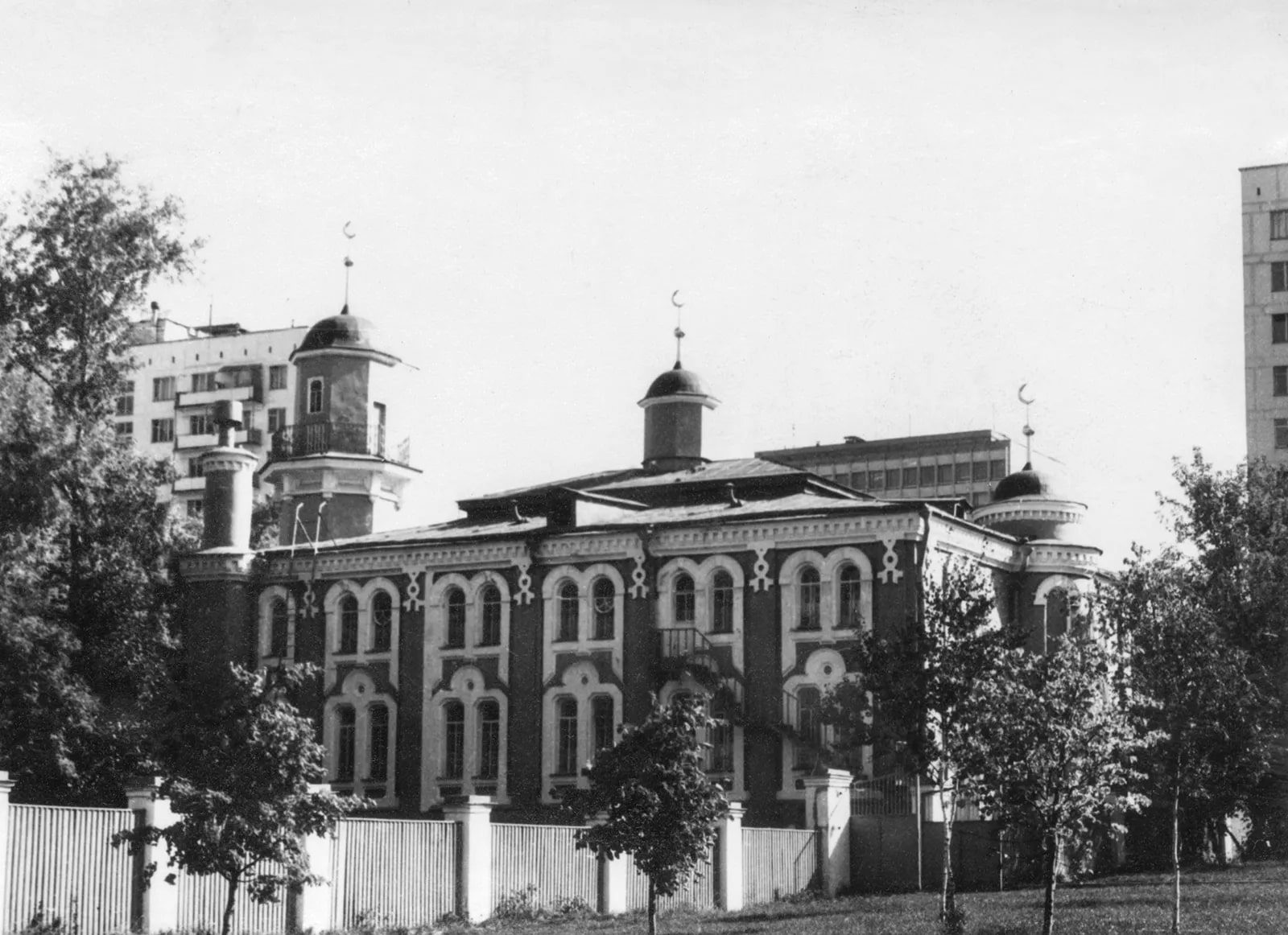
- 1904: the first mosque is completed, designed by the architect Nikolai Zhukov and paid for by the Tatar merchant Salikh Yerzin. It was a modest two-storey building with a single minaret.
- Soviet period: unlike almost all mosques in the country, it was never closed. Foreign leaders prayed there, among them President Sukarno of Indonesia in 1955, Gamal Abdel Nasser in 1957 and Muammar Gaddafi in 1969. Before the 1980 Olympics, which were held next door, it was under threat of demolition, and it was saved.
- 2005: the Spiritual Administration of Muslims of Russia launches a large reconstruction.
- 11 September 2011: the old building is demolished. According to the newspaper Delovoy Peterburg, part of its walls had collapsed. According to the Russian travel guide Tonkosti, parts of the old facade were kept in the new building.
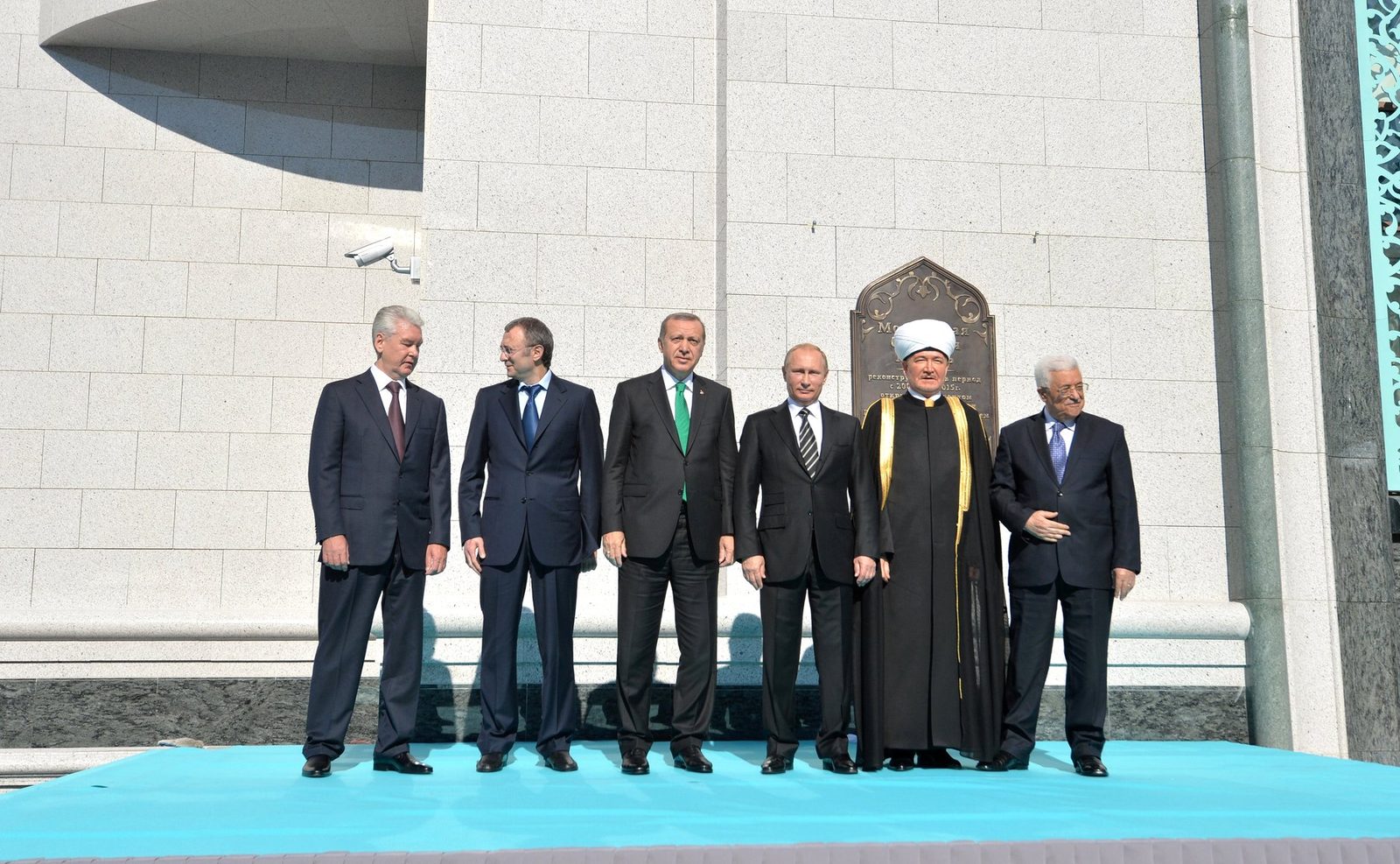
- 23 September 2015: the new mosque, designed by the architect Ilyas Tazhiyev, is opened. Vladimir Putin, the Turkish president Recep Tayyip Erdoğan and the Palestinian president Mahmoud Abbas spoke at the ceremony, in front of about 10,000 people.
Turkey played a big part in the new building. The reconstruction was paid for mainly by the businessman Suleiman Kerimov and by the governments of Turkey and Kazakhstan, according to the Russian Wikipedia. The great chandelier of the main hall, the mihrab and the marble cladding of the hall were made in Turkey, according to the mufti Ravil Gaynutdin, quoted by Interfax, and the Turkish government gave the carved main doors.
Visiting the mosque if you’re not Muslim
The mosque is open to people of any faith, as long as they follow its rules. The simplest and most complete way to see it is the official guided tour: you enter through a separate entrance for tourists, with its own cloakroom, and men and women stay together in the group.
The official guided tour
According to the mosque’s website (mihrab.ru/muzej, also in English):
- Days: every day except Friday.
- Times: five group slots of about an hour: 10:10, 11:15, 12:50, 14:50 and 16:00.
- Languages: Russian and English, and Arabic on request. I have not found tours in other languages.
- Booking: required, through the form on the website or by WhatsApp or Telegram at +7 916 088-45-61. Groups of more than 10 people must agree their visit in advance.
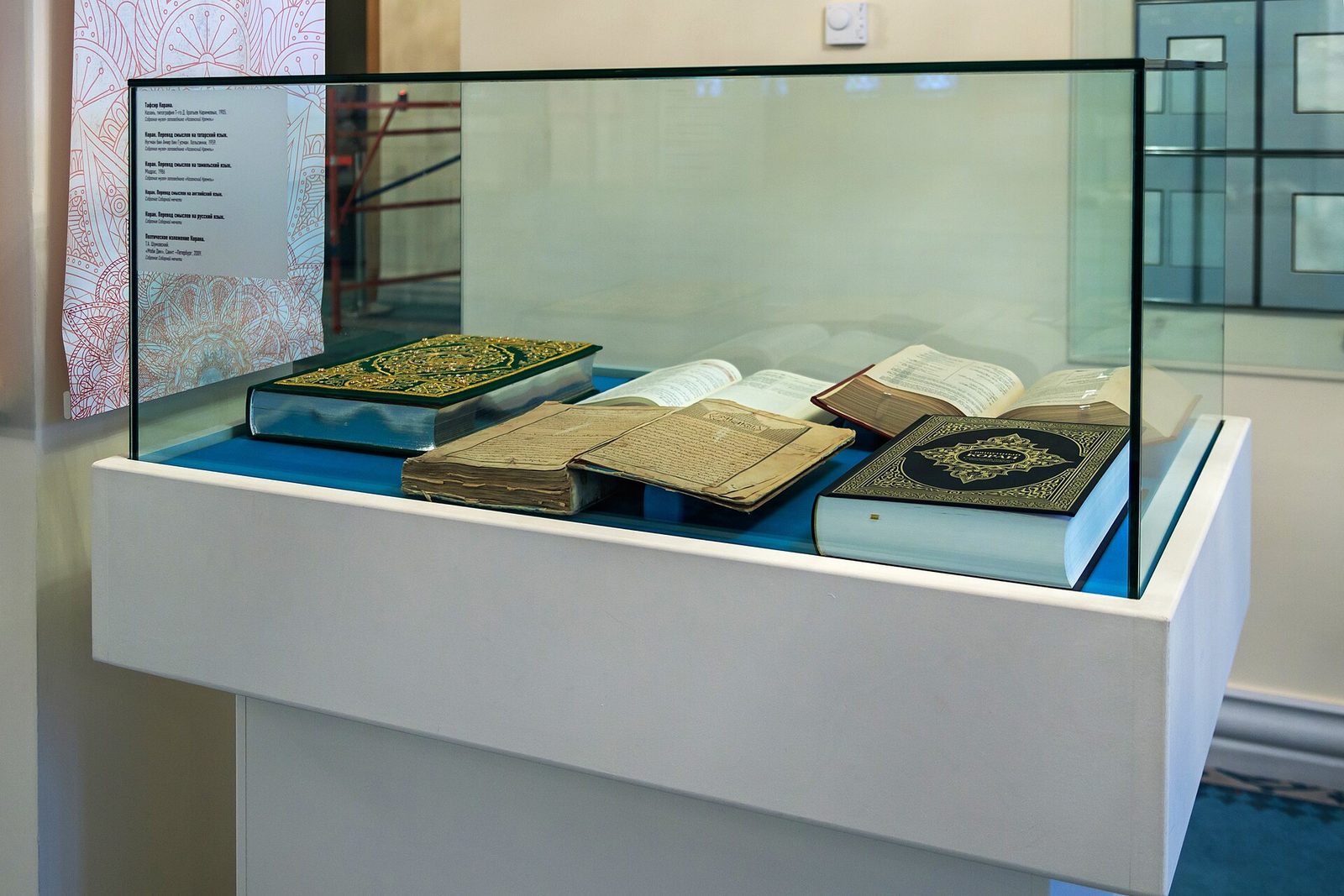
- What you see: the architecture and the prayer hall, and the museum of Islam opened in 2015, with a model of the mosque, a fragment of the cover of the Kaaba and a Qur’an made of silver. With a private tour you can also go up to an open viewing platform 30 metres high.
Prices. The English page of the website gives 550 roubles per person for the group tour in English, and for private tours 3,000 roubles for one person, 6,000 for 2 to 10 people and 9,000 for 11 to 20. Other sources give lower prices, and the Russian page doesn’t list them, so check when you book. As for payment, the English page says cards and cash are accepted, but the Russian page says cards are not accepted: bring cash in roubles. I explain how to get roubles as a foreigner in the guide on where to change money.
Inside the mosque, tours can only be given by the mosque’s own guides: a private guide can show you the outside, but not lead the tour inside. If you want to see the area with a guide you can pay for with a foreign card, see the guided tours of Moscow.
Dress code and rules
These rules come from the mosque’s official page for visitors:
- Clothes: men and women must be dressed according to the rules of the mosque, with arms and legs covered. If your clothes don’t meet them, you can borrow a gown at the entrance. Women, bring a scarf to cover your hair.
- Shoes: they are not allowed inside the mosque under any circumstances.
- Behaviour: speak quietly, on the grounds and inside, and don’t cross the barriers inside the mosque.
- Photos and video: forbidden of the guide and of worshippers.
If you’re Muslim: praying at the mosque
The Cathedral Mosque belongs to the Spiritual Administration of Muslims of the Russian Federation, and the five daily prayers are held here every day. A few practical things:
- Prayer times: they are published every day on the home page of mihrab.ru. In Moscow they change a lot through the year: in late November, for example, the afternoon prayer is at about 13:50 and the sunset prayer at about 16:20.
- Friday prayer (Jumu’ah): it is held at the time of the midday prayer (Zuhr). It is the busiest moment of the week, and there are no tours that day. The sermons published on the website are in Russian.
- Men and women pray in separate halls.
- Groups: the mosque offers tour companies an escort for groups that come only to pray, to the ablution area and the men’s or women’s hall.
Ramadan and Eid in Moscow
On the two big holidays, Eid al-Fitr (Uraza Bayram in Russia) and Eid al-Adha (Kurban Bayram), thousands of people pray at the Cathedral Mosque and in the streets around it. On Kurban Bayram, 27 May 2026, the festive prayer started at around 7:00, and to get onto the mosque grounds you had to go through a security check with metal detectors, according to the news site MSK1. What this meant in practice:
- Metro: from 5:45, Prospekt Mira station was open only for exit and transfers, so you could get off there but not get on. From 7:45, Rizhskaya station on the Big Circle line worked only for entry and transfers.
- Streets closed from midnight to 11:00 around the mosque: Shchepkina, Meshchanskaya and Gilyarovskogo streets and the surrounding lanes, Vypolzov included, and Durova Street from 23:00 the evening before, according to Autonews.
- Dates in 2027: Eid al-Fitr is expected around 9 March and Eid al-Adha around 16 May. The exact day depends on the moon and is announced shortly before.
If you are Muslim and you are in Moscow on one of these days, arrive very early by metro to Prospekt Mira, where you can get off, and bring your own prayer mat. If you are not, avoid the area that morning.
Other mosques in Moscow
- The Historical Mosque (Bolshaya Tatarskaya Street 28, in Zamoskvorechye), in the old Tatar quarter. It was closed in 1939 and reopened in 1993.
- The Memorial Mosque on Poklonnaya Gora (Minskaya Street 2b), next to the Victory Park.
- The Yardyam Mosque, on Khachaturyana Street, near Otradnoye metro.
Halal food
According to the mosque’s website, groups can book meals of halal Tatar cuisine at the Hayat restaurant, and there is a halal food shop behind the building, outside the fence, as well as a souvenir shop. For the rest of the city, the quickest way is to search for халяль (halal) in Yandex Maps, which shows cafés and restaurants with reviews and opening hours; I explain how to use it with a foreign phone in the guide to Yandex for travellers.
How to get there and what to see nearby
The mosque is at Vypolzov Pereulok 7, in the Meshchansky district, north of the centre. The nearest metro station is Prospekt Mira (on the ring line and the orange line): take the exit towards the Olimpiysky sports complex. Trolleybuses 7 and 50 stop at Ulitsa Shchepkina. If you come by car, parking is paid, outside the mosque grounds, on Durova Street. Here you can see it in Yandex Maps. The fares and how to pay are in the guides to the Moscow metro and the Troika card.
Nearby:
- The Aptekarsky Ogorod, the botanical garden of Moscow University, on Prospekt Mira, one of the oldest gardens in Russia.
- VDNKh, the great Soviet exhibition park, three stops north on the orange line: everything is in the guide to VDNKh.
For more ideas, see what to see in Moscow and the complete guide to Moscow. If you are also going to St Petersburg, its mosque is a copy of a mausoleum in Samarkand: I explain how to visit it in the guide to the St Petersburg mosque. And for Islam in Russia, the great destination is Kazan, with the Kul Sharif mosque inside the Kazan Kremlin and the Marjani mosque in the Old Tatar Quarter. Everything else a Muslim traveller needs to know (halal food, prayer times, Ramadan and what not to bring) is in the guide to travelling to Russia as a Muslim.
Frequently asked questions
Can non-Muslims visit the Moscow Cathedral Mosque?
Yes. The mosque is open to people of any faith who follow its rules. The best way to see it is the official guided tour, every day except Friday, with advance booking.
Is there a tour in English?
Yes. According to the official website, tours are in Russian and English (Arabic on request), and the group tour in English costs 550 roubles per person. Book in advance through the website or by WhatsApp or Telegram.
Can I pay by card?
Don’t count on it. The English page of the website says cards are accepted, but the Russian page says they are not. Bring cash in roubles.
What should I wear?
Clothes that cover arms and legs; women, a scarf for the hair. Shoes are taken off. If your clothes don’t meet the rules, you can borrow a gown at the entrance.
Can I visit on Friday?
There are no tours on Fridays, the day of the main weekly prayer. Choose another day.
Which metro station is closest?
Prospekt Mira, on the ring line and the orange line, exit towards the Olimpiysky sports complex. On the mornings of the two Eids, entry to the station is closed.
You’ve finished this stop 5. Experiences
Real Traveller Experiences in Russia
Real accounts from travellers just back from Russia: cards, cash, accommodation, safety... What travelling to Russia is really like now, from those who've been.
Go to 5. ExperiencesBack to the start of this stage: 4. Destinations
Was this useful? I'll tell you when something changes in Russia
One short email a month with what has changed for travellers (visas, payments, border crossings, apps), based on what readers report to me from Russia. More than 4,000 of us already. No spam: if you ever lose interest, unsubscribing is one click.
Irena DomingoAbout Me
I was born in Russia. I grew up between two worlds: my father was Russian, my mother Spanish — a descendant of the "Children of Russia", the Basque children evacuated to the USSR during the Spanish Civil War. I've worked as a translator, interpreter and Russian teacher for over 30 years, and since 2013 I've been writing this blog to help travellers discover Russia with practical, always up-to-date information. Author of the Russiable Guide. If this blog has helped you plan your trip, you can buy me a coffee ❤️.
More on Moscow
 Destinations · MoscowMoscow Public Transport: Troika Card, Tickets and How to Get AroundTroika card, Edinyi passes and how to pay for transport in Moscow. Which pass fits you and why Visa or Apple Pay no longer work in 2026.
 Destinations · MoscowMoscow Metro: How to Use It, Ticket Prices, and the Most Stunning StationsWarning: Visa and Mastercard don't work on the Moscow metro since 2022. Here's how to use it, 2026 fares, the Troika card, and the most spectacular stations.
 Destinations · MoscowThings to Do in Moscow: 15 Must-Sees and Hour-by-Hour Itineraries for 1 to 5 DaysThe 15 things to do in Moscow plus hour-by-hour plans for 1 to 5 days, with summer and winter opening hours, current prices and tips from recent travellers.