
The Golden Ring of Russia: A Practical Guide to the 9 Cities
 By Irena Domingo
Updated on
In This Article
The Golden Ring of Russia is the country’s most classic tourist route after Moscow and Saint Petersburg: a circular itinerary of about 700 kilometres northeast of Moscow that links 9 medieval cities packed with kremlins, monasteries and onion-domed churches, several of them UNESCO World Heritage sites. If you’ve got a few days in Moscow, the easiest plan is to set aside 1 day for Sergiyev Posad (the closest city, 1 h 20 min away by train) or a weekend for Vladimir and Suzdal. If you have more time, you can do the full route in 5-7 days by car, train or on a Volga river cruise.
In this article I tell you which cities make up the Golden Ring, what to see in each one, how to get there from Moscow, which itineraries work depending on how many days you have, where to sleep and eat, which souvenirs are typical of each stop, and the practical tips you need as a traveller to make sure the trip goes smoothly.

1. What is the Golden Ring of Russia and why is it called that?
The name was coined in 1967 by Soviet journalist Yuri Bychkov, who took a road trip through the old cities northeast of Moscow and published a series of reports in the newspaper Sovetskaya Kultura under the title “Golden Ring”. He came up with the name after seeing the golden reflection of the Ivan the Great Bell Tower in the Moscow Kremlin, and the route caught on so quickly that by 1971 the first tourist buses were already running.
The original route had 8 cities: Sergiyev Posad, Pereslavl-Zalessky, Rostov Veliky, Yaroslavl, Kostroma, Ivanovo, Suzdal and Vladimir. In March 2018, the Russian Ministry of Culture officially added a ninth city, Uglich, so the Golden Ring now consists of 9 cities spread across 5 regions (oblasts) of the Central Federal District: Moscow, Yaroslavl, Vladimir, Ivanovo and Kostroma.
The main draw is medieval Orthodox architecture: white 12th-century cathedrals, walled monasteries, provincial kremlins and carved wooden houses. If you’re into old Russia, you’ll be blown away; if not, seeing two or three cities is probably enough.

2. The 9 cities of the Golden Ring, one by one
The distances I mention are from central Moscow. You don’t need to visit them all: each one has its own character and, unless you’re travelling at a leisurely pace, picking three or four makes the most sense.
2.1. Sergiyev Posad (75 km) — the “Russian Vatican”

This is the only Golden Ring city that belongs to Moscow Oblast and, by far, the easiest one for a day trip. It has about 110,000 inhabitants and its big draw is the Trinity Lavra of St. Sergius, the largest male monastery in Russia, founded in the 14th century by Saint Sergius of Radonezh and declared a UNESCO World Heritage site. People call it “the Russian Vatican” because it is the spiritual heart of the Orthodox Church.
The complex includes around 50 white-stone buildings from different periods. The oldest, the Trinity Cathedral (1423), holds the relics of Saint Sergius and an iconostasis painted by disciples of Andrei Rublev. The most imposing is the Cathedral of the Dormition, whose five star-spangled blue domes can be seen from far away. If you can, try to time your visit with a liturgy: the choir singing inside the church is one of those moments that stays with you.
Sergiyev Posad is also the birthplace of the matryoshka: this is where the first Russian nesting doll was carved in the late 19th century, and there’s a Toy Museum that’s worth a visit if you’re travelling with kids. About 12 km away, in the middle of the countryside, sits the Abramtsevo estate-museum, where Repin, Vasnetsov and Vrubel all worked and where Gogol read out the second volume of Dead Souls.
2.2. Pereslavl-Zalessky (140 km) — the cradle of the Russian fleet

A small city (around 38,000 inhabitants) but with huge historical weight: founded by Yury Dolgoruky in 1152, this is where Alexander Nevsky was born and where, on Lake Pleshcheyevo at the end of the 17th century, the young Peter the Great built his “toy fleet”, the embryo of the Russian navy.
The big highlight is the Cathedral of the Transfiguration of the Saviour, one of the oldest buildings in northeastern Russia (1152-1157), where Alexander Nevsky was baptised. On top of that, there are six monasteries, a kremlin with earthwork walls that still survive, and a museum-estate, “Botik Petra Pervogo”, which preserves the Fortuna, the only boat from the Poteshnaya flotilla that has survived to this day.
Pereslavl is also famous for its quirky museums: the Tea Museum, the Iron Museum (with 400 models from all over the world) and the Money Museum. On the outskirts is the Sin-Kamen (“Blue Stone”), a granite block from pagan times that, according to legend, changes colour when it rains. People still leave coins on it to make wishes.
2.3. Rostov Veliky (220 km) — the prettiest kremlin on the route

Its official name is just Rostov, but in Russia people call it Rostov Veliky (“the Great”) to avoid confusion with Rostov-on-Don. It’s a small city (~30,000 inhabitants) on the shore of Lake Nero, first mentioned in the chronicles in the year 862. For me, it has the most photogenic kremlin of the entire Golden Ring: a late 17th-century white fortress with pointed towers and silver domes that reflects beautifully in the lake.
If it looks familiar, it’s because this is where Leonid Gaidai filmed the Soviet comedy Ivan Vasilievich Changes Profession (1973), with the Rostov kremlin standing in for the Moscow Kremlin in the medieval scenes. Inside is the Cathedral of the Dormition, with a bell tower of 15 bells (the largest weighing 32 tonnes) that still rings: the sound is spectacular thanks to the acoustics created by the nearby lake.
The other souvenir from Rostov is finift, a fired enamel-on-metal technique that has been practised here for centuries. There’s an impressive collection in the kremlin museum, and the shops in the centre sell miniature icons, earrings and enamelled jewellery at reasonable prices. And if you like weird stuff, try the onion jam, a local speciality.
2.4. Uglich (~220 km via Yaroslavl) — the latest addition
It’s the most recent city to officially join the Golden Ring (March 2018), although it could have done so much earlier: there’s history here to spare. First mentioned in the chronicles in 1148, Uglich is where Prince Dmitry died in 1591, the youngest son of Ivan the Terrible, in circumstances that were never fully explained and which triggered the so-called “Time of Troubles” in Russia.
The city’s emblem is the Church of St. Dmitry on the Blood, a bright red church with blue domes built on the exact spot where the tsarevich died. Inside is preserved the “exiled bell”, the one that tolled the alarm when the locals rose up after the boy’s death: as punishment, its tongue was cut out, it was flogged and then banished to Tobolsk, in Siberia, until it was returned to Uglich at the end of the 19th century.
The other must-see is the Cathedral of the Transfiguration, with frescoes that copy Raphael (including a version of his Transfiguration). And on the banks of the Volga, the chambers of the tsarevich’s palace, a 15th-century rarity that survived all the fires and lootings. Uglich is also a regular stop for Volga river cruises, so if you take one from Moscow, you’ll most likely spend a few hours here.
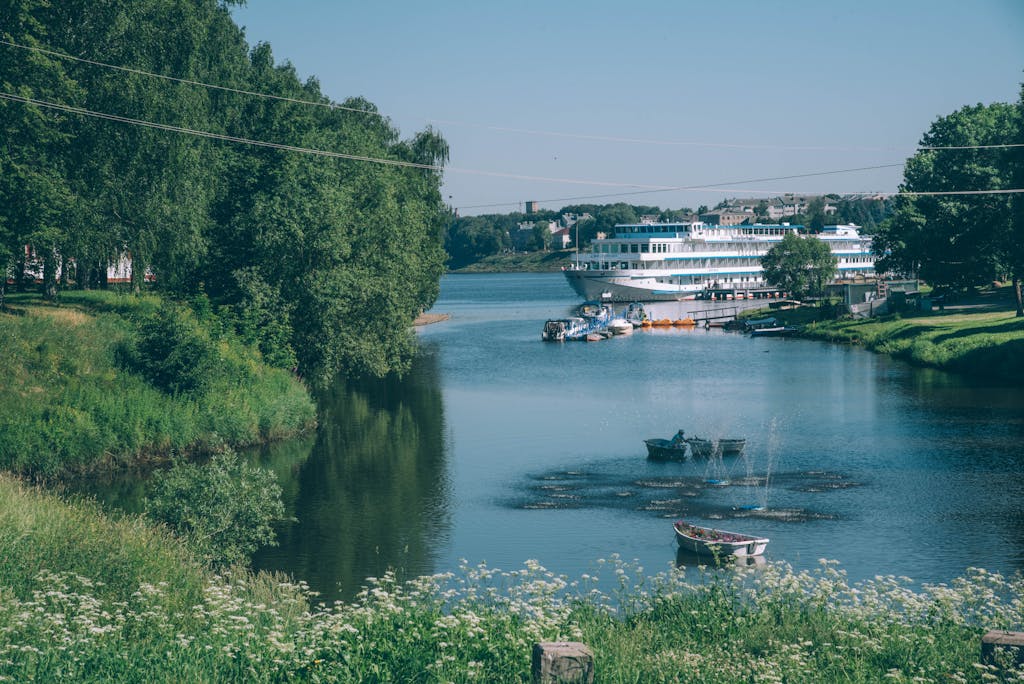
2.5. Yaroslavl (270 km) — the capital of the Golden Ring
With over 600,000 inhabitants, Yaroslavl is the largest city on the Golden Ring and the only one with an airport. It was founded by Yaroslav the Wise in 1010, at the confluence of the Volga and the Kotorosl, and its historic centre is a UNESCO World Heritage site. It’s the unofficial “capital” of the route and the favourite weekend escape for Russians.
The must-do walk is the Strelka (“the arrow”), the park at the tip where the two rivers meet, with the millennium stele crowned by a golden eagle. From there, the Volga embankment heads downstream past merchants’ houses, dancing fountains (from May to October) and 17th-century churches. The most famous is the Church of Elijah the Prophet, with its green domes and spectacular interior frescoes, although it only opens in the warm season because winter humidity damages them.
Another interesting stop is the Spaso-Preobrazhensky Monastery, the oldest preserved building in Yaroslavl (16th century) and where the manuscript of The Tale of Igor’s Campaign was discovered in the 18th century. And if you’re travelling with kids or you’re just curious, the Golden Ring miniature show recreates in miniature the main attractions of all the cities on the route.
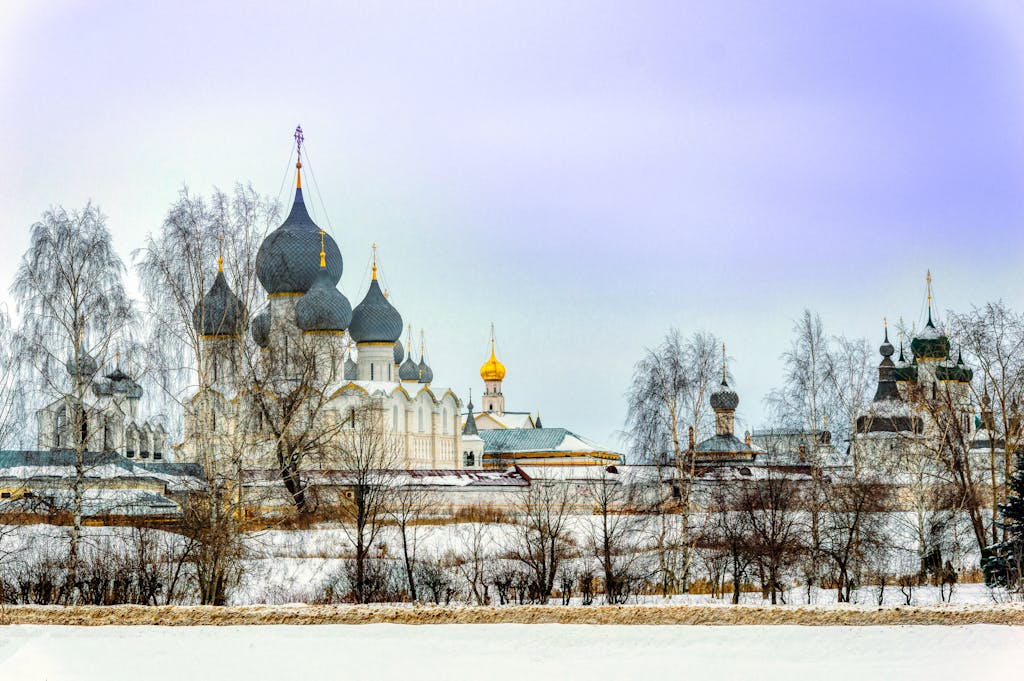
2.6. Kostroma (340 km) — the cradle of the Romanovs
Kostroma (~270,000 inhabitants) is the city furthest from Moscow on the Golden Ring, at the confluence of the Volga and the Kostroma River. Its big historical claim to fame is the Ipatiev Monastery, where in 1613 the young Mikhail Romanov, taking refuge there with his mother, accepted the crown and founded the dynasty that would rule for three centuries. Inside is the Trinity Cathedral, with five domes and a gilded iconostasis, plus a historical-religious museum that tells the story of the Romanovs and of the more than 600 churches in Kostroma destroyed in the Soviet era.
The city’s symbol, however, is something much more modest: the fire-watch tower (kalancha) on Susanin Square, a watchtower with a neoclassical colonnade from 1820 so striking that when Tsar Nicholas I saw it, he reportedly said: “I don’t have anything like this even in Petersburg”. Today it’s the central square and there are usually weekend markets.
Kostroma is also famous for its cheese, its linen and its silver filigree (skan), a meticulous craft of goldsmithing. There’s a Cheese Museum where you can taste several varieties for around 200 rubles, and on the outskirts is the Sumarokovo Elk Farm, where you can see semi-tame elks up close and try elk milk. Important for Russians: this is officially the home of Snegurochka, the granddaughter of Ded Moroz (the Russian Santa Claus).

2.7. Ivanovo (300 km) — the constructivist surprise
Of all the cities on the Golden Ring, Ivanovo (~400,000 inhabitants) is the most different. It only received city status in 1871, so it has almost no old architecture, but in exchange it’s a gem of Soviet constructivism from the 1920s and 30s. If you’re into design and modern architecture, this stop is more enjoyable than any monastery.
The emblematic buildings are shaped like metaphors: the Dom-Podkova (Horseshoe House), the Dom-Korabl (Ship House) with its curved walls and panoramic windows, the commune-house with 400 workers’ apartments, and a station lobby rebuilt in 2010 that combines three different decades (1930s façade, 1950s blue hall, 1980s red hall). Everything is linked by the signposted urban route “Red Thread”.
Ivanovo’s nickname is the “City of Brides” because, for decades, the textile factories mostly employed women, and the country’s biggest textile industry is still concentrated here: that’s why it’s also called the “Russian Manchester”. At the Calico Museum you’ll see fabrics printed with tractors and Soviet slogans, a wonderful curiosity. And nearby, in the village of Palekh, the famous hand-painted lacquer miniatures are made.
2.8. Suzdal (220 km) — the open-air museum
For me, if you could only visit one city on the Golden Ring, it would be Suzdal. With just 10,000 inhabitants, no train station and no industry, it has been frozen in time: it’s literally an open-air museum, with a 10th-12th century kremlin, five monasteries, around thirty churches and dozens of carved wooden houses from the 18th and 19th centuries, all within walking distance. There are stretches where all you can hear is the wind and the bells.
Some of its monuments are part of the UNESCO ensemble “White Monuments of Vladimir and Suzdal”. The must-sees are:
- The Suzdal kremlin, with the Cathedral of the Nativity of the Virgin and its five blue domes with golden stars (the city’s signature photo).
- The Spaso-Yefimiev Monastery, a 14th-century walled fortress that served as a political prison for centuries (even under Stalin). Today it houses several museums.
- The Museum of Wooden Architecture, a recreated village with houses and two churches relocated from nearby villages: essential to understand how Russian peasants lived before the revolution.
- The Saviour Monastery of St. Euthymius and the Intercession Monastery, where Ivan the Terrible confined his first wife.
The big local product is medovukha (mead), a fermented drink made from honey that’s produced here by hand in different flavours (horseradish, hops, ginger). And the second, surprisingly: the cucumber. Suzdal dedicates a festival to it every third Saturday of July (День огурца, “Cucumber Day”), with tastings, workshops and even a giant cucumber-shaped puppet that’s launched into the sky at the end of the day. A delightfully odd tradition.
2.9. Vladimir (180 km) — the medieval capital of Russia
Before Moscow was the capital, Vladimir was. For almost 250 years (12th-14th centuries), this city of about 340,000 inhabitants was the political and spiritual centre of northeastern Russia, under Yury Dolgoruky, Andrey Bogolyubsky and Vsevolod “Big Nest”. From that golden age, three UNESCO monuments survive that justify the trip on their own:
- The Cathedral of the Dormition (1158), built to be the main temple of all Russia, with original 15th-century frescoes by Andrei Rublev (including a fragment of The Last Judgment). A relic of Alexander Nevsky rests here.
- The Cathedral of Saint Demetrius (1197), smaller but with absolutely unique limestone carving work: around 600 figures of saints, animals and plants cover the façades, including the odd pagan centaur slipped in among the Christian motifs.
- The Golden Gate (1164), the only gate of the old city wall that survives. It’s a 14-metre arch with a church on top and a diorama inside reconstructing the siege of Vladimir by Batu Khan in 1238.
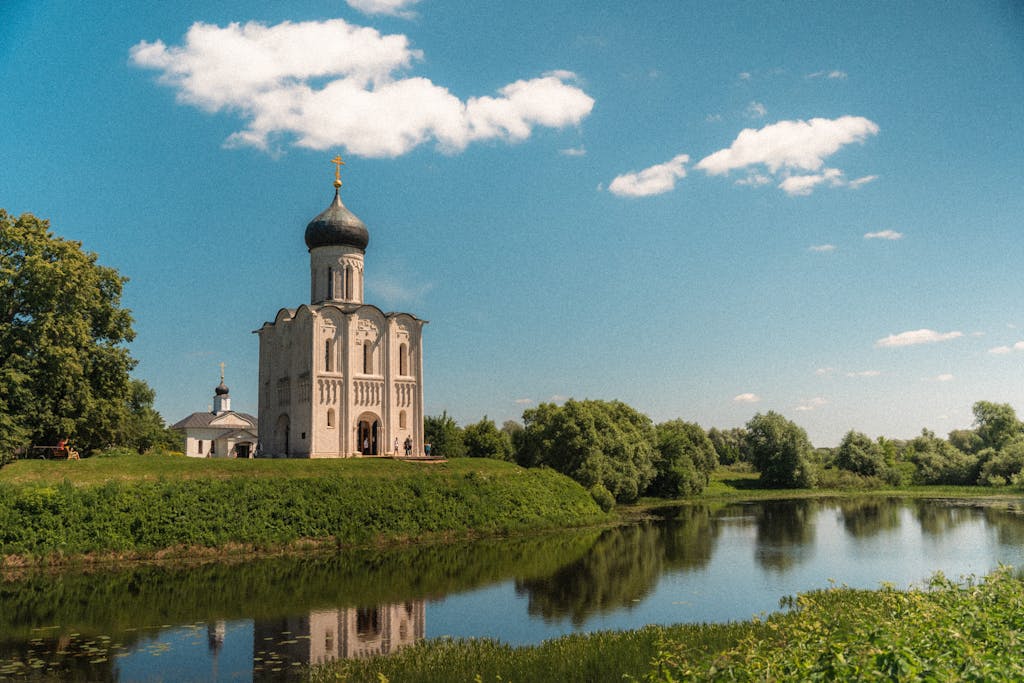
Ten kilometres from Vladimir, in the village of Bogolyubovo, sits the Church of the Intercession on the Nerl, a small white 12th-century church standing in the middle of a meadow, considered one of the masterpieces of Russian architecture and also a UNESCO World Heritage site. The view, especially in spring when the meadow is flooded, is worth the detour.
Back in the city, Vladimir is the natural starting point for Suzdal (35 km, 45 minutes by bus), because it has the closest train station. And 70 km away there’s another curious destination: Gus-Khrustalny, the historical centre of Russian glassmaking, where workshops still blow glass the old-fashioned way and run their own factory shops.
3. When is the best time to visit the Golden Ring?
The good news is that the Golden Ring is charming at any time of year, but not all seasons are equally comfortable for a foreign traveller:
- May to September is the main season. Long days, pleasant temperatures (15-25 °C on average), all churches open, dancing fountains running and walks along the Volga at their best. The downside: higher prices and more domestic Russian tourism, especially on weekends.
- May and September are, for me, the ideal months: nice weather, fewer people and everything accessible. In May you’ll see the monastery gardens in bloom; in September, the famous Russian “golden autumn” with yellow birch trees.
- December to February is pure Russia: snow, white domes, troikas with bells. Suzdal and Kostroma look especially beautiful. The catch: it’s very cold (-10/-20 °C) and the days are extremely short.
- March and early April, better skip. It’s the season of the rasputitsa: thaw, mud, streets full of dirty snow. Secondary roads get even worse.
If you want a deeper dive into Russian weather month by month and what clothes to pack, I cover it in detail in when is the best time to travel to Russia and what clothes to wear.
4. Itineraries based on how much time you have
The most practical thing for a traveller is to think of the Golden Ring as an extension of Moscow, not as a trip in itself. These are the four plans that work best:
4.1. I only have 1 day: Sergiyev Posad or Vladimir + Suzdal
With a single day from Moscow, the two realistic options are:
- Sergiyev Posad (recommended). 75 km, 1 h 20 min by express train from Yaroslavsky station, everything within 20 minutes’ walk of the station. You leave in the morning, eat in town, head back to Moscow by mid-afternoon and still have your evening free. Ideal if this is your first and only foray into the Golden Ring.
- Vladimir + Suzdal. More demanding. You leave early on the Lastochka from Kursky station (1 h 40 min to Vladimir), take a bus or taxi to Suzdal (45 min), spend the bulk of the day there, head back to Vladimir at the last minute and catch the Lastochka home. It’s doable but you’ll be skimming through Vladimir. If you can afford it, better do it over two days.
4.2. A weekend (2 days)
My favourite option for a weekend is Vladimir + Suzdal with a night in Suzdal:
- Day 1. Lastochka Moscow-Vladimir in the morning. All of Vladimir (Cathedral of the Dormition, Cathedral of Saint Demetrius, Golden Gate, a stroll along Bolshaya Moskovskaya street). In the afternoon, bus to Suzdal and overnight there. Dinner with traditional Russian food and medovukha.
- Day 2. Full day in Suzdal: kremlin, Spaso-Yefimiev, Museum of Wooden Architecture, boat ride on the Kamenka River if the weather is good. In the afternoon, back to Vladimir and Lastochka to Moscow.
Alternative: Yaroslavl + Rostov Veliky. Train to Yaroslavl, full day there, overnight in a central hotel; next day, a side trip to Rostov (1 h by train), and back to Moscow in the late afternoon or evening.
4.3. Three or four days
With three or four days you can do half the route without killing yourself. One combination that works really well:
- Day 1. Moscow → Sergiyev Posad (morning) → Pereslavl-Zalessky by bus/car (afternoon and overnight).
- Day 2. Pereslavl-Zalessky → Rostov Veliky → Yaroslavl. Overnight in Yaroslavl.
- Day 3. Yaroslavl → Kostroma → back to Moscow on the overnight train, or from Yaroslavl the next day.
- (Optional Day 4). Yaroslavl → Uglich (90 km) → Moscow by train or bus.
This half-route works best in a rental car or with a private driver, because some public transport connections are slow.
4.4. A full week: all 9 cities
With 6-8 days you can do the full route and enjoy each stop without rushing. The classic order, going anticlockwise, is:
- Day 1. Moscow → Sergiyev Posad → Pereslavl-Zalessky (overnight).
- Day 2. Pereslavl-Zalessky → Rostov Veliky → Yaroslavl (overnight).
- Day 3. Full day in Yaroslavl (second overnight).
- Day 4. Yaroslavl → Uglich → back to Yaroslavl or onwards to Kostroma (overnight in Kostroma).
- Day 5. Kostroma → Ivanovo (quick visit) → Suzdal (overnight).
- Day 6. Full day in Suzdal (second overnight).
- Day 7. Suzdal → Vladimir → Bogolyubovo → back to Moscow.
The full route covers around 700 km. Given the distances and the public transport timetables, the most comfortable way to do it is in a rental car, with a private driver or by booking an organised tour.
5. How to get there and how to get around
You have five ways to get around the Golden Ring. Each one makes sense depending on how many cities you want to see and how much time you have.
5.1. By train (best for 1-3 cities)
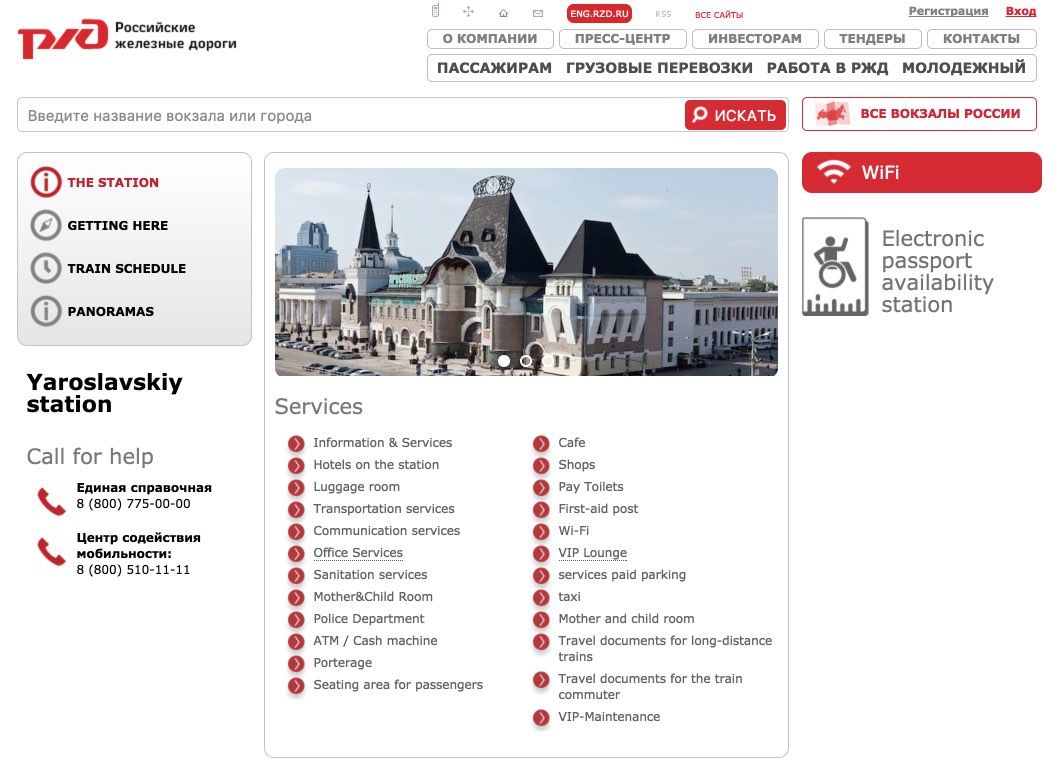
The railway network in central Russia is excellent and, for one-off day trips from Moscow, the train is the most efficient choice: you skip the traffic getting out of the city and prices are low. These are the three most useful routes:
- Moscow-Sergiyev Posad. Departure from Yaroslavsky station (Komsomolskaya metro). You have the express train (1 h 20 min, ~334 rubles, several a day) and the suburban trains (elektrichki) every 15-30 minutes, slower (1 h 30 min – 1 h 40 min) but cheaper.
- Moscow-Vladimir. Departure from Kursky station (Kurskaya metro), on the Lastochka train (1 h 38 min – 1 h 50 min, between 359 and 1,000+ rubles depending on the date). There are 8-11 trains daily, so it’s super convenient. Once in Vladimir, the bus to Suzdal leaves right opposite the station.
- Moscow-Yaroslavl. Also from Yaroslavsky station. Daytime Lastochka (3 h 15 min, ~900-1,500 rubles) or overnight trains (handy so you don’t lose time on the journey).
As a foreign traveller you won’t be able to pay with a Visa or Mastercard on the official RZD (Russian Railways) website due to sanctions. I explain how to work around this in how to buy train tickets in Russia despite the sanctions, and the carriage types and classes in trains in Russia: types, classes and what it’s like to travel by Russian train.
5.2. By bus

The bus is the cheapest option, although not the most comfortable (fixed seats, often without a toilet and dependent on traffic). Some useful routes:
- Moscow-Sergiyev Posad. Bus 388 from VDNKh metro station, every 15-20 minutes, 1 h 15 min if there’s no traffic.
- Moscow-Vladimir. From the Tsentralny Avtovokzal (Moscow Central Bus Station), about 3 hours, frequent departures.
- Moscow-Suzdal direct. 4 hours, from Tsentralny Avtovokzal, departures roughly every 30 minutes, around 1,500 rubles. Not always the fastest if there’s traffic getting out of Moscow; in many cases the Lastochka to Vladimir + bus to Suzdal combo works out better.
- Vladimir-Suzdal. Direct bus 159, 45-50 minutes, 130-150 rubles, every 15-30 minutes. The Vladimir bus station is right opposite the train station, so the combination with the Lastochka works perfectly.
5.3. By rental car or with a private driver
If you’re going to cover several cities, the car is the most comfortable option. The federal and regional roads in central Russia are in good condition, there are petrol stations every few kilometres and the distances between points are reasonable (about 100 km between each stop).
The alternative, without having to drive yourself, is to book a transfer with a driver: there are services that pick you up at your hotel and take you wherever you want, including trips between Golden Ring cities. More info in how to book transfers in Russia with a foreign card. For short trips within a city, Yandex Go (the Russian equivalent of Uber) works brilliantly and you pay directly through the app.
5.4. Organised tours with a private guide
If you don’t feel like wrestling with timetables, tickets and translators, booking a private tour is the most relaxed option. Most Moscow agencies offer 1-day tours to Sergiyev Posad, 2-day tours to Vladimir + Suzdal and full 4-7 day routes with everything included (transport, entrance fees and sometimes lunch).
5.5. Volga river cruise
A lesser-known option outside Russia but very popular among Russians: doing the Golden Ring from the water. Volga river cruises usually depart from Moscow or Saint Petersburg and pass through several cities on the route: Uglich, Yaroslavl, Kostroma and sometimes Myshkin and Plyos (Большое Золотое кольцо).
Typical durations are 5 to 10 days and everything is included (accommodation, full board, excursions at each stop and an on-board programme). It’s a quiet, very photogenic experience that takes care of all the logistics, although stops only last a few hours and don’t give you much room to dive deeper into each city.
6. Where to sleep on the Golden Ring
The accommodation offer is wide and fairly affordable by European standards, but don’t expect international 5-star hotels: the Golden Ring is the territory of “boutique hotels”, provincial inns and charming little guesthouses. The good news is that a double room in a 4-star hotel in Suzdal goes for around €60-90 and in Kostroma or Vladimir, even less.
Some pointers by city:
- Suzdal: the best hotels on the Golden Ring. Look at boutique hotels like Mira Hotel, Pushkarskaya Sloboda (a themed “village” with wooden houses) and Heliopark Suzdal.
- Vladimir: more urban options, several central 4-star hotels.
- Yaroslavl: as the largest city, you’ll find everything from international hotels (Ibis, AZIMUT) to tourist apartments.
- Kostroma: 3-4 star hotels and family-run B&Bs, all at good prices.
- Sergiyev Posad, Pereslavl, Rostov, Uglich, Ivanovo: simpler options, dominated by locally-run hotels and the occasional renovated Soviet-era hotel. Useful if you’re spending the night, but not spectacular.
Since Booking stopped operating in Russia with Western cards, foreigners use alternative platforms. The best option is to search and book with a foreign card through the platforms that still accept Visa/Mastercard issued abroad. I walk you through it step by step in how to find hotels, apartments and hostels in Russia with a foreign card.
7. What to eat and where
Golden Ring cuisine is traditional Russian cooking, hearty and comforting: don’t expect haute cuisine in most cities. Expect dishes from the Moscow outskirts, soups (borscht, solyanka, shchi), pelmeni, blini, cold salads and baked river fish or meat. Some local specialities worth trying:
- Rostov Veliky: dishes with fish from Lake Nero, pike in okroshka (cold soup) and sweet onion specialities (jam and jelly-jam).
- Yaroslavl: the famous Yaroslavl pickles, the “Mologa” cheese and a starter called Razsol.
- Kostroma: artisan cheeses (Kostroma has its own Cheese Museum with tastings), sychug (fermented dairy products) and black salt, a salt flavoured through a special process that adds a curious touch to salads.
- Suzdal: medovukha (the most typical drink), cucumbers in a thousand versions (fresh, brined, in jam) and the surprising “cucumber raf coffee”, served only here.
- Vladimir: Vladimir cherries (the prize cherry of central Russia) and the sweets and jams made from them.
Prices are very reasonable: a full meal at a good tourist restaurant in Suzdal or Yaroslavl runs around 800-1,500 rubles per person (€8-15), less than the same thing would cost in Moscow.
8. What to buy in each city
One of the charms of the Golden Ring is that each city is famous for a different craft or product. If you’re planning to take souvenirs home, here’s your cheat sheet:
- Sergiyev Posad: matryoshkas, this is the birthplace. The first one was carved here in the 19th century and you can find everything from miniatures to hand-painted collector pieces.
- Pereslavl-Zalessky: spiced fish from the lake (actually ряпушка, an endemic species) and local mineral water.
- Rostov Veliky: finift (fired enamel), miniature painted icons and linen tableware.
- Yaroslavl: bear figurines carved in wood or ceramic (a nod to the city’s founding legend), Yaroslavl chocolate and painted ceramic tiles (izrazets).
- Uglich: wristwatches by the “Chaika” brand, whose old Soviet factory is still running, and miniatures featuring the red church.
- Kostroma: “Kostromskoy” cheese, black salt, linen and silver filigree (skan) from Krasnoye-on-Volga.
- Ivanovo: fabrics and scarves in printed calico (it’s the textile capital of Russia), and lacquer miniatures from Palekh, the nearby village.
- Suzdal: medovukha, cucumber jam, traditional patchwork sewing (loskutnoye shitye) and birch bark crafts (beresta).
- Vladimir: cherry jams and sweets, and if you stop in Gus-Khrustalny, blown glassware.
If you want a general overview of typical Russian souvenirs (matryoshkas, vodka, caviar, samovars, fur hats), here’s the dedicated guide: which souvenirs to buy in Russia? from matryoshkas to Cheburashka.
9. Practical tips
A few things that aren’t obvious and that are worth knowing before leaving Moscow:
- Bring cash. In the smaller cities (Pereslavl, Suzdal, Rostov, Uglich) there are private museums, souvenir shops and family-run restaurants that don’t accept cards or only take cash. Withdraw rubles at a Moscow ATM before leaving, or get yourself a Russian MIR card so you don’t have to rely on cash.
- Almost no one speaks English. Beyond the staff at 4-star hotels in Suzdal, Vladimir or Yaroslavl, the language barrier is real. Bring Google Translate in offline mode or, better still, Yandex Translator, which works better with Russian. Learn to read the Cyrillic alphabet even at a basic level — it’ll help you with signs and menus.
- Yandex Maps, not Google Maps. In Russia, Yandex Maps is far superior: it has up-to-date timetables, public transport routes, local reviews and works offline once you’ve downloaded the maps. Yandex Go is the equivalent of Uber for booking taxis. For both to work properly you need internet, so grab a eSIM before you travel.
- The “tourist passport” of the Golden Ring. It’s an official discount card (10-15% at hotels, restaurants and private museums in the network) issued only at the offices in Vladimir (Mira Street, 36B, “Nebo33” pavilion) and Yaroslavl (Revolyutsionnaya Street, 30). It costs 1,000-1,500 rubles and is valid for 10 years. Useful if you’re doing the full route; if you’re only visiting Sergiyev Posad for a day, it doesn’t pay off.
- Buy museum tickets at the ticket office. Russian museums’ online platforms don’t accept foreign cards and are often only in Russian. In most cases, tickets (300-500 rubles per museum) can be bought at the ticket office itself without queues.
- Dress code in monasteries and churches. Women must cover their heads and, in general, shorts and bare shoulders are not allowed. At monastery entrances there are usually loaner headscarves and wrap-around skirts, but bring your own just in case.
- Visa, invitation, insurance and migration card. To enter Russia you still need a visa (or an eVisa, depending on your nationality), an invitation letter, valid medical insurance and to fill in the migration card on arrival. If you have doubts about the current situation in the country and whether it’s a good idea to travel, everything is explained in this article: travel to Russia now: is it safe?.
Frequently asked questions about the Golden Ring of Russia
How many cities does the Golden Ring of Russia have?
Since March 2018, the Golden Ring officially consists of 9 cities: Sergiyev Posad, Pereslavl-Zalessky, Rostov Veliky, Yaroslavl, Uglich, Kostroma, Ivanovo, Suzdal and Vladimir. The original route (1967) had 8, and Uglich was the ninth to be added by a decision of the Russian Ministry of Culture.
Which is the best Golden Ring city for a 1-day trip from Moscow?
Sergiyev Posad. It’s only 75 km away, there are express trains every few hours (1 h 20 min) and everything important is within a 20-minute walk of the station. In a single day you have plenty of time to see the Trinity Lavra of St. Sergius (UNESCO), have lunch in the centre and head back to Moscow.
Is it worth visiting Vladimir and Suzdal in a single day?
You can, but you’ll skim through everything. With the morning Lastochka you reach Vladimir in 1 h 40 min, take a bus to Suzdal (45 min), see Suzdal in passing and rush back. If you can, do it over two days with a night in Suzdal: you get much more out of it and you’ll enjoy the village atmosphere at sunset and sunrise, when it’s at its best.
How many days do I need to see the whole Golden Ring?
To see all 9 cities without stress, count on 6 or 7 days, sleeping in Pereslavl, Yaroslavl (two nights), Kostroma and Suzdal (two nights). If you’re in a hurry, in 4-5 days you can do half the route (Sergiyev Posad, Pereslavl, Rostov, Yaroslavl and Kostroma, or alternatively Vladimir, Suzdal and Ivanovo).
Is it better to do the Golden Ring independently or on an organised tour?
It depends on your level of adventure and your language skills. If you’ve never been to Russia and don’t speak any Russian, an organised tour with an English-speaking guide solves the logistics and the language barrier. If you already know the country, the best option is to rent a car or hire a private driver for full flexibility.
When is the best time to visit the Golden Ring?
May and September are the ideal months: pleasant temperatures (15-20 °C), long days, all museums and churches open and less domestic tourism than in July-August. Winter (December-February) is very photogenic with snow, especially in Suzdal and Kostroma, but it’s very cold and the days are short. Avoid March and early April, which is the thaw season when everything turns to mud.
Are there international hotel chains on the Golden Ring?
Very few. Only in Yaroslavl will you find chains like Ibis or AZIMUT. In the rest of the cities, the options are local 3-4 star hotels, boutique hotels and family-run guesthouses. The good news is that prices are very reasonable (€60-90 for a double room in a 4-star hotel in Suzdal) and the service tends to be more authentic.
Can I pay with a Visa or Mastercard on the Golden Ring?
No. Since 2022, foreign Visa, Mastercard and American Express cards don’t work in Russia. Large hotels in Yaroslavl or Suzdal might accept a Russian MIR card if you’ve issued one in your name while in the country; everywhere else, you’ll have to pay in cash. Bring rubles in cash for the whole trip or get a MIR card before leaving Moscow.
In This Article
Was this useful? I'll tell you when something changes in Russia
One short email a month with what has changed for travellers (visas, payments, border crossings, apps), based on what readers report to me from Russia. More than 4,000 of us already. No spam: if you ever lose interest, unsubscribing is one click.
Irena DomingoAbout Me
I was born in Russia. I grew up between two worlds: my father was Russian, my mother Spanish — a descendant of the "Children of Russia", the Basque children evacuated to the USSR during the Spanish Civil War. I've worked as a translator, interpreter and Russian teacher for over 30 years, and since 2013 I've been writing this blog to help travellers discover Russia with practical, always up-to-date information. Author of the Russiable Guide. If this blog has helped you plan your trip, you can buy me a coffee ❤️.
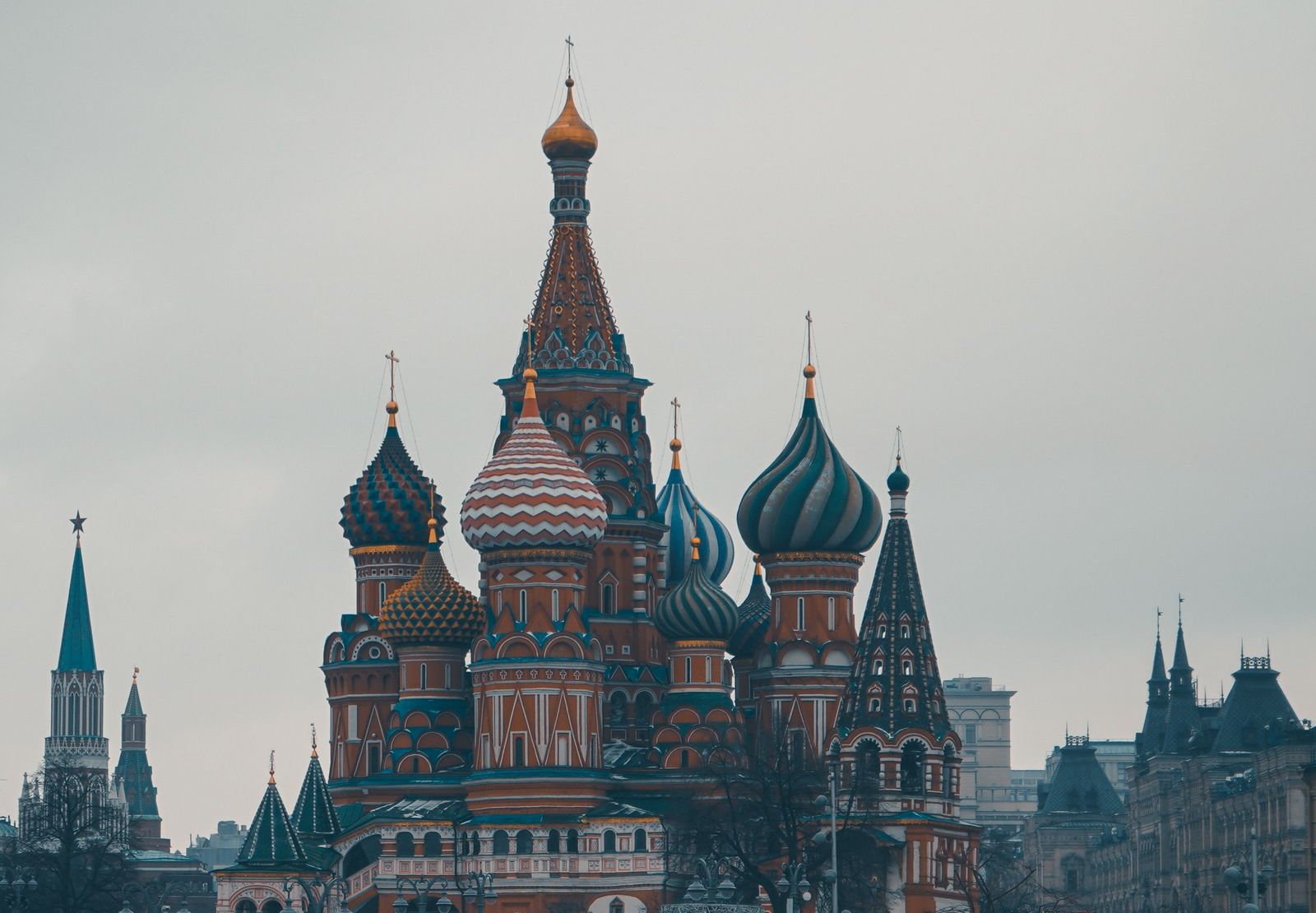 Things to Do in Moscow: 15 Must-Sees and Hour-by-Hour Itineraries for 1 to 5 Days
 Where to eat in Moscow: restaurant types, what to try and prices
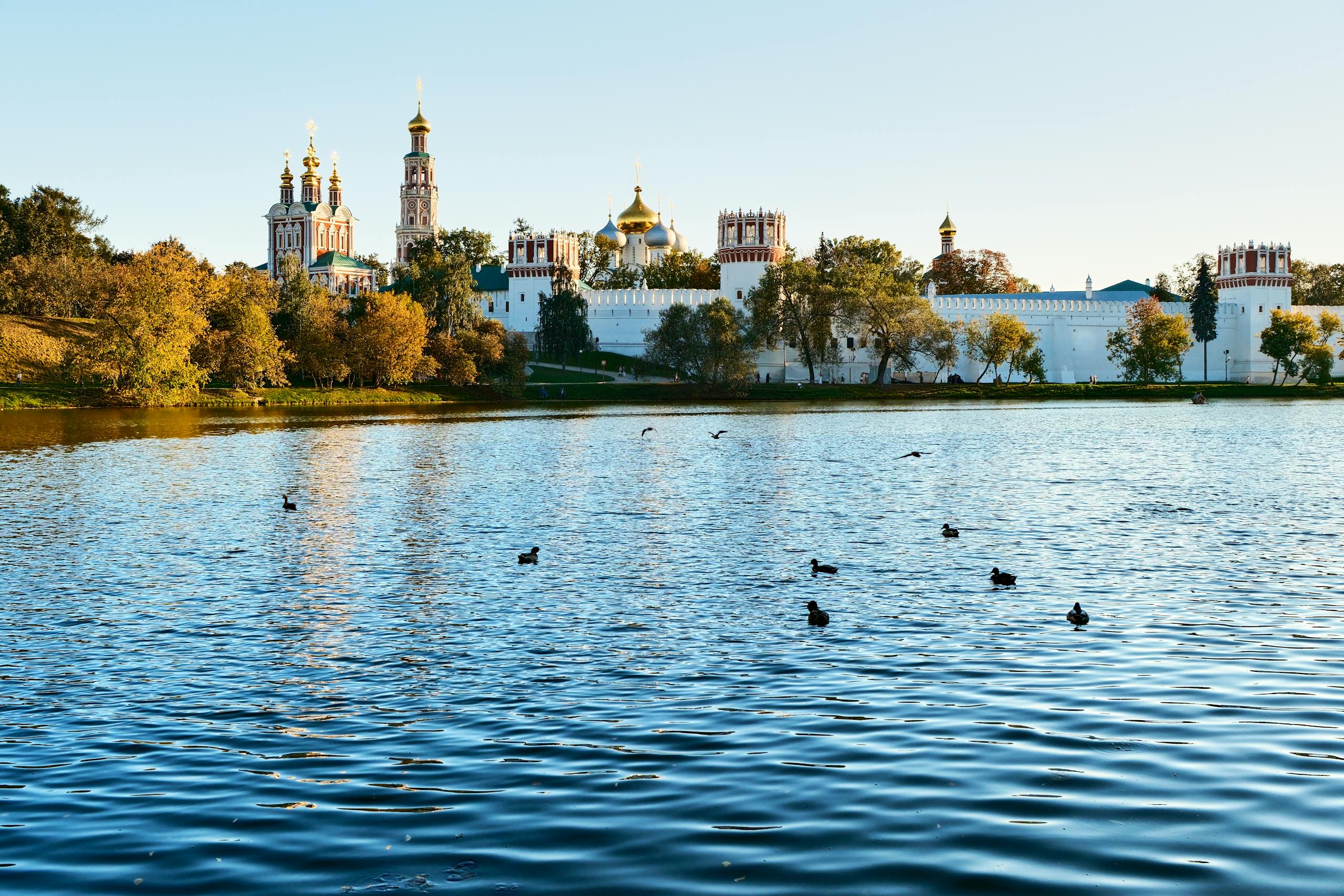 Novodevichy Convent and Cemetery in Moscow: a corner with more history than the Kremlin