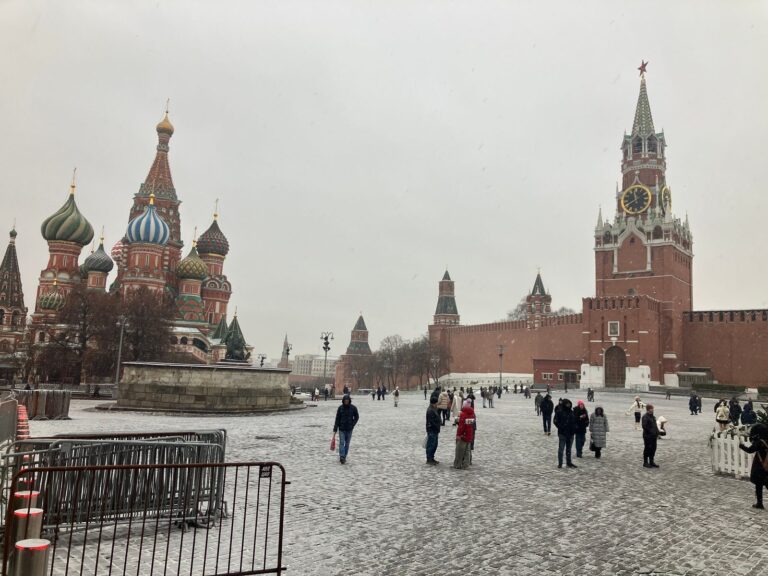
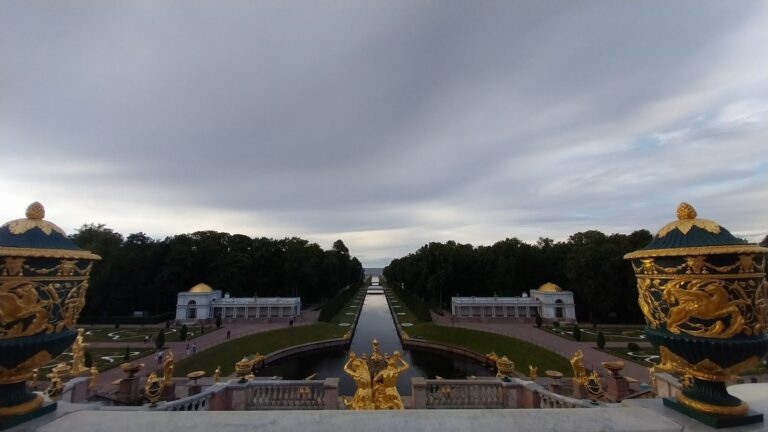
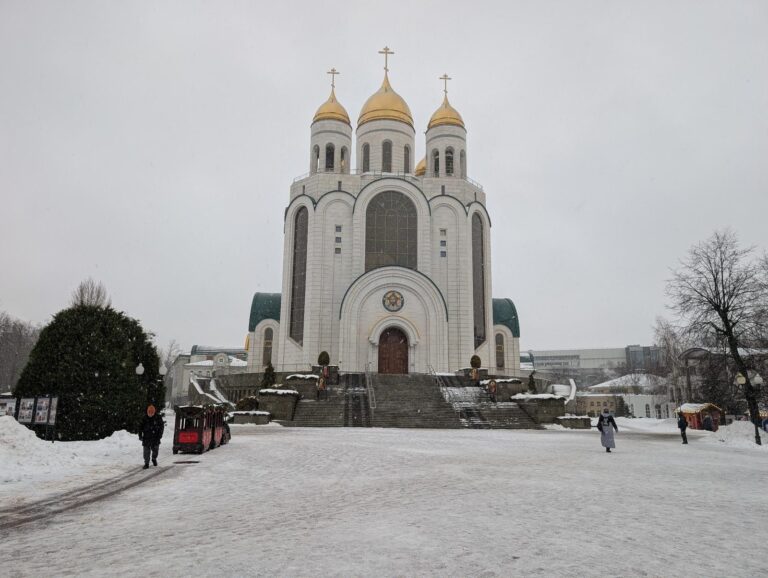
Today I’m launching a new section of the blog: stories from travellers who have been to Russia recently and tell me, with no filters, how it went for them. And I can’t think of a better way to start than with Philippe’s account, a French reader who wrote to me the moment he got back from his trip, on 26 June 2026.
His trip was anything but short: 3 weeks along the Trans-Siberian from Moscow to Vladivostok, with stops along the way, and the return to Moscow in one go —7 days straight on the train— before heading back to France via Istanbul with Turkish Airlines. If you’re thinking of doing this route, I’d recommend reading my complete Trans-Siberian guide first; Philippe’s story is the perfect companion to it: what really happens on the ground.
What follows is his account, translated from French, with his own tips and his own photos. Thank you, Philippe, for sharing it.

The hotel registration surprise
I have some news to share. On my way back to Moscow, at the very same hotel I’d chosen on the way out, the receptionist asked me for the “registration” from the previous hotel. Something completely new: no one had asked me for anything like it the whole trip. When she saw that my last hotel had been 7 days earlier in Vladivostok, she asked where I’d stayed during that week. “On the train,” I replied. Her eyes went wide as saucers!
So here’s my advice: when you leave a hotel, ask for an invoice or the registration slip. It may come in handy later.
Irena’s note: registering foreigners is compulsory in Russia and it’s handled by your accommodation. I explain how it works in this article on registration, and what to do if your accommodation doesn’t register you.

“Nalíchnimi”: in Russia you can pay for almost everything in cash
Despite the positive news about using bank cards, I’d prepared myself to pay for everything in cash. That’s why I was carrying a lot of euros on me.
The magic word, apart from spasiba (thank you), is NALÍCHNIMI… just “nalích” will do. It means “in cash”. You can pay in cash almost everywhere, unless you fancy a burger at Rostic’s, the Russian KFC. There, without a card there’s nothing doing. Same at fast-food chains like McDonald’s or Burger King. I’m not a big fan, but after a week of bread, ham and cheese, a treat feels good.

Safety: I didn’t lose a single cent
On this point, I want to reassure future travellers: Russia is a safe country. You won’t get what happens back home, someone snatching your bag or mugging you. I carried my euros in a bum bag, tucked inside my backpack, and I didn’t lose a single cent.
I even dropped a rouble note in the street: someone gave it back to me. And with my passport, which fell out of my pocket in a hypermarket, the same thing: a Russian let me know. Hats off!

Eating without speaking Russian: my biggest problem
Food is a real problem if you don’t speak Russian. Deciphering a restaurant menu or the name of a grocery product is an absolute ordeal. Those who have a translation app with a photo feature have the upper hand. I didn’t have one, so my diet was limited to whatever I recognised on the supermarket shelves. And you soon end up going round in circles.
Once I tried ordering the dishes I saw being served at the neighbouring tables. Bad idea: I ended up with several plates in front of me. Luckily, the restaurant owner, full of compassion, packed the food into containers for me, doggy-bag style.

Your phone: never let it out of your sight
If there’s one object you should never let out of your sight, it’s your phone. It’s useful for everything: for translating, for finding your way (with the odd glitch, especially on Google Maps) and for sending photos and messages over WhatsApp.
Since I didn’t have a Russian SIM, before leaving I signed up in France for an international plan from Free at 20 euros a month. It works well, but not everywhere: as soon as I entered eastern Siberia, past Khabarovsk, I could no longer send images over WhatsApp; the messages, luckily, still got through. The only alternative was email, but with how slowly it loads, it’s a real pain to send photos that way.
Irena’s note: if you don’t want to rely on your carrier’s roaming, here are the eSIMs that work in Russia.
Exchanging euros in Russia: pristine banknotes only
Last point, but a vital one: exchanging euros at the banks. This can’t be stressed enough, and it’s essential: you have to hand over banknotes IN MINT CONDITION. At first, when I still lacked confidence, I kept euros stuffed in my socks. With the heat and the sweat, my banknotes suffered. The result? Half my euros were refused. Just as well I’d brought plenty to spare.
The bank least fussy about the condition of the notes is Sberbank, but its exchange rate isn’t one of the best. Better to check Alfa Bank.
Another important detail: above a certain amount (around 450 euros, generally), the cashier will ask for your passport… TRANSLATED into Russian. I’d never have prepared for something like that. Luckily, you can exchange smaller amounts without showing your passport.
Irena’s note: you’ll find all the information on bringing cash euros to Russia and on where to exchange euros for roubles in their respective articles.
Airport checks: don’t regret taking the train
Don’t regret choosing the train instead of the plane for the Vladivostok–Moscow return: airport checks are hellish, and it gets worse when you pass through Istanbul on the way back to France. They literally turn your hand luggage upside down. They confiscated a bottle of mine… of mineral water, with the threat of a fine thrown in.

What I take away from Philippe’s story
That’s Philippe’s account. I take away four very concrete tips that don’t usually appear in the guidebooks: always ask for the registration slip when you leave each hotel, learn the word nalíchnimi, carry your euro notes in pristine condition (no socks) and, if you’re going to exchange more than around 450 euros at once, bear in mind that they may ask for your passport translated into Russian.

Have you travelled to Russia recently and want to share your experience? Write to me with your story and your photos and I’ll publish it in this section, under your name or anonymously, as you prefer. Accounts like Philippe’s are the ones that really help those planning their trip.