Guy lives in Rivesaltes, in the Pyrénées-Orientales in the south of France, and in March 2026 he did what plenty of people dream about and never get round to: Moscow to Vladivostok on the Trans-Siberian, 7 days and 7 nights in one go, without getting off the train, to catch the ferry to South Korea and carry on to Japan.
His story is valuable for two reasons. First, because he nearly didn’t go at all: his original route went through Belarus, and a week before leaving he found out that his electronic visa wasn’t valid for entering Russia from Minsk. Second, because he describes, without romanticising it and without complaining, what you actually do for seven days in a four-berth compartment. If you want to compare it with a different way of travelling, read Philippe’s story too: he took three weeks over the same route, stopping along the way.
Guy’s trip at a glance
| Traveller | Guy, from Rivesaltes (Pyrénées-Orientales, France) |
| When | March 2026 |
| Entry into Russia | Electronic visa (eVisa), by plane: Marseille – Istanbul – Moscow |
| Route in Russia | Moscow → Vladivostok on the Trans-Siberian, without getting off along the way |
| Time on the train | 7 days and 7 nights, leaving Yaroslavsky station at 1 a.m. |
| Class | Kupé (four-berth compartment) |
| Train ticket | €430, paid from France before leaving |
| Accommodation | Minima Kitay Gorod in Moscow · KamInn in Vladivostok (5,000 ₽) |
| Cash brought | €600 (train and hotels already paid from France) |
| Internet | Local SIM card (data only) bought at the station: 1,000 ₽ for a month |
| What came next | Ferry Vladivostok → South Korea (about €300), then Japan |
Guy’s route on the map
Approximate route: Marseille – Istanbul – Moscow flight (dashed line), then the Trans-Siberian from Moscow to Vladivostok (solid line).
What follows is Guy's story, translated from French, with his tips and his own photos. Thank you, Guy, for sharing it.
A brilliant idea… that didn't work
I started planning my trip in December 2025, using the Russiable guide as my starting point. Step one was applying for the electronic visa, which I got in three or four days. Nothing to report: that was the easy part.
To get to Moscow, I'd had what I thought was a brilliant idea: fly to Vilnius in Lithuania, bus to Minsk in Belarus, then the Minsk–Moscow train. Everything was booked and paid for, hotels included. All good… until, a week before leaving, I contacted the Belarusian embassy and learned that you can't enter Russia from Belarus on an eVisa. I cancelled everything and bought a different trip: Marseille – Istanbul – Moscow. The hotels I'd booked on Booking, the bus and the train were all refunded.
Before leaving, I'd already booked and paid for the Trans-Siberian from France: €430 for Moscow–Vladivostok without getting off, bought online with my French card. My goal was to reach Vladivostok in time to catch the ferry to South Korea, and then Japan. For hotels in Russia, I used the Ostrovok app: the site is in French, you pay by card from France, and it's laid out a lot like Booking.
Budget-wise, since the train and hotels were already paid for, I didn't have any big expenses to plan for: €600 in cash was enough for the whole stay, ferry included (and the ferry is fairly expensive, about €300).
Moscow: a simple hotel, a left-luggage office and no internet
In Moscow I stayed at the Minima Kitay Gorod hotel. Simple and friendly, and above all ten minutes' walk from Red Square and very close to the metro.

A tip for the day of waiting before the train: don't use the luggage lockers inside the station. They're complicated to use, everything is written in Russian, and I think you have to pay by card. On the pavement opposite there's a tobacco shop that stores luggage in its back room: 500 roubles for 24 hours, and that's that.
While I was in Moscow, internet outages were very frequent, including in hotels, where it didn't work very well. Phone and bank card put away: pure bliss.
Phone put away, yes, but at the station there was a little pop-up kiosk run by two students selling SIM cards for 1,000 roubles, valid for a month. Data only. I got one and, in the end, I managed to send emails every day: it worked fine. No translator, of course, but since I don't speak Russian, a small paper phrasebook was more than enough for what I needed.

Leaving at 1 a.m. from Yaroslavsky station
The train left at one in the morning on 17 March from Yaroslavsky station. Before leaving, I'd read a lot and watched videos: some travellers prefer to go third class, apparently it's better, you meet Russians, and so on. But either way, the language barrier is there. I went for a four-berth compartment, the kupé.

In the end, over the seven days on board, most passengers only stayed for 24 hours. Just one, who got on in Moscow with me, stayed for five days. It's a long way from the big closed-door drama people imagine.
Seven days of snow outside the window
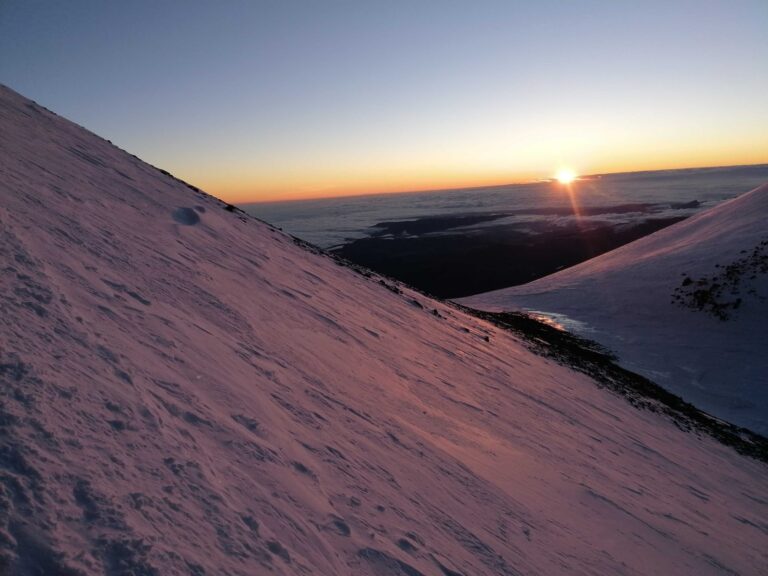
In March, Russia is under snow and the landscapes are magnificent. That's really what struck me most: hours and hours of white, forests, villages and frozen rivers.


My only regret: the train I took passes Lake Baikal at night. Seven days on a train only to miss the one stretch everyone waits for: it comes down to a few hours in the timetable.
The stops: smokers on the platform and stocking up
The train stops often. Smokers rush onto the platform as soon as the doors open. At the long stops, sometimes nearly an hour, you have time to leave the station and go and buy food.


Eating on board: the dining car saved me
Russians get on the train loaded with bags of food. I, as a beginner, had bought enough to last 24 hours at the station. In other words, not much for seven days.

Luckily there's a dining car, with a set menu of the day at a very fair price: about €6. At the big stations there are also informal vendors selling all sorts of things, but the king of food is still the Chinese instant noodle pot. I saw a few people selling dried fish further east, around Lake Baikal.

Seven days on a train: scary? Not really
For some people, seven days on a train can sound scary. I admit you need to keep yourself busy. But after a day or two you settle into a pleasant routine: tea, the window, the stops, the meals, the people getting on and off. Time passes differently.

At the end of the line: Vladivostok
At the end of the line, the magnificent city of Vladivostok. I found it a lively, interesting city. I stayed at the KamInn hotel, newly renovated, in a central area, for 5,000 roubles. After seven nights on the train, it felt good.
A few days later, I took the ferry to South Korea.
Have you travelled to Russia recently and want to share your experience? Tell me about your trip here and I'll publish it in this section, under your name or anonymously, whichever you prefer. Stories like Guy's are the ones that really help people planning their trip.