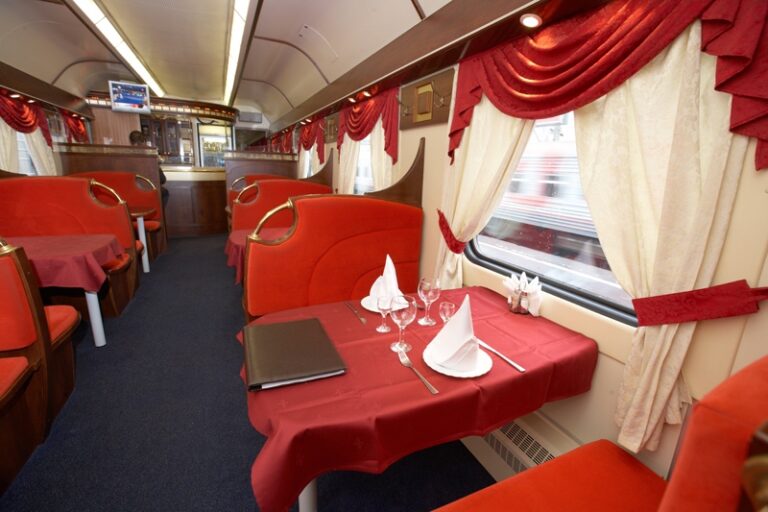
Vladivostok is the end (or the start) of the Trans-Siberian: 9,288 km from Moscow, seven hours ahead on the clock and the Sea of Japan right in front of you. In this guide I cover everything you need in practice: how to get there and how to leave, which visa works, how many days to spend, what not to miss (with a map) and how to carry on by ferry to South Korea, with information updated for 2026.
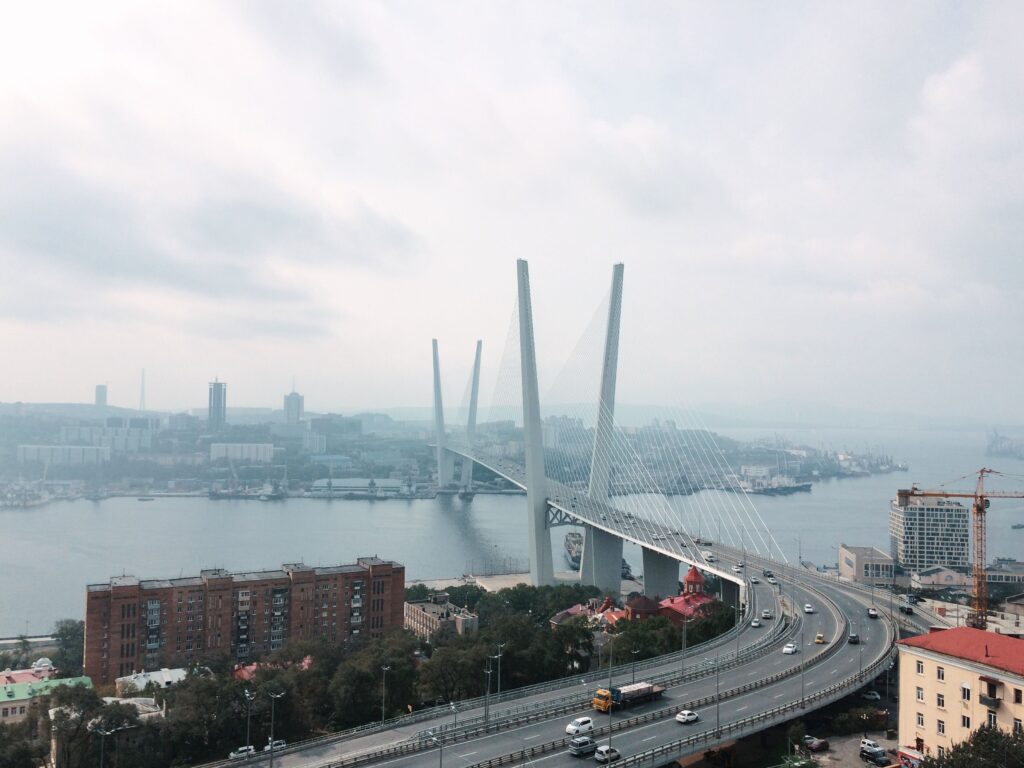
Vladivostok doesn’t look like any other Russian city. It’s built on hills (locals call them sopki) around a bay named the Golden Horn, like the one in Istanbul, and the strait separating it from Russky Island is called the Eastern Bosphorus. It has early 20th-century European facades, a very Asian feel in its food and shops, and two huge bridges you can see from almost everywhere. I’ll walk you through all of it so you can make the most of it, whether the Trans-Siberian ends here or starts here.
Vladivostok in one minute: what you need to know
- Where it is: in the far south-east of Russia, on the Sea of Japan, very close to the borders with China and North Korea. It’s the capital of Primorsky Krai and, since late 2018, of the Far Eastern Federal District.
- Time zone: UTC+10. That’s 7 hours ahead of Moscow, 9 hours ahead of London in summer (10 in winter) and 14 hours ahead of New York in summer (15 in winter).
- Visa: the Russian eVisa is valid for entering and leaving through Vladivostok, but not every passport can get one (more on that below).
- How many days: 2 or 3 days are enough for the city and Russky Island. If you want beaches and trips along the coast, allow 4 or 5.
- Best time to go: August and September.
- Money: foreign Visa and Mastercard cards don’t work in Russia. Bring cash or get a MIR card.
Is the Russian eVisa valid for Vladivostok?
Yes. In fact, the eVisa was born here: in 2017 Russia launched the Free Port of Vladivostok eVisa, the forerunner of today’s unified eVisa. With the current eVisa you can enter and leave through these points in the region:
- Vladivostok Airport (Knevichi).
- Vladivostok seaport, the same one the ferry to South Korea uses.
- The border railway stations of Pogranichny (towards China) and Khasan (towards North Korea).
- The road border crossings of Poltavka and Turiy Rog, towards China.
Since 23 August 2025 the eVisa lets you stay in Russia for up to 30 days (it used to be 16), and you have 120 days from issue to use it; I explain it in this article on the new duration. It’s still single-entry, though. You can enter through one point and leave through another, as long as both are on the official list (Moscow, St Petersburg and almost all major airports are). Thirty days is enough for the Trans-Siberian with several stops; if you need more time or more entries, you’re better off with a regular tourist visa and a letter of invitation.
Important if you’re from the US, the UK, Canada, Australia or New Zealand: these passports aren’t eligible for the eVisa, so you’ll need a regular tourist visa. Vladivostok works just the same with a regular visa. You can check what applies to your passport in my guide to Russian visa requirements by nationality.
If you can use the eVisa, you’ll find all the requirements in my step-by-step guide to the Russian eVisa, and if you’d rather have help with the application, there’s my eVisa help service. And remember that you need medical insurance valid in Russia for either visa.
How to get to Vladivostok
By train: the end of the Trans-Siberian
The legendary train is the Rossiya (number 002 from Moscow to Vladivostok, 001 the other way). It leaves Moscow’s Yaroslavsky station every day and covers 9,288 km in almost 7 days (about 166 hours). There’s another direct train that’s a bit faster, at around six and a half days. As a rough guide, the whole route costs from about 12,000–14,000 ₽ in open-plan third class (platskart) and from about 14,000–17,000 ₽ in a four-berth compartment (kupé), and prices go up a lot in summer. Trains also arrive from Khabarovsk (one night), Irkutsk or Novosibirsk, so you can do the trip in stages and stop at Lake Baikal or in Novosibirsk.
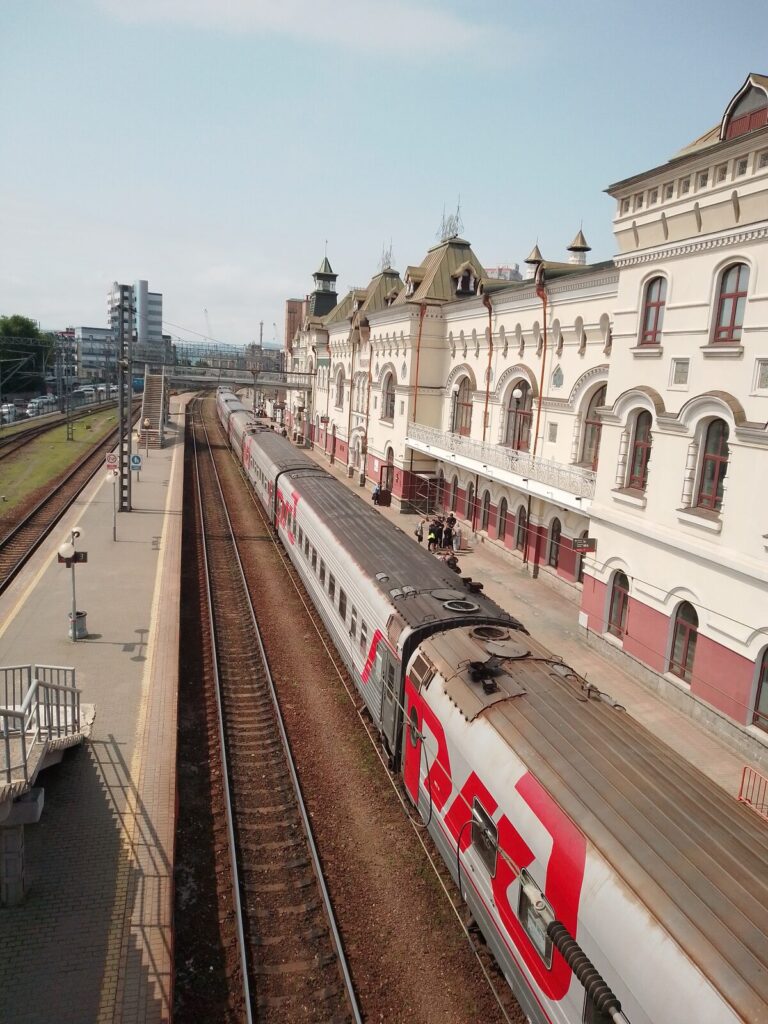
Vladivostok station is a smaller copy of Yaroslavsky station in Moscow, where the journey begins, and it’s right in the centre. On the platform you’ll see the famous 9288 km marker, the must-have end-of-trip photo. Everything you need to plan the route is in my complete Trans-Siberian guide, and how to buy tickets from abroad is on my page about train tickets in Russia.
A detail that trips people up: since 2018, RZD tickets show the local time of each station, not Moscow time. Between Moscow and Vladivostok the clock moves forward 7 hours, so double-check the departure time of every leg.
By plane
It’s the fastest option. There are direct flights from Moscow every day and the flight takes about 9 hours. From St Petersburg there are direct flights in high season and, the rest of the year, flights with a stop in Siberia. Vladivostok airport also has flights to several Chinese cities, such as Beijing, Shanghai and Harbin. Since Skyscanner and similar sites no longer show flights to Russia, I explain how to book them with a foreign card on my page about flights to Russia.
From the airport to the city centre
Knevichi Airport (VVO) is about 40 km from the centre. You have three options:
- Aeroexpress: a direct train to the main station in about 50 minutes. There are only a few a day and the timetable changes often, so check it on expresspk.ru before you go.
- Bus 107: the cheapest option. It takes a little over an hour and also ends at the railway station. It runs during the day.
- Taxi: order one through Yandex Go or Maxim, and ignore the drivers who approach you at the exit. Expect from about 1,500 ₽. I go through the options on my page about transfers in Russia.
Time difference and jet lag
If you arrive by train, you absorb the time change bit by bit, one hour a day. If you fly in from Moscow, the 7-hour jump all at once hits hard: many people say it took them two or three days to adjust. Sleep on the plane and don’t plan anything demanding for the first day.
If you start the Trans-Siberian in Vladivostok
Starting here and travelling west has a clear advantage: every day you “gain” an hour, and your body copes with that better than the other way round. You also finish in Moscow or St Petersburg, with far more flight options to get home.
There are three sensible ways to get here and start the journey:
- By plane from Moscow, after flying into Russia (via Istanbul, Dubai or another hub).
- By plane from China, if you’re coming from a trip around Asia. Most European passports, plus the UK, Canada, Australia and New Zealand, get 30 days visa-free in China, while US citizens still need a visa; I explain it in this article.
- By ferry from South Korea, from Donghae (details below).
There are buses from Vladivostok to Chinese border towns such as Suifenhe or Hunchun, but they’re designed for organised groups of Russians. For you, the easiest option is to fly.
How to leave Vladivostok
Once you reach the end of the line, you have four ways to carry on:
- Fly to Moscow (9 hours) and head home from there with one stop. It’s what almost everyone does. I explain which routes work in Russia’s borders.
- Go back to Moscow by train in one go: seven days straight on board. That’s what Philippe, a reader, did, and he tells the story in his Trans-Siberian chronicle. His tip: when you check out of each hotel, ask for proof of your registration, because back in Moscow he was asked where he’d slept that week. If you’d rather do it in stages, Rajendra and Jayshree spent a month getting from Moscow to Vladivostok.
- Fly to China and carry on around Asia.
- Cross to South Korea by ferry, the most unusual option.
By ferry from Vladivostok to South Korea
Yes, you can reach Korea by sea. In 2026 there’s only one regular route: the Eastern Dream, run by DuWon Shipping, between Vladivostok and Donghae, on Korea’s east coast. The other route, to Sokcho, has been suspended since 13 April 2026 with no restart date.
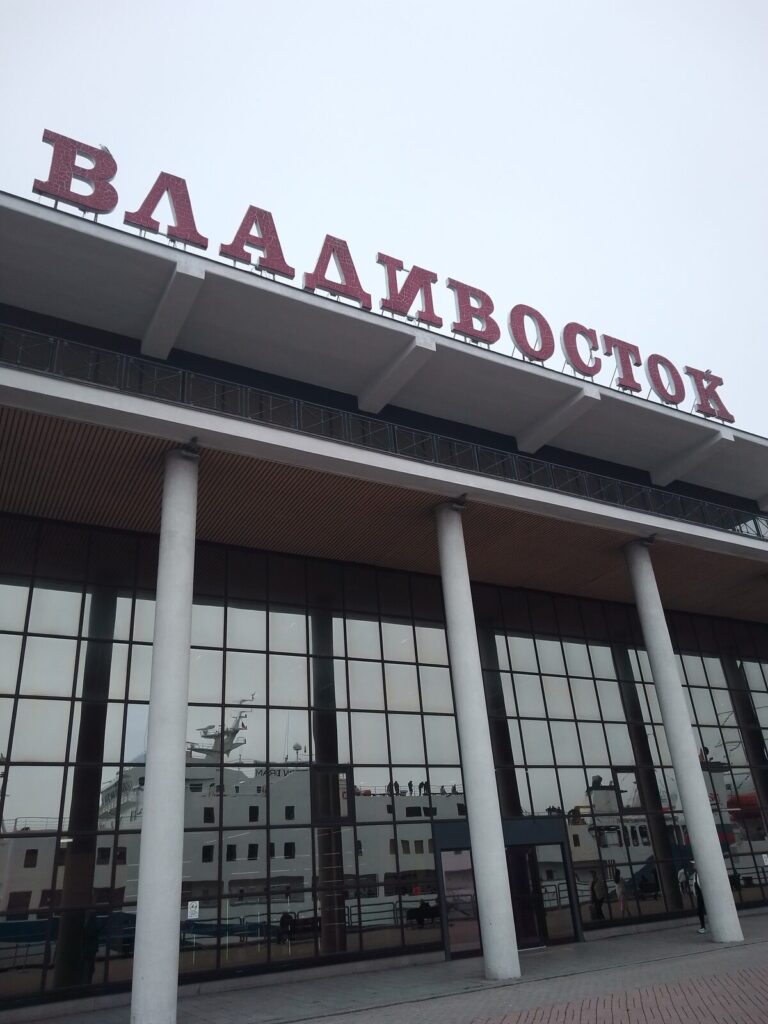
- Departure: from Vladivostok sea terminal, right next to the railway station. In summer 2026 it left once a week, on Wednesdays around midday, but the schedule changes with the season, so check the latest dates on ferryvl.com before planning anything.
- Duration: about 24 hours. You reach Donghae around midday the next day.
- Return: there’s also one sailing a week from Donghae (this summer, on Monday afternoons).
- Price: from about $290 one way in economy, plus about $60 fuel surcharge and about $30 port fees. A return starts at about $440 plus surcharges.
- On board: economy class means shared cabins with tatami mats or bunks with curtains. There’s a restaurant, but bring some food, warm clothes (the air conditioning is strong) and seasickness tablets. On board you can only pay in cash, in won or dollars.
- From Donghae to Seoul: the KTX high-speed train takes about 2.5 hours, and the station is 15 minutes from the terminal.
Where to buy tickets: from the general agent in Vladivostok, ferryvl.com (in the sea terminal; the site has an English version), from travel agencies in the city or on the company’s website, dwship.co.kr. The schedule changes with the season, and the same ship sometimes runs a loop that also calls at Sakaiminato, in Japan. Always confirm the dates before booking the rest of your trip.
Neil, a reader from Glasgow, came into Russia this way in summer 2026: he paid £266 one way for an economy berth and then spent almost three hours at immigration in Vladivostok, with his phone and laptop checked. He tells the whole story in his Far East chronicle, and if you’re wondering how common that is, read my article on phone checks at the Russian border.
Documents: Vladivostok port is on the eVisa list, so you can leave Russia by sea on an eVisa. For South Korea, US, UK, Canadian, Australian and New Zealand passport holders don’t need a visa for a short tourist stay and, until 31 December 2026, don’t need the K-ETA electronic travel authorisation either, because these countries are among the 22 temporarily exempted; you’ll still have to fill in the arrival card, which is also available online. With another passport, check whether you need the K-ETA (it costs 10,000 won, about $7, and is valid for three years): you apply and check on k-eta.go.kr.
What to see in Vladivostok: map of the must-sees
The map shows the places not to miss, numbered as in the list below. Red is the city centre, which you can see on foot; blue is Russky Island; green is the beaches around the city. Tap each point to see what it is.
● City centre · ● Russky Island · ● Around the city
The city centre, on foot
1. The station and the 9288 km marker. Start where the train stops: the early 20th-century station building is worth a look inside for its painted ceilings.
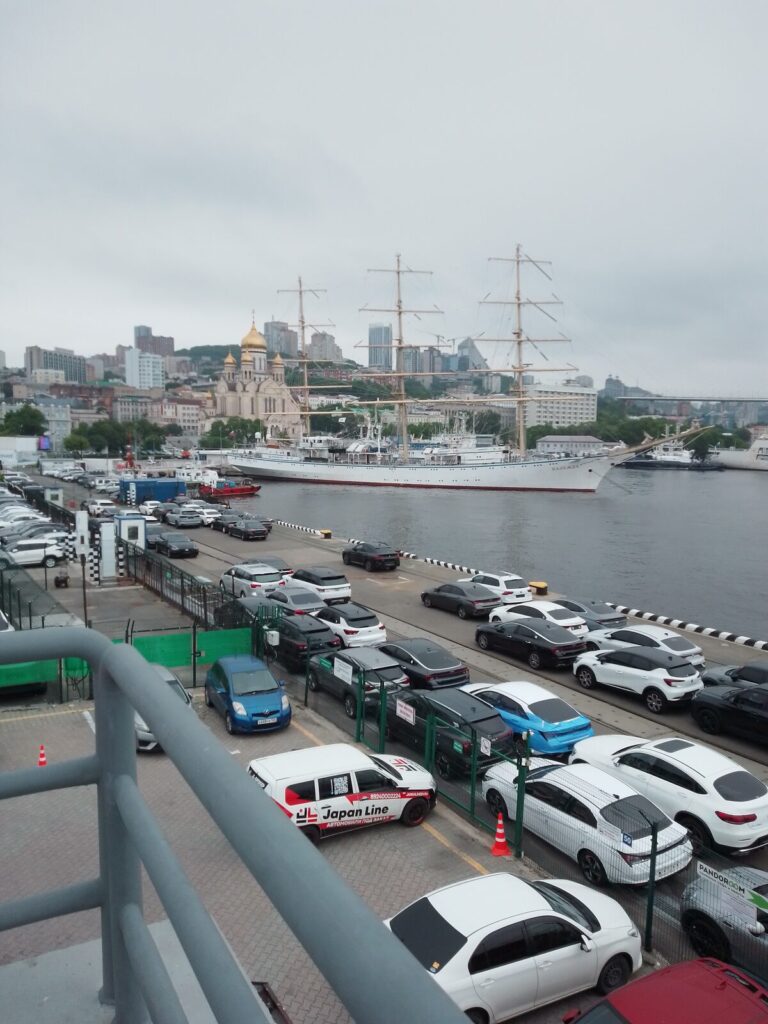
2. The sea terminal. Walk around it (during the day you can go through it) and out onto the terrace on the other side: you get a great view of the port and the Golden Bridge, and you'll often see the tall ship Pallada, a training vessel, moored there.
3. Central Square. Its official name is the Square of the Fighters for Soviet Power, and it's dominated by a large monument to the Civil War fighters. It sits right by the waterfront, and it's where the city holds its markets and festivals.
4. Admiral Fokin Street and Millionka. The liveliest pedestrian street in the centre, with cafés and shops, sloping down towards the sea. Duck into the courtyards around it: they're what's left of Millionka, the old early 20th-century Chinatown, famous back then for its opium dens and gambling houses.
5. Arsenyev Museum. The museum of Far Eastern history, at 20 Svetlanskaya Street. Svetlanskaya is the main thoroughfare and has the city's finest historic buildings, such as the old Kunst and Albers department store. Info at arseniev.org.
6. Sportivnaya Harbour embankment. The classic waterfront: a Ferris wheel, food stalls, people out for a stroll and, at sunset, the best atmosphere in town.
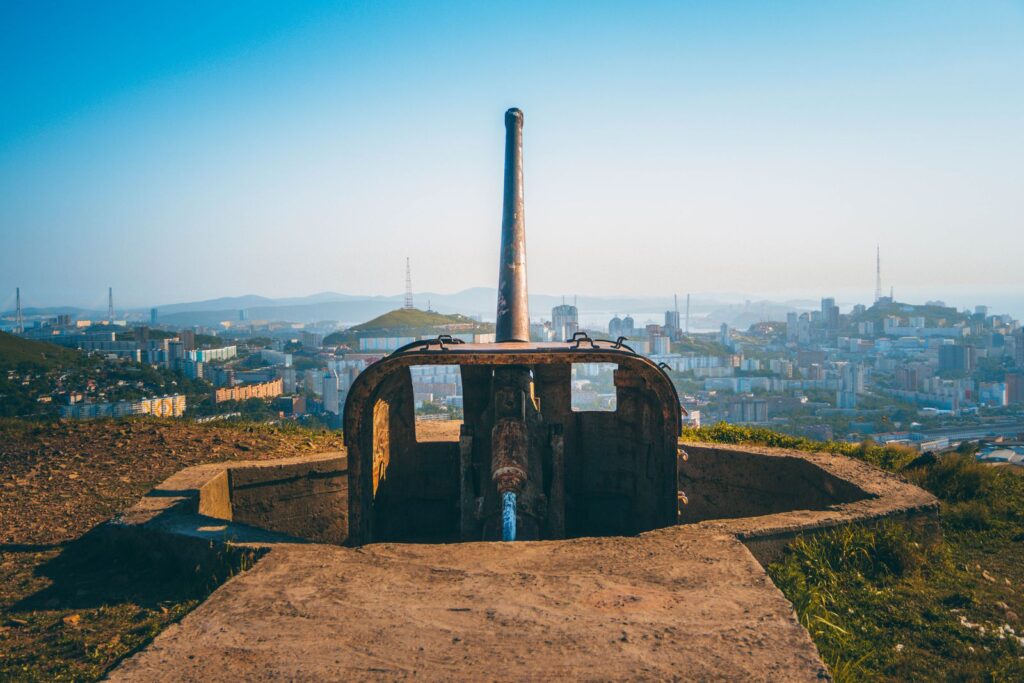
7. Vladivostok Fortress Museum. Above the embankment, in an old coastal battery: cannons, the city's military history and fine views over the bay.
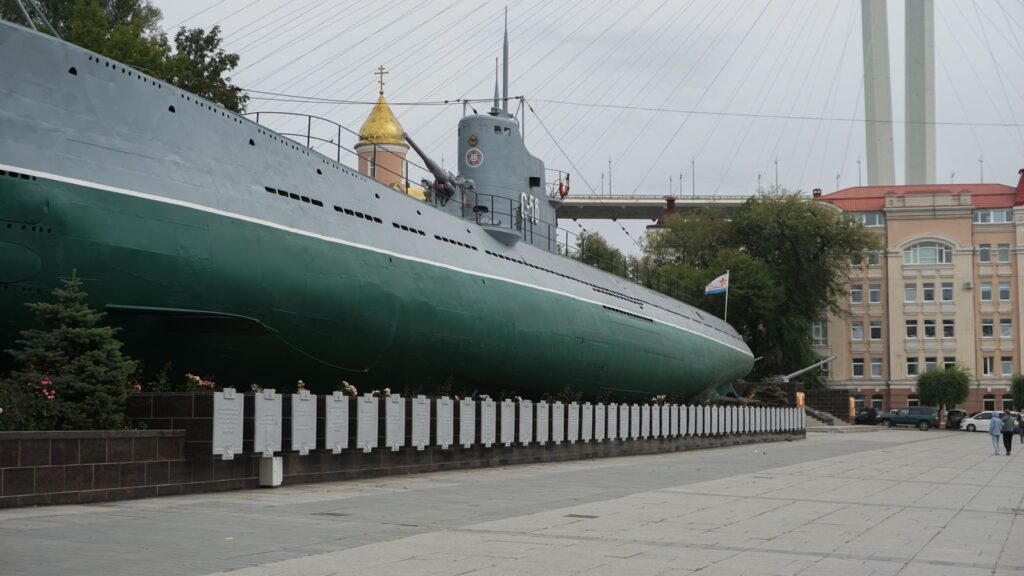
8. S-56 submarine and the Tsarevich Arch. On Korabelnaya embankment you can go inside the S-56 submarine, from World War II and now a museum. Next to it is the Tsarevich Arch, built in 1891 to welcome the future Nicholas II and rebuilt in 2003. From the nearby pier, boats leave for trips under both bridges; the short tour lasts an hour and is the best way to see the Russky Bridge up close.
9. The funicular. It has run since 1962 with the same cars and it's public transport: it climbs a very steep slope in a minute and a half for a few roubles. It saves you a lot of stairs.
10. Eagle's Nest viewpoint (Orlinoye Gnezdo). The postcard view of Vladivostok: the bay, the Golden Bridge and, in the distance, the Russky Bridge. The official viewing platform has been closed for works, but there's an informal viewpoint a little higher up, near the TV tower. Take the funicular up and carry on on foot.
11. Golden Bridge. The cable-stayed bridge over the Golden Horn, opened in 2012. It's for cars only, but you can see it from all over the centre and it looks beautiful lit up at night.
12. Tsarevich Embankment. A modern seafront promenade on the other side of the Golden Bridge, ideal for a quiet walk with views of the port.
13. Nagorny Park. A hilltop park with a viewpoint, benches and a few coffee stands. It's one of the few well-kept viewpoints in the city.
14. Primorsky Stage of the Mariinsky Theatre. The Vladivostok branch of St Petersburg's Mariinsky, with top-level opera and ballet. The building is modern and plain from the outside, but the inside doesn't disappoint. Programme at prim.mariinsky.ru.
15. Tokarevsky Lighthouse. The 1876 lighthouse at the end of a spit of pebbles that the tide covers and uncovers. Before you go, look up the Vladivostok tide times online and wear shoes that can get wet. In winter, on sunny days, you can sometimes see seals on the ice. The easiest way to get there is by taxi.
Russky Island
16. Russky Bridge. The one on the 2,000-rouble banknote: one of the longest cable-stayed bridges in the world, opened in 2012. You can't walk across this one either, so you'll cross it by bus or taxi on your way to the island.
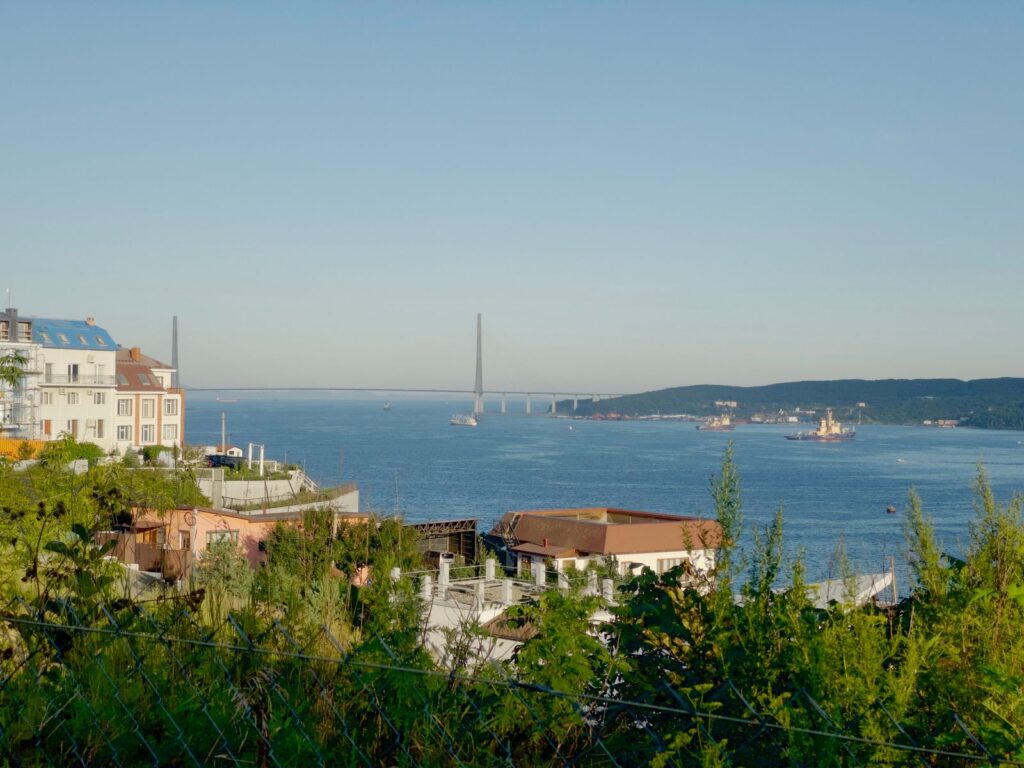
17. Novosiltsevskaya Battery. Part of the old fortress, right under the bridge: the best photo of the Russky Bridge from below.
18. Primorsky Aquarium. One of the largest in Russia, with a shell-shaped building and a dolphinarium. It's usually closed on Mondays; it opens from 10:00 to 20:00, with last entry around 18:45. Buy your ticket on the website, primocean.ru, and avoid weekend mornings.
19. Cape Tobizin. The island's star walk: cliffs, coves and a boardwalk trail that's fine even for children. Take bus 29 from the “TTs Izumrud” stop, get off at “Mini-TETs Kommunalnaya” and allow an hour to an hour and a half on foot. You'll see foxes with no fear of people at all: don't feed them, they're wild animals.
Around the city
20. Steklyannaya Bay (the glass beach). A beach covered in sea-polished pieces of glass, the remains of glass and porcelain dumped here decades ago. In the sun it's spectacular; under grey skies, much less so. The most practical way to get there is by taxi.
21. Shamora. The locals' favourite beach, with food stalls and a summer holiday feel. You can get there by bus from the centre in about 40 minutes.
If you'd rather have everything organised for you, there are day tours that combine the lighthouse, Russky Island and the glass beach.
What travellers say about Vladivostok
I've read a lot of reviews from travellers who've been to Vladivostok in recent years. Here's an honest summary of what they say, the good and the not so good.
What people like most:
- The bays and the sunsets. Many describe it as the city of sunsets and wind, and some say they found the scenery on Russky Island more beautiful than Baikal.
- The food. Super-fresh seafood (raw scallops surprise more than a few people) and chifanki, the cheap little Chinese restaurants you find everywhere.
- Russky Island. The Cape Tobizin trail is what families remember most.
- The people. Several travellers say locals helped them patiently and with a smile when they asked for directions in the street.
What people like least:
- Prices, especially for accommodation. Several travellers complain that below 5,000 ₽ a night there are almost only hostels, and in summer 2026 hotels like the Novotel started at about 12,000 ₽. One local added that food and restaurants feel more expensive than in Moscow.
- The weather. It can change several times a day: fog, sun, rain and wind in the same afternoon.
- The hills. It's all up and down stairs, and some people ended up changing their plans just to avoid climbing one more hill.
- The traffic, and a few dirty beaches near the city.
Advice from a Vladivostok local who often goes back: go in early September, book your accommodation well in advance and, if you can, get out of the city to the south of Primorye, where the real nature is.
When to go to Vladivostok
- August and September: the best time. August has more sunny days and gets up to 27–30 °C; September is mild and dry, and the sea is still warm.
- Early September: watch out, that's when the Eastern Economic Forum takes place and hotels fill up and put their prices up.
- May to July: fog season. With a bit of luck you'll see the bridges rising out of the mist; without it, you won't see a thing from the viewpoints.
- Winter: very cold because of the wind and humidity, with icy slopes. Only if that doesn't put you off.
- On the last Sunday of September the city celebrates Tiger Day, with a parade of people dressed as Amur tigers, the city's symbol.
Where to stay in Vladivostok
Stay in the city centre: Svetlanskaya Street, Aleutskaya Street, Okeansky Prospekt and the streets around them. Check the location on the map before you book: with all the hills, a “central” flat can end up at the top of a steep climb and far from public transport. Prices are high for Russia and there's not much available in summer, so book early. The big Western booking platforms don't work in Russia; I explain how to book with a foreign card in my guide to booking hotels and apartments in Russia.
Getting around, paying and internet
- Buses: the basic way to get around. You pay when you get off, at the front door, in cash or with a Russian card.
- Taxis: through the app (Yandex Go or Maxim). They're cheap and, with so many hills, very handy, although there's traffic at rush hour.
- Electric scooters: you'll find them for hire all over the city.
- Paying: cash in roubles or a MIR card for foreigners, which works in shops, taxis and on public transport.
- Internet: the easiest option is to install an eSIM for Russia before you leave.
What to eat in Vladivostok
People come here for the seafood: scallops (raw or grilled), sea urchins, king crab and fish from the Sea of Japan. With Asia so close, there are lots of Chinese, Korean and Japanese restaurants, and on the street they sell pyanse, a steamed Korean bun filled with meat and cabbage. To take home, the classic is chocolate from the local Primorsky Konditer factory, flavoured with seaweed or scallop: it sounds odd, but people like it.
If you're wondering whether it's a good time to go to Russia, I go through it calmly in travelling to Russia now. And if you still have questions about Vladivostok or the Trans-Siberian, ask me on the Russiable forum.
Frequently asked questions about Vladivostok
Can I enter Russia through Vladivostok on an eVisa?
Yes. The airport, the seaport, the Pogranichny and Khasan border railway stations and the Poltavka and Turiy Rog road crossings are on the unified eVisa list. It's single-entry, lets you stay up to 30 days and you can leave through any other point on the list. US, UK, Canadian, Australian and New Zealand passports aren't eligible for the eVisa and need a regular visa.
What is the time difference between Vladivostok and Moscow?
Vladivostok is on UTC+10: 7 hours ahead of Moscow, 9 hours ahead of London in summer and 10 in winter. Russian train tickets show the local time of each station.
How long does the train take from Moscow to Vladivostok?
The Rossiya train covers the 9,288 km of the Trans-Siberian in almost 7 days (about 166 hours); another direct train is a bit faster, at around six and a half days. By plane, the direct flight takes about 9 hours.
Is there a ferry from Vladivostok to South Korea?
Yes. The Eastern Dream links Vladivostok and Donghae in about 24 hours, usually with one sailing a week. Economy class costs from about 290 dollars one way plus surcharges. The route to Sokcho has been suspended since April 2026.
How many days do you need in Vladivostok?
In 2 or 3 days you can see the centre, the viewpoints, Tokarevsky Lighthouse and Russky Island. If you want beaches and trips along the Primorye coast, allow 4 or 5.
How do I get from Vladivostok airport to the city centre?
By Aeroexpress to the railway station (about 50 minutes, only a few a day), by bus 107 (a little over an hour) or by taxi booked through an app, from about 1,500 roubles.
What is the best time to visit Vladivostok?
August and September. From May to July there's a lot of fog, and winter is cold and windy. The Eastern Economic Forum is held in early September and hotels fill up.