Nicolas and Lara are 29 and 28, live in Paris and have been travelling around the world since January. Russia was one of their stops: 24 days, from 4 to 27 August 2026, from St Petersburg to Olkhon Island, by way of Moscow, Suzdal, Kazan, Yekaterinburg and three nights in a row on the Trans-Siberian. They entered on an electronic visa issued in four days, flew in from Tbilisi and left from Irkutsk for Bangkok.
Their story is one of the most complete I’ve received on the practical side of the trip: how they changed €3,000 in Georgia before entering, how they opened a T-Bank account the moment they landed at Pulkovo airport, what did and didn’t work for internet, how berths are allocated on night trains, what the stay cost them day by day, and the 45-minute check they went through on their way out of the country. If you’re planning a route to Siberia, it pairs well with Kira’s solo Trans-Siberian and Philippe’s three weeks on the Trans-Siberian.
What follows is Nicolas and Lara’s story, translated from French, with their tips and their own photos. I’ve shaped their text so it reads easily, but everything they tell is theirs. Thank you both for sharing it.
Nicolas and Lara’s trip at a glance
| Travellers | Nicolas and Lara, 29 and 28, from Paris, travelling around the world since January |
| When | 4 to 27 August 2026 (24 days) |
| Where | St Petersburg, Moscow, Vladimir, Suzdal, Kazan, Yekaterinburg, Irkutsk and Olkhon Island |
| Entry into Russia | Electronic visa (eVisa), received in 4 days |
| Arrival | Tbilisi → St Petersburg flight with Red Wings, tickets bought through the Turkish platform Wingie |
| Exit | Irkutsk → Bangkok flight |
| Insurance | Solidarity, paid from France with a French card |
| Money | €3,000 in cash for two, changed into roubles in Tbilisi, then a T-Bank account and card opened at Pulkovo airport |
| Phone and internet | Beeline SIM card bought at the airport: 600 ₽ for a month of unlimited internet. NordVPN worked very erratically |
| Accommodation | Ostrovok (and once Sutochno), rarely more than €30 a night for two |
| Trains | 4 journeys, including 54 hours in a row between Yekaterinburg and Irkutsk |
| Budget | About €130 a day for two, all in (visas, insurance and train tickets included) |
| Language | Lara gets by in Russian, Nicolas doesn’t. Very few of the Russians they met spoke English |
| The hitch | A 45-minute in-depth check with military personnel at Irkutsk airport, just before the flight out |
Nicolas and Lara’s route on the map
Approximate route of Nicolas and Lara’s trip: dashed, the arrival flight from Tbilisi; solid, their route through Russia (trains and road) from St Petersburg to Olkhon Island. They flew out from Irkutsk.
Why we wanted to tell the story of this trip
We're a French couple aged 29 and 28, travelling around the world since January. We wanted to share our experience of Russia in turn, to help and reassure anyone still hesitating about going or struggling to organise their trip. We spent 24 days in the country, from 4 to 27 August.
A quick note: Nicolas doesn't speak Russian, but Lara gets by pretty well, which honestly made a real difference during the trip. We didn't meet many Russians who spoke English, either.
The visa, insurance and train tickets, before leaving
Towards the end of June, ahead of entering Russia, we applied for our eVisa, which we received in four days.
As for insurance, the one we'd taken out in France obviously didn't cover us in Russia. So, on this site's recommendations, we took out Solidarity insurance, which we could pay through a Belarusian platform with our French cards.
As soon as our visas arrived, we also booked the trains for our Trans-Siberian journey through the Tutu app, which uses the same Belarusian platform for foreign cards. Be aware that there are extra fees, so you pay more than the price you could get directly on the RZD website. If you're wondering how to go about it, the different ways to buy Russian train tickets from abroad are explained on this blog.
€3,000 changed in Tbilisi: our solution for roubles
In July, after six months on the road, we took a two-week break in France. During that time, we withdrew €3,000 in cash for the two of us so we could change it later. We'd deliberately built in a buffer, even though our main flights and trains had already been paid for in advance.
Once we'd recharged our batteries, we left at the end of July for two weeks in Georgia and took the opportunity to change all our euros into roubles.
In Tbilisi, the capital, you can hardly walk ten metres without seeing a bureau de change! By comparing a bit, we found very attractive rates, even better than the official rate. And they're not at all fussy about the condition of the notes. So in our view it's an interesting alternative to changing money in Russia itself, especially since Tbilisi and Georgia were real favourites for us!
Tbilisi–St Petersburg with Red Wings
On 4 August we boarded a Red Wings flight, the Russian airline, from Tbilisi to St Petersburg. We'd booked the tickets through the Turkish platform Wingie, which lets you buy flights operated by Russian airlines with a foreign card.
Our take-off was delayed by two hours because of a temporary airspace closure, but apart from that, no particular problems with the journey. Going through customs was also smooth with our French passports.
Opening a T-Bank account at Pulkovo airport
As soon as we arrived in the Pulkovo airport terminal, we headed for the T-Bank desk to open a Russian bank account.
We ran into a few small difficulties: you need a Russian phone number to open the account and, although the very kind T-Bank representative gave us several free SIM cards to try, none of the ones we tested would work!
So he advised us to buy a Beeline SIM card at the desk right next door. It was very simple: 600 roubles for a month of unlimited internet, and we could buy it with our French passport. The SIM card worked immediately and we were then able to open our T-Bank account. The physical bank card was handed to us on the spot.
The representative simply advised us not to deposit all our roubles into the account at once, as that could trigger a freeze under anti-money-laundering checks. So, following his advice, we deposited 50,000 roubles a day over the following days. There are T-Bank cash machines all over the place, easy to find on Google Maps or Yandex Maps.
Paying in Russia: the card worked absolutely everywhere
After that, we paid for practically everything with this card and it worked absolutely everywhere. Russia is extremely well set up for card payments: even for tiny purchases, and in every region we went through, we could almost always use our T-Bank MIR card. In St Petersburg and Moscow, for example, we simply tapped our card directly at the metro gates.
Accommodation: Ostrovok, Sutochno and not a single registration
For accommodation, we booked the vast majority through Ostrovok, and once through Sutochno. We made these bookings once we had our card and had no problems paying directly on the platforms.
None of our hotels or places to stay gave us a “registration” document. That never caused us a problem, though, and nobody asked us for it afterwards, not even when we left the country.
Internet, VPN and apps: what worked and what didn't
Lara has a Free mobile plan that includes Russia but, for almost the entire stay, apart from St Petersburg, some parts of Moscow and Irkutsk, she had no internet access at all. So the Beeline SIM card was particularly useful, as it worked almost everywhere. If you'd rather have something you set up before leaving, there are also eSIMs that work in Russia.
Having a Russian number was also really useful for contacting our accommodation directly or booking some excursions, especially on Olkhon. Some people use neither Telegram nor WhatsApp, and messages sent through Ostrovok aren't always read quickly, or at all. It was especially handy when our night trains got us in very early: we could call to let them know we were arriving or ask to drop off our bags before check-in time.
We also used a VPN, NordVPN in our case, and it worked quite erratically: some days it worked very well, other days not at all. Curiously, servers in American cities worked much better than the others. Overall, it let us use our usual apps most of the time.
Still, it's best to have backup options, especially offline maps. Russian apps like Yandex Maps and Yandex Go worked normally without a VPN.
To get around, we used Yandex Go a lot, which works really well and is still very cheap, plus Yandex Maps for public transport and metros. We already had a Yandex account from our trip to Central Asia; to create one from Russia, though, you need a Russian number.
Google Maps also worked surprisingly well on foot when our VPN was on. Our GPS worked normally overall, apart from a few occasional glitches near the Kremlin or some train stations.
Our 24-day itinerary
- St Petersburg: 4 nights
- Moscow: 2 nights
- Suzdal: 2 nights
- Moscow: 1 night
- 🚆 Night train Moscow–Kazan (13 h)
- Kazan: 2 nights
- 🚆 Night train Kazan–Yekaterinburg (15 h)
- Yekaterinburg: 1 night
- 🚆 Train Yekaterinburg–Irkutsk: 3 nights (54 h)
- Irkutsk: 1 night
- Olkhon Island: 4 nights
- Irkutsk: 1 night
- ✈️ International flight Irkutsk–Bangkok
We found this itinerary very well balanced. Looking back, though, we'd add a night in St Petersburg and one in Suzdal, because we really fell for those two cities.
St Petersburg and Swan Lake at the Mariinsky
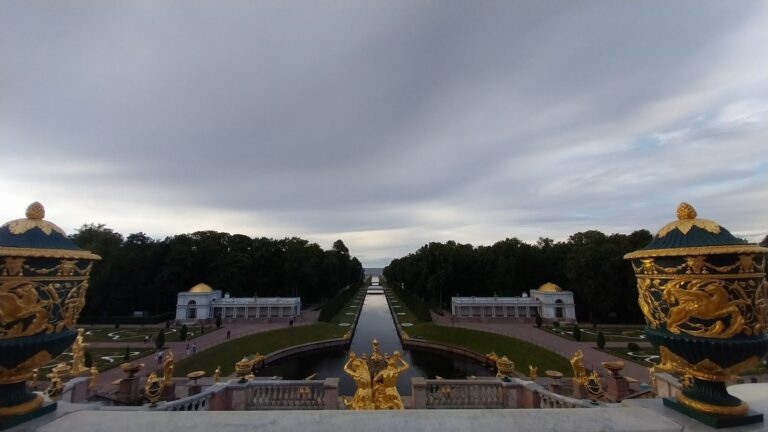
St Petersburg made a particular impression on us: the city is magnificent and has a truly unique atmosphere.


We were also lucky enough to see Swan Lake at the Mariinsky Theatre, which will definitely remain one of the highlights of our stay.

Moscow, between Red Square and the Stalinist skyscrapers
We passed through Moscow twice: two nights on arriving from St Petersburg, then one more night on the way back from Suzdal, before taking the night train to Kazan.


Suzdal, our other favourite
We also really liked Suzdal, very different from Russia's big cities, with its very peaceful atmosphere, slower pace and even the chance to swim in the river that runs through the town.


Kazan: a cold snap in the middle of August and Tatar cuisine
When we arrived in Kazan, a “cold pocket” took us suddenly from about 25 °C to 12 °C, with several days of rain: so even in the middle of August, it's best to pack something warm!
Being fans of Central Asia, we also really liked Tatar cuisine, and later Buryat cuisine in Siberia, which reminded us of some flavours we'd come across on previous trips. In Kazan we especially loved the Marhaba restaurant, on Bauman Street.

Yekaterinburg and the Boris Yeltsin museum
In Yekaterinburg, the Boris Yeltsin museum was another very pleasant surprise: modern, very well designed and genuinely interesting.

Olkhon Island, on Lake Baikal
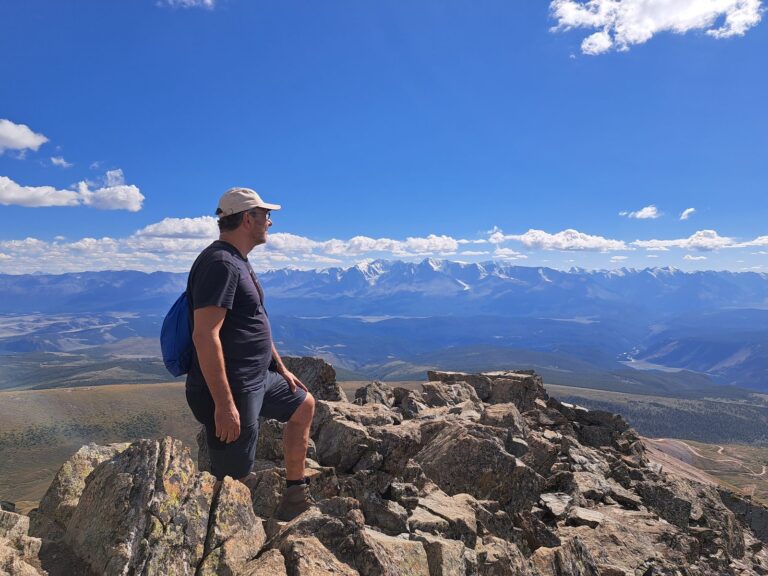
Finally, Olkhon Island was another of our favourites. The vastness of Lake Baikal, the steppes and the cliffs really make you feel you've come a very long way.


We did an excursion to the north of the island, very easy to arrange the day before, as there are agencies all over Khuzhir. The dirt tracks, on the other hand, are particularly bumpy and the vehicles shake a lot: sometimes you really have to hold on!


Having your own 4x4 would probably be very handy for exploring the island more freely. As far as we know, there's no rental company on Olkhon itself, so you'd probably have to rent a vehicle in Irkutsk. We didn't look into the price or whether it's feasible for a foreigner, though.
To get to Olkhon from Irkutsk, we booked directly on the city's transport website, which we'd found thanks to ChatGPT, which came in very handy several times during the trip. We could pay for the return journey online; the trip included the bus and the ferry crossing and cost us about €20 per person each way.

The Trans-Siberian: our tips on berths
As for the Trans-Siberian, we loved the experience.
Our first night journey, between Moscow and Kazan, was in a fairly old carriage. There were practically no power sockets, apart from one near the toilets. We'd chosen the two upper berths, which means that during the day you have to share the lower berths' space with the people sleeping there.
The space above the upper berths isn't huge and you can't sit up straight on them, which can feel a little claustrophobic!
We'd also recommend, where possible, avoiding the side berths along the corridor. They're a bit smaller, and the people in them seemed to be disturbed more by other passengers walking past, especially at night.
Ideally, in our view, you should also pick berths towards the middle of the carriage so you're not too close to the toilets and the light that stays on there all the time. If you don't know the difference between the classes on Russian trains yet, it's worth checking before you book.
The following trains were more modern. This time we'd taken one lower berth and one upper. That was much more practical: we could both sit on the lower one during the day and Lara just climbed up to sleep on the upper one at night. There were also power sockets right next to the beds and more space around the upper berths.
On every train, hot water is available free of charge. So we'd brought instant noodles and mashed potato, plus a few foods that keep well: vegetables, bread, peanut butter, bananas and so on. There's also a dining car, which we found pretty nice, with breakfasts and meals at perfectly reasonable prices.
The trains make a huge number of stops along the way, but how long they last varies a lot: some are only two minutes while others are over an hour. We use artificial intelligence a lot on our trip, especially ChatGPT, and with the train number we could easily find the different stops and how long they last. That was very handy for knowing when we had time to get off, stretch our legs or buy food and drink on the platform.
We also met quite a few people on the trains. Lara speaking Russian obviously helped a lot with chatting to other passengers, but we also met a Russian who spoke very good English. Overall, everyone was very kind and welcoming, and passengers were always quite surprised to find two French people in their carriage!
Changing our leftover roubles in Irkutsk
On our last day in Irkutsk, we changed the roubles we had left. Some at a bank, Solidbank, and the rest at a Unistream exchange office. We chose to change them into dollars, as the rate was better.
The bank normally required a Russian translation of our passport, but the woman at the counter ended up agreeing to do the transaction without one. At the exchange office, the formalities were much simpler: no documents were requested.
How much this trip cost us
In the end, including the expenses paid before we arrived (visas, insurance and train tickets), our stay cost us about €130 a day for two people, all in: accommodation, food, activities, transport and so on. By far the biggest expense was the Trans-Siberian, in the middle of August, which is really not cheap, especially if you don't book well in advance.
The €3,000 in cash we'd brought was therefore deliberately a buffer, since our flights and train tickets had already been paid for before we arrived.
As we're travelling for a whole year, we obviously keep an eye on our spending. Our accommodation rarely went over €30 a night for two, but even at that price we still managed to find perfectly decent rooms everywhere in the country.
A 45-minute check on the way out, at Irkutsk airport
Leaving the country, on the other hand, was a bit more eventful.
When we got to Irkutsk airport to catch our flight to Bangkok, we were taken aside into a room for an in-depth check of about 45 minutes with military personnel.
They took our phones to examine them and asked us lots of questions. Well, mostly Lara, since she was the only one who could answer them in Russian. For example: where did you stay in Russia? What money are you travelling on? Which countries have you visited? What do you think of the situation with Ukraine? And so on.
The check was inevitably a bit intimidating and gave us a moment of stress, especially with a plane to catch straight afterwards, but in the end everything went fine. They gave us our phones back and let us go just in time to board.
What we take away from Russia
We loved our trip to Russia and have only one small regret: not going on to Vladivostok. But we'd found a good-value flight from Irkutsk and, in any case, we'd probably have been a bit short of time to go further.
We felt very safe throughout our stay. People were often spontaneously helpful to us and were generally pleasantly surprised when we told them we were French.
We'll definitely be back to discover the Russian Far East!
Thanks again for all the information on this site, which really helped us prepare this trip.
Have you travelled to Russia recently and want to share your experience? Tell me about your trip here and I'll publish it in this section, under your name or anonymously, whichever you prefer. Stories like Nicolas and Lara's are the ones that really help people planning their trip.