
What to See and Do in Saint Petersburg in 1, 2, 3 or 4 Days: Itineraries
 By Irena Domingo
Updated on
In This Article
Saint Petersburg is the most European city in Russia and the most visited by foreign tourists. In this guide I lay out the whole trip for you: ready-made itineraries for 1, 2, 3 or 4 days, with hours, prices updated for 2026, which museums are open and which are closed, what each ticket actually costs for foreigners and, above all, how to pay and book as a European traveller (which is the part nobody tells you). I’ve lived and walked this route several times: the plan you’ll see works if you follow it as is, but it’s also very easy to adapt to your own pace.
Clicking loads Google Maps, which may set cookies. Open in Google Maps
Before you start: 12 things you have to know in 2026
Saint Petersburg has changed a lot since 2022. If you’re putting your trip together and you’ve been reading old articles online, you’ll bump into plenty of things that simply don’t work that way anymore. Before you dive into the itinerary, take these points as your baseline, because they’ll shape every single visit of the day:
- Foreign Visa, Mastercard and American Express cards have not worked in Russia since March 2022. Not at ticket offices, not on official websites, not in hotels, not in restaurants. The easiest option is to get a Russian MIR card from T-Bank when you arrive; the alternative is to bring rubles in cash.
- The official museum websites don’t accept foreign cards. You’ll have to buy at the ticket office (where there’s almost always availability and queues are reasonable) or book a tour through a platform that does accept your card. Don’t insist on booking online from home: apart from Nevatrip and a few exceptions, you won’t be able to pay.
- Foreigners pay more than Russians at some museums, especially Peterhof, Catherine Palace and the Russian Museum. The difference can be double. Carry your passport at all times: they may ask for it at the ticket office to apply the correct fare.
- GetYourGuide and Civitatis no longer operate in Russia. The platforms that do work in Russia are Sputnik8 (book in advance but pay on the day of the tour) and Nevatrip (river cruises and water transport, accepts Visa/Mastercard and PayPal). All the options and how you pay on each are in guided tours in Russia.
- Booking.com and Airbnb don’t work either. The Russian alternative is Ostrovok, which does accept foreign cards. The dedicated guide is here: how to book hotels in Russia with a foreign card.
- Closing days you need to memorise: the Hermitage closes on Mondays; the Russian Museum, on Tuesdays; Saint Isaac’s Cathedral, Savior on Spilled Blood and the Fabergé close on Wednesdays; the Catherine Palace (Pushkin) closes on Tuesdays; the Grand Palace of Peterhof closes on Mondays and the last Tuesday of the month.
- There are free days at the Hermitage: 23 February, 8 March, 18 May and 7 December. If they coincide with your visit, get ready for big queues; if they don’t, those aren’t days to go.
- The Saint Petersburg metro is good, cheap and deep. Buy the Podorozhnik at any ticket booth — it works on the metro, bus, tram, trolleybus and marshrutka. The details are in my guide to public transport in Saint Petersburg.
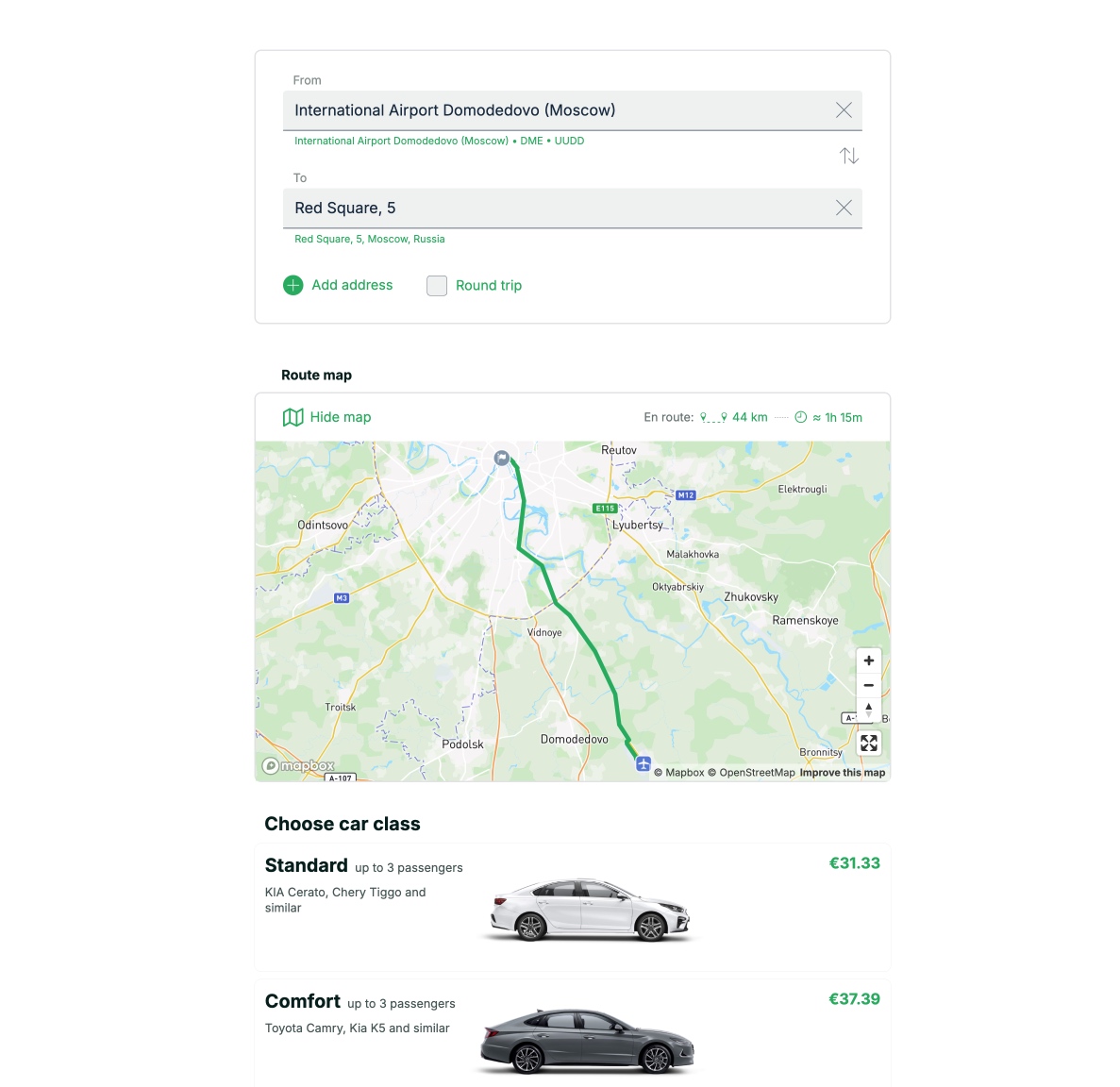
- For taxis, use Yandex Go or Maxim. The app is free, reliable and cheap; the catch is that it doesn’t accept foreign cards. Link your Russian MIR card when you arrive, or pay the driver in cash. If you’d rather have your airport transfer booked from home with a European card, check the guide to transfers in Russia with a foreign card.
- Mobile internet is almost essential. The easiest thing is to activate an eSIM with data for Russia before you leave home.
With that in mind, let’s get to the route. I’ve laid out a 4-day itinerary. If you have less time, I’ll show you the recommended cuts at the end of the article.
DAY 1. The Hermitage, Palace Square, Nevsky Avenue and Saint Isaac’s Cathedral
The first day has to be the Hermitage day, no question. It’s the longest visit of the whole trip and the one that will hit you hardest, so it’s worth tackling with energy and, above all, avoiding Mondays (closed). My recommendation: Tuesday, Friday or Saturday, because those are the days the museum stays open until 20:00 and you have some breathing room.
09:30 — Palace Square and surroundings
Start at Palace Square, Saint Petersburg’s equivalent of Moscow’s Red Square. This is where Bloody Sunday in 1905 and the October Revolution of 1917 played out, and the surrounding ensemble is probably the most photogenic in all of Russia: the blue and white baroque Winter Palace, the Alexander Column (47.5 metres of red granite, standing without any fixings thanks to its own weight) and, to the south, the General Staff Building with its neoclassical arch. At 9:30 it’s practically empty. Make the most of it for photos.

Before going into the museum, loop round along Millionnaya street and head over to the Atlantes Portico of the New Hermitage: ten five-metre grey granite figures holding up the roof. Local tradition says that touching the big toe of the right-hand atlas brings good luck. The portico is free to see — it’s right on the street.

11:00 — Hermitage: the most important visit of your trip
The museum opens at 11:00. The Hermitage holds more than 3 million works spread across six buildings and is considered the largest art museum in the world by exhibition space. Since 2020 it runs on 30-minute sessions and three possible routes, and you have to pick one when you buy your ticket:
- Route 1 (Jordan Staircase): the most complete and the one I recommend for a first visit. Imperial halls, the Peacock Clock, Leonardo, Raphael, Rubens, Rembrandt and classical antiquities. It’s the only one accessible for wheelchairs.
- Route 2 (Church Staircase): private apartments of the imperial family and Russian art. Good for a second visit.
- Route 3 (General Staff Building): a separate building, across the square. Impressionists and post-impressionists (Monet, Van Gogh, Gauguin, Matisse, Picasso, Cézanne) and the Fabergé collection. If you’ve only got one day, take Route 1; if you have two, combine it with this one.
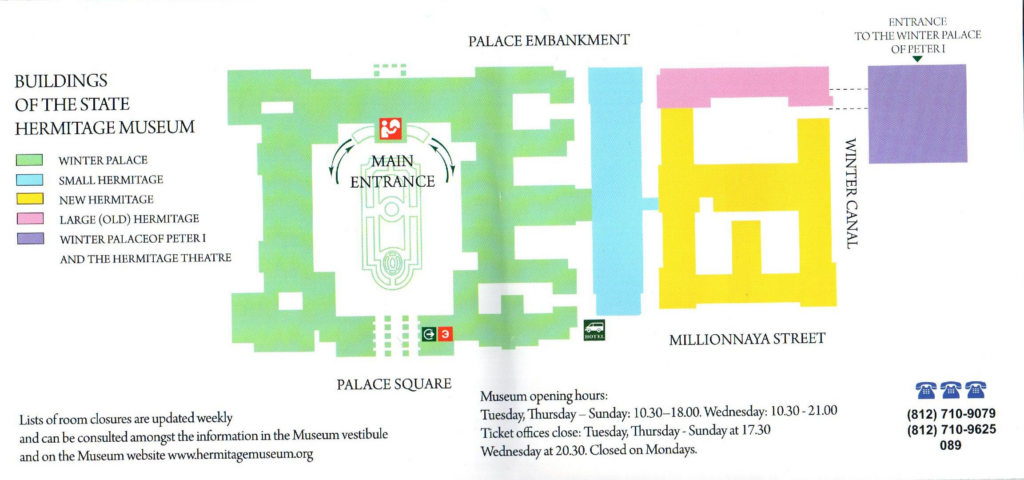
Quick practical info for the Hermitage in 2026:
- Price: 500 ₽ for a timed-session ticket (Main Complex or General Staff Building); 1,200 ₽ for an open-date ticket valid for 3 days. Children under 14, free.
- Hours: Tuesday, Friday and Saturday from 11:00 to 20:00; Wednesday, Thursday and Sunday until 18:00. Closed on Mondays.
- Minimum duration: 2 hours (that’s the fixed session length). If you want to do Route 1 properly, allow 3 to 4 hours.
- How to buy: at the ticket office in the Winter Palace courtyard, in cash (rubles) or with a Russian MIR card. The self-service machines are faster than the manned booths. The official website only accepts Russian cards.
- I walk you through it room by room in the complete guide to the Hermitage of Saint Petersburg.

Inside the museum there’s only one café, on the ground floor of the Winter Palace, with overpriced sandwiches and little variety. My advice: eat outside. Five to ten minutes’ walk away you have the Yat Restaurant (Moika 16, traditional Russian cuisine, around 1,000–1,500 ₽ per person), the Bellevue Brasserie on the rooftop of the Kempinski Hotel (Moika 22, spectacular views over the Hermitage and the Neva, pricey option), or the more casual and quick Stolovaya No. 1 on Nevsky Avenue 5 (Russian self-service, 300–500 ₽).
17:00 — Nevsky Avenue: the city’s main street
After the Hermitage, it’s time for Nevsky Avenue, the liveliest 4.5 kilometres of Saint Petersburg. Start from Palace Square and walk south. In the first stretch, the buildings you’ve been seeing in photos all morning will appear one after another:
- The Kazan Cathedral, with its semicircular colonnade inspired by St Peter’s in the Vatican. Free entry, open every day from 7:00 to 20:00. It’s an active Orthodox church and the seat of the bishop of Saint Petersburg: it houses the icon of Our Lady of Kazan, the most venerated icon in Russia.
- The House of Books (Dom Knigi), right opposite, with its glass dome — one of the city’s Art Nouveau landmarks.
- The Yeliseev Emporium (Nevsky 56), an Art Nouveau jewel dedicated to Russian gourmet products: caviar, vodka, teas, chocolates. Even if you only go in to look, the interior decoration is worth it.
- Pyshechnaya (Bolshaya Konyushennaya 25), a 1940s kiosk that still serves the classic Russian doughnuts (pyshki) with a weak coffee. It’s Soviet and cheap, and the queue wraps around the corner. Highly recommended.

19:00 — Saint Isaac’s Cathedral and the colonnade for sunset
The day ends with one of the best views in all of Russia: the colonnade of Saint Isaac’s Cathedral. The cathedral is the most imposing religious building in the city (it took 40 years to build, from 1818 to 1858; 24,000 piles were driven in to support its bulk on the swampy ground; 112 pink granite columns). Inside it holds 40 different minerals, Florentine mosaics, columns of malachite and lapis lazuli, and a dome painted by Karl Bryullov. But if you’re short on time, what you cannot skip is going up to the colonnade, the viewing platform 43 metres up, where you can see the Admiralty, the Neva, the Winter Palace, the Peter and Paul Fortress and, in the distance, the golden domes of Smolny.

Details for 2026:
- Price: 550 ₽ for the museum, 600 ₽ for the colonnade (separate tickets). Audioguide in English, 300 ₽.
- Museum hours: 10:30 to 18:00, closed on Wednesdays. From 1 May to 30 September it also opens for an evening session from 18:00 to 21:30.
- Colonnade hours: same as the museum, but from 1 May to 30 September it doesn’t close any day and the evening session runs every night until 21:30.
- Climb: 262 spiral steps, no lift. Suitable for everyone if you take it slowly.
- If you go in summer, the colonnade’s evening session coincides with the White Nights and the golden light is absolutely incredible. That’s my pick if you can choose.
- The full details are in the dedicated guide to Saint Isaac’s Cathedral.

21:00 — Dinner around Saint Isaac’s Square
The area around Saint Isaac’s Square is packed with good restaurants. My picks:
- Percorso (Italian cuisine, inside the Four Seasons Lion Palace): one of the finest in the city. Reservation essential.
- Mansarda (modern Russian cuisine with views of Saint Isaac’s dome): part of the Ginza Project group, an experience.
- Teplo (Bolshaya Morskaya 45): contemporary Russian cooking in a cosy old-parlour atmosphere. An institution among locals.
- Stroganoff Steak House (Konnogvardeysky Prospekt 4): meats, classic atmosphere, mid-to-high price range.
Here’s the guide on how to book restaurants in Moscow, Saint Petersburg and other Russian cities.
DAY 2. The Church of the Savior on Spilled Blood, the Russian Museum, the Peter and Paul Fortress and the drawbridges
The second day is one of the densest. Heads up: avoid Wednesdays (Savior on Spilled Blood is closed) and Tuesdays (the Russian Museum is closed). Best days: Thursday, Friday, Saturday or Sunday.
10:00 — Church of the Savior on Spilled Blood
The Church of the Savior on Spilled Blood (in Russian Spas na Krovi) is, along with the Hermitage, the mental image most people carry of Saint Petersburg. Built on the exact spot where Tsar Alexander II was assassinated in 1881, it blends multicoloured domes and the volumes of the 17th-century neo-Russian style — a deliberate nod to St Basil’s Cathedral in Moscow, out of place in a city that’s mostly baroque and neoclassical. From the outside it impresses; on the inside, it leaves you speechless: more than 7,000 m² of mosaics, one of the largest collections in the world.
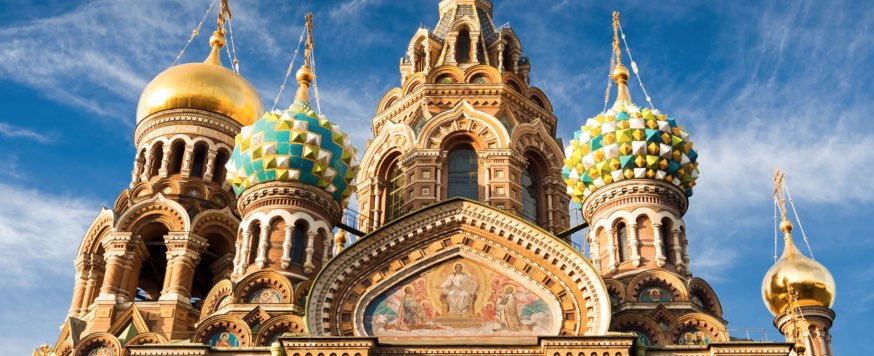
- Price: 550 ₽ adult (evening ticket in summer, 700 ₽). Audioguide in English: 300 ₽.
- Hours: 10:00 to 18:00. Closed on Wednesdays. From May to September there’s an evening session until 21:30.
- How to buy: at the ticket office, no booking. Queues are moderate except in July and August between 12:00 and 14:00, when the tour groups arrive.
- Visit duration: 45–60 minutes.

11:30 — State Russian Museum
Walking out of Savior on Spilled Blood, it’s literally next door: the State Russian Museum, housed in the Mikhailovsky Palace. It’s the largest collection of Russian art in the world, with more than 400,000 pieces ranging from medieval icons to the Soviet avant-gardes: Andrei Rublev, Repin (Barge Haulers on the Volga), Aivazovsky, Vrubel, Kandinsky and Malevich.
- Price for foreigners: 800 ₽ for the Mikhailovsky Palace (main exhibition), 450 ₽ for the Benois Wing (temporary exhibitions and avant-gardes).
- Hours: Monday, Wednesday, Friday, Saturday and Sunday from 10:00 to 18:00. Thursday from 13:00 to 21:00. Closed on Tuesdays.
- How to buy: the official website (rusmuseum.ru) accepts Russian MIR cards; without one, head to the ticket office. Tickets are sold in 2-hour sessions to control capacity (15 people enter every 10 minutes), so avoid peak times.
- Duration: 1.5–2 hours if you’re selective.

If you’re still hungry for more Russian art but the Russian Museum has worn you out, you can skip the Fabergé Museum (also in this area, in the Shuvalov Palace) and come back another day. That’s the call most people end up making, because fitting both into the same afternoon without ending up wrecked is hard.
14:00 — Lunch and a stroll through the Field of Mars and the Summer Garden
Coming out of the Russian Museum, within fifteen minutes on foot you have two lovely green spaces to rest your feet: the Field of Mars (Marsovo Pole), a former military parade ground now turned into a big lawn where locals lie down to sunbathe when the weather permits; and right next to it the Summer Garden (Letni Sad), the first public park in Russia, created by Peter the Great in 1704, with geometric avenues, fountains and nearly 90 neoclassical marble statues. Both are free. After the walk, eat somewhere along Pestelya Street or head back towards the Hermitage along Naberezhnaya Kutuzova: either area has reasonably priced restaurants.
15:30 — Peter and Paul Fortress
This is where it all started. The Peter and Paul Fortress, founded in 1703 on Hare Island (Zayachy Ostrov), marks the official birth of Saint Petersburg. Inside, three things you really shouldn’t miss: the Saints Peter and Paul Cathedral, where every Romanov tsar from Peter the Great to Alexander III is buried (and the remains of the last tsar, Nicholas II, and his family, brought here in 1998); the Trubetskoy Bastion prison, where Decembrists and Narodovoltsy were imprisoned; and the Museum of the History of Saint Petersburg in the Commandant’s House.

- Access to the island and fortress: free.
- Combined ticket to the main exhibitions and museums: 750 ₽. Includes the cathedral, the Trubetskoy Bastion, the Museum of the History of Saint Petersburg and others. It’s the best pass if you’re staying 2–3 hours.
- Hours: the grounds are open every day; the exhibitions, Wednesday to Monday from 11:00 to 18:00, Tuesdays until 17:00. The weekly closing day varies by museum: as a reference, several of the side buildings close on Wednesdays.
- Curious tradition: the Naryshkin Bastion fires a cannon shot every day at 12:00 sharp, a custom that’s been going since the 19th century.
Right next to the fortress is Koryushka, a restaurant with a terrace and spectacular views of the Neva and the Winter Palace across the water. If you’re going in summer and you’ve booked, it’s a memorable dinner. On the same island there’s also a small beach where people swim in the Neva when it gets hot (yes, people swim, but the water is cold even in July).
18:30 — Cruiser Aurora
Ten minutes’ walk from the fortress, moored on the Petrogradskaya Naberezhnaya, sits the Cruiser Aurora, one of the strongest symbols of 20th-century Russia. It fired the blank shot that signalled the storming of the Winter Palace on the night of 7 November 1917, in the middle of the October Revolution. You can go on board and tour the inside: the exhibitions cover the history of the Russian Navy, life on board and the ship’s role in the Revolution.

- Price: 700 ₽ adults, free for under-16s.
- Hours: Wednesday to Sunday, 11:00 to 18:00. Closed Monday and Tuesday.
- Duration: a good 45 minutes. If you arrive late, bear in mind that they don’t admit visitors after 17:15.
If you arrive after 17:15 and can’t get in, no big deal: the ship is perfectly visible from the dock and the photo is the same. Move on to the next stop.
23:55 — Night cruise under the drawbridges
The perfect way to close the day (if you’re in Saint Petersburg between 10 April and 30 November, when navigation is open): watching the bridges go up. The drawbridges of Saint Petersburg open every night to let through the ships of the Volga–Baltic canal, which come from Russia’s interior and head out to the Gulf of Finland. The show lasts 4 to 6 minutes per bridge, but the whole thing stretches over 3 hours: the first to open is the Dvortsovy (Palace Bridge) at 01:10, right in front of the Hermitage, and then in cascade come the Troitsky (01:20), the Birzhevoy and the Tuchkov.

There are two ways to see it: from the bank (free, with especially good spots at Palace Square and the Strelka of Vasilievsky Island) or from the water, on a night cruise. The cruise is the most spectacular option because you pass under and between the already-open bridges. The company that does accept foreign cards and PayPal is Nevatrip; the price is around 2,000–2,500 ₽ per person for 2-hour tours with music and commentary in Russian. The full details are in the guide to cruises along the canals of Saint Petersburg.
Important: on the nights of Russian state holidays (1–2 May, 9–10 May, 12–13 June and 4–5 November) the bridges do not go up. If you’re travelling on those dates, check the updated calendar at mostotrest-spb.ru.

DAY 3. Peterhof: a full day at the “Russian Versailles”
Day 3 is a full-day excursion outside the city. Peterhof sits 30 km west, on the shore of the Gulf of Finland, and brings together the largest fountain complex in the world, French-style gardens, several palaces and an English Romantic park. The “Russian Versailles” (though Peter the Great preferred water) is a UNESCO site and, if I had to pick a single excursion from the outskirts of Saint Petersburg, this would be it.

When and how to get there
Fountain season runs from late April to mid-October (in 2026 it opened on 25 April). Outside that window, the fountains are switched off and the Lower Park is free to enter — pretty but with less of a wow factor. Recommended days: weekdays; June and August weekends get packed. Monday isn’t a bad day for the park (with the palace closed there are fewer tour groups).
There are two ways to get there:
- By sea, on the Meteor hydrofoil: 35–45 minutes from the pier by the Hermitage, with spectacular views of the Neva and the Gulf. From 1,290 ₽ one way. Departures every 30 minutes between 10:00 and 18:30, only from May to October. The most beautiful option.
- By land: metro to Avtovo (red line) and bus 200, 204 or 210 to Peterhof, total 1 h 15. Cheaper (200–300 ₽) but slower.

My preferred strategy: go out by hydrofoil in the morning and return by land. You skip the queue for the return hydrofoil (which can be huge at the end of the day) and you keep the views for the outbound trip, which is the part that’s really worth it.
The route through Peterhof: what to see and in what order
If you arrive by hydrofoil, the pier drops you 200 m from the Grand Cascade. If you come by land, you enter through the Upper Garden (which is free) and walk through the Grand Palace to come out by the sea side.
- 09:30 — Upper Garden. Free, ideal as a starter. Five symmetrical fountains. 30 minutes.
- 10:00 — Lower Park and Grand Cascade. The main event. More than 150 fountains and 4 cascades fed by gravity from the Ropsha springs (96 km of canals, not a single pump). The official launch is at 11:00 with solemn music: get there at least 20 minutes early to find a spot on the terrace of the Grand Palace. Allow 4–5 hours to go round it all unhurried.
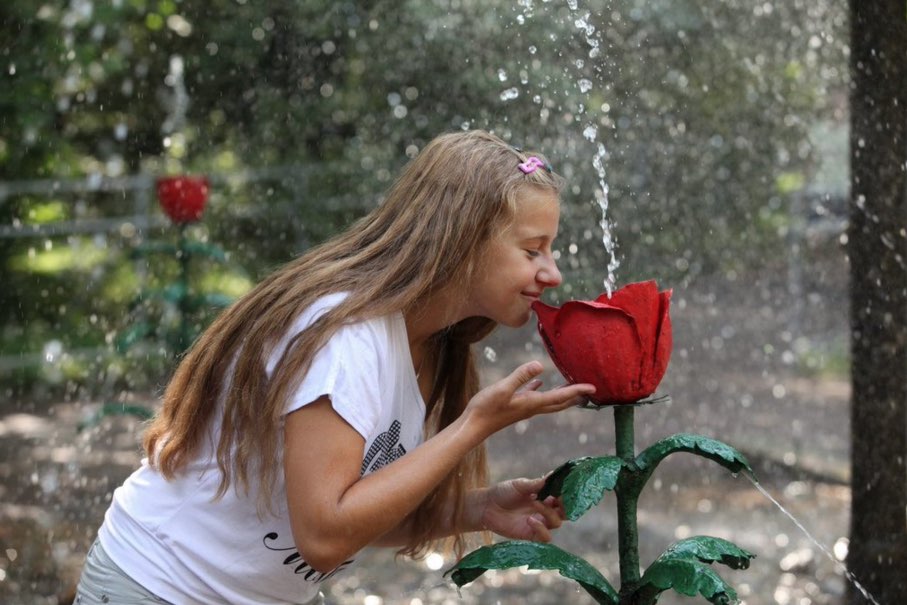
- The trick fountains (shutikhi): the most fun part if you’re with kids. Benches that soak you when you sit down, umbrellas that release water from the edge, paths with hidden jets. Bring a change of clothes.
- 16:00 — Grand Palace (optional). Only if the interior interests you; the fountains are what matter. Better after 16:00, when the queues are reasonable.
- Closed in 2026: Monplaisir Palace and Marly Palace, both under restoration. Worth knowing so you don’t get caught out.
Prices updated for 2026 (for foreigners)
- Lower Park (fountains): 1,500 ₽ foreigners (free in winter).
- Grand Palace: 2,000 ₽ foreigners (guided visit included, in Russian).
- Upper Garden: free.
- Hermitage Pavilion, Treasury Chamber, other pavilions: 500–700 ₽ each.
- Under 16s: free (with documentation).
- How to pay: at the ticket office, in cash (rubles) or with a MIR card. The official website doesn’t accept foreign cards. The easy option for foreigners is a guided tour with tickets included, which can be paid with a European card.
For a full guide and detailed practical tips, see the article on Peterhof: what to see, how to get there and tickets from Saint Petersburg. I go through all the tricks to skip the queues, where to eat in the park and what to bring.

DAY 4. Catherine Palace in Pushkin and an evening at the Mariinsky Theatre
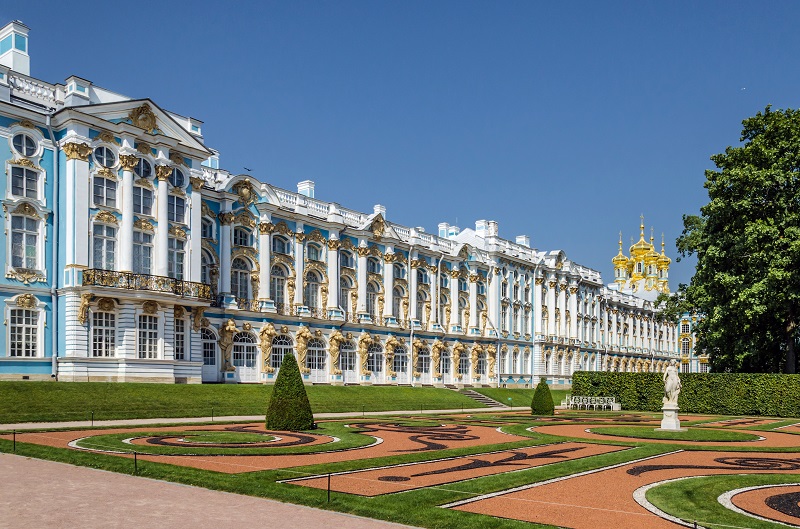
The last day is for the other great imperial excursion, the Catherine Palace in the town of Pushkin (formerly Tsarskoye Selo, “the tsar’s village”), 25 km south of Saint Petersburg. It’s the most spectacular Romanov summer residence: 300 metres of blue-and-white baroque facade designed by Rastrelli, a golden enfilade of rooms that link up in infinite perspective, and the legendary Amber Room, which vanished during the Second World War and was fully reconstructed between 1979 and 2003.
How to get there and practical details
- Distance: 25 km south.
- How to get there: the quickest way is by taxi (Yandex Go, around 800–1,500 ₽ one way depending on the time). By public transport: elektrichka train from Vitebsky Station to Tsarskoye Selo or Pushkin (35 minutes), then marshrutka K-371 or K-377 to the palace.
- Closing days: Tuesdays. From November to mid-April, also the last Monday of the month.
- Hours: Wednesday to Monday from 10:00 to 18:00 (last entry at 17:00). In high season time slots apply.
- Palace + Amber Room price for foreigners: 2,200 ₽. Children under 7, free (with documentation). Catherine Park: an extra 150 ₽ in high season, free in winter.
- Online tickets: only 7 days in advance and nominative (with your name and passport). The official website doesn’t accept foreign cards; alternative, get them through a guided tour.
- Closed in 2026: the Lyon Room, the Arabesque Hall, Catherine II’s private apartments and the Cameron Gallery, under restoration until June. Forewarned is forearmed.
- The full information is in the guide to Catherine Palace.
The visit: what not to miss
The palace is walked through as a block, along the enfilade of rooms (32 in total), in one direction, with no way to backtrack. The mandatory stops:
- The Grand Staircase, fully reconstructed after the war, with 18th-century Japanese and Chinese vases.
- The Throne Room, 800 m² of gold, mirrors and crystal chandeliers. The largest room in the palace.
- The Amber Room: 6 tonnes of carved amber in panels of ridiculous level of detail. The original was dismantled by the Nazis in 1941 and disappeared; what you see today is a reconstruction unveiled by Putin and Schröder in 2003. Photos are not allowed.
- The Cavaliers’ Dining Room, with display cases and 18th-century weaponry.
- Catherine Park, with the rococo pavilions on the Great Pond, the Roman cold-water baths, the Marble Bridge and the famous Chinese Bridge. In summer you can hire a rowing boat.
If you have time and energy to spare, in the same town you can drop by the Imperial Lyceum, where the poet Alexander Pushkin (after whom the town is now named) studied, or the Alexander Palace, Nicholas II’s favourite residence, recently restored.
19:00 — Back to the city and an evening at the Mariinsky
Back in Saint Petersburg, get cleaned up and ready: the perfect ending to the trip is a performance at the Mariinsky Theatre (Teatralnaya Square), one of the great cathedrals of ballet and opera in the world. The historic 1860 building, home to the legendary Mariinsky Ballet (known as the Kirov Ballet during the Soviet era), puts on programmes almost every night of the year.

- Price: from 1,500–2,000 ₽ for the cheapest tickets (gallery). Top performances or international guests can climb to 8,000–12,000 ₽.
- How to buy: on the official website mariinsky.ru. Different rates for residents and foreigners (full rate); e-tickets are printed and shown at the box office. Heads up: the website accepts some international cards depending on the issuing bank; if yours is rejected, buy at the theatre’s box office once you’re in town.
- Dress code: no strict code, but most of the audience dresses up. Jeans and trainers look out of place.
- Season: September to June. In summer (July–August) the theatre closes for the holidays. If you’re going then, look for an alternative.
- All the details in the guide to opera and ballet in Saint Petersburg.
Summer alternative (July–August): if the Mariinsky is closed, don’t miss the Russian folk show Feel Yourself Russian at the Nikolayevsky Palace, with traditional Russian, Ukrainian and Caucasian dances. It’s touristy but authentic, and very enjoyable.

If you only have 1, 2 or 3 days: how to trim the itinerary
Only 1 day in Saint Petersburg
You can’t see it all, so you’ll have to choose. My suggestion: Palace Square → Hermitage (Route 1) → lunch on Nevsky Avenue → Church of the Savior on Spilled Blood → Kazan Cathedral → up to the colonnade of Saint Isaac’s for sunset. If it’s summer, round it off with a canal boat ride or the drawbridges spectacle.
2 days
Day 1 same as above, no cuts. Day 2: Peter and Paul Fortress in the morning → lunch on the island → Russian Museum in the afternoon → dinner near Savior on Spilled Blood → drawbridges at midnight. You’ll leave out Peterhof and the Catherine Palace, but you cover the whole historic centre.
3 days
Days 1 and 2 as above, and use day 3 for whichever town and palace appeals most: Peterhof if you’re there during fountain season (May–October) or the Catherine Palace if you’re going in winter or fountains don’t really do it for you. If I had to pick just one, I’d go with Peterhof in summer and the Catherine Palace in winter.
4 days or more
The full itinerary in this article. If you have days left over, check the next section for ideas.
If you have extra days: 5 more ideas
Saint Petersburg has plenty more to offer beyond 4 days. These are my five picks beyond the classics:
- The Lakhta Center observation deck, the tallest skyscraper in Europe (462 m). It has a viewing platform 360 metres up with unique views of the city and the Gulf of Finland.
- Kronstadt, the naval fortress town on Kotlin Island, 30 km away. Naval Cathedral, 18th–19th-century fortifications, a walk along the dam that connects it to the mainland.
- Vasilievsky Island: the Strelka (with the Rostral Columns), the Kunstkamera (the first museum in Russia, founded by Peter the Great with his famous collection of “curiosities”), a walk along the Universitetskaya Naberezhnaya with the original 15th-century BC Egyptian sphinxes.
- The dvory-kolodtsy, the famous “well courtyards” of the buildings in the centre. Some iconic ones: the dvor of the Bak building (Kirochnaya 24), with its hanging galleries; the “courtyard within a courtyard” at Fontanka 92; the “courtyard of spirits” on the 4th line of Vasilievsky (the smallest well-courtyard in the city).
- New Holland, an artificial 18th-century island reinvented as a contemporary public space: lawn, local restaurants, open-air scene. It’s where the locals hang out when the weather is good.
Common mistakes to avoid
After several trips and many conversations with readers who’ve been to Saint Petersburg, these are the most typical missteps:
- Going into the Hermitage on an empty stomach. It’s at least 3–4 hours inside the museum and you can’t leave and come back with the same ticket. Eat first or pack something in your bag.
- Showing up at Peterhof on a July weekend. Queues, crowds and few good photo opportunities. Go on a weekday, ideally first thing.
- Not checking closing days. Hermitage on Mondays, Russian Museum on Tuesdays, Savior on Spilled Blood and Saint Isaac’s on Wednesdays, Catherine Palace on Tuesdays, Peterhof Grand Palace on Mondays and the last Tuesday of the month. If you turn up and find it closed, you’ve lost the morning.
- Expecting to see the drawbridges in winter. Navigation is closed from December to March and the bridges don’t go up. Same goes for the major holiday nights.
- Trying to see everything in one day. The Hermitage alone is already 3–4 hours. If you add Peterhof or the Catherine Palace on the same day, you’ll end up exhausted and enjoying nothing. Better fewer visits done well.
- Not packing an umbrella. The weather in Saint Petersburg is unpredictable at any time of year. Always carry something lightweight and waterproof, especially if you’re heading to Peterhof or Kronstadt.
Where to stay
For this itinerary to flow smoothly, the ideal thing is to stay near the historic centre: Palace Square, Nevsky Avenue, the Admiralteyskaya district or the Liteyny area. From there, you can reach almost every sight on foot or by metro. The best areas (with hotels and apartments) are covered in the guide on where to stay in Saint Petersburg.
To book your hotel from home with a foreign card (Booking no longer works in Russia), I use Ostrovok, which is the Russian equivalent and accepts European Visa/Mastercard.
Frequently asked questions
How many days do you need to see Saint Petersburg?
The reasonable minimum is 3 days to cover the historic centre (Hermitage, Saint Isaac’s, Savior on Spilled Blood, Peter and Paul Fortress, a boat ride) and one excursion to Peterhof or the Catherine Palace. With 4 days you can fit in both excursions and round it off with opera or ballet at the Mariinsky. With less than 2 days, you’ll leave half the city out.
When is the best time to visit Saint Petersburg?
From late May to early September, when the Peterhof fountains are running, the drawbridges go up, the days are endless thanks to the White Nights (more light, less fatigue) and every museum is on its full schedule. June is the busiest month; May and September have fewer crowds and mild temperatures. December has its own charm with snow and Christmas markets, but the days only last 5–6 hours of daylight.
Can I pay with Visa or Mastercard in Saint Petersburg?
No. Since March 2022, Visa, Mastercard, American Express and JCB cards issued outside Russia no longer work in the country. Neither do the payment gateways of official Russian websites. The real options for a foreign traveller are: bring rubles in cash, get a Russian MIR card on arrival (T-Bank issues them quickly for foreigners), or book entries and tours through platforms that do accept international cards, like Sputnik8 or Nevatrip.
Is it safe to travel to Saint Petersburg in 2026?
Saint Petersburg is still a very safe city for tourism in general terms: very low rates of crime against tourists, reliable public transport, accessible medical care. The complications for a European traveller are mostly logistical: card payments, language, airline restrictions and difficulty booking some things online. Personal health and safety are not the problem if you plan well.
Is the Hermitage or the Russian Museum better?
They’re different and complementary. The Hermitage is for universal art (Leonardo, Raphael, Rembrandt, Velázquez, Goya, Matisse, Picasso) and imperial architecture. The Russian Museum is for understanding Russian art, from medieval icons to the Soviet avant-gardes (Repin, Aivazovsky, Kandinsky, Malevich). If you only have time for one, go to the Hermitage on your first visit. If you come back or you have 4+ days, give a morning to the Russian Museum.
When do the bridges go up in Saint Petersburg in 2026?
The 2026 navigation season runs from 10 April to 30 November on the Neva and Little Neva, and from 20 April to 15 November on the side waterways. The first bridge to open each night is the Dvortsovy (Palace Bridge) at 01:10. The whole show stretches over 3 hours with the bridges going up in cascade. They don’t go up on the nights of major state holidays (1–2 May, 9–10 May, 12–13 June, 4–5 November) or with winds above 15 m/s.
Is it worth doing a canal cruise?
Very much so. Saint Petersburg is best understood from the water, and the boat ride is one of the best things to do in the city. The 1-hour daytime cruises already give you a completely different perspective on the palaces and cathedrals of the centre. The night cruises to see the drawbridges are spectacular. The operator that does accept foreign cards and PayPal is Nevatrip; prices range from 1,500 to 2,500 ₽ depending on the duration.
In This Article
Was this useful? I'll tell you when something changes in Russia
One short email a month with what has changed for travellers (visas, payments, border crossings, apps), based on what readers report to me from Russia. More than 4,000 of us already. No spam: if you ever lose interest, unsubscribing is one click.
Irena DomingoAbout Me
I was born in Russia. I grew up between two worlds: my father was Russian, my mother Spanish — a descendant of the "Children of Russia", the Basque children evacuated to the USSR during the Spanish Civil War. I've worked as a translator, interpreter and Russian teacher for over 30 years, and since 2013 I've been writing this blog to help travellers discover Russia with practical, always up-to-date information. Author of the Russiable Guide. If this blog has helped you plan your trip, you can buy me a coffee ❤️.
 How to book a taxi in Moscow, Saint Petersburg, or in other Russian cities
 Visiting St. Petersburg on a cruise without a visa (visa-free) and with a tourist visa
 Kvas: The Russian Fermented Drink You Didn’t Know You Needed to Try