
Church of the Savior on Spilled Blood: visiting tips, prices and hours
 By Irena Domingo
Updated on
In This Article
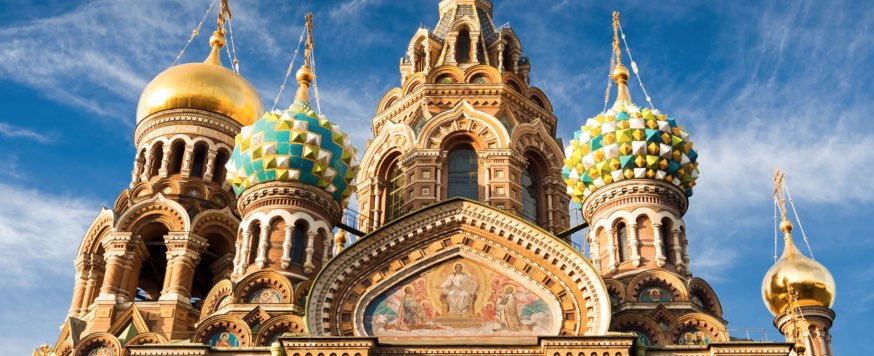
The Church of the Savior on Spilled Blood is, alongside the Hermitage, what most travellers picture when they think of St. Petersburg: those five multicoloured onion domes that look straight out of a Russian fairy tale. The church stands on the exact spot where Tsar Alexander II was assassinated in 1881, and its interior holds over 7,000 m² of mosaics, one of the largest mosaic collections in the world. Here I’ll tell you what to look out for, how to buy tickets (the on-site ticket offices work without a hitch and queues are usually short) and everything you should know before your visit.
This is step 5 of my guide to planning a trip to Russia in 10 steps, where you’ll find everything else in order.
The essentials in 30 seconds
- What it is: an Orthodox memorial church built where Tsar Alexander II was killed (also known as the Cathedral of the Resurrection of Christ or, in Russian, Spas na Krovi).
- Where: Griboyedov Canal Embankment, 2Б, just off Nevsky Avenue. A 5-minute walk from the Hermitage.
- Hours: daily 10:00–18:00 (ticket office closes at 17:30). Closed on Wednesdays and on 1 January. From May to September there is an evening programme until 21:30.
- Price (2026): 550 rubles for a standard ticket (around €6). Children under 7 enter for free.
- How to buy: the on-site ticket office works without issues. Outside the peak summer months you rarely find a queue.
- Visit time: between 45 minutes and 1 hour if you want to take in the mosaics calmly.
- Official website: cathedral.ru (the State Museum “Saint Isaac’s Cathedral”, which also runs Spas na Krovi).
Clicking loads Google Maps, which may set cookies. Open in Google Maps
Why this church is unique in St. Petersburg
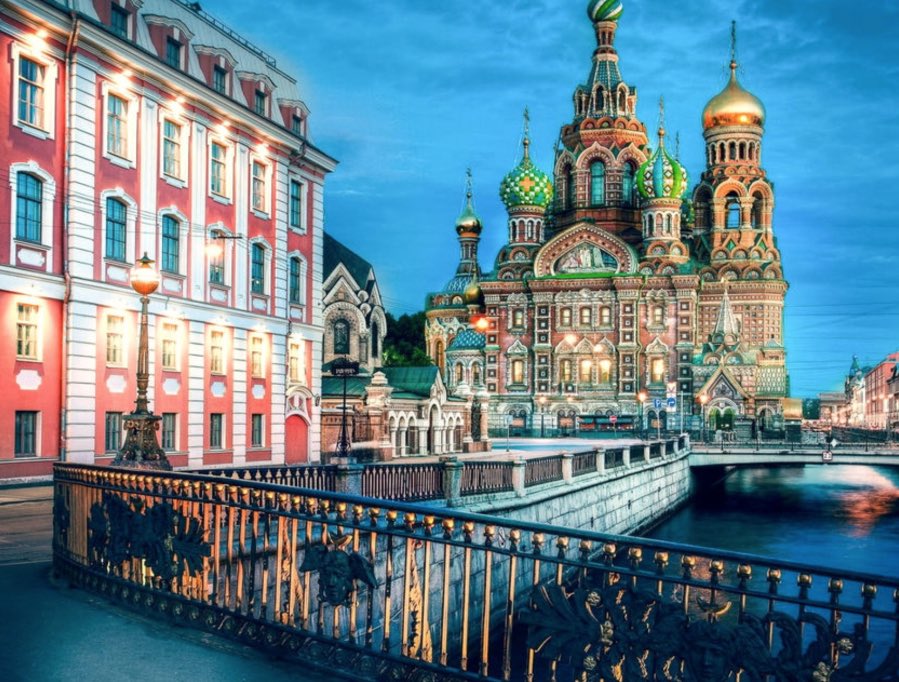
If you walk down Nevsky Avenue and turn toward the Griboyedov Canal, the first time you see those domes your jaw will drop. And rightly so: the rest of St. Petersburg is Baroque and Neoclassical (the Hermitage, Saint Isaac’s Cathedral, Catherine Palace, Peterhof). This church, by contrast, is built in a “Neo-Russian” style that looks remarkably like St. Basil’s Cathedral in Moscow. It feels as if it had moved cities.
The reason is historical. On 1 March 1881 (13 March in the Gregorian calendar), Tsar Alexander II was riding in his carriage along the canal embankment when a member of the terrorist group Narodnaya Volya (People’s Will) threw a first bomb. The tsar was unharmed. But as he stepped out to check on the wounded, a second terrorist threw another bomb at his feet. Alexander II died a few hours later in the Winter Palace.
His son Alexander III decided to build a memorial church exactly over the site of the assassination, and he rejected the classical proposals submitted to him, asking instead for something that revived the style of 17th-century Russian churches. Hence the name: “the Savior on Spilled Blood”.
Architect Alfred Parland took 24 years to finish it (1883–1907). The comparison with Moscow fits perfectly: here, in a city where almost everything is European in inspiration, Spas na Krovi is a nod to older, deeper Russia.
What to see on the outside
Before going in, take ten minutes to walk around the church. The façade is as rewarding as the interior. Here’s what to look for:
The five multicoloured domes
The domes are made of copper coated with coloured vitreous enamel, a jewellery technique applied on a monumental scale. More than 1,000 m² of enamelled domes, done by hand. Each dome has its own pattern: if you look closely, no two are alike.
The central dome rises 81 metres high. And here begins the first of many numerical nods built into this church: Alexander II was killed in 1881.
The 134 coats of arms on the bell tower
The bell tower, lower and facing the canal, was built right above the spot of the attack. On its outer surface you’ll see 134 coats of arms in mosaic: each one represents a province, region or city of the Russian Empire that contributed donations to fund the church. It was a memorial paid for “by all of Russia”.
The 20 plaques with Alexander II’s reforms
Around the base of the building there are 20 plaques of red granite with gold-lettered inscriptions. Each one summarises one of the great reforms or events of the tsar’s reign: the abolition of serfdom (which freed 20 million peasants in 1861), the reform of the judicial system, the end of the Crimean War, the annexation of Central Asia, and so on. They’re written in decorative Old Cyrillic, but the dates and names are easy enough to read.
The exterior mosaics
The four pediments are decorated with large mosaics. The most visible one from Nevsky Avenue is “Christ in Glory” (south façade). On the west façade there’s a Crucifixion designed by Parland himself, and the north façade displays the “Resurrection” by painter Mikhail Nesterov. They aren’t tucked away inside: they sit out in the open, exposed to St. Petersburg’s weather, and they’ve been holding up stoically for over a century.
What to see inside
This is where the church will leave you speechless. The interior is a museum of mosaics: more than 7,000 m² of surface covered, made by over 30 artists across many years. There’s no painting, no frescoes, no wooden icons: almost everything you see is mosaic. And the reason is practical: in the damp St. Petersburg climate, frescoes would have been ruined in a few years. Mosaics, on the other hand, have stayed intact.

Christ Pantocrator on the dome
Look up the moment you walk in. On the inside of the central dome there’s a monumental image of Christ Pantocrator (Christ “Almighty”), dressed in blue and red. It’s the iconic image of the church and the one that ends up in every photograph. If you’ve brought a small pair of binoculars, now’s the moment to use them: the detail work is extraordinary.
The canopy over the site of the attack
On the west side, facing the altar, there’s a canopy of dark jasper topped with a cross. Underneath it are the original cobblestones of the canal embankment and a fragment of the railing onto which the tsar’s blood fell. This is the whole reason the church exists: it was literally built around this spot. During the Soviet era, much of the original interior was destroyed; what you see today is a reconstruction, but the cobblestones are the real thing.
The iconostasis and the silver doors
The iconostasis (the wall separating the nave from the altar) is low, which lets you see the entire apse. The royal doors are made of chased silver inlaid with enamel. Unlike most Orthodox churches, the figure above the altar here isn’t the Virgin but Christ: Spas na Krovi is “Christ-centred”, designed that way to reinforce the parallel between the sacrifice of Christ and the death of the martyred tsar.
The Italian marble floor
Remember to look down too. The floor has over 600 m² of coloured Italian marble, with 45 different patterns, none of them repeated. It’s usually covered with carpets in the busiest spots to protect it, but on the sides and under the canopy you can see it perfectly.
Five things almost no one tells you
Beyond its beauty, Spas na Krovi is packed with stories that sound like fiction. These are my favourites:
1. The numerical coincidences
The central dome is 81 metres high: Alexander II was assassinated in 1881. The bell tower is 62 metres tall: the tsar was 62 years old when he died. Coincidence, a hidden message from the architect or a legend built up after the fact — some people take it very seriously.
2. The crosses hidden in the canal
After the Revolution, the Soviets considered demolishing the church and, in the meantime, ordered the crosses removed from the domes. Legend has it that local residents hid them at the bottom of the Griboyedov Canal to keep them from being melted down. Decades later, in the middle of the restoration, a passer-by pointed out the exact spot. Divers recovered the crosses, brought them up, and those are the ones you see on top today.
3. “Spas na Kartoshke” (the Savior on Potatoes)
During the Siege of Leningrad (the city’s name at the time) the church was used as a morgue for those killed by starvation and bombing. Later it became a warehouse for potatoes and other vegetables brought in over Lake Ladoga along the “Road of Life”. With characteristic dark Russian humour, the people of Leningrad nicknamed it “Spas na Kartoshke”: “the Savior on Potatoes”.
4. The German shell that never went off
In 1961, during a roof inspection, workers found a 240 mm German shell weighing around 150 kg lodged in the central dome, unexploded, sitting there since the siege. A team of six (an artillery technician, a former combat engineer and several mountaineers) lowered it down centimetre by centimetre and detonated it under control outside the city. Had it exploded in place, there probably wouldn’t be a church left.
5. The church that predicted the end of the USSR
The Soviet restoration started in 1972 and lasted almost 27 years. The church had been covered in scaffolding for so long that a joke circulated around St. Petersburg: “the day they take the scaffolding off Spas na Krovi, the Soviet Union will end”. The scaffolding came down in August 1991. A few days later came the attempted coup, and within months the USSR ceased to exist. The coincidence has fed urban legend for 30 years.
Updated hours and prices
Hours
- Regular schedule: 10:00–18:00 (ticket offices close at 17:30).
- Closing day: Wednesdays. And 1 January.
- Evening programme (1 May–30 September): 18:00–21:30, no guided tours. It’s the best option if you’re visiting the city during the White Nights: with the long evening light, the exterior looks unreal.
- On school holidays and public holidays (except 1 January) it usually opens on Wednesdays too. The official schedule is always available at cathedral.ru.
Prices (rubles, 2026)
- Standard ticket: 550 ₽ (around €6).
- Youth (7–18 years): 300 ₽.
- Children under 7: free.
- Students with an ISIC card: 330 ₽.
- Evening ticket (May–September): 700 ₽.
- Audio guide: 300 ₽ (available in English, Spanish, German, French, Italian, Finnish, Chinese, Korean, Japanese and Turkish).
- Guided tour in a foreign language (groups of 1 to 15 people): 5,000 ₽ per group (advance phone booking required).
The full price list is published at cathedral.ru. There’s no separate price for foreigners: you pay the same as a Russian.
How to buy your ticket (from my experience)
The times I’ve been to Spas na Krovi, the ticket offices worked perfectly and there was hardly any queue. The church has a capacity of 1,600 people, so the bottleneck is never the building itself but the occasional tour group. My recommendation, especially if you’re not travelling in peak season:
- Go straight to the ticket offices. They’re inside a separate building, across from the main entrance. If there’s a line, it usually moves fast.
- Bring rubles in cash or a MIR card. Visa and Mastercard issued outside Russia haven’t worked since 2022. If you’re staying for several days, I recommend getting a T-Bank MIR card on arrival: you pay for everything with it, including Spas na Krovi.
- As an alternative, you can buy your ticket on the official website (isaak.ticketnet.ru). Tickets go on sale 30 days in advance. The site is available in English. The catch: payment also requires a Russian (MIR) card. If you have one, you can pay online; if not, the ticket office is your best bet.
- Reduced and free tickets (children under 7) are only redeemed at the ticket office, with a document confirming the visitor’s age.
When to visit to avoid the crowds
- Best time of day: right at opening (10:00) or after 16:00. The flood of tour groups is concentrated between 11:30 and 14:30.
- Best season: if you can choose, October, November, March and April are perfect. The church is almost empty and the mosaics look much better without people’s heads in your line of sight.
- What I’d avoid: weekends in June, July and August between 12:00 and 14:00. That’s when all the Baltic cruise ships disembark their passengers in the city centre.
- Evening programme: from May to September, open until 21:30. No guided groups, and the late light is lovely. If you’re coming during the White Nights, it’s well worth it.
How to get there
Address: набережная канала Грибоедова, 2Б, лит. А (Naberezhnaya kanala Griboyedova, 2Б).
- By metro: the most convenient stations are Nevsky Prospekt (Невский проспект, blue line 2) using exit no. 2; or Gostiny Dvor (Гостиный двор, green line 3), exit no. 3. Both stations share the same interchange and sit about 500 metres from the church. You step out onto Nevsky Avenue, turn toward the canal and you’ll see it at the end of the street. More on the metro in our St. Petersburg public transport guide.
- On foot: if you’re anywhere in the city centre, it’s close. From Palace Square (next to the Hermitage) it’s 10 minutes on foot. From Saint Isaac’s Square, about 15.
- By bus/trolleybus: buses 3, 7, 22 and 27 and trolleybuses 1, 5, 7, 10, 11 and 22 all stop nearby.
- By taxi: use Yandex Go. From Pulkovo airport it’s about 30–40 minutes depending on traffic.
Services and religious life
The church is both a museum and an active place of worship. After decades of being closed during the Soviet era, it was reconsecrated in 1997 and has held regular services ever since. If you’d like to attend a service, or simply see the building in its original function:
- Liturgy (Divine Liturgy): Sundays and religious feast days, usually at 07:30.
- Vespers: Saturdays and on the eve of feast days, usually at 18:00.
- Official liturgical calendar: spas.spb.ru/schedule (the parish, not the museum).
- Telegram channel with announcements: t.me/spasnakrove. They post photos of services, feast-day reminders and special celebrations.
During services, part of the church is reserved for worshippers, but tourists can keep visiting as long as they respect the liturgical schedule. If you’re only coming to attend a service, you don’t need a museum ticket.
Practical tips for your visit
- Dress code: although the tourist entrance isn’t strict, remember it’s still an Orthodox church. Covered shoulders and no very short shorts are best. Women are encouraged to wear a headscarf if entering during a service (not required outside of services).
- Photos: allowed without flash. Photography is not permitted during religious services.
- Time needed: 45 minutes if you’re in a rush; 60–90 minutes if you want to study the mosaics calmly. An audio guide adds 15–20 minutes.
- Children: entry is free up to age 7 and there’s a children’s audio guide (300 ₽). They’ll be impressed by the interior, but after 30 minutes most will lose interest. Don’t plan a long visit if you’re bringing little ones.
- Accessibility: the museum offers programmes adapted for visitors with disabilities, although the interior access has some steps.
What to see and do nearby
The church sits in the historic heart of St. Petersburg. If you have half a day in the area, you can string several visits together on foot:
- State Russian Museum: literally next door, in the Mikhailovsky Palace. It’s the collection of Russian art (Repin, Aivazovsky, Kandinsky).
- Nevsky Avenue: 100 metres away. The grand street of St. Petersburg.
- The Hermitage and Palace Square: 10 minutes on foot along Nevsky or the canal.
- Saint Isaac’s Cathedral: run by the same museum as Spas na Krovi. Saint Isaac’s dome also has a panoramic viewing terrace over the city.
- A canal cruise: tourist boats running one-hour tours leave from several piers near the Griboyedov Canal. The church looks stunning from the water.
- Dom Knigi (House of Books) and Kazan Cathedral: just across Nevsky Avenue.
If you’re still putting the trip together, this blog has full guides on what to see and do in St. Petersburg depending on how many days you have and where to stay in St. Petersburg.
Frequently asked questions
How much does a ticket to the Church of the Savior on Spilled Blood cost in 2026?
A standard ticket costs 550 rubles (around €6). Youth aged 7 to 18 pay 300 ₽, children under 7 enter free, and students with an ISIC card pay 330 ₽. The evening ticket (May–September) costs 700 ₽ and the audio guide is 300 ₽.
Do I need to book tickets online or can I buy them at the ticket office?
The on-site ticket office works perfectly and, outside the peak season, there’s almost no queue. If you’re visiting on a weekend in July or August, buying ahead on isaak.ticketnet.ru can be worthwhile, but online payment requires a Russian MIR card. In practice, for most foreign visitors the simplest option is to go directly to the ticket office with rubles in cash or a MIR card opened on arrival in Russia.
How much time do I need to visit the church?
Between 45 minutes and an hour if you take your time. If you add the audio guide, add another 15–20 minutes. The church isn’t huge, but the level of detail in the mosaics tends to keep you there longer than you’d planned.
Is the church open for worship or is it only a museum?
It works as both: during the day it operates as a museum (with paid admission) and, outside museum hours, it holds regular services. There’s Divine Liturgy on Sundays (usually at 07:30) and Vespers on Saturdays (18:00). The full calendar is on spas.spb.ru/schedule. You don’t need a ticket to attend a service.
How do I get to the Church of the Savior on Spilled Blood by metro?
The closest stations are Nevsky Prospekt (blue line 2) and Gostiny Dvor (green line 3), which share the same interchange. From Nevsky Prospekt use exit no. 2; from Gostiny Dvor, exit no. 3. You’ll step out onto Nevsky Avenue, turn toward the Griboyedov Canal and the church is about 500 metres away — impossible to miss with those domes.
Why is it called the Church of the Savior on Spilled Blood?
Because it’s built on the exact spot where Tsar Alexander II was mortally wounded in 1881 during a bomb attack while travelling in his carriage along the Griboyedov Canal embankment. Its official name is the Cathedral of the Resurrection of Christ, but everyone knows it by its popular nickname: the “Saviour” is Christ, and “on Spilled Blood” refers to the place of the assassination.
In This Article
Was this useful? I'll tell you when something changes in Russia
One short email a month with what has changed for travellers (visas, payments, border crossings, apps), based on what readers report to me from Russia. More than 4,000 of us already. No spam: if you ever lose interest, unsubscribing is one click.
Irena DomingoAbout Me
I was born in Russia. I grew up between two worlds: my father was Russian, my mother Spanish — a descendant of the "Children of Russia", the Basque children evacuated to the USSR during the Spanish Civil War. I've worked as a translator, interpreter and Russian teacher for over 30 years, and since 2013 I've been writing this blog to help travellers discover Russia with practical, always up-to-date information. Author of the Russiable Guide. If this blog has helped you plan your trip, you can buy me a coffee ❤️.
 How to book a restaurant in Moscow and St. Petersburg as a foreigner
 Catherine Palace in St. Petersburg: what to see, how to get there & tickets
 Peterhof: what to see, how to get there & tickets from St. Petersburg