Jérémie, aka NomadeSurRails, set off from Lille in February 2025 with one fixed idea: to get from France to Japan without ever getting on a plane. Russia was the big chunk of the journey: in by bus from Estonia, three days in St Petersburg, two in Moscow, then the Trans-Siberian from Moscow to Vladivostok in one go, six days and seven nights, before leaving the country through the Chinese border at Pogranichny.
His chronicle is valuable because it tells you what nobody else does: the eVisa countdown that forces you to cross a continent without stopping, the cash that melts faster than planned, the fast-food place that only takes cards when all you have is banknotes, and six days in a row in a four-berth compartment with a stranger who doesn’t speak a word of English.
What follows is Jérémie’s story, translated from French, with his tips and his own photos. Thanks to him for sharing it.
The trip at a glance
| Traveller | Jérémie, aka NomadeSurRails (Lille, France) |
| When | February 2025 |
| Time in Russia | 16 days (the eVisa limit at the time: 16 days) |
| Route | Estonia → St Petersburg (3 days) → Moscow (2 days) → Trans-Siberian (6 days) → Vladivostok (4 days) → Pogranichny (China) |
| Entry | eVisa, overland from Estonia, by bus |
| Exit | Pogranichny, on the Chinese border (one-hour interrogation) |
| Train | Rossiya, Moscow–Vladivostok non-stop, 2nd class (kupé) |
| Money | Cash only: dollars exchanged locally, no Western cards |
| Internet | French mobile plan with data included in Russia (but no signal everywhere) |
| Context | The Russian leg of an entirely flight-free trip from France to Japan |
The route on the map
Approximate route. Dashed: the European part up to Moscow. Solid: the Trans-Siberian to Vladivostok and the exit towards China.
Crossing Russia without flying: my route
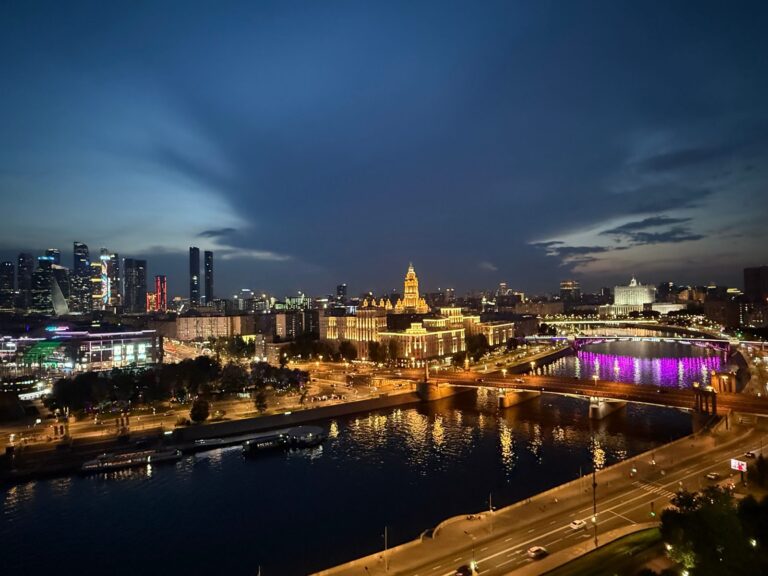
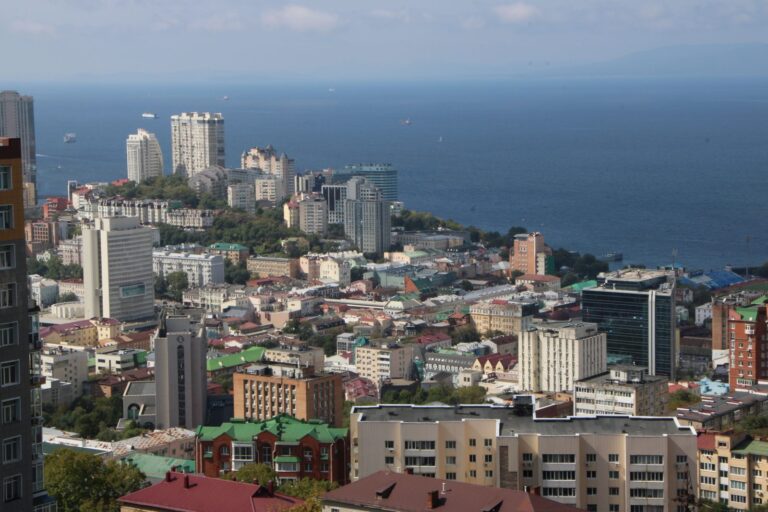
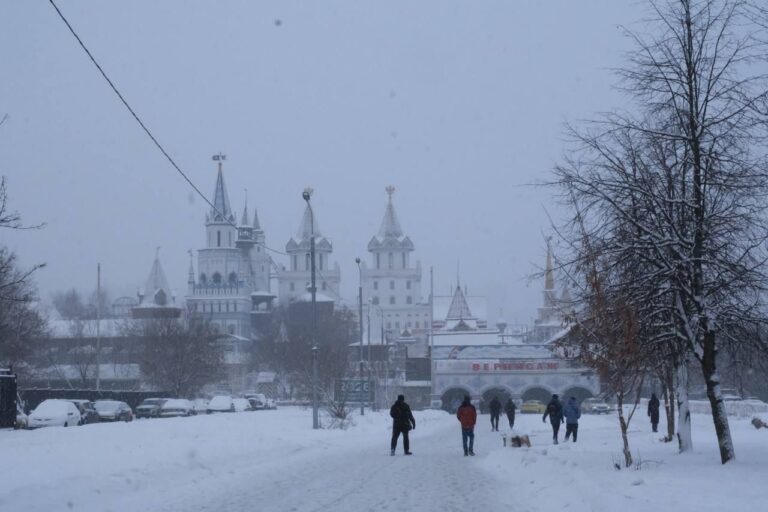
I crossed Russia in 2025, as part of an entirely flight-free trip from France to Japan. I came in from Estonia, by bus to St Petersburg, then visited St Petersburg and Moscow before boarding the Trans-Siberian: Moscow–Vladivostok on the Rossiya, six days and seven nights in one go, in 2nd class (kupé). I then left the country through Pogranichny, on the Chinese border. In total: three days in St Petersburg, two days in Moscow, six days on the train and four days in Vladivostok.
My big regret: at the time, the eVisa was limited to 16 days, so the whole trip had to fit into that window. There was no way to stop along the Trans-Siberian and enjoy other cities, even though I'd have loved to get off in Yekaterinburg, in Irkutsk for Lake Baikal or in Ulan-Ude. Good news for anyone going now: the eVisa has gone up to 30 days, so you no longer have that excuse.
Five hours at the Estonian border (and an encounter that changed everything)
What surprised me most, in a good way, was how kind Russians are. Everyone I dealt with was friendly and helpful, even when talking was complicated because they didn't speak English.
One example. At the Estonian border we waited more than five hours. There I met an English-speaking Russian and we talked for hours. He gave me a map of the best things to do in St Petersburg, then came with me for the bus: our departure time was no longer valid, so he spoke to the driver to confirm we could take the next one. It made arriving a whole lot easier.
Slavic culture is reserved; people don't smile at you spontaneously. But as soon as you take a step, even a tiny one, they open up.

St Petersburg and Moscow in fast-forward
Three days in St Petersburg, two in Moscow: it's short, but with the eVisa countdown I had no choice. I'd booked most of my nights through a platform that accepts foreign cards (ZenHotels, in my case). Everything went fine, except once in Moscow, when I had to change hotels at the last minute.

In St Petersburg, most of my time went on the Hermitage, and I don't regret a second of it: it's a museum you get lost in, literally.


Then Moscow, two days, before the big departure.


Moscow–Vladivostok in one go: six days and seven nights
I did the Trans-Siberian without getting off once: Moscow–Vladivostok on the Rossiya, in kupé (2nd class, four-berth compartment). A night departure, from a frozen platform, at around 1 a.m.

After that, six days of birch trees, snow and cities rolling past without any chance to get off.


My compartment companion
There were two of us in a four-berth compartment, for six days. She had come to Moscow for dental surgery and wasn't allowed to fly afterwards, so she was going home by train. She didn't speak a word of English, let alone French. That didn't stop us communicating, laughing and having some really good times. We used the translators on our phones when there was a signal, which wasn't often.
On the last day, shortly before Vladivostok, she wrote me a long message in her translator to thank me for my kindness and tell me she'd had a very pleasant journey. On a human level, it's one of the strongest moments of the whole trip. Proof that you don't necessarily need a shared language to understand each other.
Money, the biggest issue
Western bank cards don't work in Russia, so everything comes down to cash. I'd planned my roubles for the 16 days, but I arrived in Vladivostok a bit short: the ferry I'd been counting on was under maintenance, so I had to change my plans and pay for a taxi to the Chinese border at Pogranichny. I ended up exchanging dollars at a bank, after trying several before finding the right one. Once again, people pointed me in the right direction and helped me.
The fast-food paradox
Some of them only accept bank cards, while all I had was cash. I asked a student if she could pay with her card in exchange for my cash: she said yes straight away, and she even spoke a little English. First person I asked, first yes.
Internet: it works, but not everywhere
I left with a French mobile plan that includes data in Russia. It works, but not everywhere: at the border, before St Petersburg, I found myself with no signal at all, so no translator and no map to find my way. I managed anyway, but I really recommend an offline backup (downloaded maps and translator), or a local data option set up before you leave.
Vladivostok, and the exit to China
Four days in Vladivostok, at the end of the line. In February, the sea is frozen.


Getting from Vladivostok to Pogranichny, on the other hand, gave me trouble: I couldn't find any information locally on how to get there by public transport. I ended up taking a taxi, which cost quite a lot. I wish I'd known the right local apps beforehand.
Crossing the border is a tough exercise. My entry had been easy (fifteen minutes on the Russian side), but on the way out I got a one-hour interrogation before taking the train to Suifenhe, in China. It wasn't pleasant, but it's part of the rules of the game: I was prepared for the questions. I was even surprised by the interpreter, who told me at the end that she was sorry, that she knew it wasn't pleasant, but that the officers were just doing their job. After that, they bent over backwards to walk me to my train so I wouldn't miss it. Disconcerting.
What I wish I'd known before leaving
- Bring a bigger cash buffer. The unexpected (a cancelled ferry, a taxi) is paid in roubles, and topping up isn't easy.
- Learn a few basics of Russian. All I could say was “spasibo”, and even that simple thank-you earned me little smiles and human warmth every time. With a bit more vocabulary, I'd have experienced something else again.
- Have an offline backup for maps and translation: data doesn't get through everywhere, especially at borders.
- Find out about local transport in advance for off-the-beaten-track journeys like Vladivostok–Pogranichny.
Jérémie tells the whole story of his France–Japan trip by train, including the Russian leg, on his blog (in French): From France to Japan by train.
If you're planning a Trans-Siberian trip, you can also read Philippe's story, who did the route in three weeks with stops, Kira's solo Trans-Siberian, or all the other travellers' stories in this section.
Have you travelled to Russia recently and want to share your experience? Tell me about your trip here and I'll publish it in this section, under your name or anonymously, whichever you prefer.