

The Tretyakov Gallery is the great museum of Russian art and, together with the Kremlin, the one unmissable sight in Moscow. General admission costs 700 rubles (around €7), it closes on Mondays and it’s split across two main buildings: the historic Lavrushinsky building (Russian painting from the 11th to the early 20th century) and the New Tretyakov (the avant-garde and Soviet art). In this guide I’ll explain how to organise your visit and which works you shouldn’t miss, with the changes of the last few years: Rublev’s Trinity is no longer in the museum, Repin’s Ivan the Terrible is back after six years of restoration, and there’s a brand-new building that opened in 2024.
This is step 5 of my guide to planning a trip to Russia in 10 steps, where you’ll find everything else in order.
The Tretyakov Gallery in 30 seconds
- What it is: the main museum of Russian national art, with more than 180,000 works. In 2026 it turns 170.
- Buildings: the main building (Lavrushinsky pereulok, 10), the New Tretyakov (Krymsky Val, 10) and the new temporary-exhibitions building on Kadashevskaya, opened in 2024.
- Main building hours: Tuesday, Wednesday and Sunday from 10:00 to 18:00; Thursday, Friday and Saturday from 10:00 to 21:00. Closed Mondays. The ticket desks and entry close one hour earlier.
- New Tretyakov hours: Tuesday to Sunday from 10:00 to 21:00 (entry until 20:00). Closed Mondays.
- Price: 700 rubles for general admission to the permanent exhibition at each building; under 7s free. Temporary exhibitions are paid separately.
- Payment: foreign Visa and Mastercard cards don’t work in Russia. Bring cash rubles or a MIR card.
- Official website: tretyakovgallery.ru
- Time needed: at least 2-3 hours per building.
A bit of history: the merchant who gave Moscow a museum
Years ago, leafing through an art book in the Hermitage shop, I came across a list of the seven best art museums in the world: the Hermitage topped it, followed by the Louvre, the Met, the Van Gogh, the Prado and the Rijksmuseum. The seventh was the Tretyakov. I don’t know who put that list together, but after many visits I can promise you the museum has earned its spot: there’s nowhere else in the world where you can understand the history of Russia through its painting the way you can here.
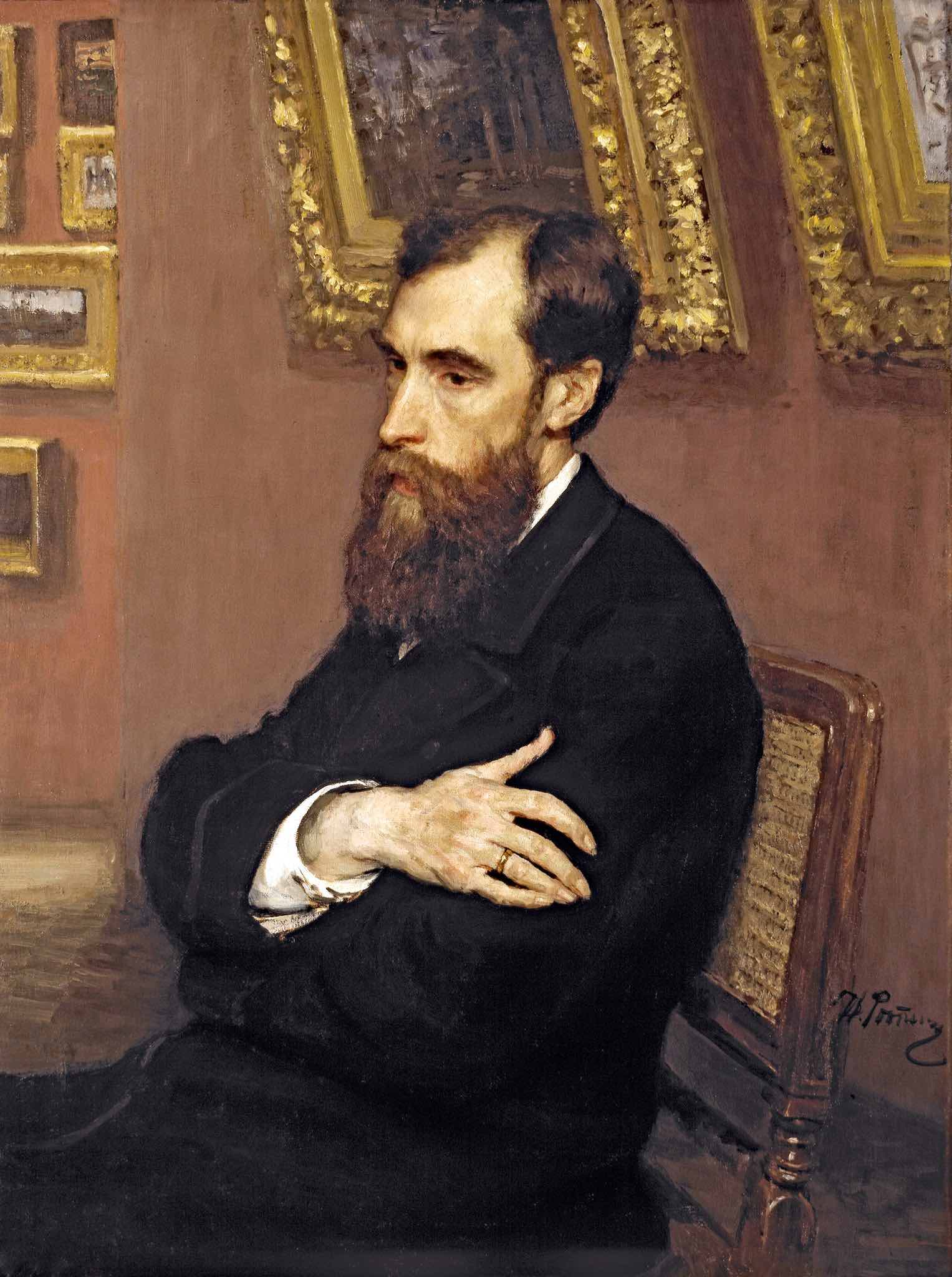
The museum owes its name to Pavel Tretyakov, a Moscow textile merchant who started buying paintings by Russian artists in 1856 (which is why 2026 marks its 170th anniversary). His brother Sergei was also a collector, mostly of European painting. In 1892, when the collection already topped 2,000 works, Pavel donated it to the city of Moscow, and a year later the museum officially opened its doors.
Pavel died in 1898 and is buried in the Novodevichy cemetery. He probably never imagined what his private collection would become. This portrait of him, painted by Ilya Repin in 1883, you’ll see in the museum itself:
One museum, several buildings: which one you’ll want to visit
Several museum spaces in Moscow are grouped under the «State Tretyakov Gallery» brand. To keep things simple, these are the ones that matter to a traveller:
- The main building (Lavrushinsky pereulok, 10): Russian art from the medieval icons to the early 20th century. It’s the one everyone visits and, if you only have time for one, this is it.
- The New Tretyakov (Krymsky Val, 10): Russian art of the 20th and 21st centuries, with the avant-garde (Malevich, Kandinsky, Chagall) and Soviet socialist realism.
- The Kadashevskaya building (Kadashevskaya naberezhnaya, 12): opened in 2024 next to the main building, it hosts the big temporary exhibitions.
- The Church of St. Nicholas in Tolmachi: a 17th-century church attached to the main building that works as a church-museum and where the Virgin of Vladimir is displayed.
The main building (Lavrushinsky pereulok, 10)
The historic Tretyakov sits right in the Zamoskvorechye district, on the other bank of the Moskva River: about a 20-25 minute walk from Red Square and a short stroll from the Cathedral of Christ the Saviour. The closest metro is Tretyakovskaya, though Novokuznetskaya and Polyanka also work.

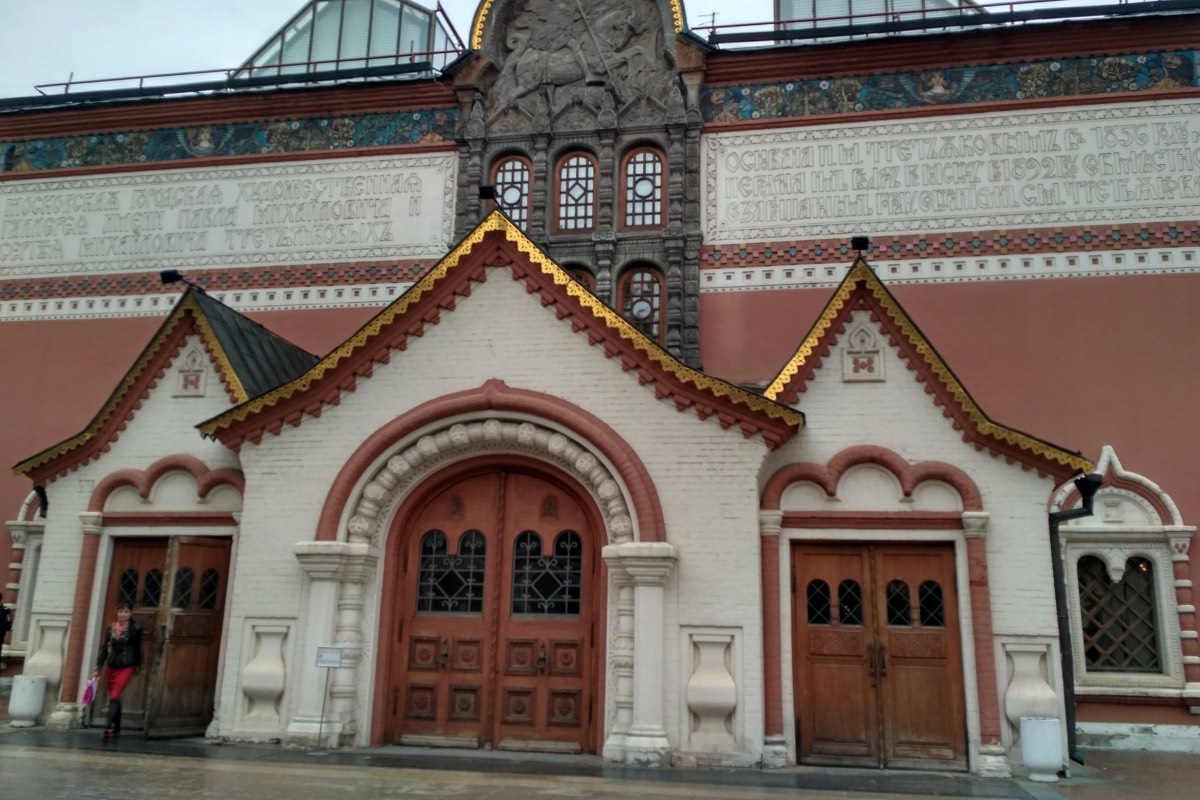
The main facade, which looks like something out of a Russian fairy tale, was built between 1902 and 1904 from a sketch by the painter Viktor Vasnetsov, and a statue of the founder presides over the entrance. Inside, 62 rooms across two floors await you with the best of Russian painting from the 11th to the early 20th century. A curious fact: during the Second World War the entire collection was evacuated by train to Novosibirsk and Perm to protect it from the bombing.
The must-see works in the main building
With 62 rooms it’s easy to get overwhelmed, so here’s my pick of the works you shouldn’t miss, roughly in the order you’ll come across them.
«The Appearance of Christ Before the People» by Alexander Ivanov (1837-1857). A monumental canvas the painter devoted twenty years of his life to, and which has a room of its own.

Vasily Surikov’s great history paintings. «The Morning of the Streltsy Execution» depicts Peter I’s punishment of the military corps that rebelled against him in 1698, and «Boyarynya Morozova» shows the 1671 arrest of the aristocrat who sided with the Old Believers, two fingers raised in the old sign of the cross. They’re two of the most striking paintings in all of Russian art.
«Bogatyrs» by Viktor Vasnetsov (1898). The painting of the three heroes of the Slavic legends (Ilya Muromets, Dobrynya Nikitich and Alyosha Popovich) that the painter worked on for twenty years. You’ve seen it a thousand times without knowing it: it’s almost a national symbol.

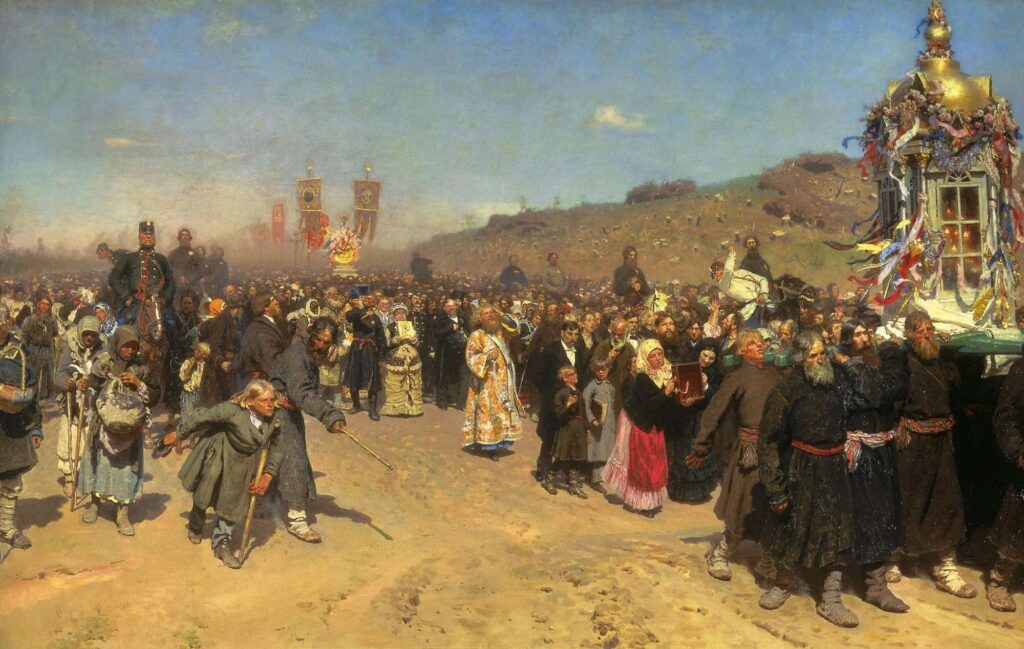
Ilya Repin, the great Russian realist, has his masterpieces here. «Religious Procession in Kursk Governorate» (1880-1883) is an unflinching portrait of 19th-century rural Russia:
Repin’s «Ivan the Terrible and His Son Ivan» (1885) deserves a separate mention. In May 2018 a vandal struck it with a security post and badly damaged it. After six and a half years of restoration, it returned to the permanent exhibition in December 2024, now protected by a climate-controlled, anti-vandal capsule. Seeing it hang in its room again is one of the highlights of the visit.

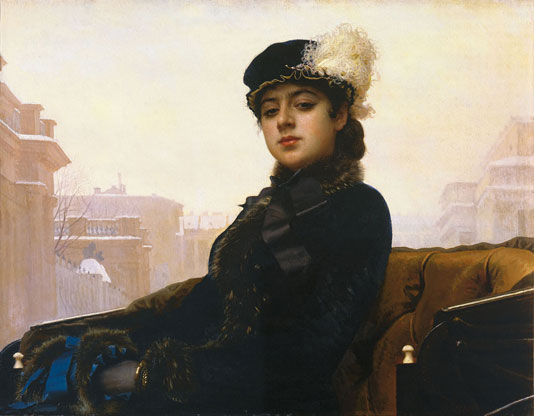
«Christ in the Desert» by Ivan Kramskoi (1872), one of the most human religious images in Russian painting, and by the same artist the famous «Portrait of an Unknown Woman» (1883), that woman with the frank gaze who once scandalised the critics and today is one of the museum’s best-loved works.

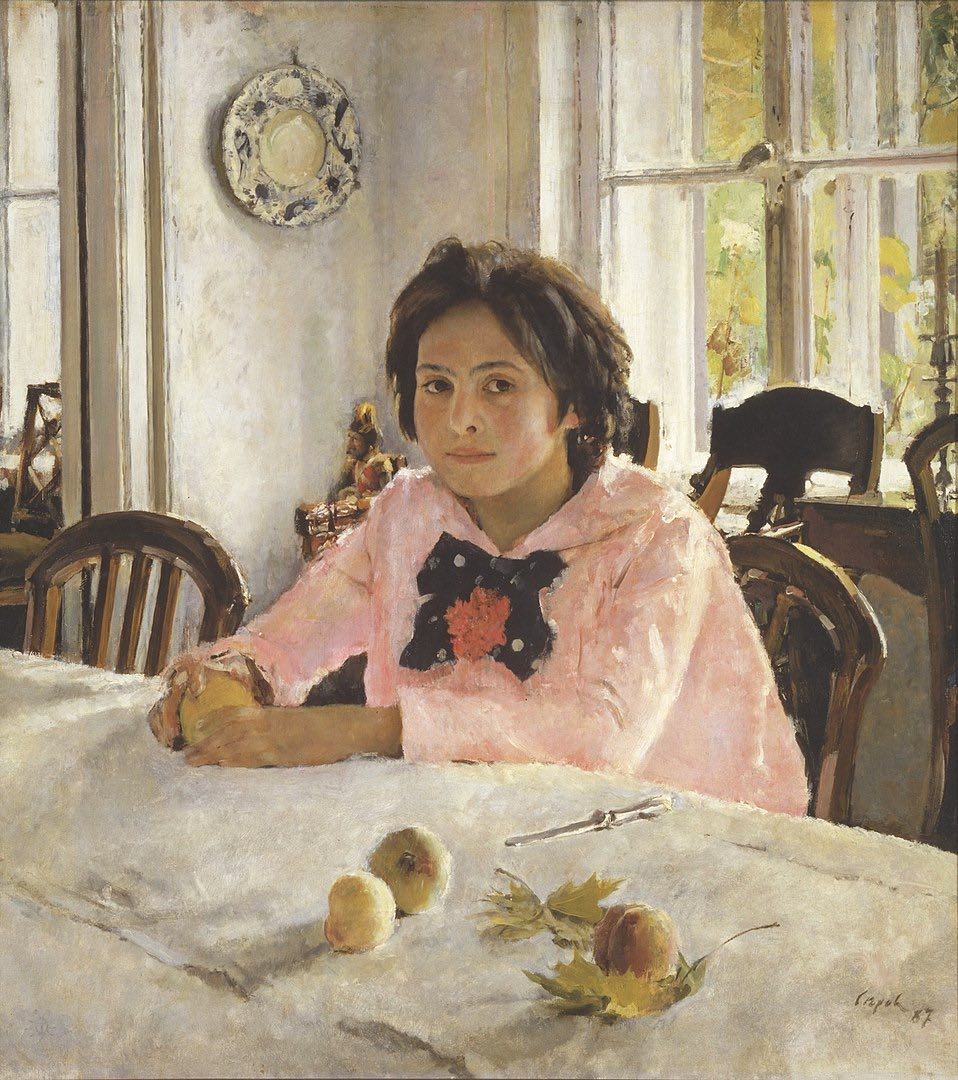
«Girl with Peaches» by Valentin Serov (1887), considered the starting point of Russian Impressionism:
«Morning in a Pine Forest» by Ivan Shishkin and Konstantin Savitsky (1889). If you’ve ever eaten the Russian «Mishka Kosolapy» chocolates, you already know this painting: their wrapper has reproduced the famous bears for more than a century. I loved them as a kid.


«The Apotheosis of War» by Vasily Vereshchagin (1871), a pyramid of skulls that is one of the most famous anti-war statements in the history of art. Leaving mountains of heads outside conquered cities was the conqueror Tamerlane’s habit, but Vereshchagin dedicated the painting «to all great conquerors, past, present and future».

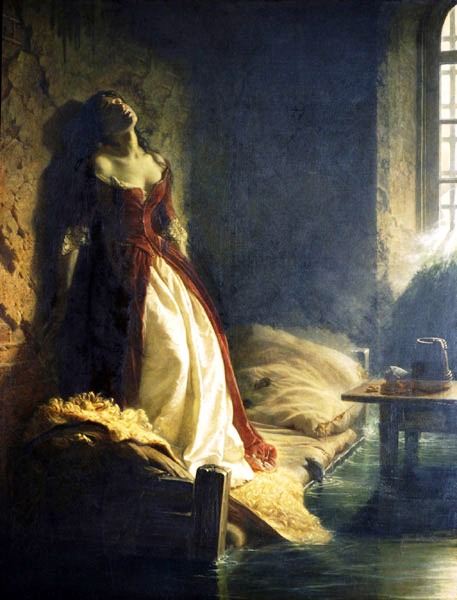
«Princess Tarakanova» by Konstantin Flavitsky (1864), which recreates a flood in the Peter and Paul Fortress in St. Petersburg, in the cell of a supposed false daughter of Empress Elizabeth.
Mikhail Vrubel’s rooms, with his unsettling «Seated Demon» (1890) —a demon with no horns or tail, beautiful and melancholy, because before he fell he was an angel— and «The Swan Princess» (1900), inspired by Russian folk tales.


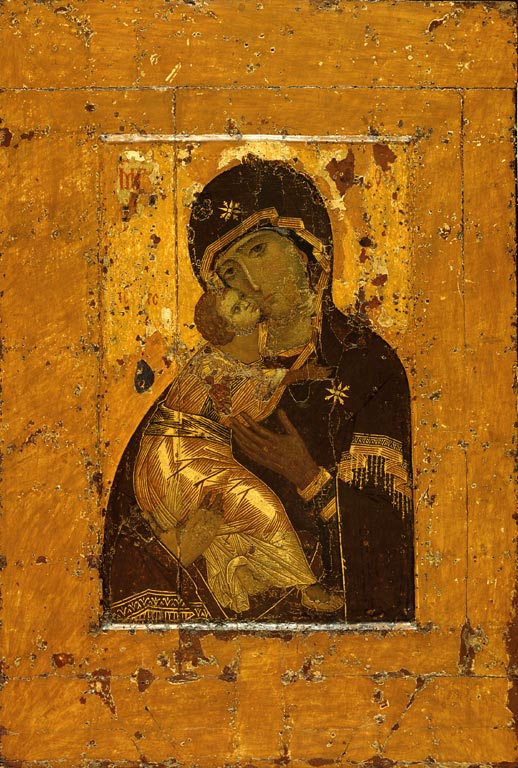
The Virgin of Vladimir, the most venerated 12th-century Byzantine icon in Russia, is displayed in the Church of St. Nicholas in Tolmachi, the 17th-century church attached to the museum that works both as a church and an exhibition room. Don’t skip it: it’s a step away from the icon rooms.
Heads up: Rublev’s Trinity is no longer in the Tretyakov
If you’re coming to see Andrei Rublev’s «Trinity», the most famous icon in Russia (painted around 1425-1427), you’re in for a disappointment: it’s no longer on display in the museum. In 2023 the Russian state handed the icon over to the Orthodox Church for 49 years and, since June 2024, it’s in its historic home: the iconostasis of the Trinity Cathedral at the Sergiev Posad monastery, about 70 km from Moscow, inside an armoured, climate-controlled case. If you want to see it, you’ll have to make a day trip to Sergiev Posad (which, by the way, is well worth it).

Hours and prices in 2026
- Main building (Lavrushinsky, 10): Tuesday, Wednesday and Sunday from 10:00 to 18:00; Thursday, Friday and Saturday from 10:00 to 21:00. Closed Mondays. Ticket desks and last entry one hour before closing.
- New Tretyakov (Krymsky Val, 10): Tuesday to Sunday from 10:00 to 21:00, with entry until 20:00. Closed Mondays.
- General admission: 700 rubles (around €7) to the permanent exhibition at each building. Temporary exhibitions have separate tickets and prices vary.
- Free entry and discounts: under 7s get in free. The reduced fares (400 rubles for pensioners and students, 350 for children aged 7 to 17) in practice apply only to citizens of Russia and the Eurasian Economic Union countries, with proof of ID.
- Audio guide: the main building has audio guides in English (and in Spanish, French, Italian, German and other languages) for around 500 rubles.
Tickets: how to buy them as a foreigner
The gallery sells tickets on its official website and at the ticket desks of each building. Here’s the important bit: since 2022, Visa and Mastercard cards issued outside Russia don’t work in the country, neither at the ticket desks nor on the website’s payment gateway. In practice, as a foreign traveller you have three options:
- Pay at the desk with cash rubles. It’s the simplest option. Except on peak weekends or for blockbuster exhibitions, there’s usually no problem buying a same-day ticket. Here’s where to change rubles at the best rate.
- Pay with a MIR card, the Russian payment system. If you’re going to be in Russia for several days I’d recommend it for everything, not just museums. Here I explain how to get a MIR card as a foreigner.
- Book a guided tour with the ticket included, paying online with your usual card before you travel (see below).
A trick to dodge the crowds: the quietest time is first thing on Tuesday or Wednesday. Thursday and Friday evenings, with the museum open until 21:00, are also a very pleasant time to visit.
The New Tretyakov (Krymsky Val, 10): the avant-garde and Soviet art
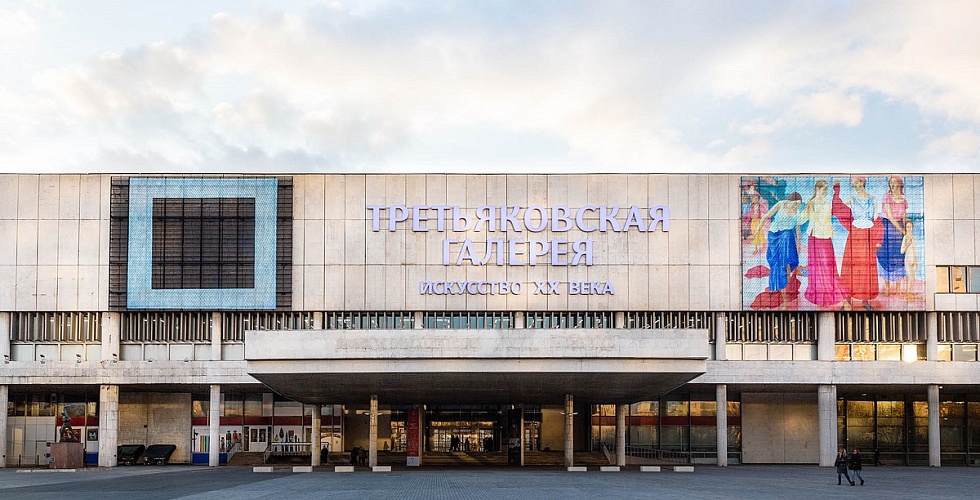
The New Tretyakov Gallery occupies a huge Soviet-era building by the river, in Muzeon Park, and picks up where the main building leaves off: Russian art of the 20th and 21st centuries. This is where you’ll find the avant-garde movements that revolutionised world art and the painting of Soviet socialist realism.
The three works that justify the visit on their own:
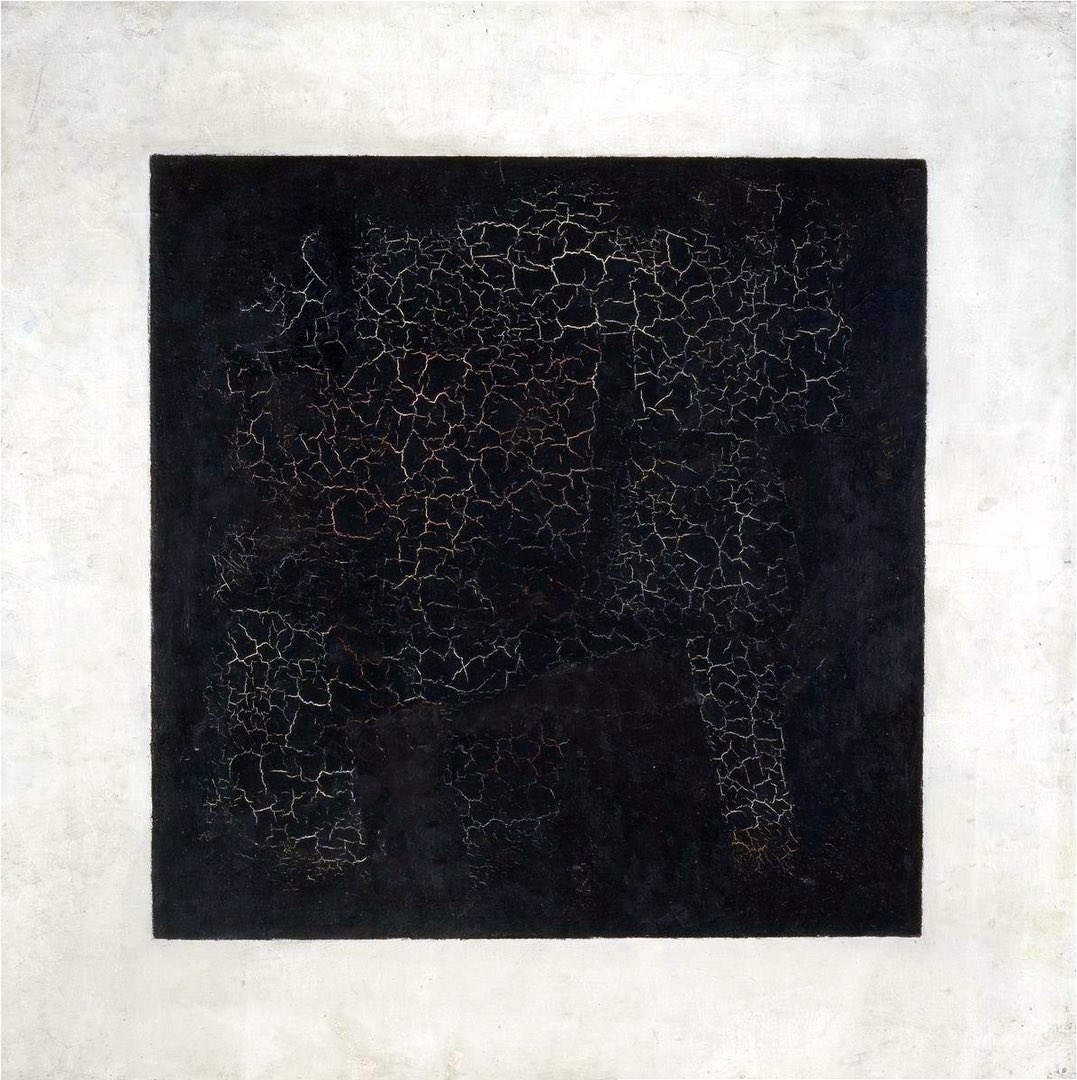
Kazimir Malevich’s «Black Square». The 1915 original, the most talked-about (and argued-over) painting of 20th-century Russian art, hangs here, in the avant-garde rooms. A lot of people look for it by mistake in the main building: it’s at Krymsky Val.
Vasily Kandinsky’s «Composition VII» (1913), one of the peaks of abstract art worldwide:

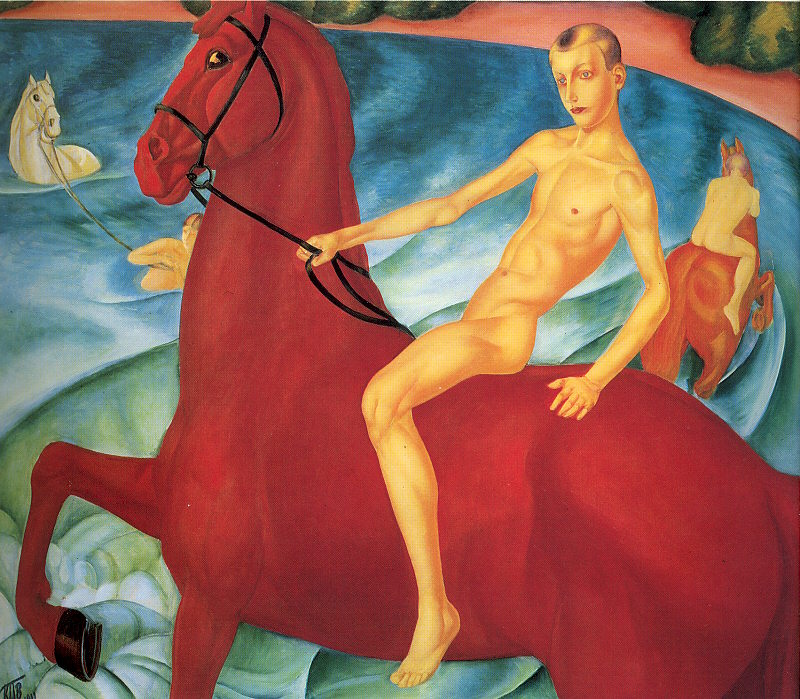
Kuzma Petrov-Vodkin’s «Bathing of the Red Horse» (1912), alongside works by Chagall, Goncharova, Rodchenko and the big names of Soviet art:
The nearest metro stations are Oktyabrskaya and Park Kultury. From the main building it’s about a 25-minute walk (around 2 km), past the colossal 98-metre statue of Peter the Great planted on a little island in the river. And don’t leave without strolling through Muzeon Park around the museum, an open-air «graveyard» of Soviet statues removed after the fall of the USSR, with Gorky Park right across the way.
The new Kadashevskaya building (opened in 2024)
The big news of recent years. In May 2024, after a decade of construction, the Tretyakov opened a third major building at Kadashevskaya naberezhnaya, 12, right next to the main Lavrushinsky building. Its facades, designed by architect Sergei Tchoban, are decorated with 34 reproductions of famous paintings from the collection, and inside there are around 4,000 m² of rooms devoted to the museum’s big temporary exhibitions (the inaugural one, dedicated to the Peredvizhniki painters, was one of Moscow’s cultural events of the year). The glazed atrium works as a public space and you can pop in to have a look without a ticket. If a major temporary exhibition coincides with your trip, it’ll most likely be here: check the schedule on the official website.
Guided tours in English
The Tretyakov is a museum that gains enormously with a guide: behind every painting there’s an episode of Russian history, and without context it’s easy to walk straight past extraordinary works. The Western tour platforms stopped operating in Russia in 2022, but it’s still possible to book guided tours in English with local agencies, paying online in advance with your usual card. You’ll find the available options on the guided tours in Moscow page.
Practical tips for your visit
- Time: allow at least 2-3 hours for the main building. If you also want to see the New Tretyakov, split it across two days or dedicate a full day to art.
- Cloakroom: it’s free, and you’ll have to leave coats and large backpacks before going into the rooms.
- Photos: you can photograph the permanent exhibition without flash or tripod.
- Eating: there’s a café inside the museum for a snack, but to eat well I’d recommend heading out: the Zamoskvorechye area, with Pyatnitskaya and Bolshaya Ordynka streets, is full of cafés and restaurants. You’ll find my recommendations in the article on where to eat cheap in Moscow.
- How to fit it into your trip: the Tretyakov slots perfectly into a morning or an afternoon of any of the Moscow itineraries. And if you’re still planning the trip, the Moscow travel guide has everything else.
Frequently asked questions
How much does it cost to get into the Tretyakov Gallery?
General admission to the permanent exhibition costs 700 rubles (around 7 euros), both at the main building and at the New Tretyakov. Children under 7 get in free and temporary exhibitions are paid separately.
What day is the Tretyakov Gallery closed?
Mondays, at every building. The main building opens Tuesday, Wednesday and Sunday from 10:00 to 18:00, and Thursday, Friday and Saturday from 10:00 to 21:00. The New Tretyakov opens Tuesday to Sunday from 10:00 to 21:00.
Is Rublev’s Trinity still in the Tretyakov?
No. In 2023 it was handed over to the Russian Orthodox Church and since June 2024 it has been in the Trinity Cathedral of the Sergiev Posad monastery, about 70 km from Moscow.
Can I pay with my Visa or Mastercard?
No. Cards issued outside Russia have not worked in the country since 2022. To buy tickets you need cash rubles or a Russian MIR card.
How much time do you need to visit the Tretyakov?
A minimum of 2 or 3 hours for the main building. If you also want to see the New Tretyakov, set aside a full day or split it across two days.
Is there an audio guide in English?
Yes. The main building has audio guides in English for around 500 rubles. You can also book a private guided tour in English with local agencies.


