
Russia Transit Visa and Moscow Stopover: When You Need One
 By Irena Domingo
Updated on
In This Article
Do you need a transit visa to stop over in Moscow or to cross Russia on your way to another country? The short answer: it depends on how you pass through Russia. If you simply change planes at the same airport, in under 24 hours and without crossing immigration, you don’t need one. If you want to step out to see the city, you change airports, your stopover is longer than 24 hours, or you cross Russia by train, car, bus or ferry, you do. In this article I explain every case, how to apply, and why today, in many situations, the e-visa is an easier alternative.
If you do need a visa to leave the airport, my Russian visa guide helps you choose between the e-Visa and the regular visa.

Do you need a transit visa for Russia? The quick answer
A transit visa is the permit a foreigner needs to pass through Russian territory on the way to a third country. Whether you need one depends on how you cross Russia. Here’s the summary before the details:
- You don’t need one if you just connect at the same airport, your layover is under 24 hours and you don’t cross passport control (you stay in the international transit area).
- You do need one if you leave the international area (even briefly, to see the city), change airports, your stopover lasts more than 24 hours, or you fly onward to a Eurasian Economic Union country (Belarus, Kazakhstan…) with a stop in Russia.
- You always need one if you cross Russia overland (train, car, bus or ferry) on the way to a third country.
- You may not need any visa at all if you’re a citizen of one of the roughly 60 countries that don’t need a visa for Russia.
- And if your nationality can apply for the e-visa (EU, Japan, India, China, Turkey…), stepping out to see the city during a layover is usually easier with an e-visa than with a transit visa. I explain this below.
One thing to be clear about from the start: Russia does not issue visas on arrival. Whatever your case, the visa (transit or e-visa) must always be arranged in advance.
When you DON’T need a transit visa (by air)
You have nothing to arrange in these cases:
- Overflight without a stop. If your plane just crosses Russian airspace without landing, you don’t need a visa.
- Short connection at the same airport. If you connect at a Moscow airport, your next flight leaves within 24 hours from that same airport (both on the outbound and the return journey) and you don’t cross passport control (you stay in the international transit area), you don’t need a transit visa.
- Visa-exempt nationalities. If you’re a citizen of one of the countries that don’t need a visa for Russia, you have nothing to arrange (but you must still meet the other entry requirements).
The key is that international transit area: as long as you don’t cross the immigration checkpoint, you officially haven’t entered Russia. The catch is that terminal layouts vary and it isn’t always obvious whether your connection forces you through the checkpoint. So my advice is clear: ask your airline, which knows each terminal’s layout better than anyone. And if the airline can’t confirm it for sure, the safe move is to get the transit visa.
When you DO need a transit visa (by air)
You must apply for a transit visa in any of these cases:
- You want to leave the airport to visit the city, even just for a few minutes. The moment you cross passport control, you need the visa.
- You change airports. If you arrive at one Moscow airport (say, Sheremetyevo) and your next flight leaves from another (Domodedovo or Vnukovo), you’ll have to cross immigration and therefore need the visa.
- Your stopover lasts more than 24 hours.
- You fly onward to a Eurasian Economic Union (EAEU) country with a stop in Russia. Flights between Russia and Belarus are treated as domestic (there’s no border control between the two countries), so you’d cross Russian immigration in Moscow and would need the visa. Russian visa centers state that a transit visa is also required for flights to Kazakhstan, Armenia and Kyrgyzstan (the other EAEU countries); always confirm with your airline.
Crossing Russia overland: train, car, bus or ferry
If, instead of an air stopover, you plan to cross Russia overland on your way to another country, the rule is simple: you always need a transit visa. It doesn’t matter whether you travel by train, car, bus or ferry. Some typical examples:
- By train. For example, crossing Russia on the Trans-Siberian or Trans-Mongolian railway en route to Mongolia or China.
- By car or campervan. Crossing Russia from the Baltic states or Finland toward Central Asia or the Caucasus, or the other way around.
- By bus. International coach routes that cross Russian territory.
- By ferry. Sea links that call at a Russian port.
This could change: since November 2026 there’s a draft law to make the e-visa valid for transit too and at all border crossings, so anyone eligible for it could cross Russia overland on the e-visa on the way to a country they have a visa for or don’t need one for. It isn’t law yet: until it’s passed, to cross Russia overland you need the transit visa. I explain it in the article on the eVisa duration.
The big difference from air transit is the duration: overland, the transit visa is granted for up to 10 days, versus 3 days for air transit. If you travel in your own vehicle, the visa is issued for the time needed to cross Russia by the shortest route, without exceeding those 10 days; consulates calculate this period assuming an average of about 500 km per day.
How long the transit visa lasts (validity and entries)
The transit visa can be single or double entry. The validity depends on the means of transport:
| Means of transport | Maximum validity | Entries |
|---|---|---|
| By air | 3 days (72 hours) | 1 or 2 |
| Train, car, bus or ferry | 10 days | 1 or 2 |
| Double entry (out and back through Russia) | 1 month maximum in total | 2 |
The double entry is useful when both the outbound and the return trip stop in Russia. On the form you must indicate that you’re applying for a double-entry transit visa. If your round trip through Russia will last longer than a month, you can’t cover it with a single double-entry visa: you’ll need a single-entry one for the outbound leg and to obtain the second transit visa at a Russian consulate in the destination country.
The e-visa, almost always easier than the transit visa
If what you want is to leave the airport to see the city during a long layover and your nationality can apply for the electronic visa (e-visa), the e-visa is almost always a better bet than the transit visa. It’s available to 64 nationalities (most of the EU, Japan, India, China, Turkey, etc.), but not to citizens of the United States, the United Kingdom, Canada, Australia and New Zealand, who must use the transit visa or the regular visa.
Advantages of the e-visa over the transit visa for a layover:
- It’s applied for 100% online, with no consulate visit, on the official site evisa.kdmid.ru.
- It costs AED 238 (about US$65 / €58) and is issued within a maximum of 4 calendar days.
- It requires no invitation letter, no hotel booking, no tickets, and not even the destination country’s visa (which the transit visa does require).
- It’s valid for 120 days from issue and allows a stay of up to 30 days.
- All three Moscow airports (Sheremetyevo, Domodedovo and Vnukovo) are approved e-visa checkpoints, so you can enter and leave through them.
The one important catch: the e-visa is single entry. If your return flight also stops in Moscow and you plan to leave the airport again, you’d need a second e-visa or, instead, a double-entry transit visa. You’ll find all the details of the process in my guide on how to apply for the e-visa.
How to apply for the transit visa: documents, where and cost
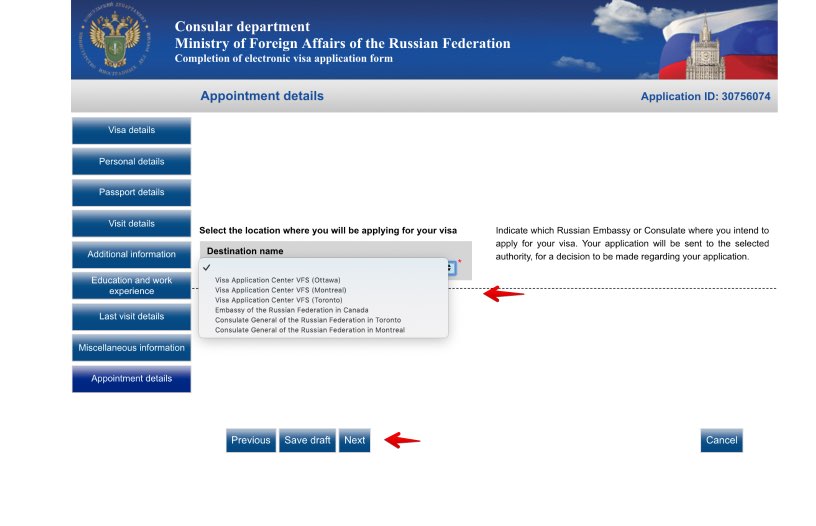
The transit visa is applied for in advance at a Russian consulate or visa center in your country of residence. It can’t be obtained on arrival, and it can be submitted at most three months before departure. You can see where to apply in my list of Russian embassies, consulates and visa centers.
Unlike the tourist visa, you don’t need an invitation letter. Instead, these are the documents usually required:
- Entry and exit tickets for Russia (air, train or other means), with confirmed booking.
- Visa for the final destination country (for example China, India or Mongolia), or that country’s passport, or proof that you can enter without a visa. Not needed if your nationality enters the destination country visa-free.
- Passport with at least 2 blank visa pages and valid for at least 6 months beyond the visa’s expiry date.
- Application form completed on the official site visa.kdmid.ru, printed and signed. You must indicate on it that it’s a single- or double-entry transit visa.
- One recent photo, 3.5 x 4.5 cm, on a light background.
- Medical insurance valid in Russia for the entire validity of the visa. Here’s travel insurance valid for Russia.
- If you apply outside your home country, you’ll also be asked for proof of legal residence in the country where you submit the application.

The cost varies by country and consulate, and usually adds the consular fee to the visa center’s service fee. As a reference: in Norway the consular fee for a single entry is around 800 NOK (about €70) plus the center’s fee; in the United States the consular fee is around $198 plus handling charges. Rush processing (1-3 business days) costs more than the regular service. Always check the current fees with the consulate or visa center where you’ll submit your application.
The rest of the process is very similar to the regular Russian visa, just without the invitation letter.
Why the transit visa is becoming less common (2026)
If you’ve made it this far thinking about a Moscow layover, it’s worth knowing the current context. Since February 2022 there are no direct flights between Europe and Russia. Today, traveling to Russia from Europe almost always means connecting via Istanbul, Belgrade, Yerevan, Doha or Dubai. And that’s the key point: those hubs are not in Russia, so you don’t need any Russian transit visa there.
That’s why, today, Moscow layovers mainly happen on flights to or from Asia operated by carriers that still route through Russia, or for those deliberately crossing Russia. And for anyone who just wants to step out to see the city during a long layover, the e-visa has effectively replaced the transit visa in most cases. In short: today the transit visa is still essential mainly for crossing Russia overland and for citizens who can’t apply for the e-visa.
Is it worth leaving the airport during a layover?
If your layover is long enough to visit Moscow and you’ve already sorted out the visa, let’s get practical: how long does it take to reach the center? I’ll calculate the time from the moment you get off the plane until you set foot on Red Square.
First, two tips to avoid wasting time:
- Bring rubles in cash or a MIR card. Important: since March 2022, foreign Visa and Mastercard cards don’t work in Russia. You won’t be able to pay with your usual card or withdraw from an ATM. The best option is to bring some cash and exchange it into rubles, or get a Russian MIR card.
- Buy your transport tickets in advance. Aeroexpress tickets (the train linking the airport to the center) are bought on its website. If you prefer a taxi, book it in advance so it’s waiting for you at the exit.
Passport control (about 30 minutes on average)
As soon as you get off the plane, you go through passport control. There are two lines, one for Russians and one for foreigners. If there aren’t many flights at the same time, it can take 15 to 30 minutes (sometimes less). In high season, especially in summer, it’s not unusual to wait an hour or more. More details in Russian airports: immigration card and customs formalities.

Taking a means of transport (between 15 and 30 minutes)
If you have no checked luggage and nothing to declare, between the checkpoint and getting on your transport a few minutes still pass, since you have to walk through the airport and buy your ticket. The Aeroexpress leaves every 30 minutes and is the best way to reach the center while avoiding traffic jams. A taxi is the best choice if you arrive at night; by day, try to avoid rush hour (Monday to Friday, 8:00–9:00 and 18:00–19:00).

The journey to Red Square (1 hour minimum)
Aeroexpress journey times:
- Between Sheremetyevo and Moscow (Belorussky station): 35 minutes.
- Between Domodedovo and Moscow (Paveletsky station): 45 minutes.
- Between Vnukovo and Moscow (Kievsky station): 35 minutes.
At the Aeroexpress terminus you have to transfer to the Metro. The Metro ride to Teatralnaya (the closest station to Red Square) is only 5 minutes, but between buying the ticket, waiting for the train, exiting and walking, count another 15-20 minutes. More details in how to get from the airport to the center of Moscow.
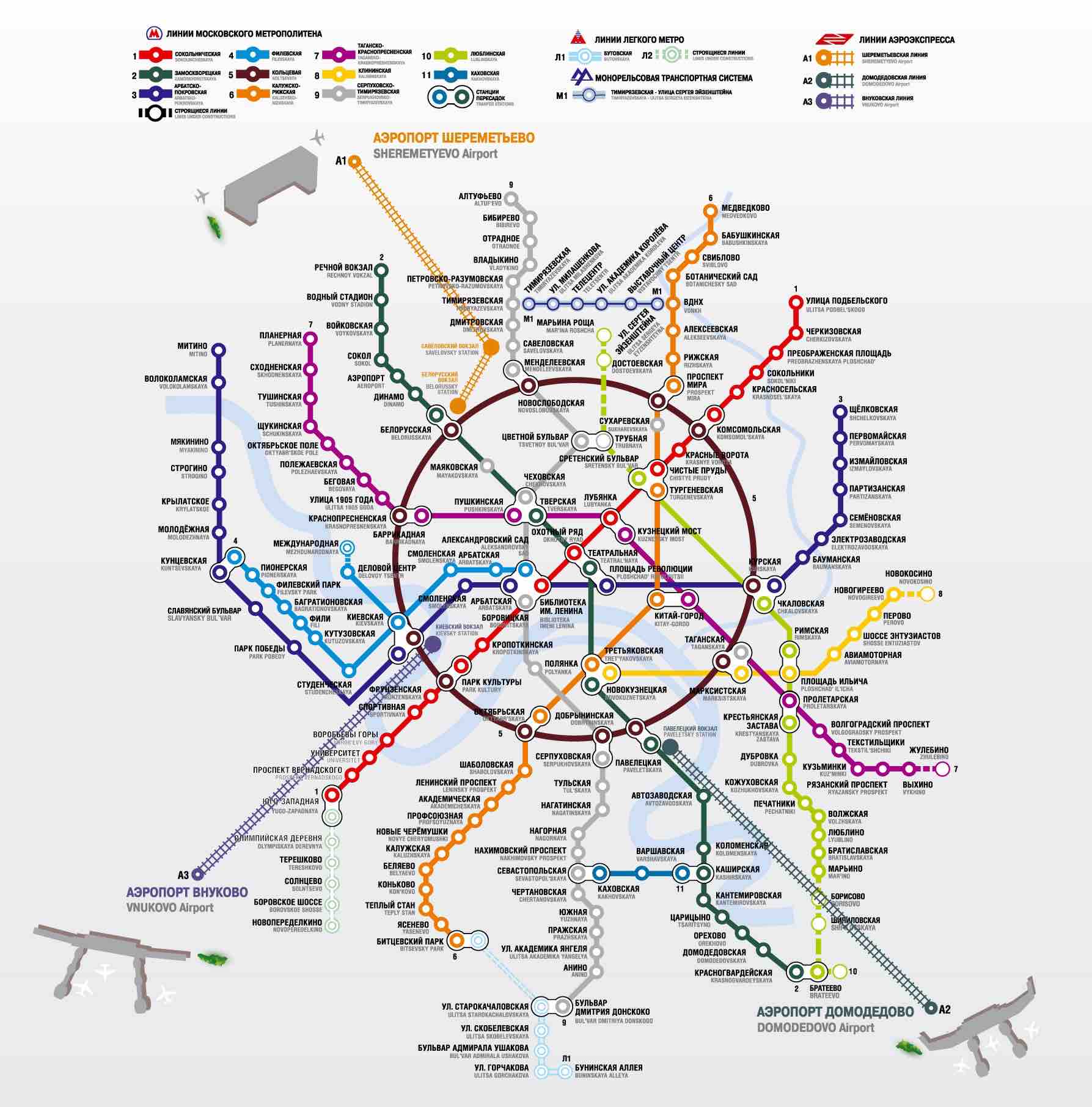
In short: is it worth stepping out to see Moscow?
From the plane landing to reaching Red Square, at least 2 hours can pass. If you add a similar time for the return and the 60-90 minutes of buffer it’s best to keep at the airport before your next flight, you’re looking at about 5 hours total. So, if your layover is under 5 hours, I don’t recommend leaving. In my opinion, it’s worth it when the layover is at least 8 hours and gives you time to see Red Square and its surroundings at a relaxed pace. And remember: to leave you need a visa (transit or e-visa).
What to see in Moscow during a layover
If your layover lets you visit the city, you can do it on your own or on a guided tour. These are the main sights in the center:
- Red Square. The heart of the city. Around it you’ll find St. Basil’s Cathedral, Lenin’s Mausoleum (free, open Tuesday, Wednesday, Thursday and Saturday from 10:00 to 13:00), the Kremlin and the GUM galleries.
- Around Red Square. Alexander Garden with the Tomb of the Unknown Soldier, a beautiful Metro station like Ploshchad Revolyutsii, and the exteriors of the Bolshoi Theatre and Tverskaya Street.
- Cathedral of Christ the Saviour. About a 25-minute walk from Red Square. The visit is free.
- Arbat Street. A one-kilometre pedestrian street, commercial and touristy, in the heart of the historic center.
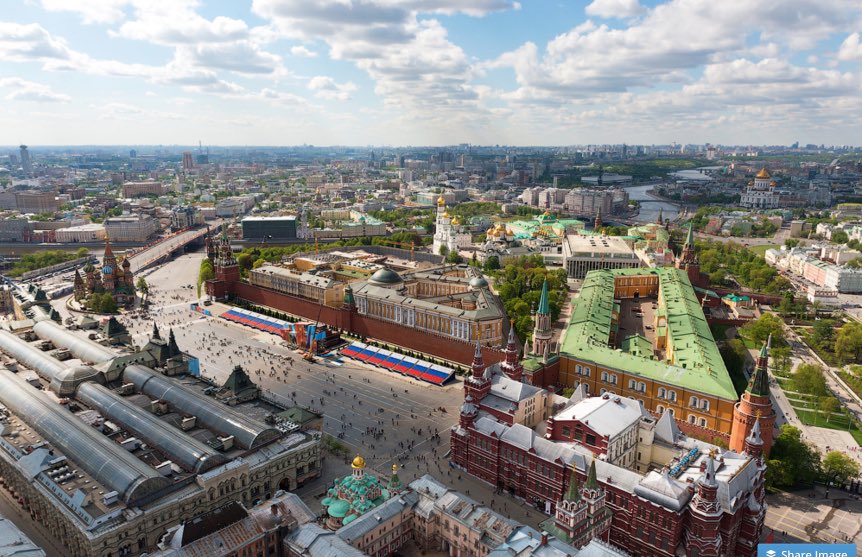
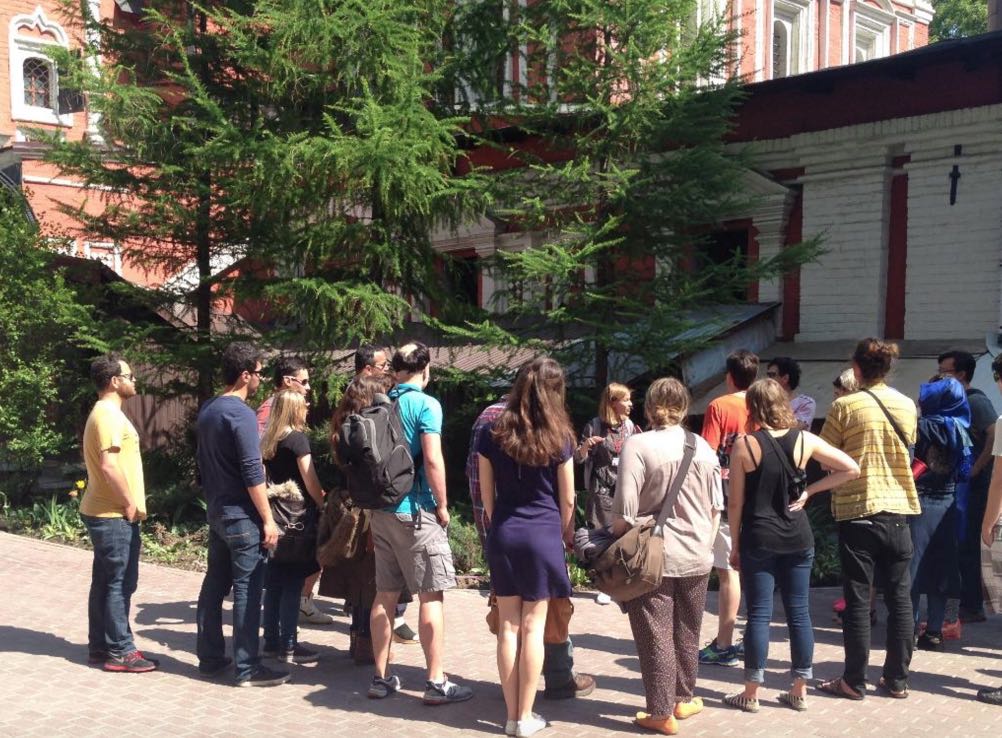
The other option is a guided tour. Some companies pick you up at the airport, show you the city based on the time you have, and bring you back in time for your flight. I go over the options in guided tours of Moscow.
Staying at the airport during the layover
If your layover is short or overnight, the best option is to stay at the airport. You can rest in the waiting area, in a VIP lounge, or spend the night in a hotel.
- Waiting area. On the airports’ official websites you can check restaurants, shops and wifi: Sheremetyevo, Domodedovo and Vnukovo.
- Business or VIP lounges. If you want more comfort, the airports have paid lounges where you can wait in peace.

Spending the night in an airport hotel
The only airport that lets you spend the night in a hotel without applying for a transit visa is Sheremetyevo, at the Vozdushny Express hotel, located inside the airport itself, before passport control. There are also nearby hotels (such as the Novotel) where you’re escorted there and back to spend the night without crossing immigration, though with limited access to the facilities. At the other Moscow airports, sleeping in a nearby hotel would require a visa. If you’re looking for something for a longer stay, take a look at my tips on accommodation in Russia (note that Booking.com and Airbnb no longer operate in the country).

Frequently asked questions about the Russia transit visa
Do I need a transit visa if I’m only connecting in Moscow without leaving the airport?
No, if your connection is at the same airport, lasts under 24 hours and you don’t cross immigration (you stay in the international transit area). You do need one if you leave that area, change airports or your stopover is longer than 24 hours.
Can I leave the airport to see the city during a long layover?
Yes, but you need a visa: a transit visa or, if your nationality allows, an e-visa. Russia doesn’t issue visas on arrival, so you must arrange it before the trip.
How long does the transit visa last?
Up to 3 days if you travel by air and up to 10 days if you cross Russia overland (train, car, bus or ferry). It can be single or double entry; the double entry can’t exceed one month in total.
Do I need a transit visa to cross Russia overland?
Yes, always. To cross Russia by train, car, bus or ferry on the way to a third country you need a transit visa, granted for up to 10 days.
Is the e-visa or the transit visa better for a layover?
If your nationality can apply for the e-visa (EU, Japan, India, China, Turkey… but not the United States, the United Kingdom, Canada, Australia or New Zealand) and you only want to step out to see the city, the e-visa is usually easier: 100% online, AED 238 (about $65 / €58), with no invitation letter or destination-country visa.
Do I need a visa if I fly to Belarus or Kazakhstan with a stop in Russia?
Yes. Flights between Russia and Belarus are treated as domestic, so you cross Russian immigration and need the visa. For Kazakhstan, Armenia and Kyrgyzstan (Eurasian Economic Union countries), visa centers require it too; confirm with your airline.
Can the transit visa be obtained on arrival at the airport?
No. Russia doesn’t issue visas on arrival. The transit visa must be arranged in advance at a Russian consulate or visa center in your country of residence.
I hope this article helps you figure out whether you need a transit visa and plan your Moscow layover. If you have questions or want to share your experience, I’ll read you in the comments.
In This Article
Was this useful? I'll tell you when something changes in Russia
One short email a month with what has changed for travellers (visas, payments, border crossings, apps), based on what readers report to me from Russia. More than 4,000 of us already. No spam: if you ever lose interest, unsubscribing is one click.
Irena DomingoAbout Me
I was born in Russia. I grew up between two worlds: my father was Russian, my mother Spanish — a descendant of the "Children of Russia", the Basque children evacuated to the USSR during the Spanish Civil War. I've worked as a translator, interpreter and Russian teacher for over 30 years, and since 2013 I've been writing this blog to help travelers discover Russia with practical, always up-to-date information. Author of the Russiable Guide. If this blog has helped you plan your trip, you can buy me a coffee ❤️.
 Russia Business Visa: When You Need It and How to Apply
 How to Enter Russia Visa-Free (Visa-Exempt Countries): The ruID App and the Electronic Travel Authorization
 Where to Apply for a Russian Visa in the USA (2026)