
Russian Orthodox Christmas: How to Experience It if You Travel in January (Dates, Christmas Eve Service, Traditions and Epiphany)
 By Irena DomingoUpdated on The essentials in 1 minute
In this article
In Russia, Christmas is not on 25 December but on 7 January, and it is not the big winter holiday: that is New Year. Russian Orthodox Christmas is quieter and more religious: a fast of more than a month, a simple supper on Christmas Eve, a night-time liturgy and then Svyatki, the festive days that run to Epiphany, with its ice swimming on the night of 18 to 19 January.
If you travel to Russia in January and want to experience it properly, and not just see the lights and the markets, here is what happens each day, where to go for the Christmas Eve service, how to behave in church and what you need to know about the cold, opening hours and bookings. The details were checked in November 2026 against official Russian sources, and where the 2027 details have not yet been published I give you the 2026 ones.
The essentials
- 2027 dates: Christmas Eve (Sochelnik) on Wednesday 6 January, Christmas on Thursday 7 January and Epiphany (Kreshchenie) on the night of 18 to 19 January.
- Holidays: Russians do not work from 31 December 2026 to 10 January 2027, both days included. 25 December is a normal working day.
- The Christmas Eve service starts around 23:00 on 6 January and lasts between two and a half and four hours. It is held in every church; the one at the Cathedral of Christ the Saviour, with the Patriarch, is broadcast live on television.
- In church: women cover their heads; men take their hats off; wear clothes that cover shoulders and legs. You stand throughout.
- On 7 January the big museums are open (in 2026 the Hermitage was free that day); many close on 1 January.
- Cold: the January average is about −6 °C in Moscow and −5 °C in St Petersburg, and Moscow has just over seven hours of daylight.
When is Christmas in Russia, and why 7 January?
The Russian Orthodox Church still uses the Julian calendar, which today runs 13 days behind the Gregorian one. Its 25 December falls on our 7 January. The Russian state adopted the Gregorian calendar in 1918, but the Church did not, so religious feasts stayed shifted by those 13 days.
In Soviet times Christmas stopped being celebrated in public and many of its customs (the fir tree, Ded Moroz, the presents) moved to New Year, which is still the big family holiday of the year, with a long dinner, the Kremlin chimes and gifts. Christmas won its place back in the 1990s: 7 January has been a public holiday since 1991, and today the Labour Code lists it as “Рождество Христово” (the Nativity of Christ). The result is that Russia celebrates New Year first and Christmas a week later, with the fast still under way on New Year’s Eve.
What happens in the streets at New Year, with the markets and the ice rinks, is in the article what to do in Moscow at Christmas and New Year. Here I concentrate on Orthodox Christmas.
Russian Orthodox Christmas calendar for 2026-2027
| Date | What it is | What you will notice as a traveller |
|---|---|---|
| 28 November to 6 January | Nativity Fast (Рождественский пост, or the “fast of St Philip”) | Believers do not eat meat, dairy or eggs. Normal life carries on. |
| 31 December | New Year’s Eve | The big night of the year. Crowded streets, chimes at midnight and fireworks. |
| 31 December to 10 January | New Year holidays | Public offices closed. Lots of domestic tourism: hotels and trains are fuller. |
| 1 January | New Year’s Day | Many museums are closed. |
| 6 January (Wednesday) | Christmas Eve (Sochelnik) | Morning services, a fasting supper and, at night, the great liturgy. |
| 7 January (Thursday) | Christmas (Rozhdestvo) | Morning liturgies, a festive family meal and folk festivals in parks and museums. |
| 7 to 17 January | Svyatki (Святки) | The “holy days”: carols, costumes and fortune-telling. |
| 18 January | Epiphany Eve (Крещенский сочельник) | Blessing of the water in churches. |
| 18 to 19 January | Epiphany, or the Baptism of the Lord (Kreshchenie) | Swimming in ice holes, at night and during the day on the 19th. |
The 2027 holiday is eleven days in a row, from Thursday 31 December to Sunday 10 January: 31 December is a day off because of the transfer of days in 2026, and the rest comes from the Labour Code holidays and Russian Government decree No. 1187 of 17 September 2026. The calendar for the whole year is in public holidays in Russia.
The Nativity Fast: eating in Russia in December
The Christmas fast lasts 40 days, from 28 November to 6 January. Those who keep it do not eat meat, dairy or eggs. Depending on the day of the week, oil and fish are allowed or not: fish is eaten on Saturdays, Sundays and some feast days, and disappears completely in the last days before Christmas. The sick, pregnant women and people doing heavy work can ease the rules with the priest’s permission.
As a traveller it does not affect you: restaurants work as usual and New Year’s Eve is celebrated with everything. If you want to fast, or simply eat like the believers, ask for a “постное меню” (postnoye menyu, fasting menu). It is very common in Lent; in Advent it is harder to find, so ask.
Christmas Eve (Sochelnik) on 6 January
The name comes from sochivo (сочиво), the dish of the day: grains of wheat (or rye or oats), soaked or boiled, with honey. It is almost the same as kutya: boiled wheat with honey.
The popular custom is to eat nothing during the day and sit down at the table when the first star, the Star of Bethlehem, comes out. The Church does not ask for this: its rule is to fast until the end of the vespers service of the eve, which, held at its proper time, ended more or less when the stars came out. That is where the custom comes from. The Christmas Eve supper is a fasting meal, without meat, and the feast is left for the next day.
You may have read that twelve dishes are prepared on Christmas Eve, one for each apostle. That is mostly a Ukrainian and Belarusian custom; the Russian sources I consulted (the Orthodox portal Azbyka and the Moscow City Hall website) talk about sochivo and kutya, not twelve dishes.
During the day on the 6th, churches celebrate the Royal Hours and Vespers with the liturgy of St Basil the Great in the morning. If you want to see a service without the crowds of the night, this is a good moment.
The Christmas Eve service: how and where to experience it
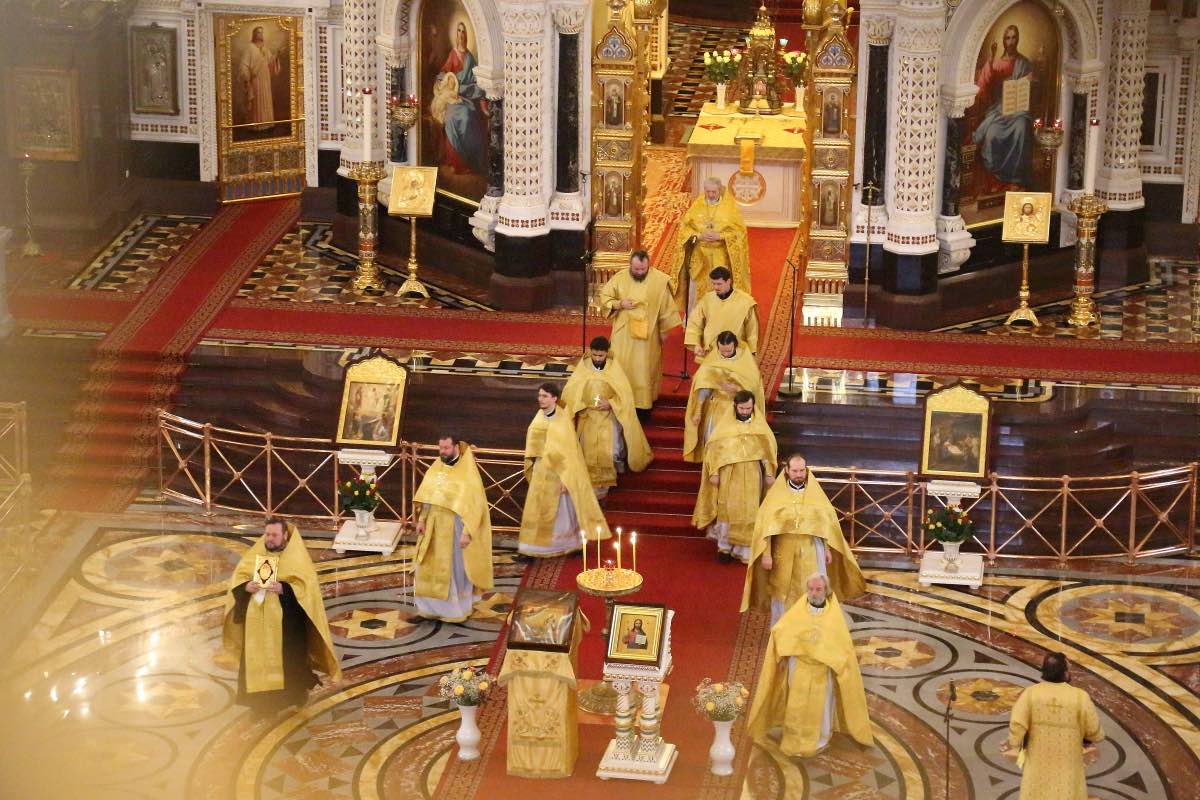
This is the central moment of Orthodox Christmas. On the night of 6 to 7 January a vigil is held (in the big cathedrals, the great compline and matins) that leads into the liturgy of St John Chrysostom. In 2026 the services started in churches at 23:00 and lasted between two and a half and four hours. The next morning, on the 7th, many parishes celebrate one or two more liturgies, so if you cannot manage the whole night you can go then.
Moscow: the Cathedral of Christ the Saviour and the neighbourhood churches
The best-known liturgy is the one at the Cathedral of Christ the Saviour, led by the Patriarch. In 2026 it began around 23:00 and was broadcast live from that time on Channel One, Rossiya 1 and the religious channels Spas and Soyuz. Many Russians follow it from home.
Going in person is more complicated: I have not found recent official information on how people get in that night, and in 2021 entry was only with invitations handed out by parishes. My advice is that, if you want to experience it inside and not on a screen, you go to another church: in Moscow every church holds a service that night, and in a neighbourhood parish or a monastery it will be much calmer and you will be much closer to it. Ask for the time at the church itself or look it up on its website in the days before, because each one publishes its own.
In 2026 the Moscow metro stayed open that night until 2:00, and 125 bus routes and 18 tram routes ran until 3:30 for people coming back from the service. The 2027 timetable will be published by mos.ru.
St Petersburg
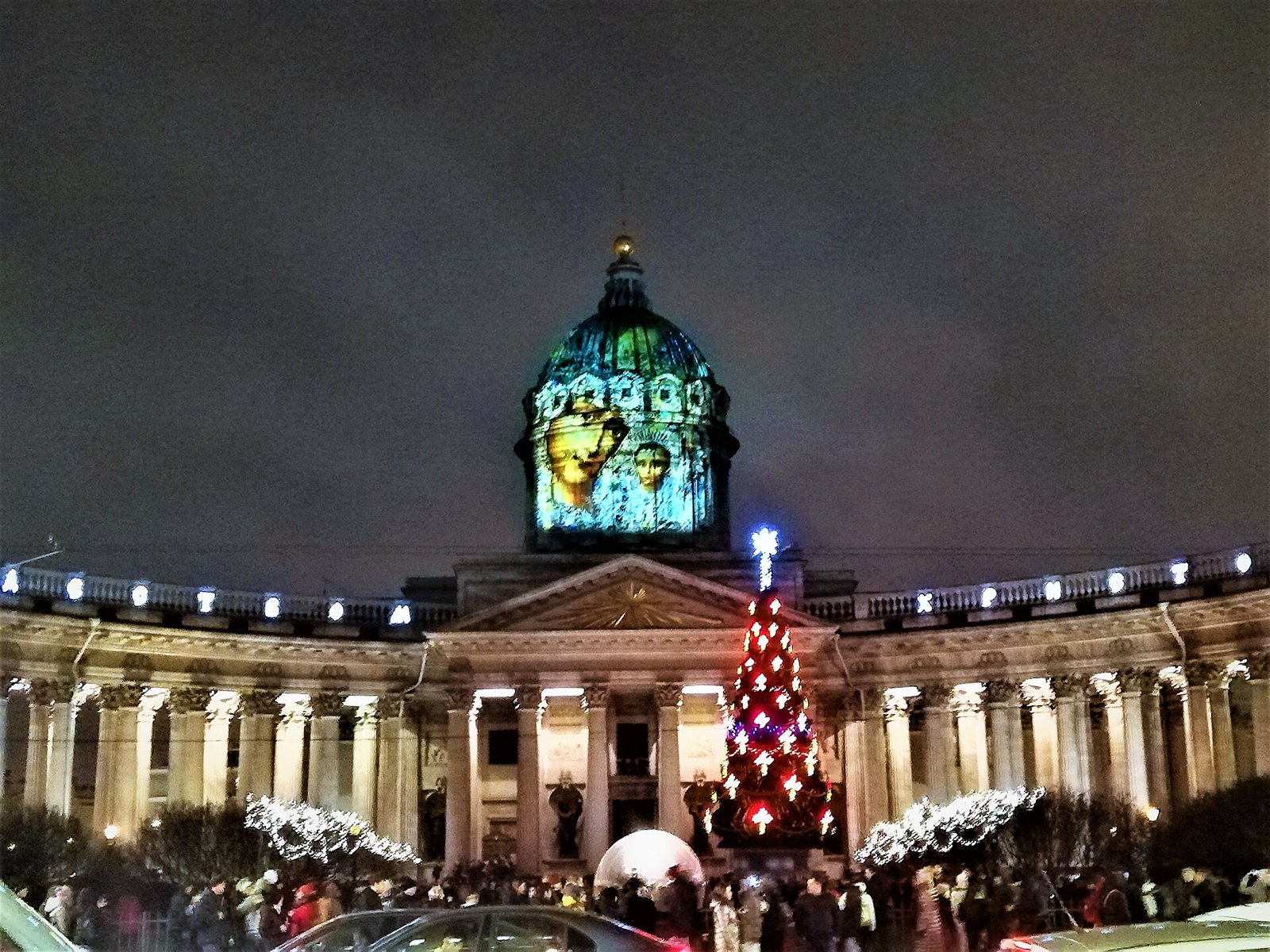
At the Kazan Cathedral, on Nevsky Prospect, the Christmas Eve service in 2026 ran from 23:00 to 1:30, with the Metropolitan of St Petersburg. That night the metro did not close, with a train at most every ten minutes. St Isaac’s Cathedral is a museum, but it also holds services on the big feast days: in 2023 there was a vigil at 23:00 on 6 January and a liturgy at 8:00 on the 7th, with free entry. For 2027, check its website in the days before.
Sergiev Posad: Christmas in a monastery
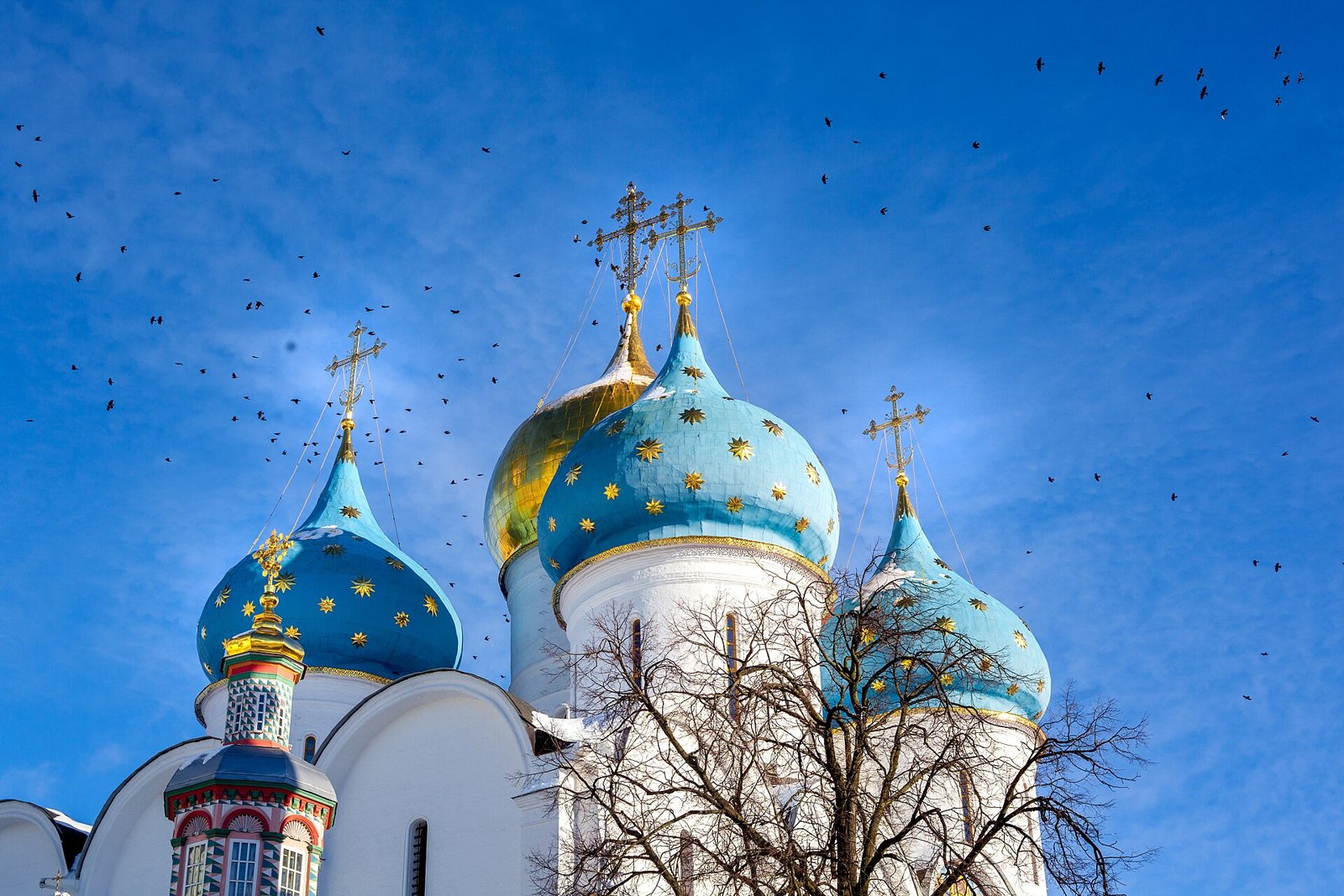
If you want to experience it somewhere special, the Trinity Lavra of St Sergius, in Sergiev Posad, is the most important monastery in Russia. In 2023 it held night services in four of its churches; the liturgy started at midnight in the Dormition Cathedral and the Refectory Church, at the same time as the great bell rang. It is a little over an hour from Moscow by suburban train; if you want to attend the night service, the easiest thing is to sleep there.
What to wear and how to behave in church
Anyone can enter Russian Orthodox churches, whatever their religion. These are the rules given by the official Moscow tourism portal (RUSSPASS) and reproduced by the Orthodox portal Azbyka:
- Women: head covered (a scarf is enough) and clothes that cover shoulders and legs. A long skirt or dress is best; in some churches, a woman in trousers or a short skirt is asked to tie a large scarf round her waist.
- Men: no hat inside the church and no shorts.
- Standing: Russian Orthodox churches have almost no pews and the service is followed standing. Anyone who is ill or tired may sit, on the few seats along the walls. At the Christmas service you will be on your feet for several hours: wear comfortable shoes and dress in layers, because it is hot inside and very cold outside.
- Candles: they are bought at the shop by the entrance. Candles for the living go in the round candlesticks; those for the dead, on the square table. Do not move around the church during solemn moments, such as the reading of the Gospel.
- Photos: no flash, and ask first. Do not photograph people who are praying. That night, in many churches, it is better not to take your phone out at all.
- The altar: never go behind the iconostasis. Do not put your hands in your pockets or behind your back either.
Traditionally men stand on the right and women on the left. Arrive early: small churches hold few people and fill up before the service starts.
7 January: Christmas Day
On Christmas morning the churches hold more liturgies and then families get together for a meal. The traditional dish was roast goose, often with apples; also suckling pig and, in the north, the kozuli of Arkhangelsk, spiced biscuits shaped like a cow, a sheep or a deer that were given as presents and hung on the tree. To drink, sbiten, a hot drink of honey and spices sold at the markets.
For the traveller it is a good day: museums are open. In 2026 the Hermitage was free for everybody on 7 January, with limited tickets on its website or at the ticket office on the same day, on a first-come basis; if you are there on that day, first read how to visit the Hermitage. The Tretyakov Gallery and the State Historical Museum in Moscow closed on 1 January and opened on the 7th. The 2027 opening hours have not been published yet: check the website of each museum.
Svyatki: carols, costumes and folk festivals
The days from Christmas to Epiphany Eve (7 to 17 January, according to the Church calendar) are Svyatki, the “holy days”. They mix Christian customs with old Slavic ones, tied to the winter solstice:
- Kolyadki: groups of children, sometimes with adults, who go from house to house singing carols and receive sweets or a kalach (a white ring-shaped bread with a handle) in return.
- Ryazhenie: dressing up in masks, furs or as animals, such as the “goat”.
- Fortune-telling: girls tried to find out whom they would marry with candles, mirrors or wax. The Church regards these as pagan customs and does not approve of them, but they are still part of the folk festival.
Today, in the city, the best place to see them is at the festivals put on by open-air parks and museums. In January 2026, in Moscow, Kolomenskoye Park held “Рождественские Святки” on the 6th and 7th, with dancing and round dances in costume, folk songs, street theatre, puppets and fortune-telling; the Izmailovo estate had carols, games and fortune-telling on the 7th, and Tsaritsyno a Christmas ball that same afternoon. All three festivals were free. The 2027 programme will be published by mos.ru in the first days of January (the 2026 one came out on the 5th).
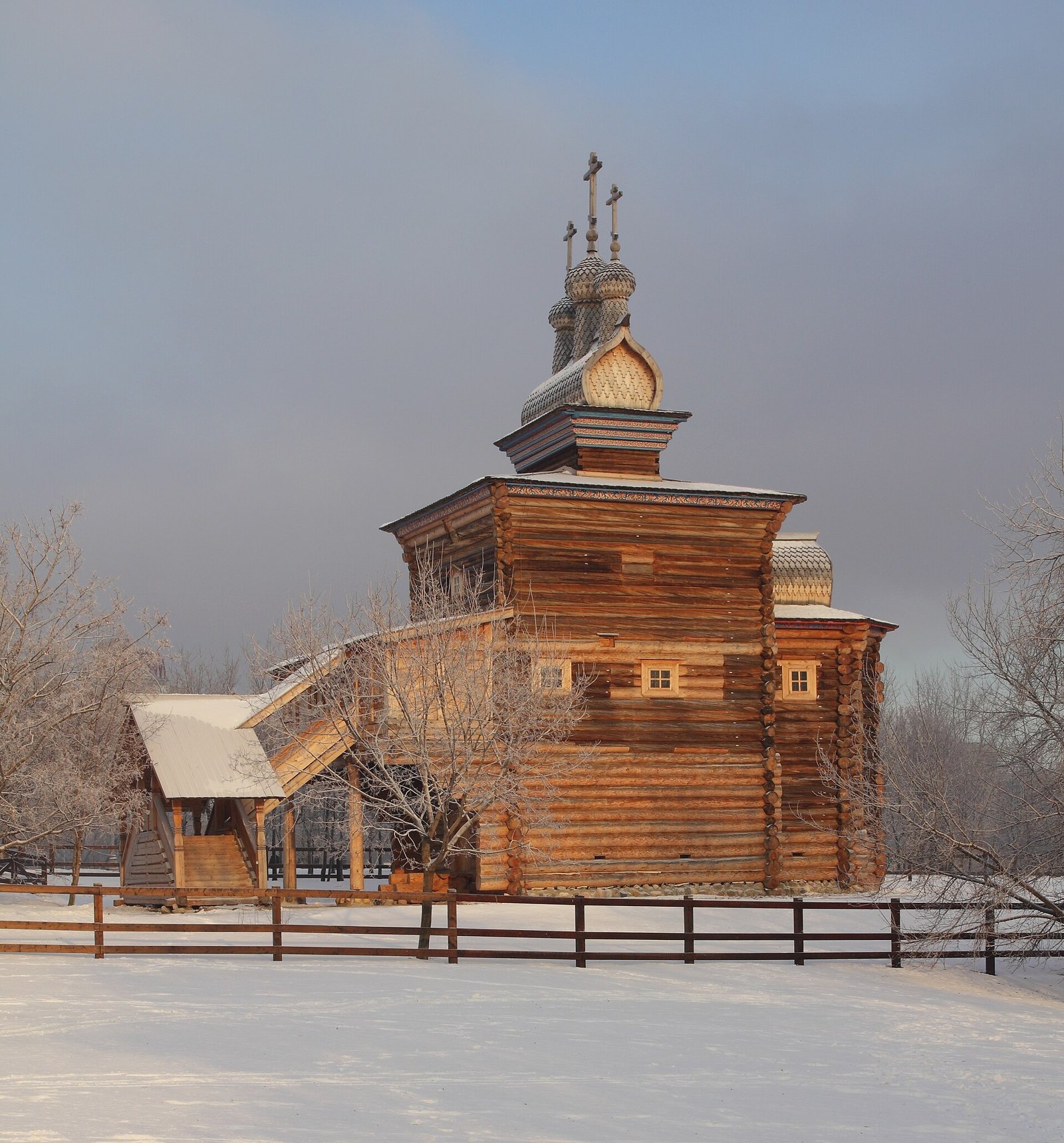
Outside Moscow, the wooden architecture museum of Vitoslavlitsy, in Veliky Novgorod, holds the festival “Святки в Витославлицах”, with folk groups, carols, costumes, horses and a fair among the wooden churches. The 2027 dates have not been published yet: check the museum’s website.
Epiphany ice swimming in Russia (18 and 19 January)
Epiphany, or the Baptism of the Lord, closes the Christmas festivities. The eve, 18 January, is a fast day, and after the liturgy the water is blessed in churches; it is blessed again on the 19th. You will see queues of people with bottles and jerrycans to take holy water home.
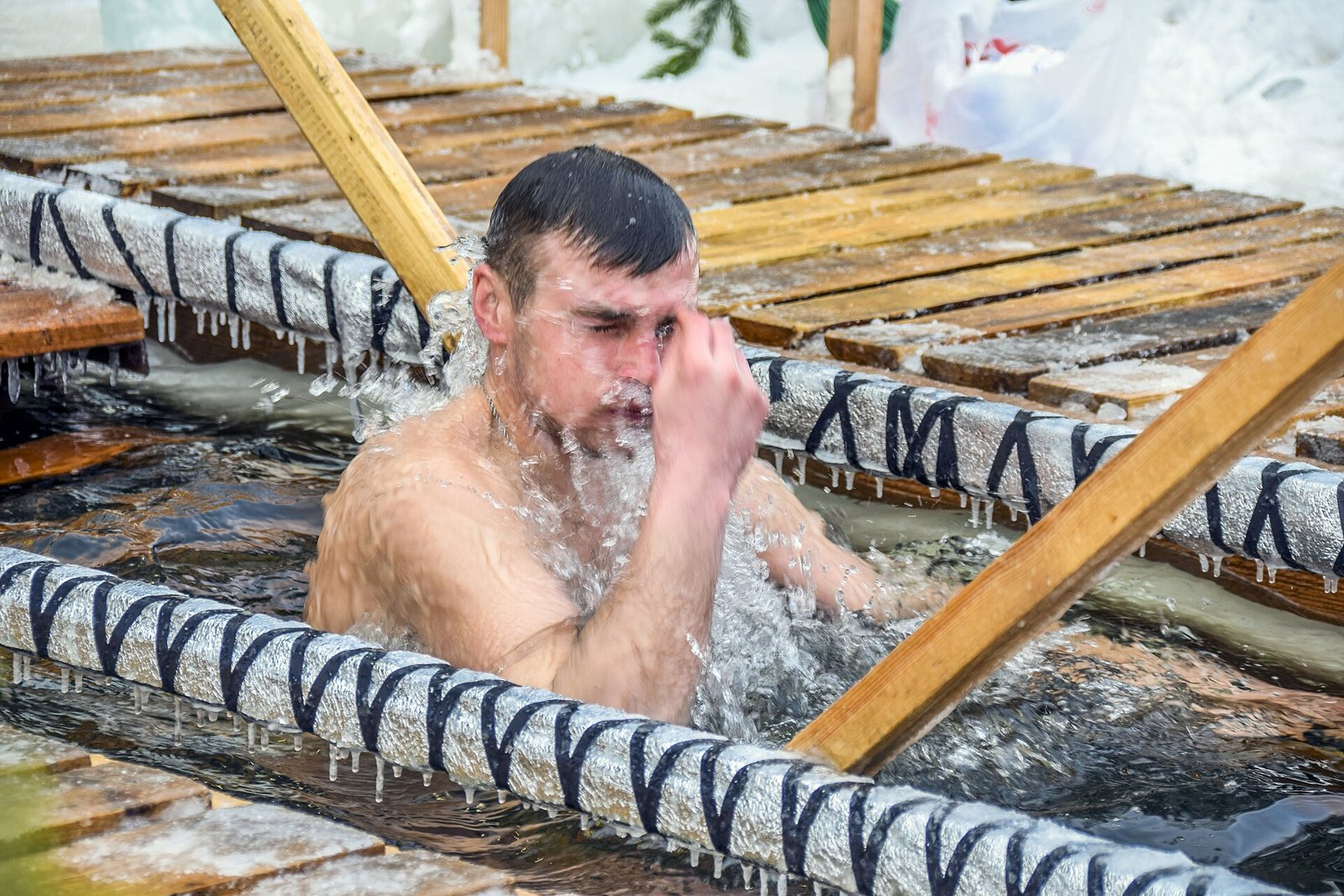
The most famous image is the swim: on the night of 18 to 19 thousands of people get into holes cut in the ice of rivers and lakes, often in the shape of a cross. In January 2026 Moscow prepared 40 swimming places in every district except the centre, open from 18:00 on the 18th to 18:00 on the 19th, with changing rooms, warming tents, doctors, more than 1,300 rescuers, firefighters and volunteers; the rescuers accompanied people into the water and back. The 2027 list is published by the City Hall on mos.ru a few days before.
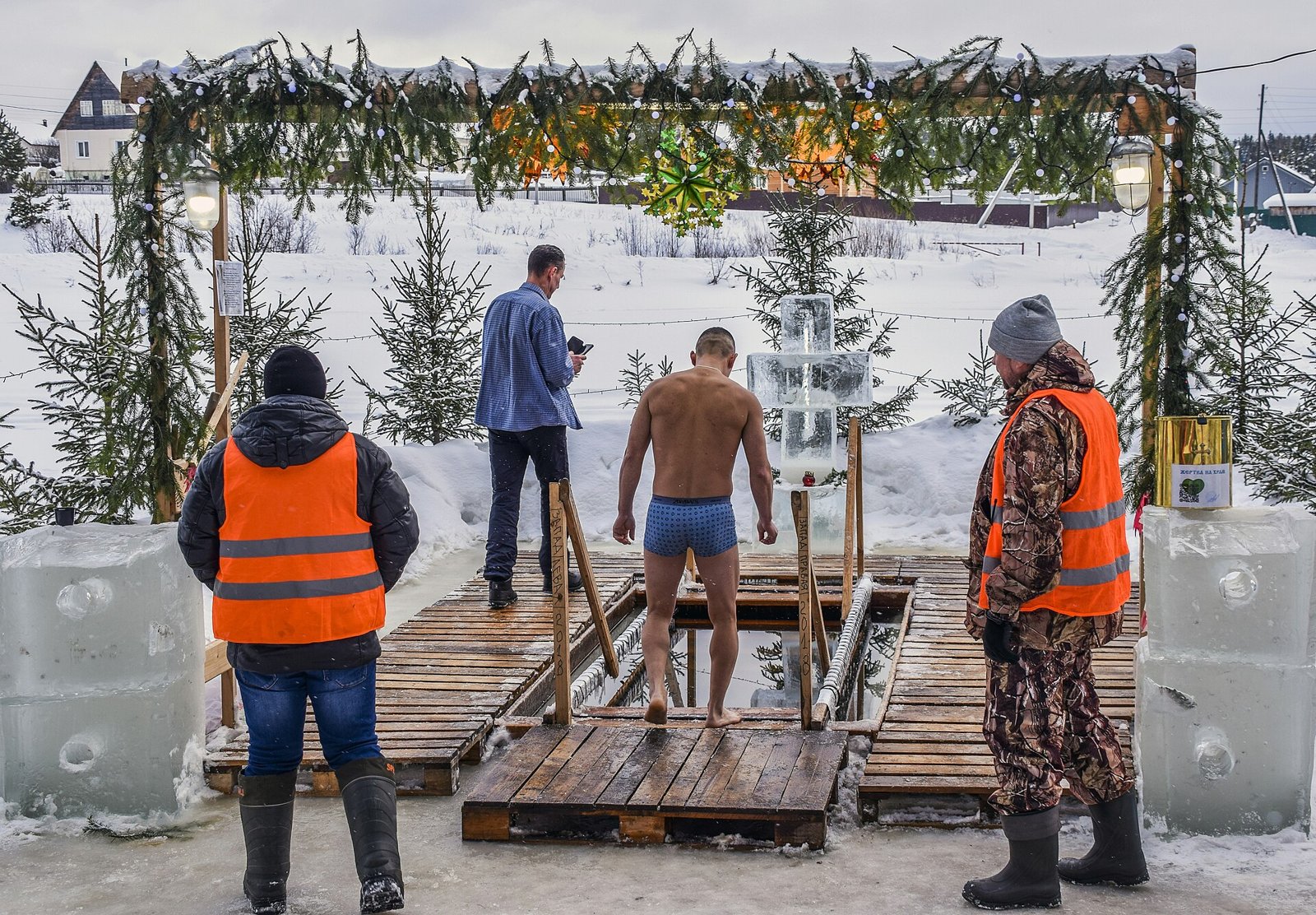
The swim is not a sacrament or a religious obligation. If you want to try it, these are the rules of the Emergencies Ministry (MChS):
- Swim only in the authorised places and with rescuers.
- Warm your body up beforehand and wear non-slip footwear.
- Go in up to your neck, without putting your head under and never diving in head first.
- Do not stay in more than a minute.
- When you get out, dry yourself, put on dry clothes and have something hot. No alcohol, before or after.
- It is not recommended for anyone with heart problems or high blood pressure, nor for children, pregnant women or older people.
Where to experience Russian Orthodox Christmas
- Moscow: the most complete. You have the service in any church, the Svyatki festivals in Kolomenskoye, Izmailovo and Tsaritsyno, the New Year atmosphere, which carries on in the streets, and the Kreshchenie swimming places.
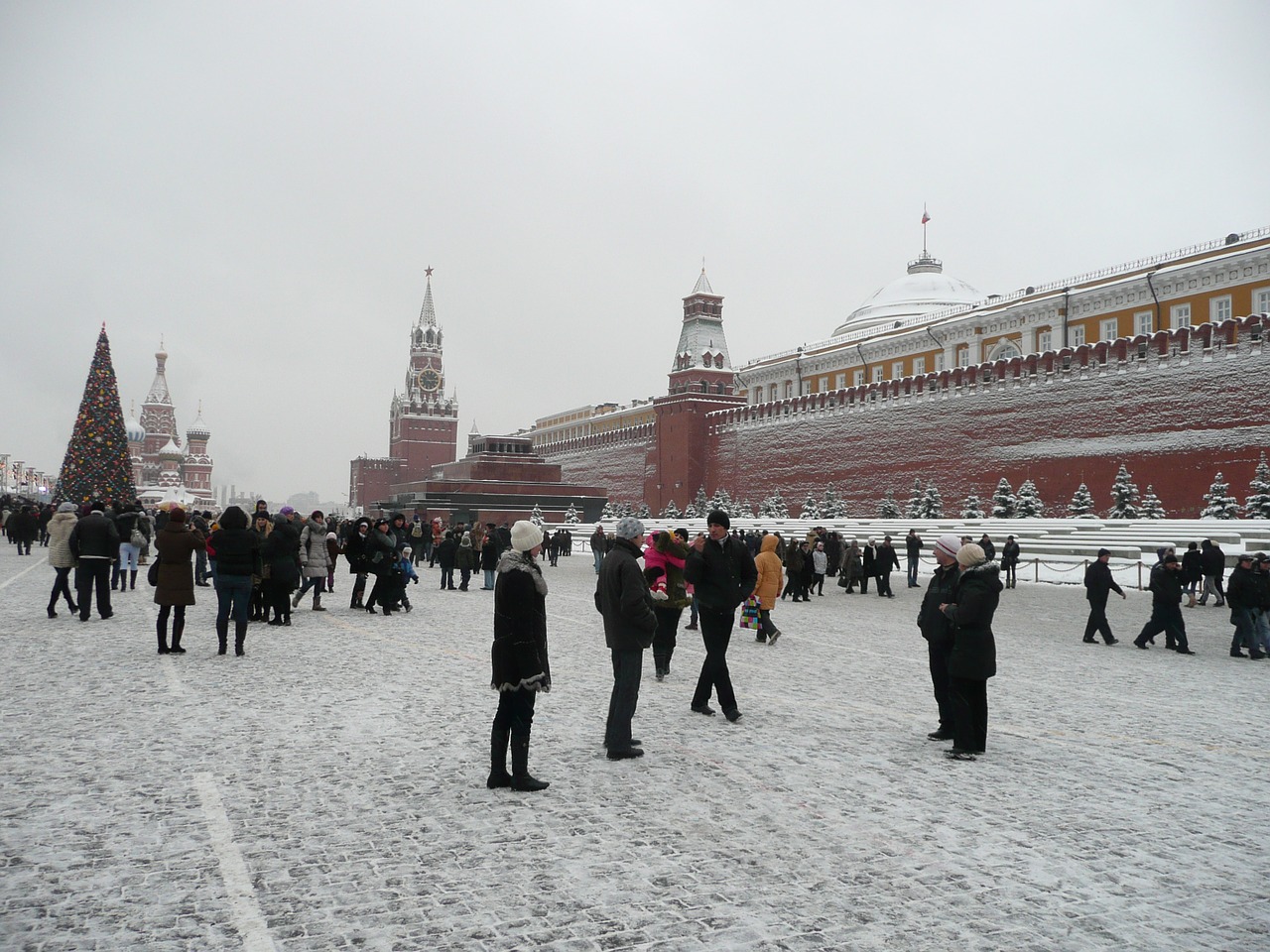
- St Petersburg: the service at the Kazan Cathedral or St Isaac’s, the Hermitage on the 7th and the Christmas markets, which in 2025-2026 were on Manezhnaya, Dvortsovaya and Moskovskaya squares from 13 December to 11 January.
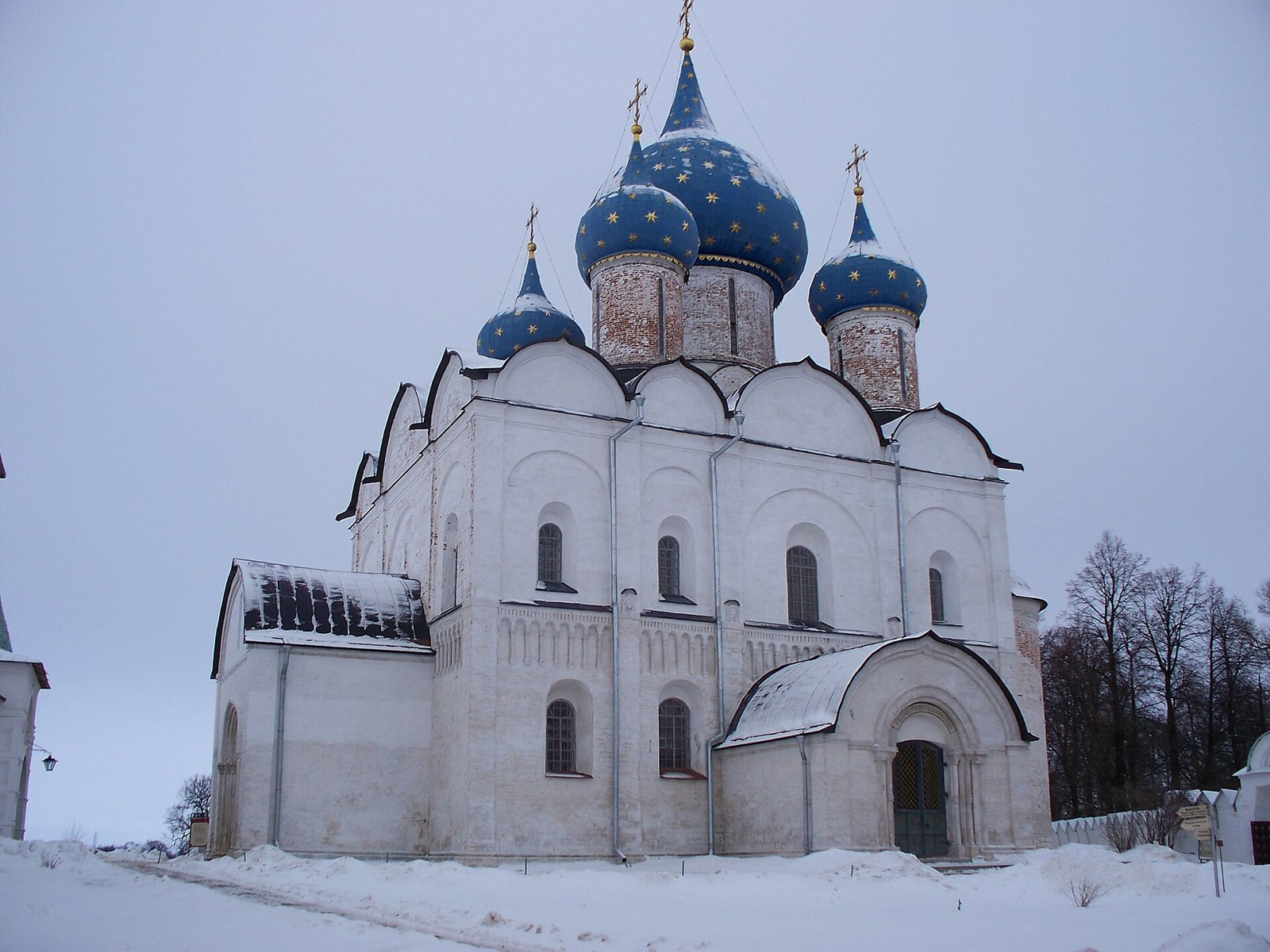
- Sergiev Posad and the Golden Ring: if you want the more religious side, a night at the Trinity Lavra. Suzdal, with its monasteries and snowy wooden houses, is the picture-postcard town to spend the following days in; you will find it in the Golden Ring guide.
- Veliky Novgorod: the oldest city in Russia, with the St Sophia Cathedral and the Svyatki of Vitoslavlitsy, three hours from St Petersburg by train.
Practical tips for travelling to Russia at Christmas
Cold and daylight
January is the coldest month. The average is −6.2 °C in Moscow (highs of about −4 °C and lows of −9 °C) and −4.8 °C in St Petersburg, though it can drop much lower in a cold snap. On 7 January in Moscow the sun rises around 8:56 and sets around 16:15: just over seven hours of daylight. For a service of several hours on your feet and the return in the small hours, bring thermal clothing, a hat, gloves and waterproof boots with a good sole. It is all in what to wear in Russia in winter.
Bookings over the holidays
From 31 December to 10 January many Russians travel, so hotels and intercity trains fill up earlier, especially in Moscow, St Petersburg and the Golden Ring. Book your accommodation and train tickets in good time. Russian public offices do not serve the public on those days: if you need any paperwork, do it beforehand.
Getting into Russia
Many nationalities can enter with the electronic visa, which you apply for online a few days before. From 1 December 2026 Estonia closes its border with Russia, so the route through Narva no longer works: the alternatives are in how to get to St Petersburg without going through Narva.
Money
Visa and Mastercard cards issued outside Russia do not work there: bring cash or a card that does work. The options are in how to pay in Russia.
Frequently asked questions
When is Christmas in Russia?
On 7 January. The Russian Orthodox Church follows the Julian calendar, which runs 13 days behind ours, and its 25 December falls on our 7 January. Christmas Eve is the night of 6 January.
Is 25 December a public holiday in Russia?
No. It is a normal working day. The winter public holidays are from 1 to 8 January, and in 2027 the holiday runs from 31 December 2026 to 10 January 2027.
What time is the Orthodox Christmas Eve service?
In most churches it starts around 23:00 on 6 January and lasts between two and a half and four hours (at the Kazan Cathedral in St Petersburg, in 2026, from 23:00 to 1:30). Some start the liturgy at midnight. There are also services on the morning of the 7th.
Can a tourist attend the Orthodox Christmas service?
Yes. Churches are open to everyone. Women must cover their heads and wear clothes that cover shoulders and legs; men must enter without a hat. The service is followed standing.
Can you get into the Cathedral of Christ the Saviour on Christmas Eve?
I have not found recent official information on how people get in that night; in 2021 entry was by invitation only. The Patriarch’s liturgy is broadcast live on television from 23:00. To experience it inside, any other church in Moscow is easier.
What do Russians eat at Orthodox Christmas?
On Christmas Eve, sochivo or kutya: boiled wheat with honey. On Christmas Day, meat dishes such as roast goose with apples or suckling pig, and sweets such as the kozuli of Arkhangelsk. The twelve dishes of Christmas Eve are mostly a Ukrainian and Belarusian custom.
When is the Epiphany ice swimming in Russia?
At Orthodox Epiphany (Kreshchenie), on the night of 18 to 19 January and during the day on the 19th. In 2026 Moscow prepared 40 places with rescuers and doctors, open from 18:00 on the 18th to 18:00 on the 19th.
Are museums open at Orthodox Christmas?
Yes. In 2026 the big museums in Moscow and St Petersburg were open on 7 January; many close on the 1st. In 2026 the Hermitage was free on 7 January.
You’ve finished this stop 3. Preparations
How to Book Flights to Russia in 2026: Where to Search and Pay with a Foreign Card
Step 2 of planning your trip: Buying airline tickets
Go to step 2Back to the start of this stage: Preparations
Was this useful? I'll tell you when something changes in Russia
One short email a month with what has changed for travellers (visas, payments, border crossings, apps), based on what readers report to me from Russia. More than 4,000 of us already. No spam: if you ever lose interest, unsubscribing is one click.
Irena DomingoAbout Me
I was born in Russia. I grew up between two worlds: my father was Russian, my mother Spanish — a descendant of the "Children of Russia", the Basque children evacuated to the USSR during the Spanish Civil War. I've worked as a translator, interpreter and Russian teacher for over 30 years, and since 2013 I've been writing this blog to help travellers discover Russia with practical, always up-to-date information. Author of the Russiable Guide. If this blog has helped you plan your trip, you can buy me a coffee ❤️.
More on Deciding on the itinerary
 Preparations · MoneyHow to Pay in Russia in 2026: What Works and What Doesn’tForeign Visa and Mastercard don't work in Russia. The options that do: cash, Pay in Russia, a YooMoney MIR card, T-Bank, and what no longer works.
 Preparations · Train & busHow to Buy Train Tickets in Russia Despite the SanctionsFive ways to buy Russian train tickets in 2026: RussianTrain, Tutu and RW.by with a foreign card, RZD.ru with MIR, or the ticket office in Russia.10 min read
 Preparations · ItineraryHolidays and celebrations in Russia in 2026 and 2027Plan your trip to Russia and avoid surprises: 12-day New Year break, Orthodox Easter, May 9 Victory Day. Official 2026 and 2027 calendar.