In this article I’ll tell you what people eat in Russia: the most typical dishes, the drinks that go with them and, above all, where to try them today. Because a few things have changed since 2022 that are worth knowing before you travel: the Western chains left the country (and reopened under new names) and foreign Visa or Mastercard cards no longer work in Russia. I’ll explain all of it, with current prices and real recommendations.

1. Russian cuisine: a mix that’s hard to define
I’ll be honest with you: Russian cuisine doesn’t have the international fame of Italian or Japanese food. But behind it there’s a very long, very rich culinary history, with influences from the country’s different regions, from the former Soviet republics and from French cooking.
And here’s a surprise: even though many Western brands left after the conflict in Ukraine, Moscow and St. Petersburg are living through one of their best gastronomic moments. There are more and more modern Russian restaurants operating at an extremely high level, and plenty of travellers go home saying they ate better than they expected. That said, at prices that, coming from Western Europe, will strike you as very reasonable.
When I travel to a country, the first thing I want to know is what people eat and drink, what time the restaurants open, how much you leave as a tip and which local products are worth seeking out. I’ll cover all of that here, plus the kind of places you’ll come across: from Russian fast food to haute cuisine.
2. How Russians do mealtimes
2.1. What meals do Russians have?
The day starts with breakfast, zavtrak, which usually means kasha (a milky cereal porridge made from rice or wheat semolina) or bread and butter. Some people have a heartier breakfast, with sausages, egg and bread.
The main meal is obed, at midday (from around 1:00 p.m.). It’s the big meal of the day: starter, main course and dessert.
And dinner, uzhin, from 7:00 p.m. onward. It’s lighter and usually doesn’t include soup or dessert.
Most dishes come with rye bread. Russians are big on sour cream, smetana, which turns up in a thousand dishes. There’s almost always soup to start, and for dessert, black tea with lemon (which they drink at all hours) and something sweet. They also use a lot of tvorog, a kind of soft, white, creamy curd cheese made from cow’s milk.
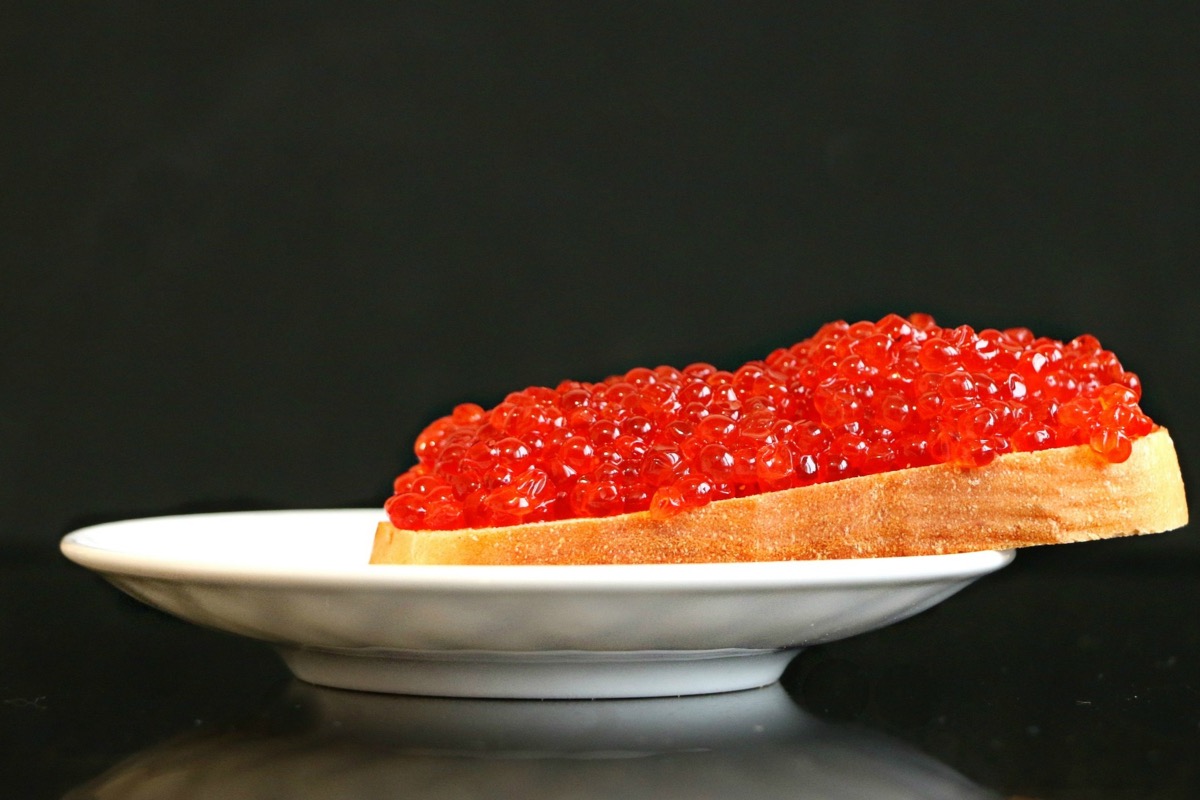
And Russian caviar? There are two kinds: red (salmon) and black (beluga, sturgeon or sevruga). The best and most expensive is beluga, and you’ll only see it in luxury restaurants or specialist shops. At home the usual thing is red caviar, which is cheaper, on a slice of white bread with butter. It also shows up in dishes like blinis. Black caviar is saved for special occasions (New Year, celebrations…).
If you like poking around food, the gourmet markets are well worth a visit: the Danilovsky and Usachevsky markets in Moscow are perfect for trying cheeses, cured meats, honey, pickles and caviar, and for eating at their Georgian, Uzbek or seafood stalls.
3. The typical dishes of Russian cuisine
3.1. The starters: from borscht to Russian salad
The soups
Something very particular about Russians: they eat soup all year round. It’s almost always the first course, rain or shine.
They’re hearty soups, made for winter. One of the most famous is shchi, made with potato, cabbage and meat. And of course borscht, Ukrainian in origin but hugely popular in Russia, with vegetables and beetroot, which gives it that deep red colour. Lighter options are solyanka and ukha (fish soup). And in summer a cold soup wins everyone over: okroshka, with vegetables, potato and kvas.

Russian salad
Salads also open the meal. The funny thing is that what we call Russian salad isn’t called that over there: they know it as Olivier salad, after the French-born chef who popularised it. It’s almost always on the New Year’s Eve table.
Another much-loved one is “herring under a fur coat”: herring covered with layers of potato, beetroot, carrot, egg and mayonnaise.

3.2. The main dishes: from stroganoff to blinis
Meats
Stroganoff is one of the most typical dishes and you’ll find it in almost any restaurant: diced beef with mushrooms, onion and a sour-cream sauce, served over rice or pasta.

Shashlik is a marinated meat skewer that’s very popular in Russia, the Caucasus and Central Asia. The name changes from country to country: mtsvadi in Georgia, khorovats in Armenia. As soon as the weather turns nice, you’ll see Russians cooking these skewers on barbecues in the parks. They’re also big on steaks and stuffed meats.

Fish
When it comes to fish, Russians mostly go for salmon, trout, herring and cod, usually with a potato side (boiled, fried or mashed) and sometimes a touch of smetana.
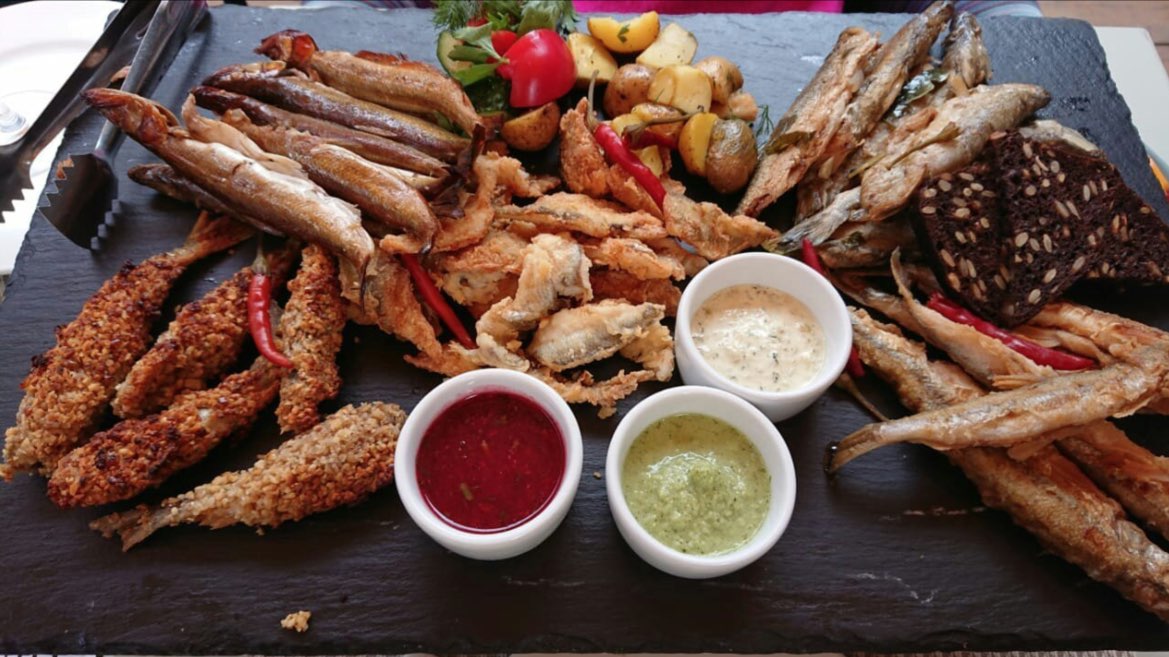
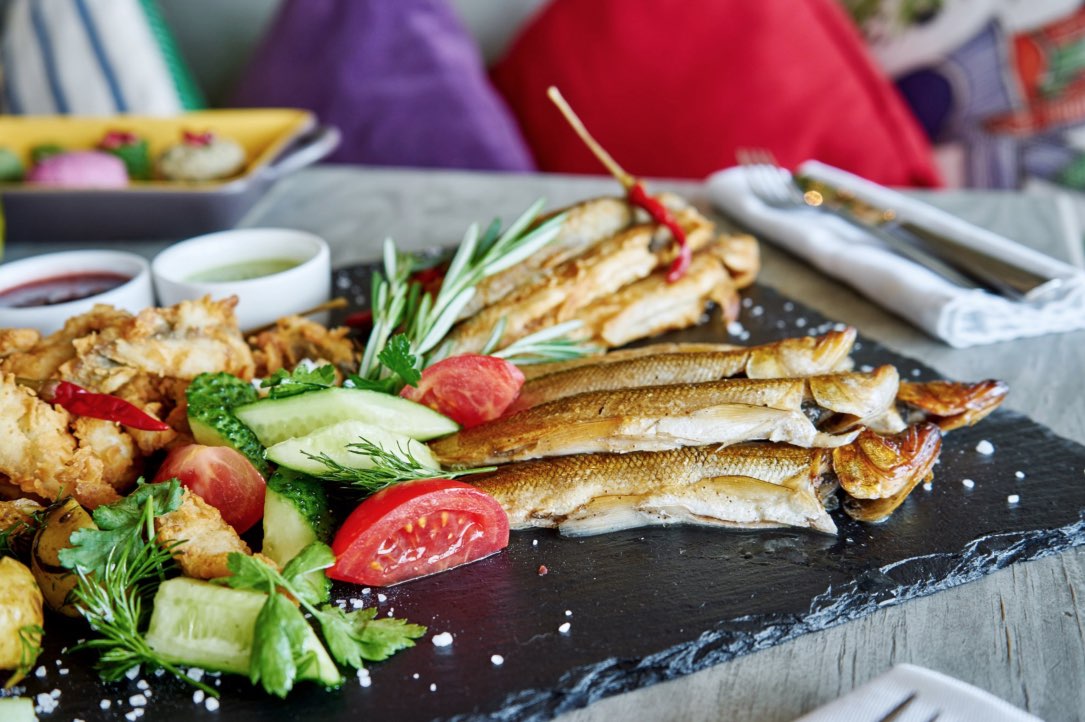
And an essential in St. Petersburg: koryushka, a small fish (a little bigger than whitebait) typical of the northern rivers like the Neva. It’s eaten fried, lightly battered and with sauces. In spring the whole city smells of koryushka.
Dumplings and pies
These dishes please everyone, kids included. First come the pelmeni, similar to ravioli, stuffed with meat (beef, pork or lamb) and served with smetana or butter. On English-language menus you’ll see them as dumplings. Their bigger version, with other fillings (vegetables, cabbage, potato, mushrooms, even cherries for the sweet ones), are the vareniki.
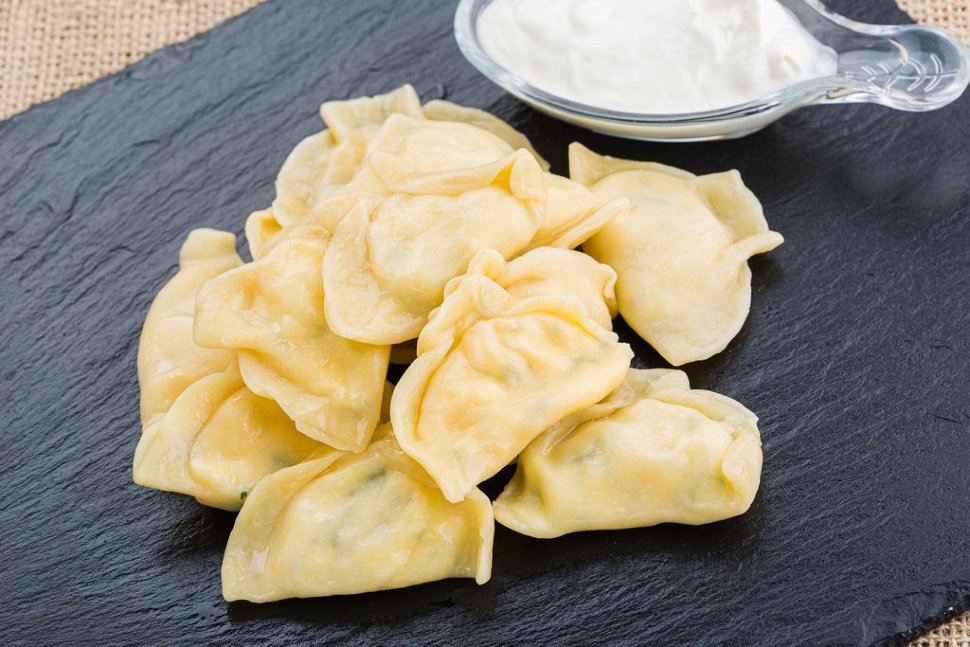
Golubtsy, stuffed cabbage rolls, also show up a lot on menus.

And the pies: pirozhki, pirogi or kulebiaka. They can be filled with cabbage, meat, fish or potato, but also sweet (jam, apple, plum). They come in all sizes, so ask about the filling before you order.
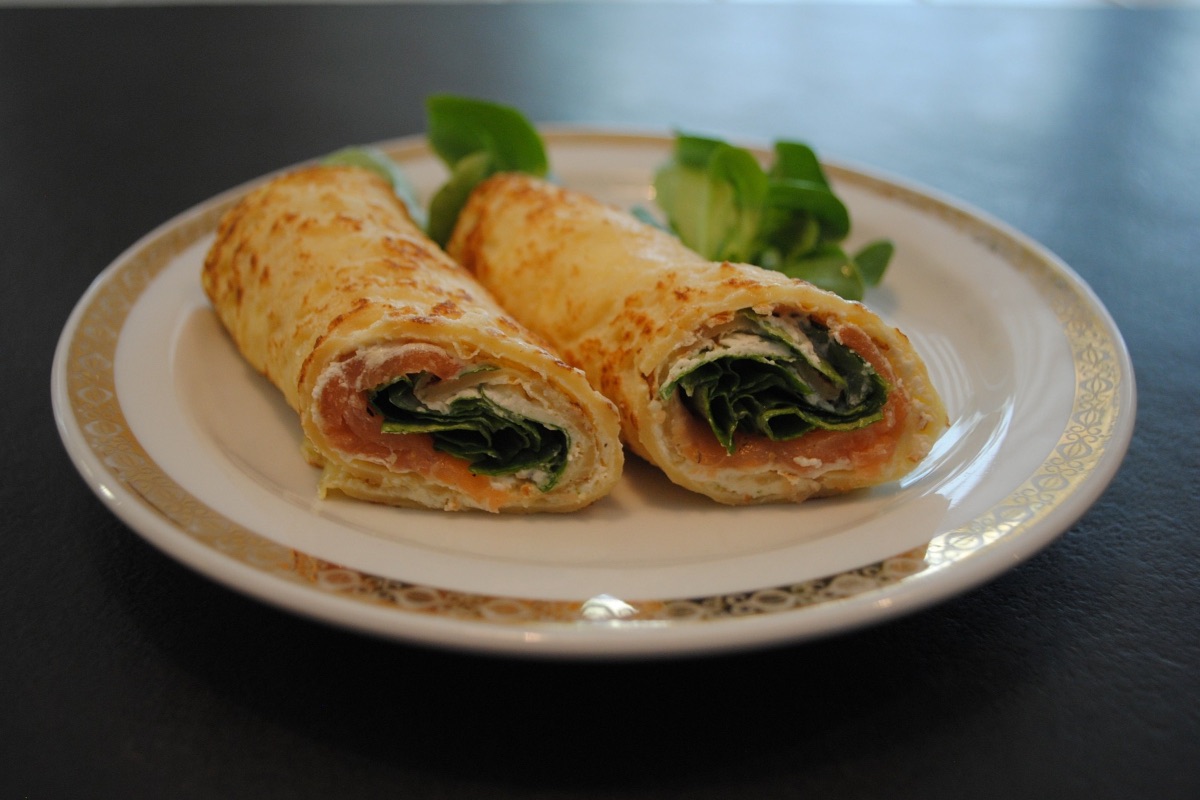
Also very popular are blinis, a kind of crêpe served with butter, smetana, jam, honey, red or black caviar… or stuffed with meat, sweet ham, cheese, potato, mushrooms, apple or strawberry.
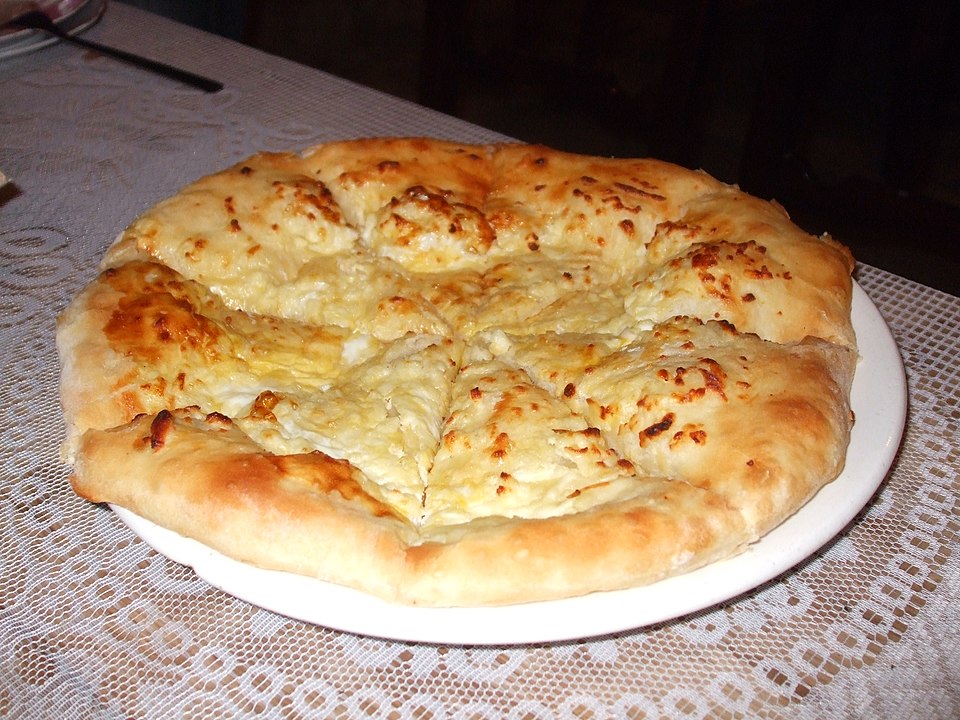
And a tip: try khachapuri, Georgia’s national dish. It’s a pizza-like bread filled with cheese (and sometimes egg). You’ll find it everywhere and it’s addictive. I’ll tell you more about Georgian food in the restaurants section, because it’s one of the great surprises of travelling to Russia.
3.3. Desserts
Russians have a serious sweet tooth, so the range of cakes and desserts is huge.
Prianiki are gingerbread sweets, usually with honey, though also chocolate or jam-filled. Blinis, depending on the filling, also work as dessert. Baked apple is a winner too, the base of many desserts like ptichye moloko (“bird’s milk”). Other classics: pastila (fruit paste), kasha guriev, Tula gingerbread, medovik (honey and cream cake) and Napoleon, a kind of millefeuille.

4. Drinks in Russia: from kvas to vodka
The first thing I’d recommend trying is kvas, a fermented drink made from black bread, very mild (around 1.2% ABV) and very popular. There’s also an alcohol-free version with forest-berry flavours. It was once dubbed the “Soviet Coca-Cola” for its colour, its taste and the foam it makes.

Tea is drunk at any time of day. The traditional one is black tea, usually with sugar and lemon, no milk, served piping hot with something sweet.
For beer, the best-known brand is Baltika (Балтика), based in St. Petersburg and the leader of the Russian market. For years it belonged to the Danish group Carlsberg, but after the conflict in Ukraine the Russian state took control of the company in 2023 and Carlsberg ended up selling its stake in late 2024. Today Baltika is Russian-owned and still number one in the country. In restaurants you’ll also find local craft beers, which keep getting better (imported ones exist, but they cost more).

Another very typical drink is kefir, a fermented milk a bit like a runny yoghurt.
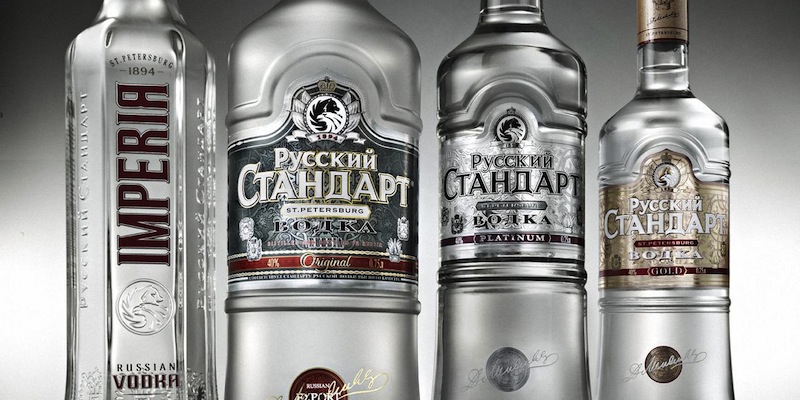
And vodka? Russians don’t mix it or serve it over ice (though the bottle does go in the fridge). It’s drunk in small glasses and always with food: pickles, herring, something to nibble on.
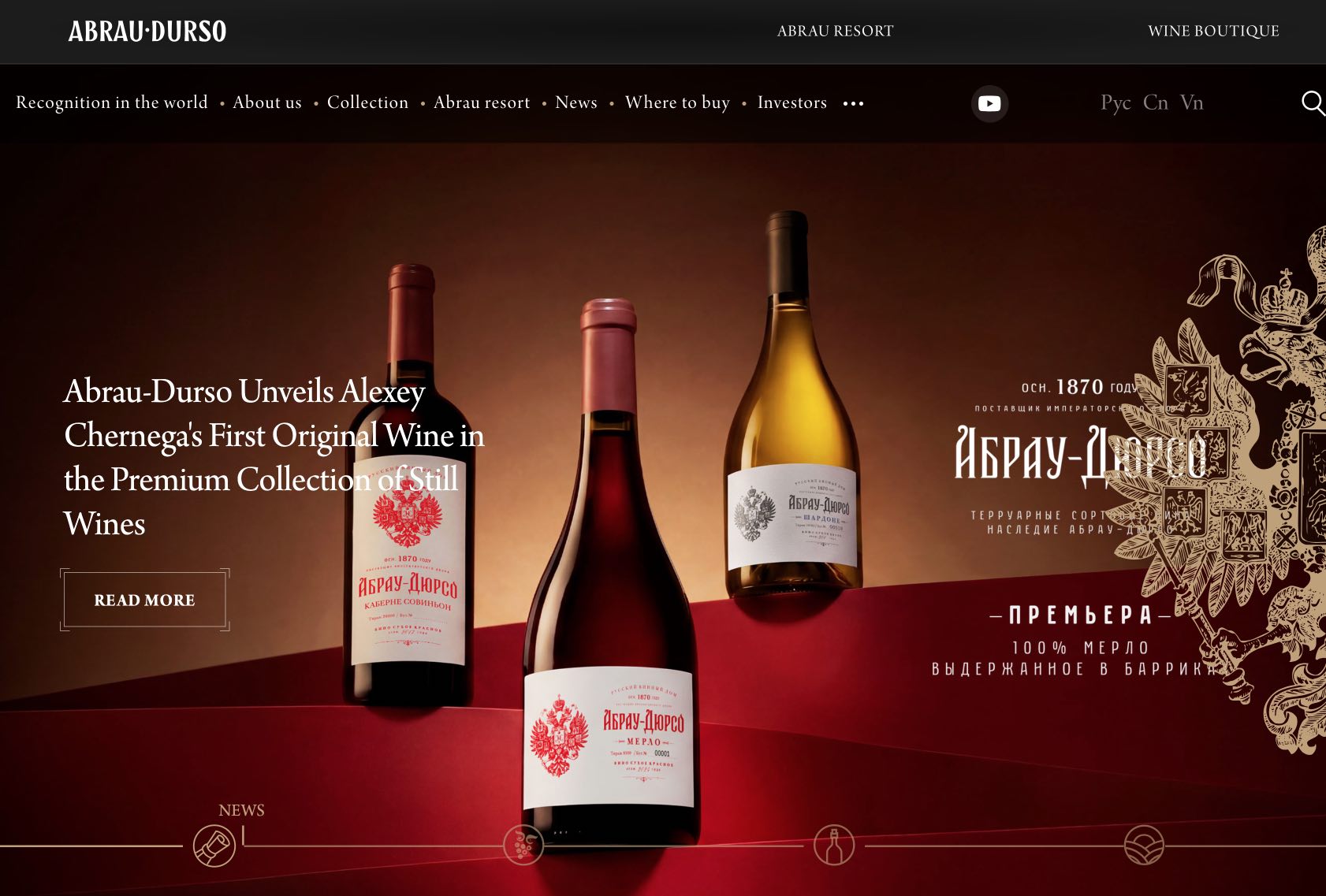
And wine is where the picture has changed the most. Imported European wine is still on the menus, but since 2022 it’s pricier and less common. In exchange, Russian wine has taken a real leap: the wineries of the Krasnodar (Kuban) and Crimea regions make perfectly decent reds, whites and sparkling wines (the Abrau-Durso sparkling is the most famous). And, as always, Georgian and Armenian wines are a safe bet: easy to find, full of character and well priced.
5. Where to eat in Russia: restaurant types and prices
Choosing a restaurant depends a lot on your budget. In Russia you can eat brilliantly and very cheaply at Russian fast-food chains or buffets, but you also have haute cuisine restaurants. To give you a quick idea, this is the table I always reach for when people ask. Approximate prices per person, without alcohol, in rubles (the rate is around 90-100 ₽ to the euro, but it’s worth checking the day’s rate):
| Type | What you’ll find | Price per person |
|---|---|---|
| Russian fast food | Blinis, stuffed potatoes, pelmeni | 400 – 700 ₽ |
| Stolovayas and buffets | Soviet-style home cooking | 500 – 1,000 ₽ |
| Substitutes for international chains | Vkusno i Tochka, Rostic’s, Burger King | 350 – 600 ₽ |
| Mid-range (Georgian, Uzbek…) | Caucasus and ex-USSR cuisine | 1,500 – 2,500 ₽ |
| Restaurants with character | Modern Russian cuisine, careful setting | 2,500 – 5,000 ₽ |
| Haute cuisine | Tasting menus, views, big-name chefs | from 5,000 ₽ |
My advice is to mix it up: a stolovaya at midday one day, a Georgian place another evening and, if you want to treat yourself, book a restaurant with a view or a Russian-cuisine classic.
5.1. Five practical things before you head out to eat
- Hours. Lunch runs from 12:00 to 16:00 and dinner from 19:00 to 23:00. Restaurants really fill up around 20:00. Many places in the centre stay open all day without closing in between.
- Language. The chains, the stolovayas and the restaurants in the tourist centre have English menus; neighbourhood spots, not always. At a mid-range or high-end place there’s usually at least one waiter who can get by. And your phone’s translator will get you out of any jam.
- Payments. Your Visa and Mastercard cards haven’t worked in Russia since 2022. You’ll need to bring cash (rubles) or get hold of a Russian MIR card. Almost every restaurant takes cash without a problem, and the more touristy ones also take MIR. I explain it all in how to pay in Russia.
- Tipping. The norm is to leave between 5 and 10% if you liked the service.
- Reservations. At the best restaurants you need to book ahead (especially White Rabbit, Twins Garden or Café Pushkin). I’ll tell you how further down.
One note in case the alphabet throws you: ресторан (read “restoran”) means “restaurant”.

5.2. What happened to the international chains?
After the conflict in Ukraine, many Western chains left. But here’s the thing: almost all of them reopened straight away under a new name, in the same premises, with the same staff and practically the same menu. This is what you’ll come across:
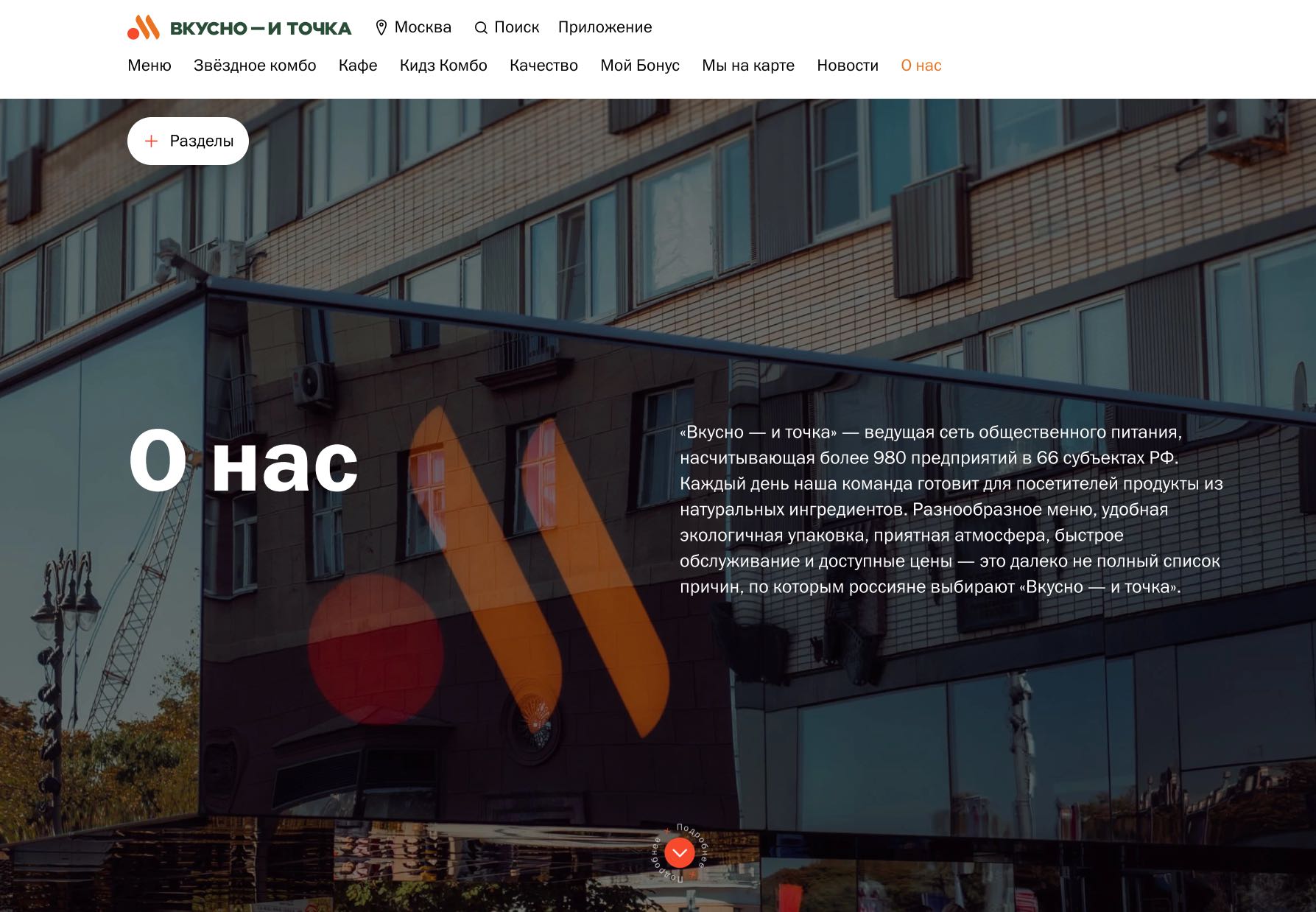
- Vkusno i Tochka (Вкусно — и точка, “tasty, full stop”). The McDonald’s replacement. Same premises and an almost identical menu: the “Big Hit” stands in for the Big Mac. A full meal, around 350-500 ₽.
- Rostic’s. The KFC replacement. Same wings, same bucket. Some outlets still keep the KFC sign because they continue as a franchise.
- Stars Coffee. The Starbucks replacement, with a green-and-white logo that looks remarkably similar. A medium coffee for 250-400 ₽.
- Burger King and Subway. These two kept their usual names: the parent companies wanted out, but the local franchisees refused, so there are still hundreds of outlets across the country.
My honest opinion: if you’re travelling to Russia, don’t waste your time on these chains. You’ve got far more interesting local options for the same money.
5.3. Russian fast food: Teremok and Kroshka Kartoshka
If you want to eat fast, cheap and try something genuinely Russian, these are the two chains to know. You’ll find them in central areas, in shopping centres and in some metro stations.
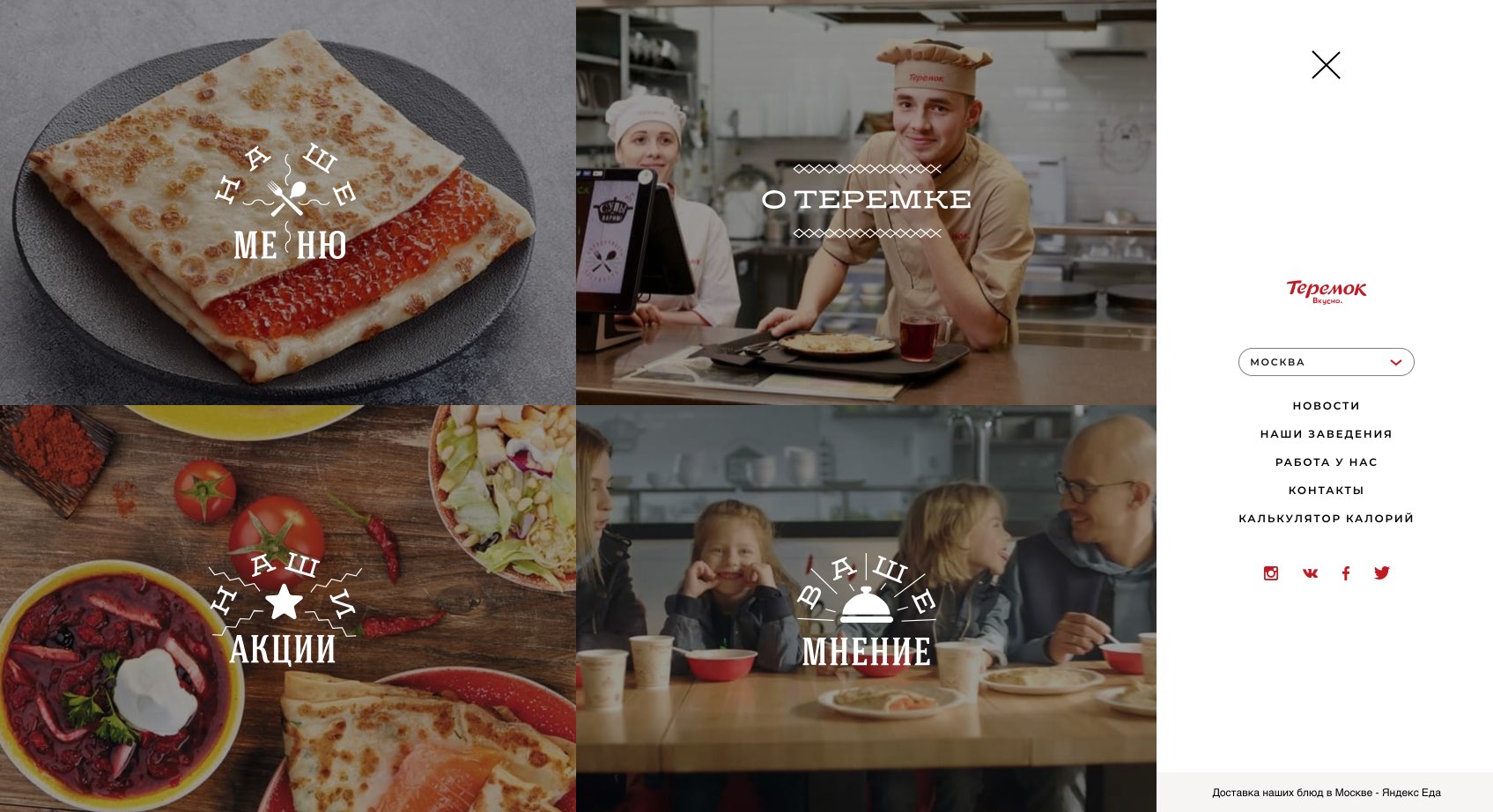
Teremok revolves around blinis, sweet and savoury: cheese, ham, salmon, tvorog, forest berries, honey and even caviar. They also do pelmeni, borscht and Olivier salad. The menu is in English and has photos, so it’s easy to order. A blini with a drink costs 350-500 ₽ and a full meal won’t go over 700 ₽.
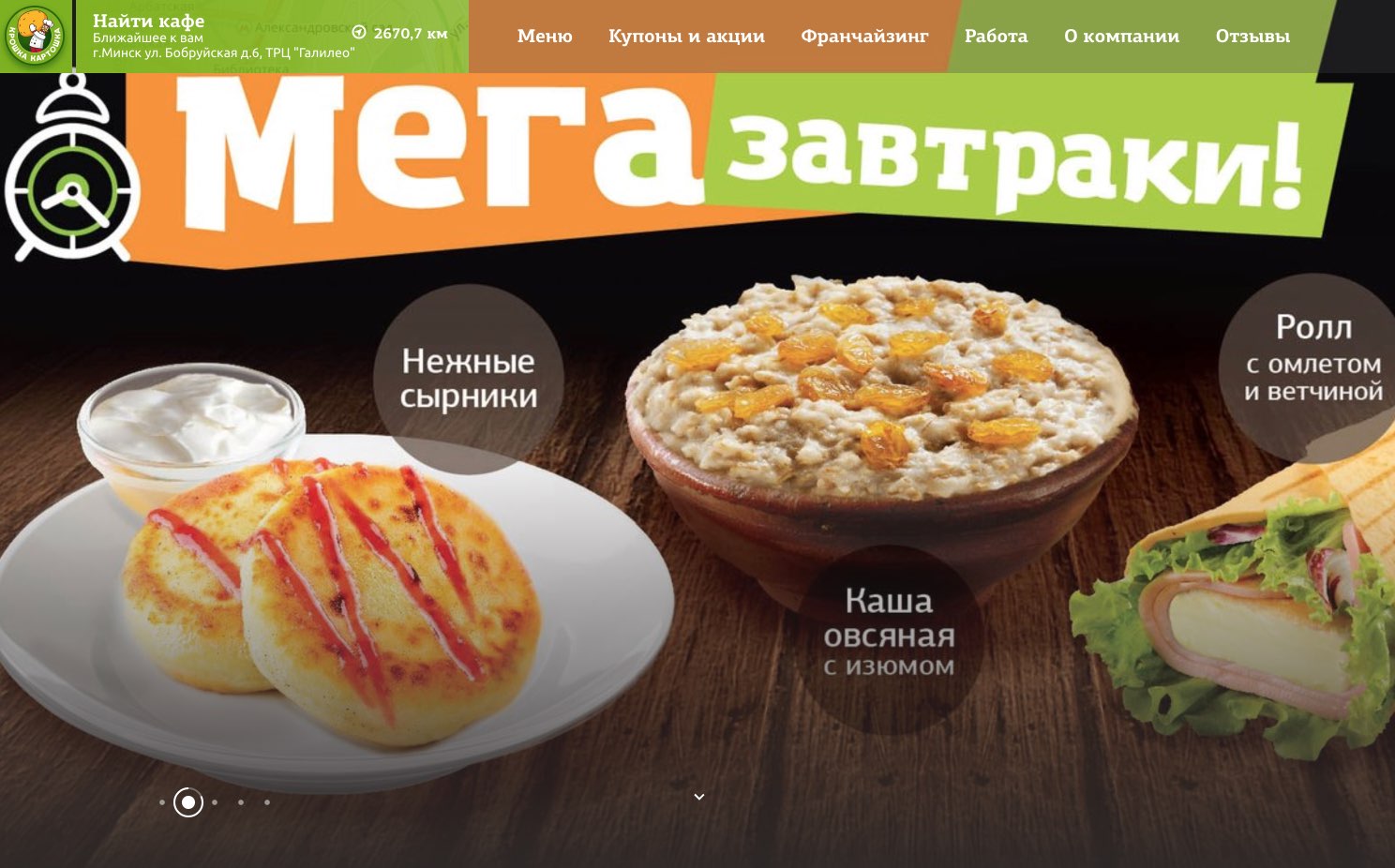
Kroshka Kartoshka (“little potato”) is built on a very simple idea: a big potato baked in foil, split open and stuffed with whatever you choose (melted cheese, mushrooms, meat, chicken, salmon, prawns, herbs…). They’re filling, cheap and very Russian. They also have soups and salads. A stuffed potato with a drink is around 400-600 ₽.
5.4. Stolovayas and buffets: eating cheap and like a local
Stolovayas (столовая, “canteen” in Russian) are the best way to eat Russian home cooking without spending much or speaking the language. They work as self-service: you grab a tray, point at what you want, pay at the end and sit down. No menu to decode, the food is right in front of you.
Three options I’d recommend:
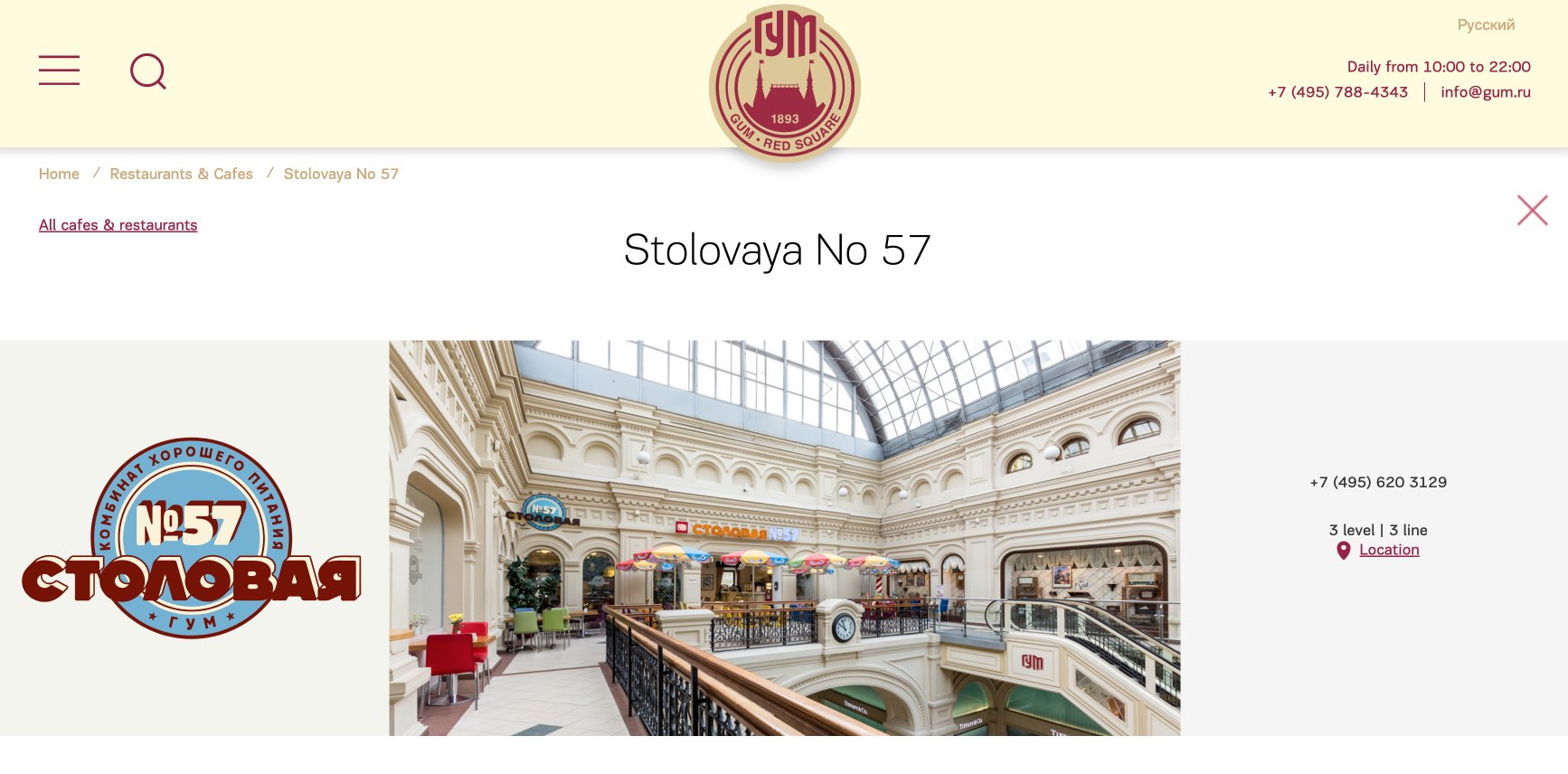
Stolovaya 57 is inside the GUM, right on Red Square (third floor). It has a full-on Soviet look: period posters, steel counters and home-style food (borscht, Olivier salad, herring under a fur coat, Russian cutlet, chicken Kiev, pelmeni, kompot…). A full meal with a drink and dessert comes to 600-900 ₽. On the same floor you’ve got Cafe Festivalnoye, another very cheap option.
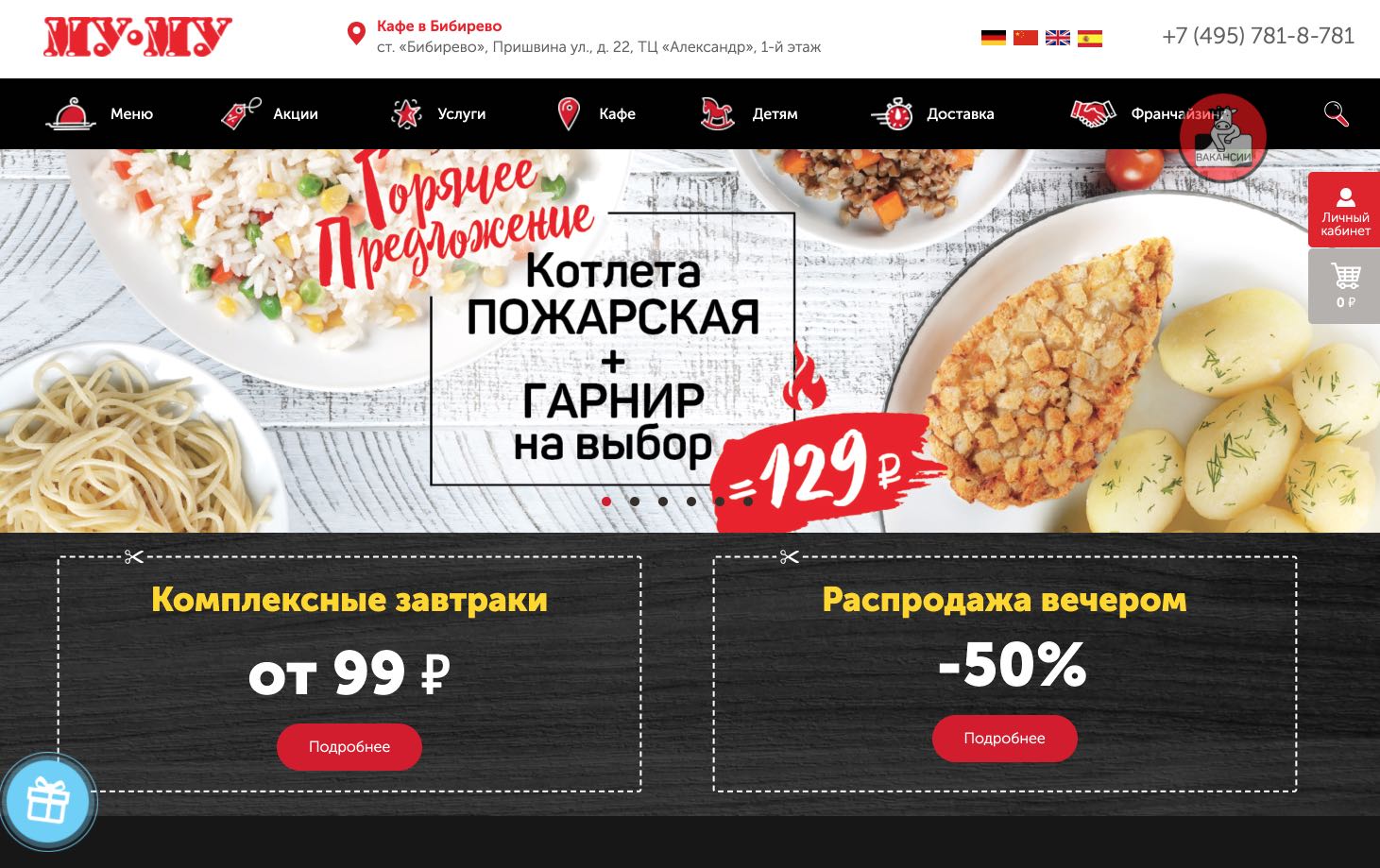
Mu Mu (Му-Му) is the most widespread buffet chain. You’ll spot it right away by the black-and-white cow at the door. It works like a stolovaya but more modern and clean, with all the Russian classics (soups, salads, meats, pelmeni, vareniki). A meal is around 600-900 ₽ and there are branches all over the centre, including the Arbat.
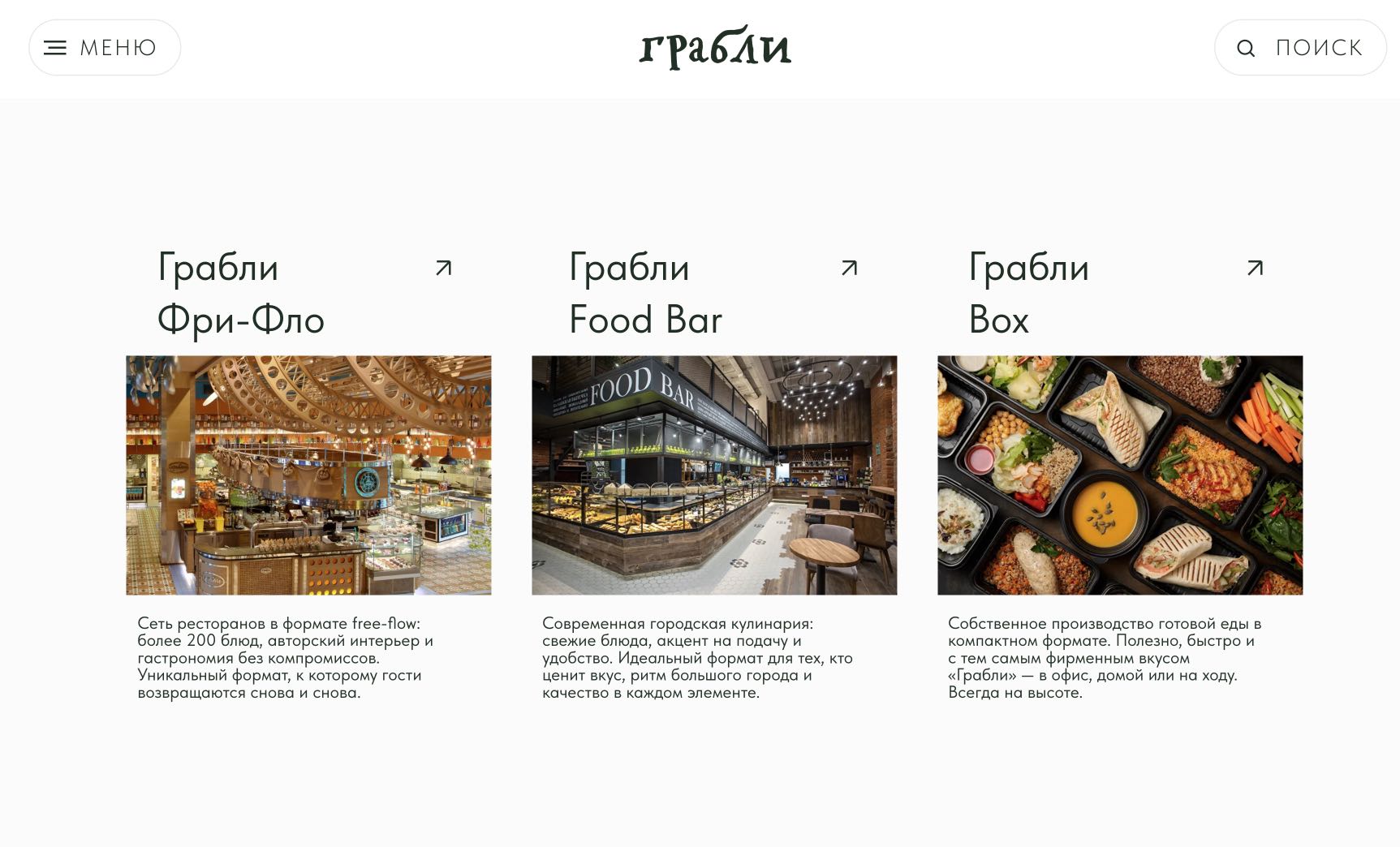
Grabli (Грабли, “rake”) is probably the best-value buffet in Moscow. The branches are smarter than Mu Mu’s, with pasta, wok, salad, soup, grill and dessert sections, and the food is better made. Reckon on around 800-1,200 ₽ for a full meal here.
5.5. Georgian and Caucasus cuisine: the big surprise
If I had to pick a single type of restaurant in Russia other than Russian ones, it would be Georgian, no hesitation. It’s my number-one recommendation for almost any traveller: hugely flavourful food, hearty, made for sharing and very well priced. And they’re everywhere.
These are the dishes you can’t miss:
- Khachapuri (хачапури). Bread filled with melted cheese. The most famous version is the adjaruli, boat-shaped with a raw egg in the centre that you mix into the hot butter and cheese. Very photogenic and very filling.
- Khinkali (хинкали). Big dumplings filled with spiced meat and broth. You eat them with your hands: one bite to sip the broth and then the rest. Never cut them with a knife and fork; to a Georgian that’s sacrilege.
- Badrijani. Aubergine rolls filled with walnut paste, garlic and herbs, topped with pomegranate seeds. Fresh and very aromatic.
- Lobio. A spiced red-bean stew, served with mchadi cornbread.
- Shashlik or mtsvadi. Marinated meat skewers over the coals.
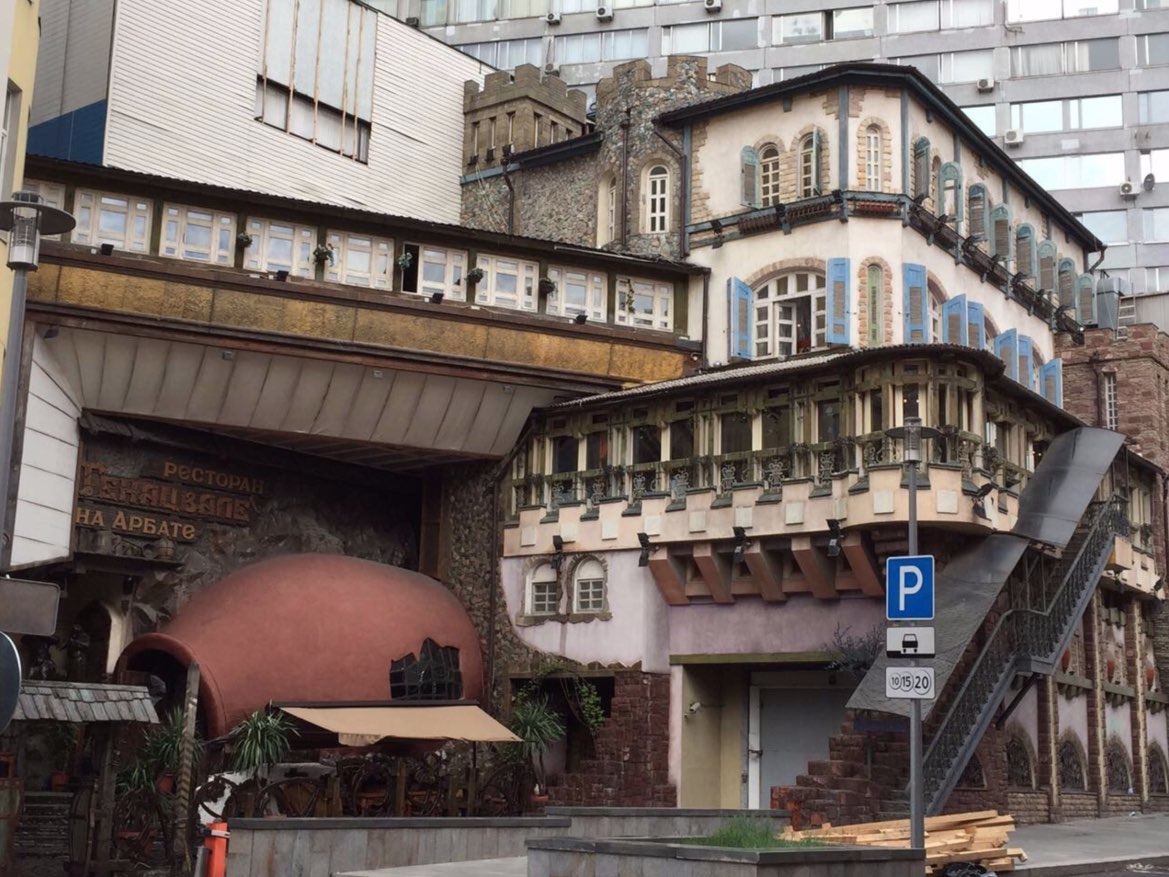
Almost all Georgian places have English menus, a cosy atmosphere and come to 1,500-2,500 ₽ per person if you share dishes. A reliable, cheap chain is Khachapuri, with several branches in the centre. And in the Arbat area you’ve got the classic Genatsvale, decorated like a Georgian village and famous for decades.
Beyond Georgian, in Russia you’ll also find lots of Uzbek restaurants (plov or Uzbek rice, samsa, lagman) and Armenian ones (dolma, skewers, freshly baked lavash). If you like spiced food and grilled meat, they’re a fantastic bet. And if you travel to Kazan, there the food stops being Russian and becomes Tatar, a whole world of its own.
5.6. Haute cuisine and modern Russian cooking
Let’s move up a level. Over the last ten years Moscow has lived through a real gastronomic revolution and today it has restaurants that have ranked among the best in the world.
Are there Michelin stars in Russia? The answer comes with nuance. Michelin arrived in Moscow in 2021 and published a first (and only) guide with 69 restaurants, 9 of which earned a star. In March 2022 it suspended its activity in Russia and hasn’t updated it since, so today there’s no current Michelin selection. Something similar happened with The World’s 50 Best list, where White Rabbit reached number 13 in the world (2019) and which stopped including Russian restaurants after 2021. Does that mean you can no longer eat in style in Moscow? Not at all: the big restaurants are still open and at an extremely high level. Here are my recommendations if you want to treat yourself:
Café Pushkin. Probably the most photographed restaurant in Moscow. It’s on Tverskoy Boulevard, decorated like a 19th-century aristocratic mansion (with its famous pharmacy-library on the ground floor) and open 24 hours. High-end classic Russian cuisine: blinis with caviar, borscht with beef, pelmeni, duck with apple, vareniki… At midday the menu is more affordable (around 2,500-3,500 ₽); in the evening, à la carte, you’ll easily hit 4,500-6,000 ₽. Book a few days ahead.

White Rabbit. On the 16th floor of the Smolensky Passage mall, by Smolenskaya Square, under a glass dome with 360° views over Moscow. Chef Vladimir Mukhin recovers forgotten Russian ingredients and techniques and reinterprets them in a modern key. It spent several years among the world’s 50 best (no. 13 in 2019). Tasting menu or à la carte; dinner is around 7,000-9,000 ₽ without alcohol. Book several days ahead, especially if you want a table by the glass at sunset.

Twins Garden. The project of twin brothers Ivan and Sergey Berezutskiy (on Strastnoy Boulevard) reached two Michelin stars before the guide suspended its Russian edition. They work “from seed to plate”: 70% of the produce comes from their own farm in Kaluga. Tasting menu only, around 9,500-12,000 ₽ per person, and with one of the biggest wine lists in Russia. If you’re after a serious dining experience, it’s my first choice.
Beluga. On the ground floor of the GUM, it’s the place to try Russian caviar properly served. It has a broad Russian menu, but the point here is the caviar and the vodka pairings. A tasting of 15 g of salmon caviar with vodka is around 800-1,000 ₽; if you go for sturgeon, the price climbs a fair bit (3,500-7,000 ₽ for 15 g, depending on the type). It’s the easiest way to live the classic caviar-and-vodka ritual without committing to a top-luxury restaurant.

Dr. Zhivago. Right opposite the Kremlin, in the Hotel National. Décor with Soviet nods to the 1930s-50s and a very well-executed Russian menu: borscht, pelmeni, stroganoff, chicken Kiev, blinis with caviar. Open 24 hours and a meal runs around 3,000-4,500 ₽. It’s an “easy” recommendation: nice setting, good food, an unbeatable location and always full of tourists and locals.

Other names you’ll see again and again in any current ranking: Selfie (signature cuisine, Novinsky area), Sakhalin (a seafood specialist, with views over the Moskva River), Sixty (in the Federation Tower at Moscow City, spectacular views from 256 m) and Turandot and Bolshoi (palatial décor, in the Tverskaya area).

5.7. Where to eat near the main attractions
A lot of the time you pick a restaurant based on what you’re visiting. What’s right next to the monument isn’t always the best value, so sometimes it pays to walk a little. Here are recommendations by area in Moscow and St. Petersburg.
Moscow
If you’re at Red Square, the Kremlin or St. Basil’s Cathedral, the GUM gives you three price levels under one roof: Stolovaya 57 (cheap), the Beluga Caviar Bar (a caviar-and-vodka treat) and the Bosco Fresh Bar, on the ground floor, with a terrace looking out over Red Square (Italian and Russian cuisine).

Right next door, under the Alexander Garden, is the underground shopping centre Okhotny Ryad. Many tourists walk past it, but it has a good food court at more affordable prices than the GUM: Russian fast-food chains (Teremok, Kroshka Kartoshka), buffets (Mu Mu) and Italian and Asian restaurants.
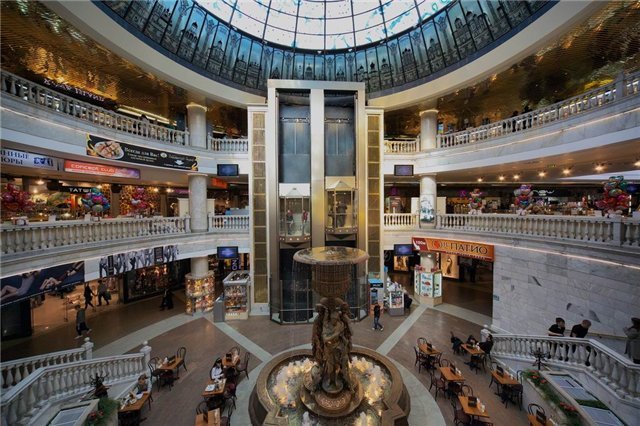
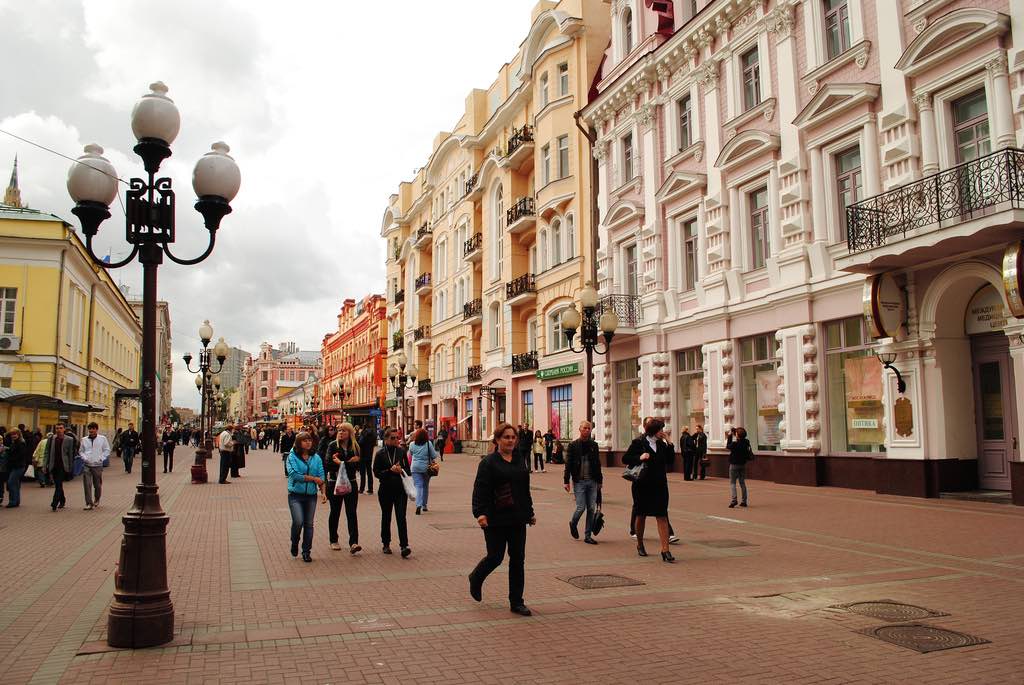
On Arbat Street the choice is enormous: Russian and American chains, buffets, and lots of Georgian and Armenian restaurants. Here you’ve got the Genatsvale (Georgian) I mentioned, and if you’re after luxury, White Rabbit is very close by, on Smolenskaya Square.
At Moscow City, among the skyscrapers, you eat with the best views in town: Ruski (Russian cuisine) and Sixty (views from 256 m) are the smartest options.

In other tourist areas (the Tretyakov Gallery, Novodevichy or VDNH) you’ll find perfectly decent cafés and restaurants. My tip: open Yandex Maps or 2GIS on the spot and filter by rating, which is what really works in Russia.
St. Petersburg
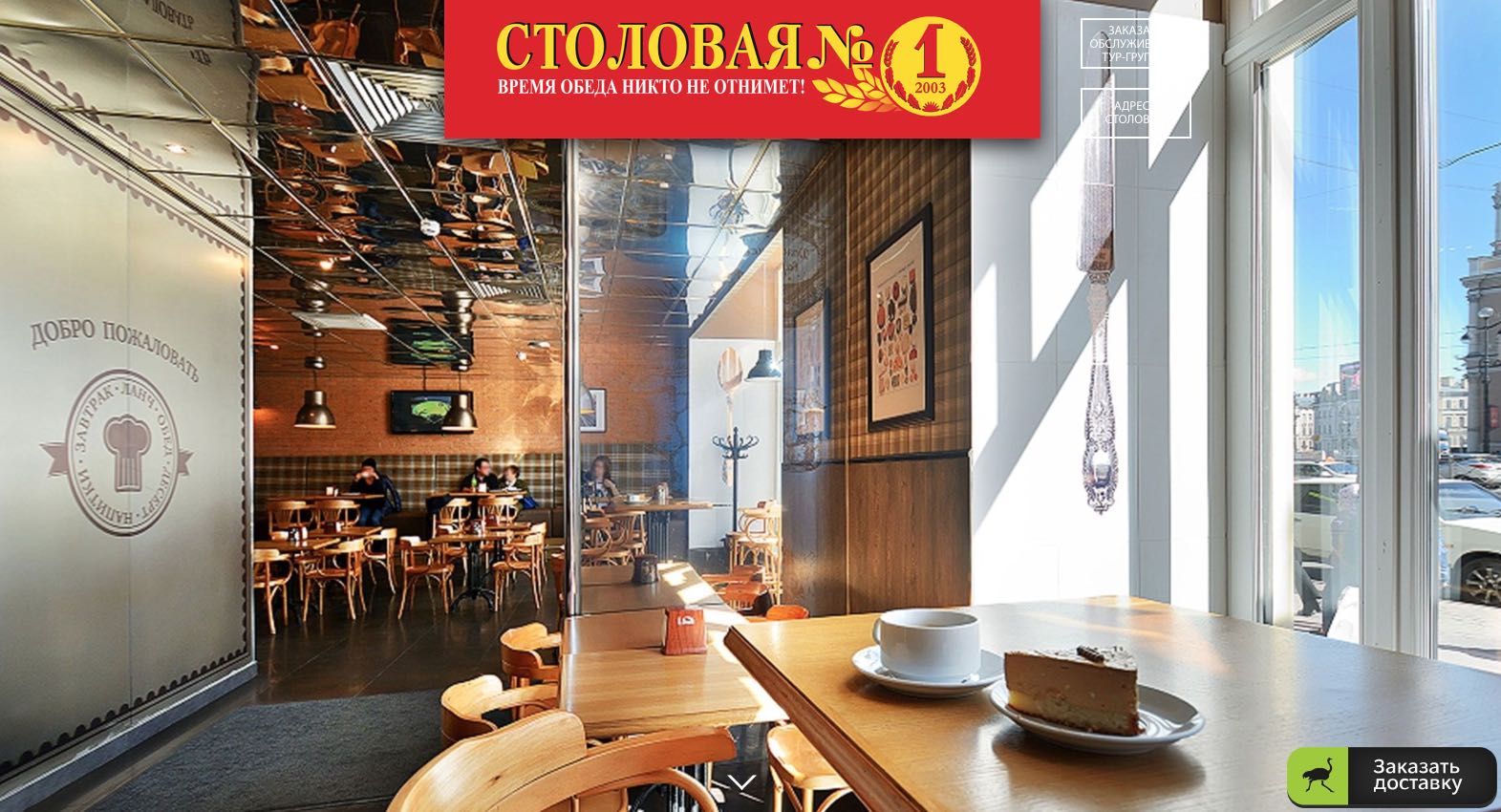
In the centre (the Hermitage area, Nevsky Avenue and the cathedrals), besides Teremok and Kroshka Kartoshka, you’ve got Stolovaya No. 1, about as cheap as it gets (Nevsky 13/19, near the Hermitage and St. Isaac’s Cathedral). Canteen-style buffet, Russian and Central European food; a meal runs around 500-900 ₽. For something more special, the Stroganoff Steak House is a huge, well-kept grill near St. Isaac’s, and Mari Vanna (Ginza group) is a charming spot decorated like a very kitsch Soviet apartment, with good home-style Russian food.
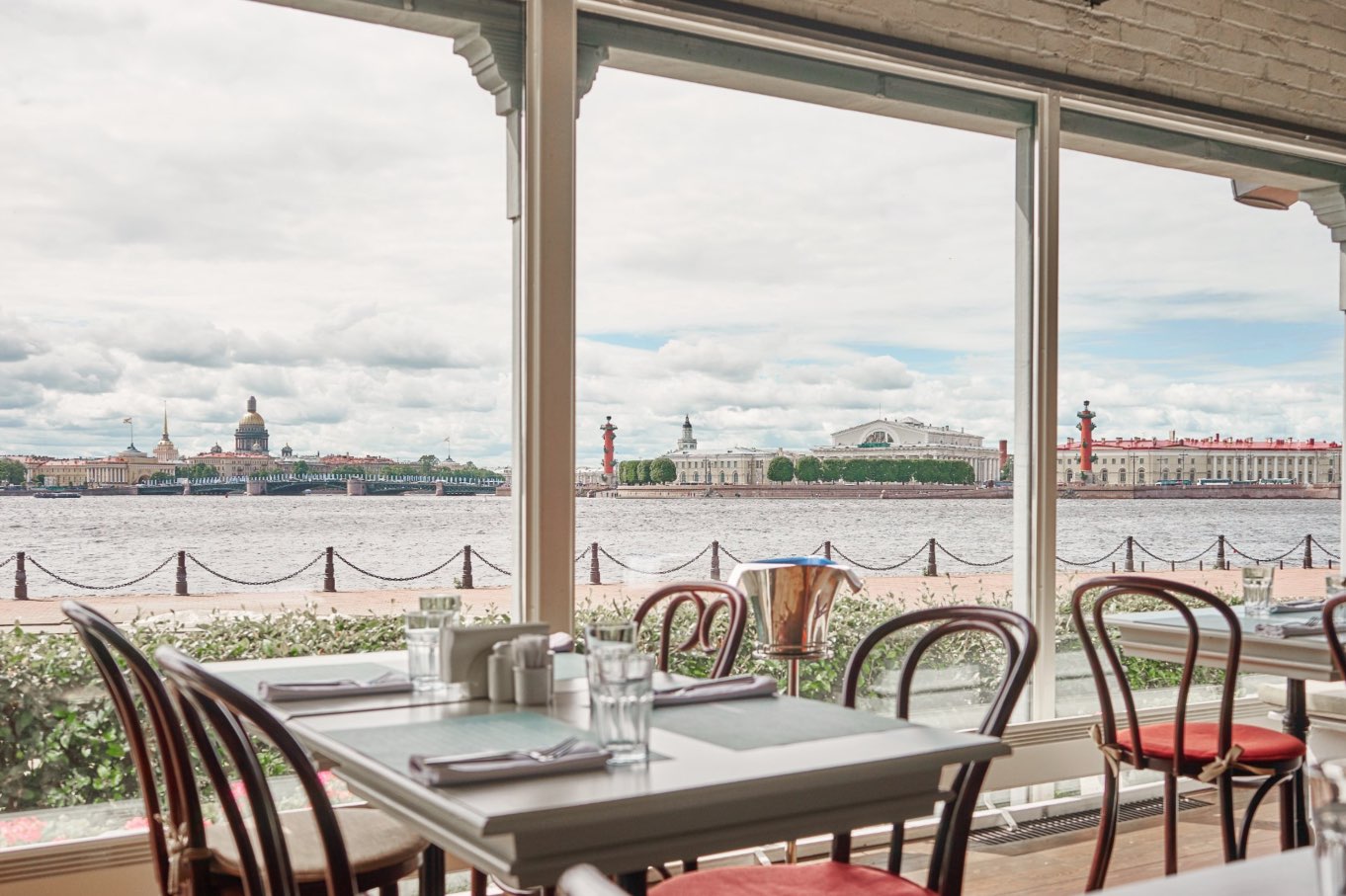
At the Peter and Paul Fortress, there are cafés and kiosks inside the grounds, but the best option is the Koryushka restaurant (Ginza group), on Zayachy Island itself, next to the sandy beach. It’s spacious, has good views and takes online bookings on its website; a meal averages around 2,000 ₽. And as the name suggests, it’s a great place to try fried koryushka.
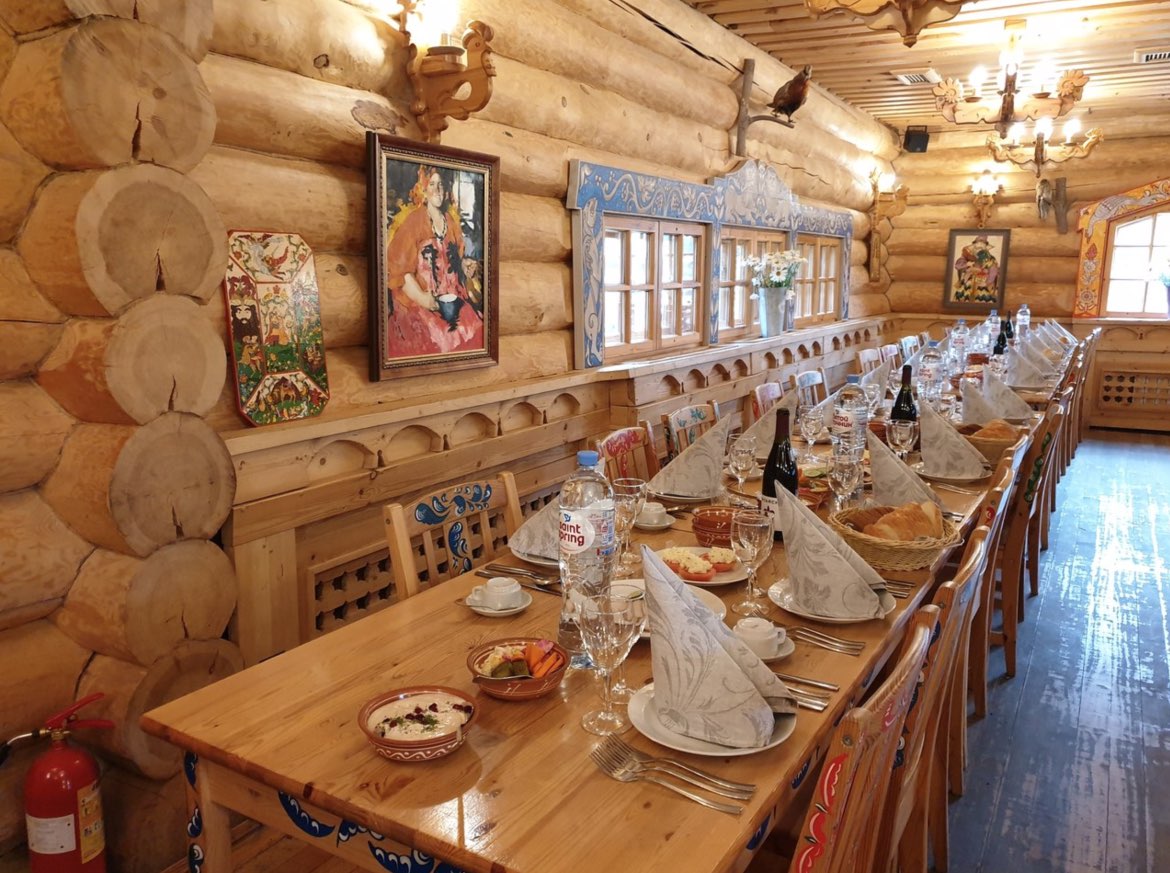
At Peterhof, there are cafés and fast-food stalls inside the gardens; to eat better you’ll need to leave the grounds (careful: if you leave the upper park you can’t get back in on the same ticket). And at Catherine Palace (Pushkin), besides the palace café, nearby you’ve got Podvorye, a Russian-cuisine restaurant set up in a wooden izba, very authentic (if touristy) and good value.
For everything else, Yandex Maps and 2GIS are your best allies in Russia: they’re far more up to date on the ground than Google Maps and show you opening hours, ratings and average prices.
5.8. How to book a restaurant in Russia
At the best restaurants (White Rabbit, Twins Garden, Café Pushkin, Beluga, Sixty…) it’s worth booking several days ahead, especially at weekends and if you want a table with a view. There are three ways to do it: through your hotel, on the restaurant’s own website, or via Yandex Maps. I walk you through it step by step in how to book a restaurant in Moscow or St. Petersburg.
Frequently asked questions about Russian food
Do Visa or Mastercard cards work in restaurants in Russia?
No. Since 2022, foreign Visa and Mastercard cards don’t work in Russia. You’ll need to pay in cash (rubles) or with a Russian MIR card. Almost every restaurant takes cash without a problem and the more touristy ones also accept MIR.
Are there still McDonald’s, KFC or Starbucks in Russia?
Not under those names. They left in 2022 and reopened as Vkusno i Tochka (McDonald’s), Rostic’s (KFC) and Stars Coffee (Starbucks), in the same premises and with very similar menus. Burger King and Subway do still operate under their original names.
How much does it cost to eat in Russia?
It depends on the place. At a stolovaya or a Russian fast-food chain you can eat for 500-1,000 rubles per person. At a mid-range restaurant (Georgian, Uzbek or a neighbourhood Russian place) it’s around 1,500-2,500 rubles without alcohol. At the best restaurants, dinner starts at around 5,000 rubles.
Is there a Michelin Guide in Russia?
Michelin published its first and only Moscow guide in 2021, with nine starred restaurants, but it suspended its activity in Russia in 2022 and hasn’t updated it since. There’s no current Michelin selection today, although the big restaurants that appeared in it are still open and at a very high level.
Do they speak English in Russian restaurants?
In the tourist-centre ones, in the chains and in many Georgian places, yes. In stolovayas and neighbourhood restaurants, not always. Carrying a translator app on your phone solves almost any situation.