Long-distance buses are still widely used in Russia for the trips that trains don’t cover, or cover badly, and they’re usually the cheapest option. The big news for foreign travellers is that you can now buy bus tickets online from outside Russia and pay with your Visa or Mastercard. Let me explain how, and which websites work in each case.
The easiest way is the tutu platform: when you pay, you choose the «foreign card» option and the charge is processed through a Belarusian payment gateway, in Belarusian rubles. The site is only in Russian, but it works fine with your browser’s automatic translator. I’ll walk you through it step by step further down.
This is step 3 of my guide to planning a trip to Russia in 10 steps, where you’ll find everything else in order.

Is it worth traveling by bus through Russia?
Russia is the largest country in the world and the distances between cities are huge. That’s why the train is the king of domestic travel: fast, safe, comfortable and cheap, and on many routes it’s used even more than the plane. If you’re moving between the big cities, you’ll almost always be better off with the train or the plane.
Even so, the bus still has its place in several situations:
- When there are routes or schedules that the trains don’t cover.
- On routes that the train does cover, but very slowly and with lots of stops.
- When the trains fill up and you need an alternative.
- When you’re after the cheapest option: the bus is usually cheaper than the train.
- For short hops between nearby cities, like Moscow–Suzdal or Vladimir–Suzdal.

Besides long-distance coaches there are the marshrutkas, shared minibuses or taxis that run short, fixed routes and are often faster and cheaper than a regular bus. You pay the marshrutka fare directly to the driver as you board.
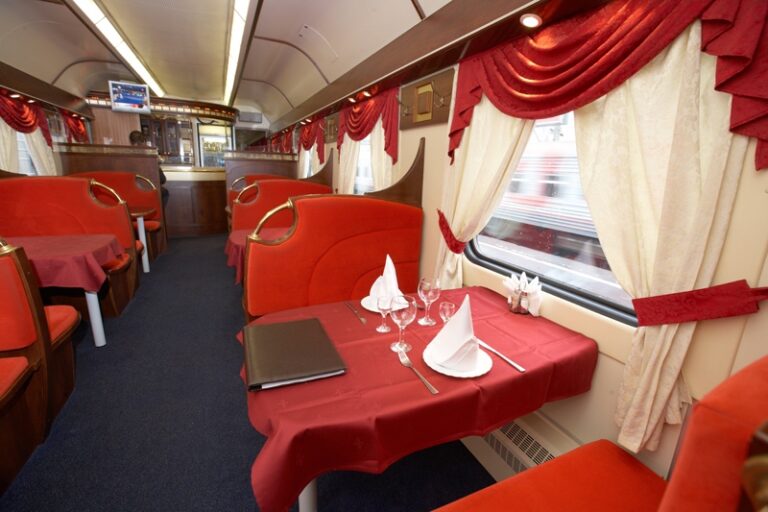
Modern intercity coaches (like the Ecolines ones) are pretty good: air conditioning, a toilet, Wi-Fi, USB sockets and reclining seats. On long routes there’s usually an attendant on board too. Don’t expect the luxury of the high-speed Sapsan train, but for an overnight trip or a short hop they do the job nicely.
Bus stations in Russia
Most cities have an intercity bus station (in Russian автовокзал, avtovokzal). Buses leave from the station, although they also pick up passengers at other points around the city. In some cities they even depart from the train station or from shopping centres.

Moscow, for example, doesn’t have a single station: departures are spread across several, such as the North Gate (Северные Ворота / Severnye Vorota), Salaryevo, Kotelniki or the South Gate (Южные Ворота). When you buy your ticket, check carefully which is your departure station, because they’re on opposite sides of the city and you’ll want to allow enough time to get there by metro.
How to buy bus tickets online with a foreign card (on tutu)
The tutu platform brings together the bus routes and companies of Russia (and several neighbouring countries), with more than 10,000 destinations. The key point: for bus tickets it does accept foreign cards.
When you choose to pay with a foreign card, the payment isn’t processed by Russia directly but by the Belarusian gateway travelfly.by, and you’re charged in Belarusian rubles (BYN). Your card will convert that into your own currency automatically.
The site is only in Russian, but you can use it without knowing the language: open it in Chrome or Yandex Browser and use your browser’s automatic translator (right-click → «Translate to English»). It translates the whole page. These are the steps:
- Go to tutu and select the buses tab (Автобусы).
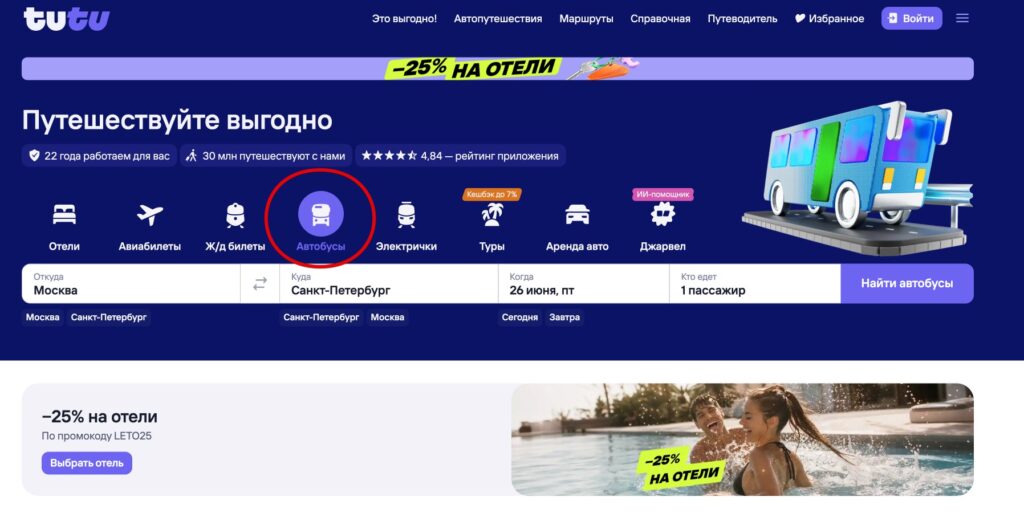
- Enter the origin, destination, date and number of passengers (for example, Москва → Санкт-Петербург) and click «Search buses». You can put a maximum of 10 tickets in a single order.
- Pick the bus that suits you best from the list. You’ll see the company, departure and arrival times, journey length, free seats and price.
- Choose your seat (if the company has provided a seat map) and add luggage if you need to.
- Enter your details. As a foreigner, use your passport details. When you book, the ticket is held for about 20 minutes so you can complete the payment.
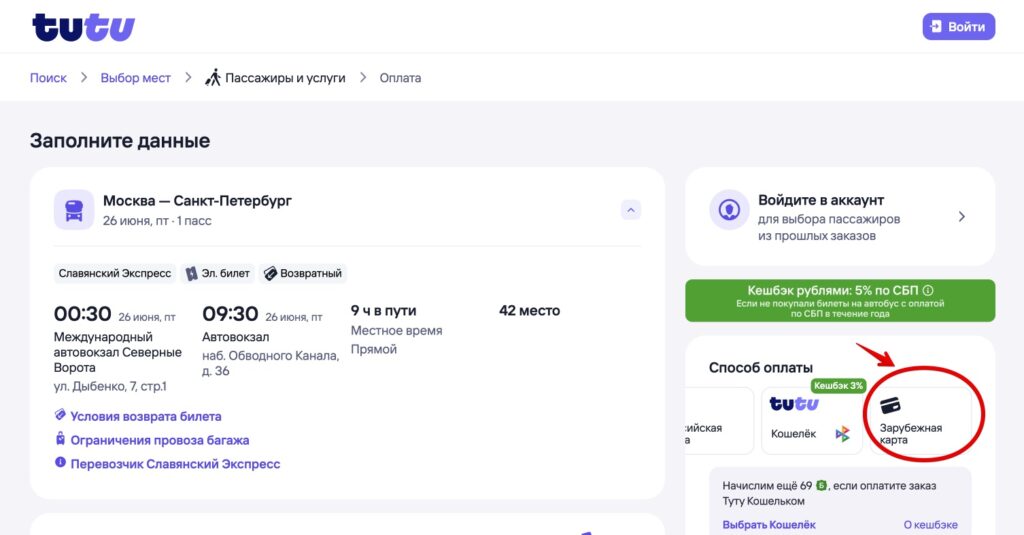
- At the payment step, choose «Зарубежная карта» (foreign card) and enter your Visa or Mastercard details. You’ll be charged in Belarusian rubles through travelfly.by.
- You’ll get the ticket as a PDF by email (check your spam folder if it doesn’t arrive). On many routes, if the ticket has a lightning-bolt icon you don’t need to print it: just show it on your phone. Bring the same passport you booked with and turn up at the station about 15 minutes before departure.
Other websites to check schedules and buy tickets
There are two other very thorough Russian websites for checking schedules, routes and prices: travel.yandex.ru/buses (Yandex Travel’s buses) and avtovokzaly.ru. They work great for browsing and comparing, but they have one big drawback for foreign travellers: they only accept Russian cards (the MIR system) for payment.
So they’re useful in two situations: to check the timetable and then buy on tutu or at the station ticket office, or to pay directly if you have a Russian MIR card.
International bus routes: the current situation
It used to be common to cross by bus between Russia and its neighbours. Today things have changed a lot: because of the sanctions stemming from the conflict in Ukraine, most land crossings between Russia and the European Union are suspended or heavily restricted. The land border with Finland, for instance, is closed to passenger traffic.
Some routes to the Baltic states are still running with companies like Ecolines (Moscow–Riga, St. Petersburg–Riga or Tallinn). Since this changes often, before planning a land crossing I’d recommend checking the up-to-date situation at each of Russia’s borders.
Prices and journey times: the Moscow–St. Petersburg example
To give you an idea: the Moscow–St. Petersburg bus takes between 8 and 9 and a half hours and tickets cost from around 950 to 1,400 rubles. There are departures at almost any time of day (including overnight ones, which save you a night’s hotel) from several Moscow stations.
It’s cheaper than the train, but also slower: the high-speed Sapsan covers that same route in about 4 hours. So unless you’re on a really tight budget or travelling overnight, on this particular route the train usually makes more sense. The bus wins when there’s no comfortable train alternative or when price is what matters most. And if you need somewhere to sleep when you arrive, see how to book a hotel in Russia with a foreign card.
Frequently asked questions
Can you buy bus tickets in Russia with a foreign card?
Yes. The easiest way is the tutu website, which lets you pay for bus tickets with a foreign Visa or Mastercard. The payment is processed through a Belarusian gateway and charged in Belarusian rubles, so on your bank statement you’ll see a charge in that currency and from Belarus.
Is the tutu website available in English?
No, it’s only in Russian. The most practical thing is to open it in Chrome or Yandex Browser and use the browser’s automatic translator, which translates the whole page and lets you book without knowing any Russian.
How much does the Moscow to St. Petersburg bus cost and how long does it take?
The journey takes between 8 and 9 and a half hours, and tickets usually cost from around 950 to 1,400 rubles. There are departures at almost any time of day from several Moscow stations, such as the North Gate (Severnye Vorota), Salaryevo or Kotelniki.
Do I need to print my bus ticket?
It depends on the route. You’ll receive the ticket as a PDF by email. On many routes you don’t need to print it and can just show it on your phone; on others you do. Always bring the same passport you booked with and arrive at the station about 15 minutes before departure.