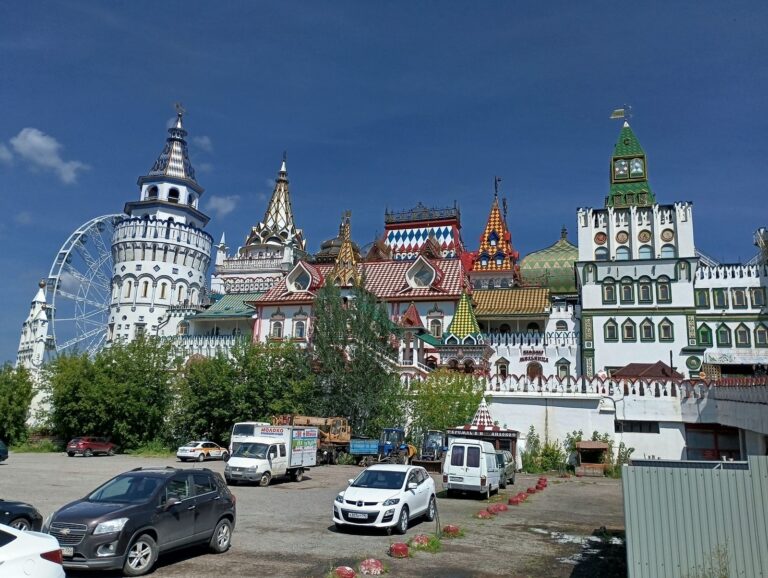
Yes, you can visit Kaliningrad as a European tourist, and it’s worth it: with the Russian eVisa you can cross overland from Poland or Lithuania or fly into Khrabrovo airport, and in two or three days you’ll see Königsberg Cathedral and Kant’s tomb, the Fishing Village, the Museum of the World Ocean and Baltic amber. Here I’ll tell you what to see in the city, how much each visit costs, how to get around, where to stay and what to keep in mind in an exclave that’s unlike anywhere else in Russia.
Kaliningrad in a nutshell: where it is and why it’s so different
Kaliningrad is the capital of Russia’s westernmost region, an exclave squeezed between Poland and Lithuania on the Baltic coast, with no land border with the rest of the country. Until 1945 it was Königsberg, one of the great cities of East Prussia: Immanuel Kant was born, lived and is buried here. After the Second World War it became part of the Soviet Union, the German population was expelled and the city was resettled with people from all over the USSR.
The result is a mix you won’t find in Moscow or St Petersburg: Prussian brick gates, German garden villas and 19th-century forts next to Soviet apartment blocks and golden Orthodox domes. The city has around 490,000 inhabitants, it’s easy to explore on foot and by tram, and less than an hour away you have Baltic beaches, dunes and pine forests.
A practical detail: Kaliningrad is one hour behind Moscow (UTC+2 all year round). In summer it’s on the same time as Central European Time; in winter it’s one hour ahead.
Can you visit Kaliningrad as a European?
Yes. You need a Russian visa, and the easiest option is the unified eVisa: it’s valid for the whole country, allows a stay of up to 30 days and can be used at the crossing points in the Kaliningrad region, both at Khrabrovo airport and at the road crossings from Poland and Lithuania. If you’d rather have someone check your application for you, there’s the eVisa application service. Who needs a visa, which crossings accept it and what outdated information to ignore are all covered in the Kaliningrad visa guide.
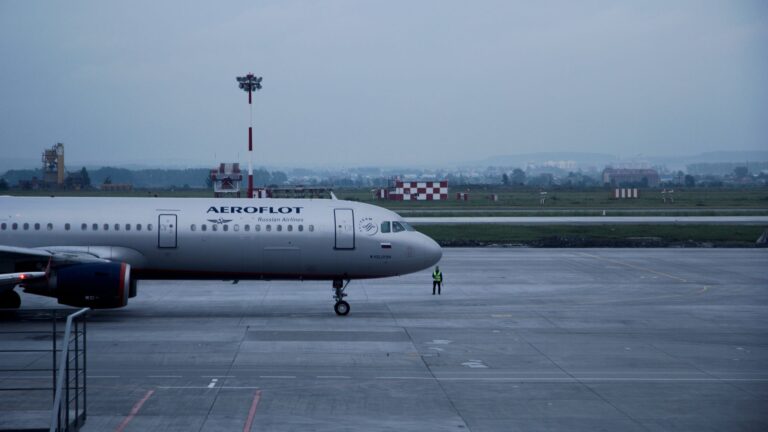
There are no direct flights from the European Union, so most travellers arrive overland: a cheap flight to Gdansk, Warsaw, Vilnius or Kaunas and then a bus or car to the border. Right now Grzechotki–Mamonovo and Bezledy–Bagrationovsk are open from Poland, and Kybartai–Chernyshevskoye from Lithuania, which you can also cross on foot. Panemunė–Sovetsk is pedestrian-only, and the Curonian Spit crossing (Nida–Morskoye) is closed. You’ll find all the details, waiting times and documents in my guide to crossing into Kaliningrad overland.
And if your plan is to use Kaliningrad as a gateway to the rest of Russia, what you need to know is how to continue to Moscow or St Petersburg. I explain it in how to get from Kaliningrad to Moscow and St Petersburg.
Things to do in Kaliningrad: the essentials
Königsberg Cathedral and Kant Island
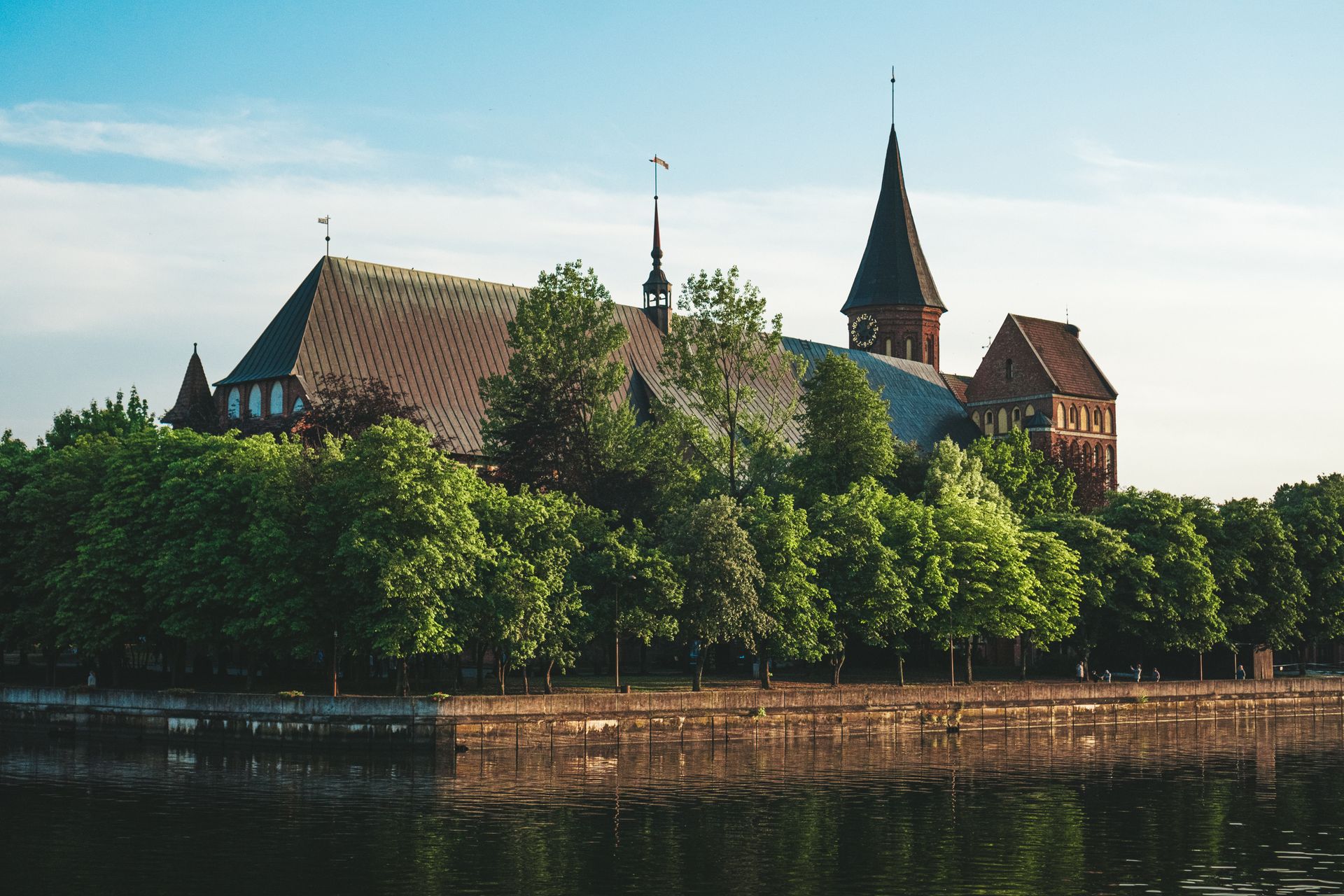
It’s the symbol of the city and your first stop. The 14th-century Gothic cathedral stands alone on Kant Island (the old Kneiphof), in the middle of the Pregolya River, surrounded by a sculpture park. It lay in ruins after the war and was rebuilt in the 1990s. Kant’s tomb is set against the outer wall, at the north-east corner, and you can see it for free.
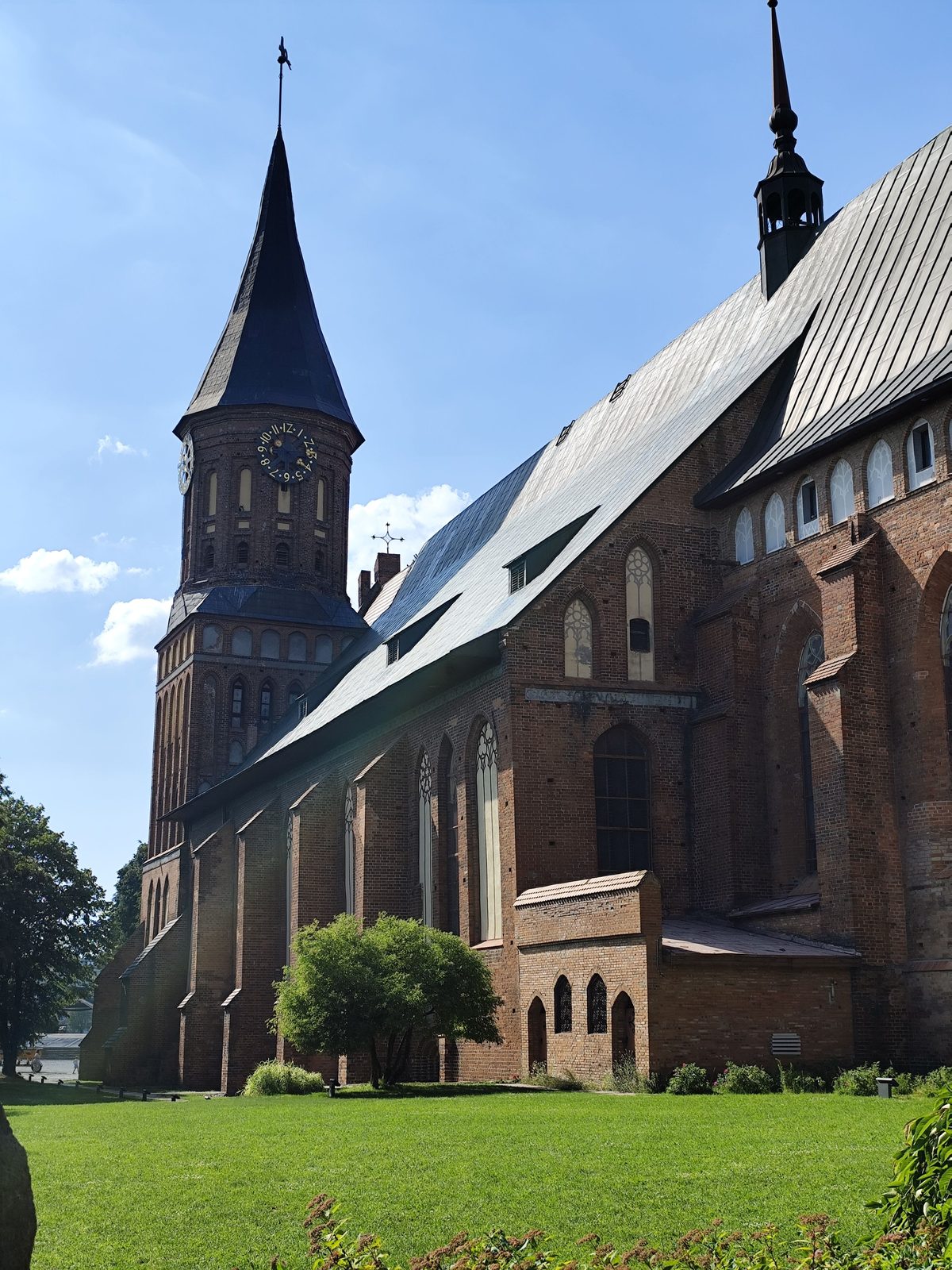
Inside there’s a small museum dedicated to Kant (300 roubles) and guided tours from 700 roubles. But what I really recommend is an organ concert: the great organ, installed in 2008 by a German workshop, has more than 6,000 pipes and is the largest in Russia. There are short daytime concerts for 700 roubles and evening concerts almost every day, from around 1,000 roubles depending on the programme. The schedule and tickets are on the cathedral’s website (there’s also a ticket office), and in summer they sell out fast.
The Fishing Village (Rybnaya Derevnya)
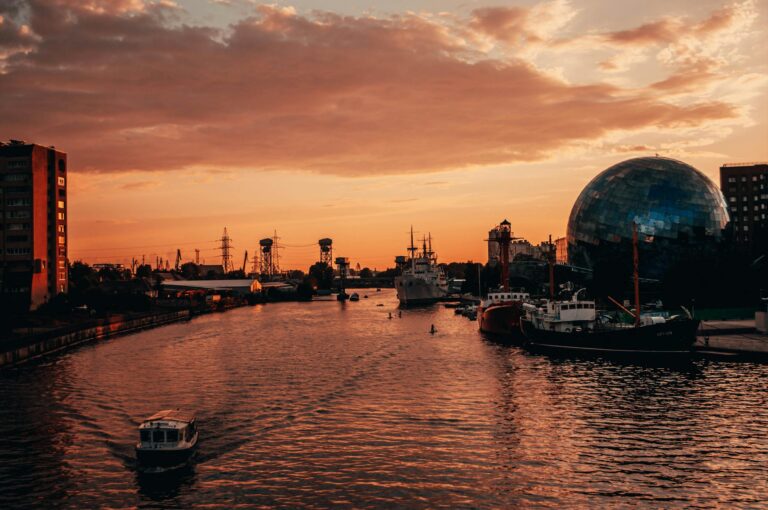
Right across from the cathedral, on the other side of the Honey Bridge, is the view you’ll see on every postcard: colourful half-timbered houses, a lighthouse with a viewing platform and terraces by the river. Don’t be fooled, it isn’t an old quarter: it’s a complex built in the 2000s imitating Königsberg architecture. Even so, it’s the best place for a walk at sunset, a fish dinner and a climb up the lighthouse to see the river from above. At night, with everything lit up, it’s much better.
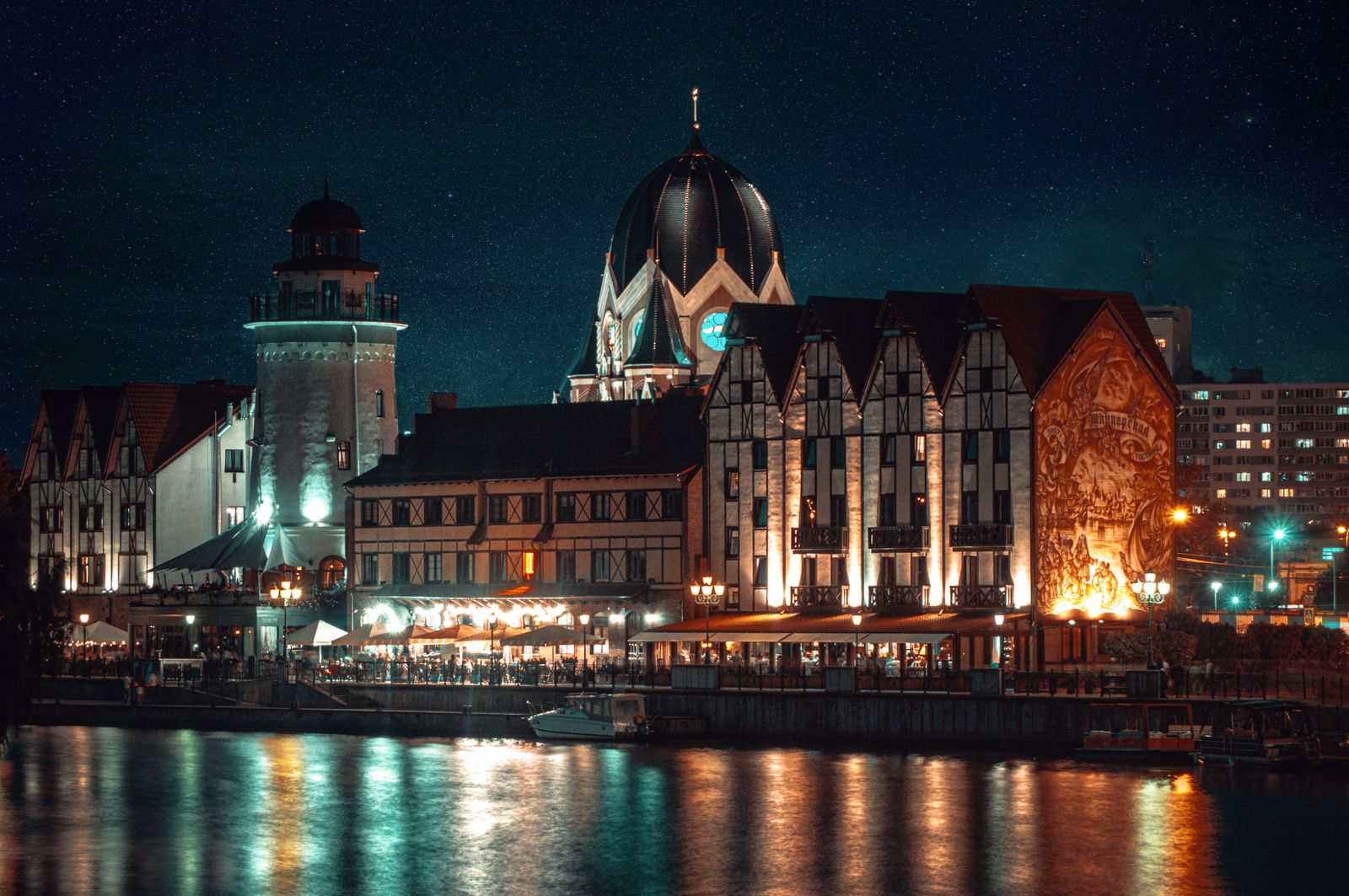
From the piers on this bank, boats leave for a trip along the Pregolya and around the port that lasts about an hour. It’s a relaxed way to see the city from the water.
The Museum of the World Ocean
If you’re only going to visit one museum, make it this one. It takes up a long stretch of the riverfront (Peter the Great Embankment) and it isn’t a single building but a whole complex: the research vessel Vityaz, the ship Kosmonavt Viktor Patsayev, which tracked space flights from the sea, the B-413 submarine, where you can walk through the compartments, an aquarium exhibition and the new sphere-shaped building, Planet Ocean, which opened in 2025.
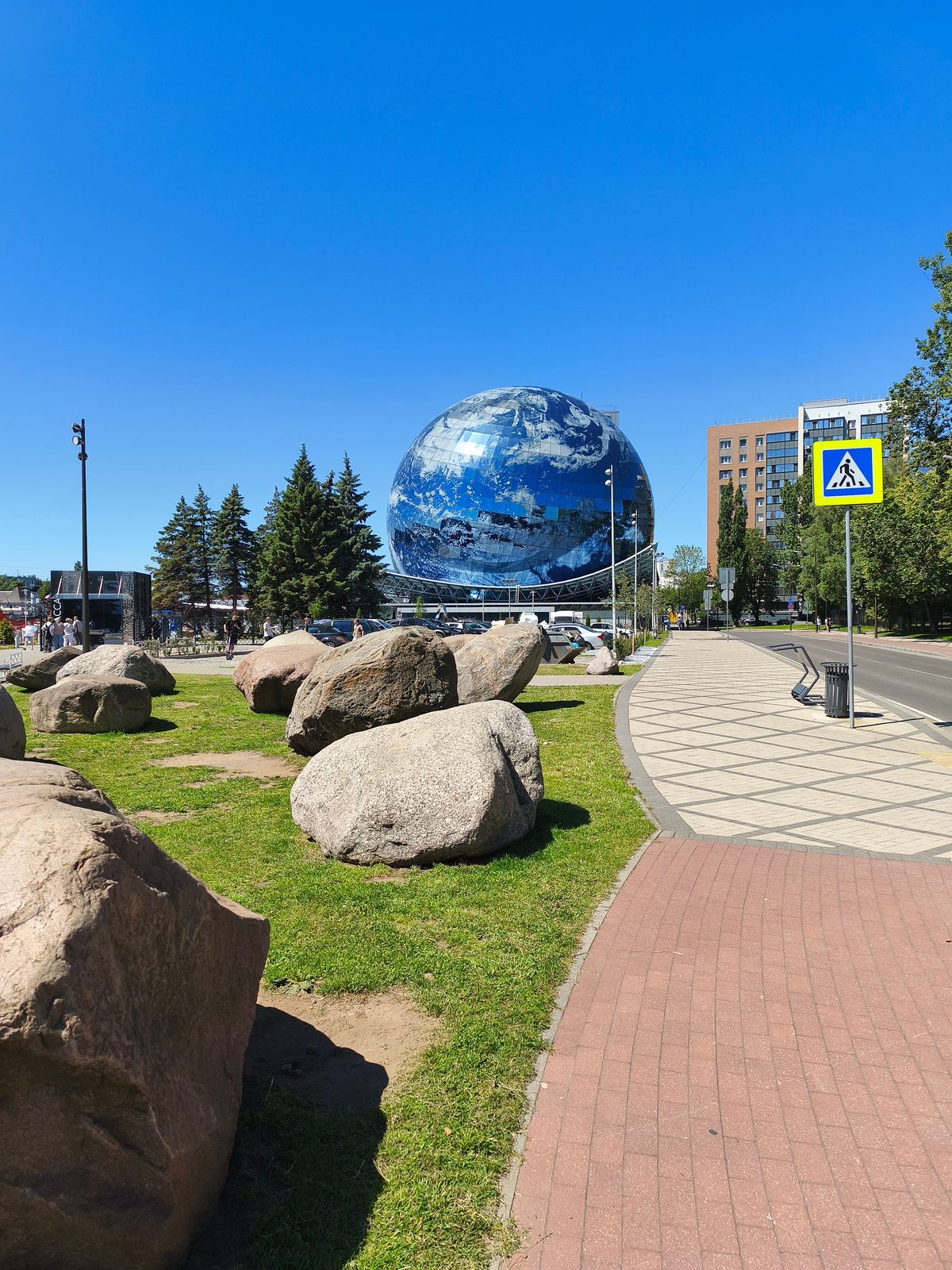
Each part has its own ticket and opening hours; Planet Ocean costs 600 roubles, is visited in timed slots and it’s best to buy online. Almost everything is open Wednesday to Sunday, from 10:00 to 18:00. On Mondays and Tuesdays only some parts open (the aquariums, the submarine or the Vityaz decks, depending on the day), so plan ahead.
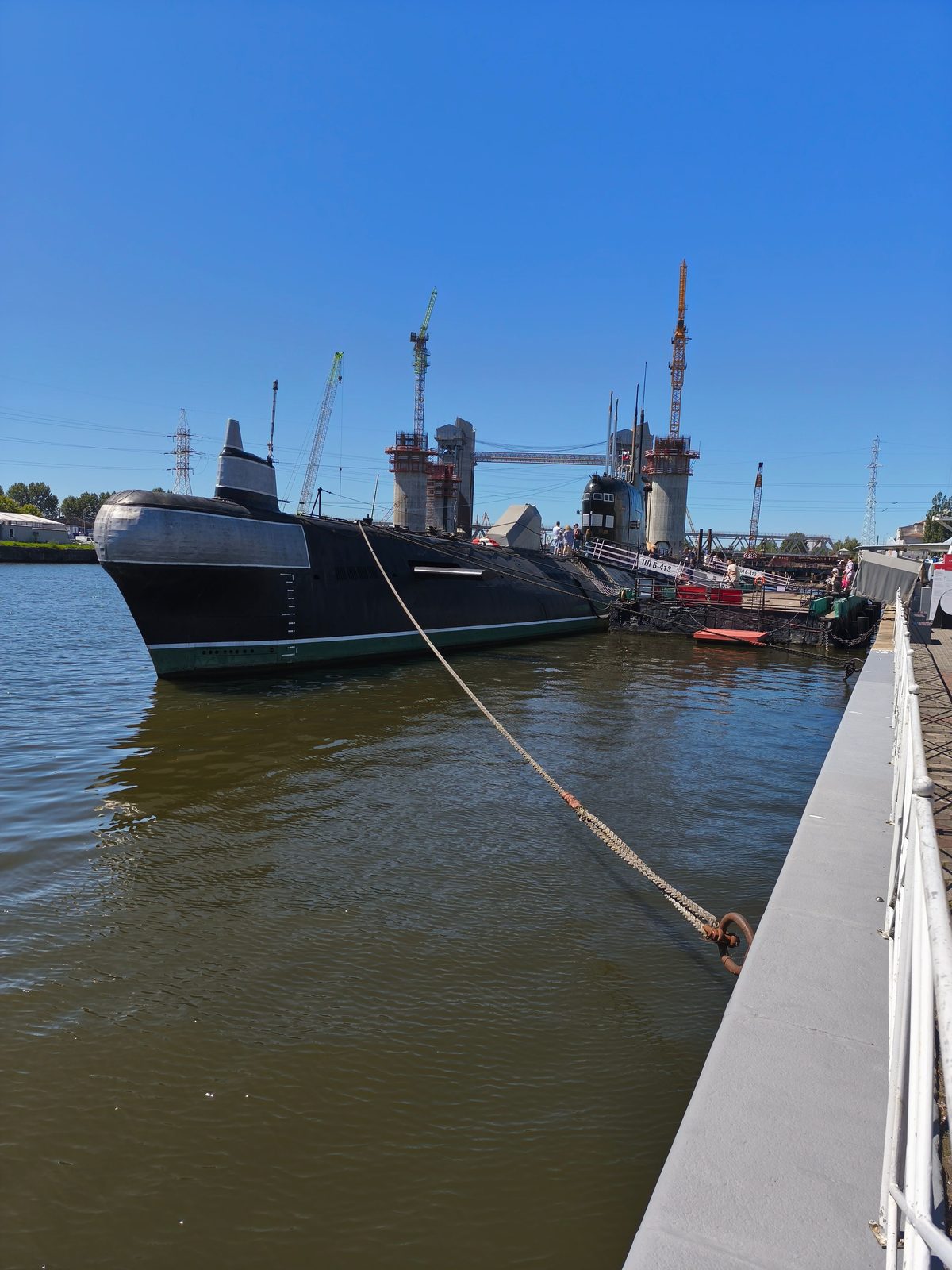
The Amber Museum in the Dohna Tower
Around 90% of the world’s amber comes from the Kaliningrad region, and this museum tells the story very well: pieces with insects trapped millions of years ago, jewellery, caskets and carved objects spanning several centuries. It’s inside the Dohna Tower, a 19th-century brick fortification by the Upper Pond. Admission costs 700 roubles. It’s open every day from May to September (10:00–19:00) and closed on Mondays from October to April (10:00–18:00).
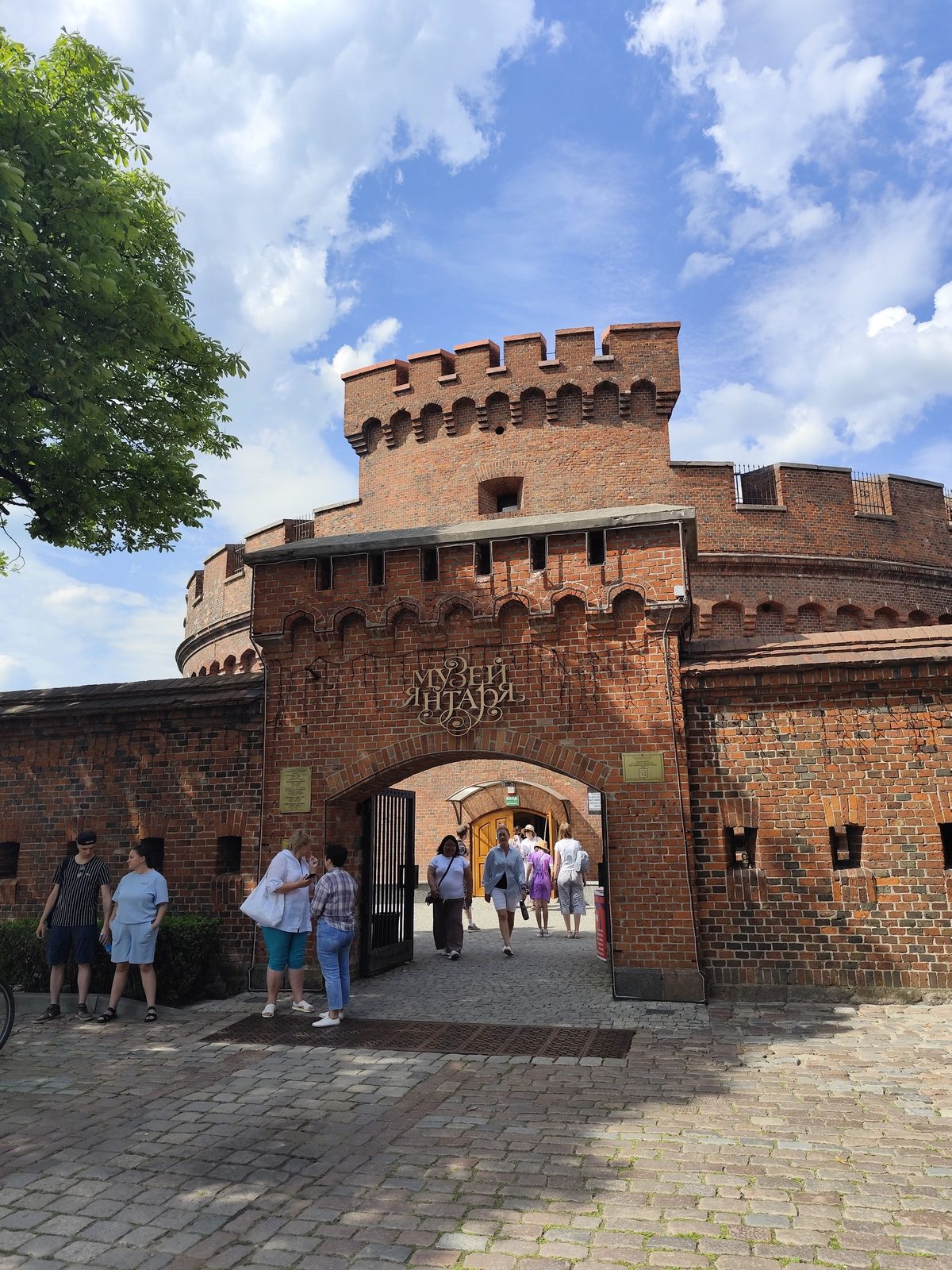
Right next to the tower is the Rossgarten Gate. If you’re into amber, save some time for Yantarny, on the coast, where the open-pit amber quarry is. I cover it in the guide to the coast and the Curonian Spit.
The gates of Königsberg
Several monumental brick gates survive from the 19th-century Prussian city wall, and seeing them is a good excuse to cross the city on foot:
- King’s Gate (Korolevskie vorota): the most beautiful one, with statues of the founders of Königsberg and Prussia. Inside there’s a small exhibition about Peter the Great’s Grand Embassy, which passed through Königsberg in 1697. Closed on Mondays and Tuesdays.
- Friedland Gate: a museum with a projection showing what Königsberg looked like before the war. It’s the best way to understand what was lost.
- Brandenburg Gate: the only one that still has traffic running through it; you see it from the outside.
Victory Square and the Cathedral of Christ the Saviour
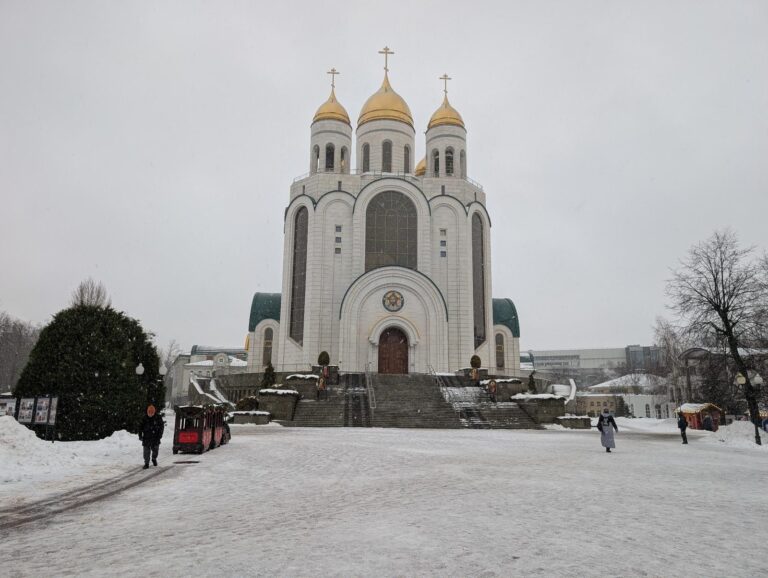
The main square of both the Soviet and the present-day city. It’s dominated by the Orthodox Cathedral of Christ the Saviour, built in 2006, with its golden domes, a striking contrast with the Gothic cathedral on Kant Island. The shopping centres are all around, and it’s a good spot to catch a tram.
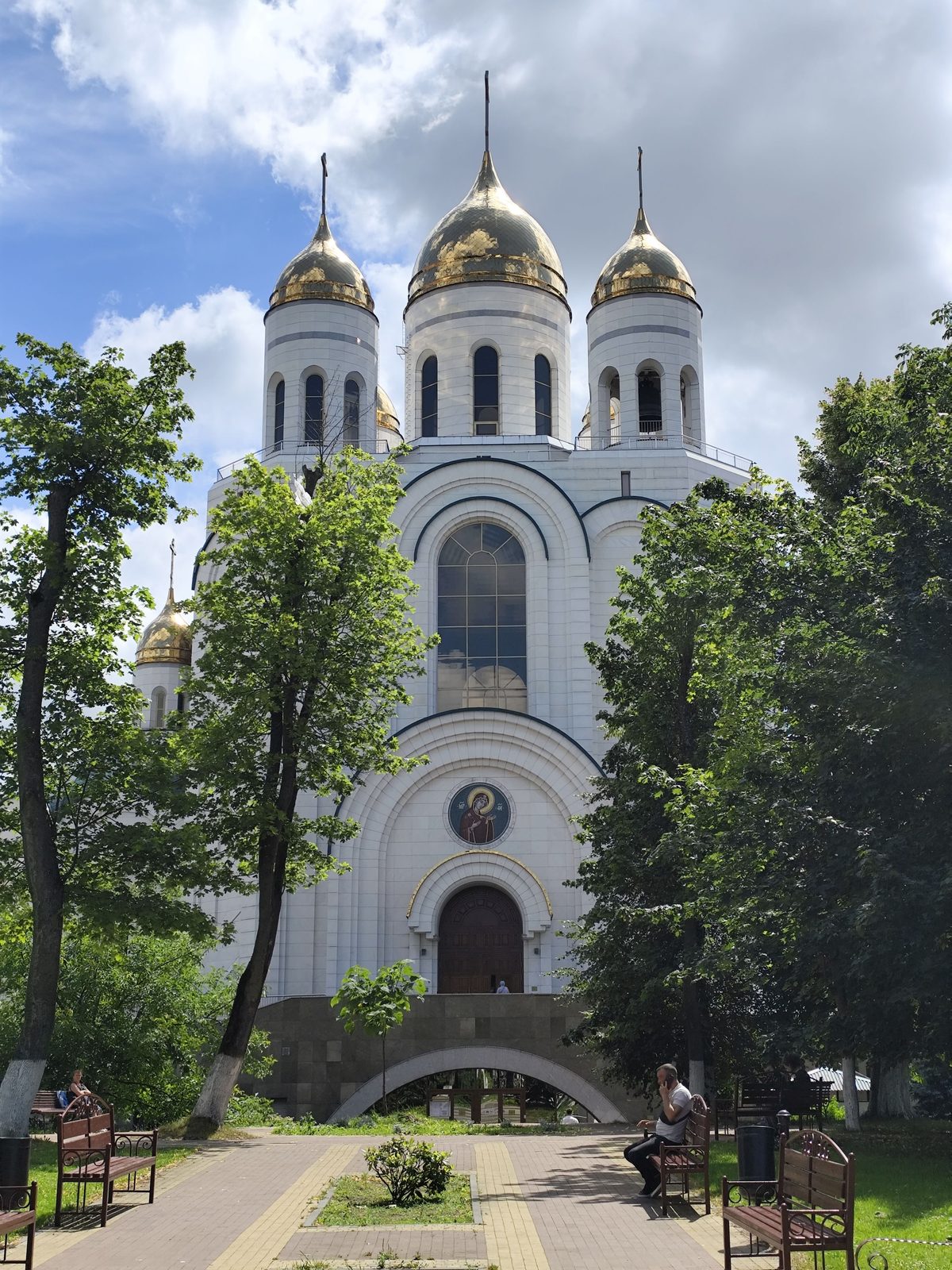
If you’ve been reading about Kaliningrad for a while, you might be looking for the House of Soviets, the huge concrete building that was never used and was put up on the ruins of Königsberg Castle. You won’t see it any more: it was demolished between 2023 and 2024. The excavated remains of the castle can be visited on Shevchenko Street in season (May–October); check before you go.
Amalienau and the German villa districts
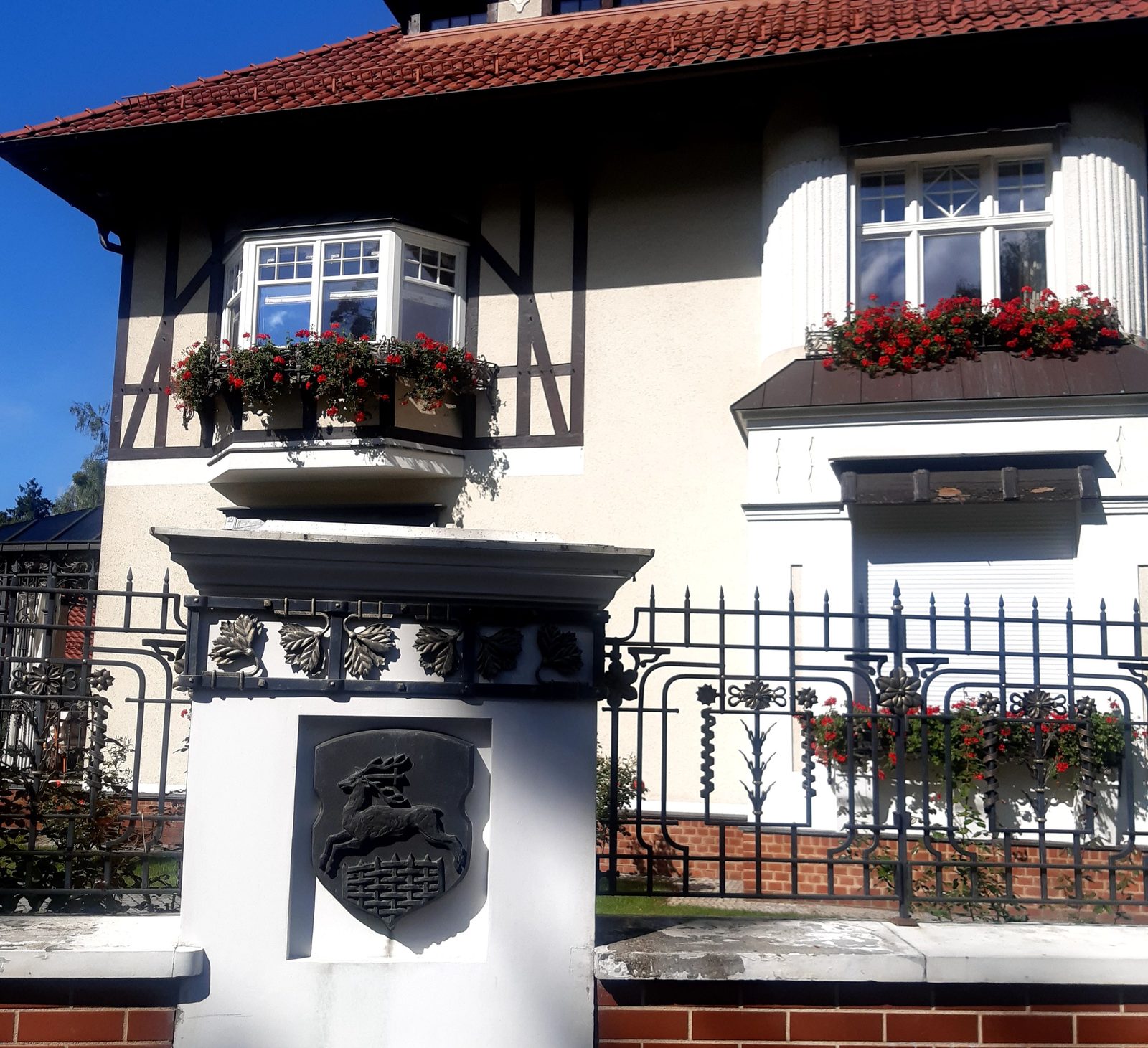
For me, the nicest part of the city. Amalienau, west of the centre, is an early 20th-century residential district with garden villas, tree-lined streets and slate roofs that survived the bombing. There’s nothing specific to “visit”: the idea is to wander slowly along Mira Avenue and its side streets, and maybe end up at the zoo (600 roubles), which is on the same avenue.
The forts of Königsberg
The city was surrounded by a ring of 19th-century forts, and some of them can be visited. Fort No. 5, the scene of heavy fighting in 1945, is now a war memorial (around 300 roubles; open every day from 10:00 to 19:00). Fort No. 11 “Dönhoff” is the best preserved and the most photogenic, with its brick galleries. They’re on the outskirts, so the practical way to get there is by taxi.
What to eat in Kaliningrad
The food mixes Russian cooking with Prussian heritage and plenty of Baltic fish. Don’t miss:
- Königsberg klopse: meatballs in a white caper sauce, the “local” dish you’ll find on lots of menus.
- Smoked fish: eel, herring, sprats… The best place to buy it is the Central Market, which is worth a visit in its own right.
- Königsberg marzipan: a Prussian tradition that has been revived; you’ll find it in pastry shops and souvenir shops.
- Beer: the Ponart brewery, heir to the historic one, runs tours, and there are craft breweries all over the city.
How many days and when to go
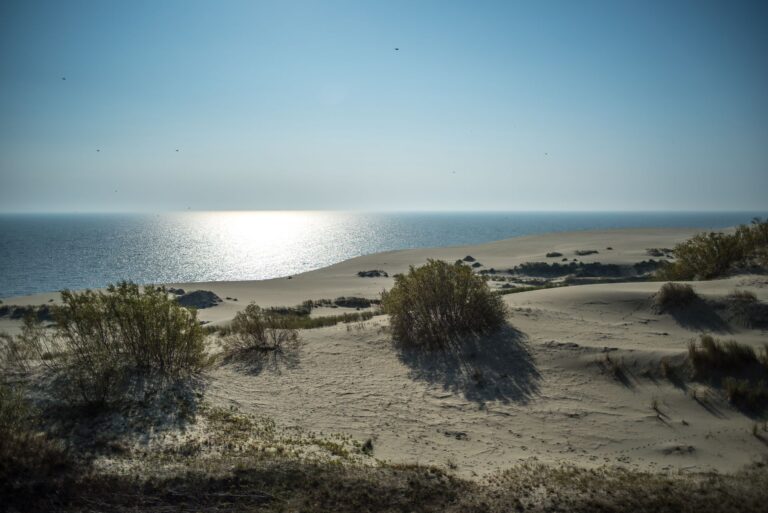
With two full days you’ll see the city properly: one for Kant Island, the Fishing Village and the Museum of the World Ocean, another for the Amber Museum, the gates, Amalienau and a fort. If you can, add one or two more days for the coast: Zelenogradsk, Svetlogorsk and the Curonian Spit are the best the region has to offer.
The best time to go is May to September: in summer it’s around 22 °C and in August the sea reaches about 20 °C. September is my favourite month, with fewer people and still good weather. Winter is cold and damp (around 0 °C), but the city, with its organ concerts and cafés, has its charm. Pack a rain jacket whatever the season: it rains here all year round.
Where to stay in Kaliningrad
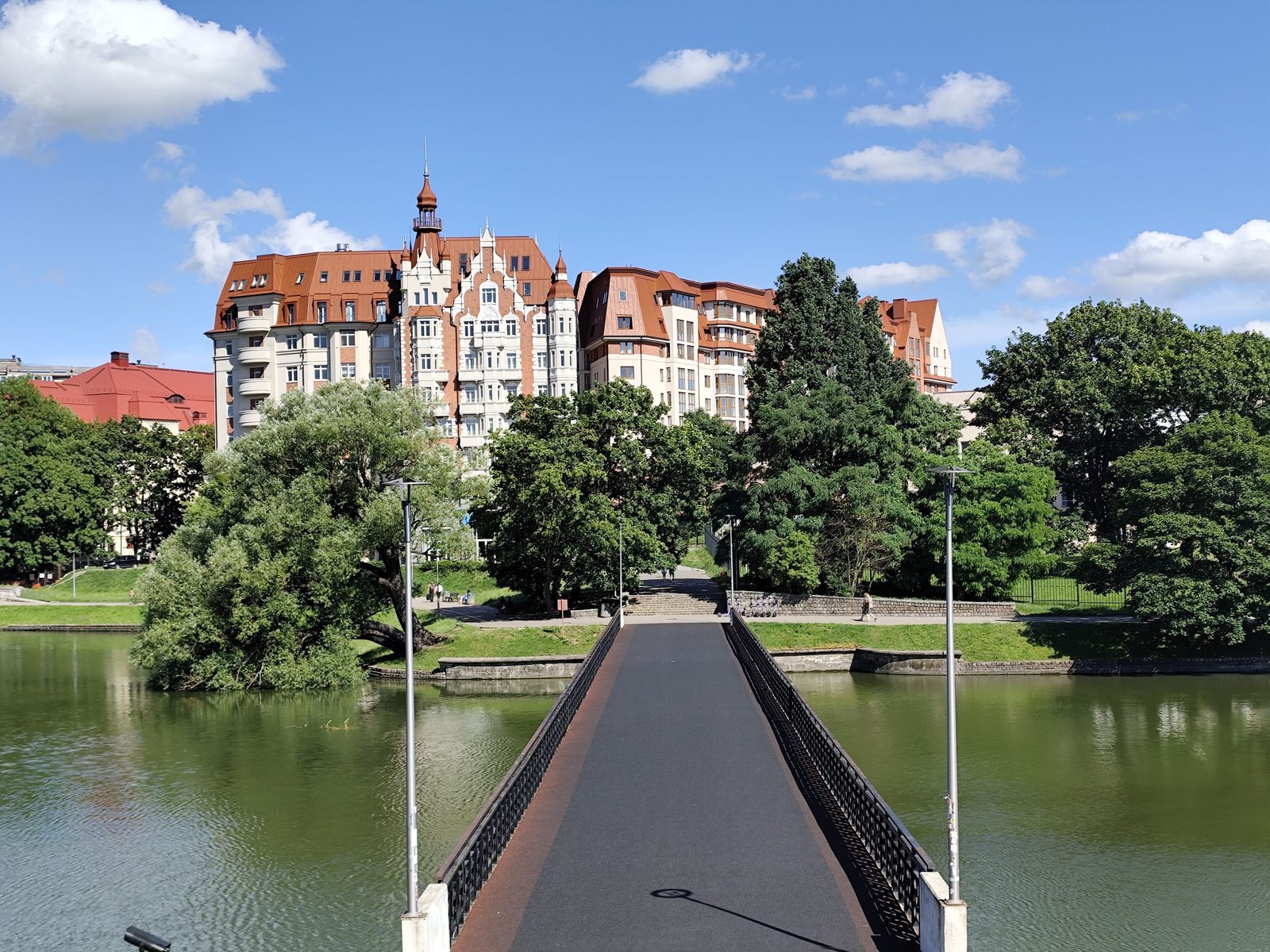
For a first visit, stay in the centre, between Kant Island, Victory Square and the Upper Pond: everything is within walking distance. If you’d prefer somewhere quieter, Amalienau is very pleasant and well connected by tram. Apartments go from around 2,500 to 10,000 roubles a night, and a three- or four-star hotel from 5,600 to 13,000 roubles. Many travellers combine a couple of nights in the city with a couple more in Zelenogradsk or Svetlogorsk.
The big international booking platforms don’t work in Russia. In my guide to booking hotels and apartments in Russia with a foreign card I explain which platforms accept your card.
How to get around the city
- From Khrabrovo airport: bus 244-E gets to the centre in about 45 minutes and costs less than 200 roubles. A taxi is faster and doesn’t cost much more if there are a few of you.
- Around the city: cheap trams and buses. The historic centre is easy to explore on foot.
- Taxi: Yandex Go works just like in the rest of Russia; you can pay the driver in cash.
- To the coast: local trains from Severny (North) and Yuzhny (South) stations, and buses from the bus station next to Yuzhny station.
What you need to know before you go: money, internet and safety
Money. Visa and Mastercard cards issued outside Russia don’t work, and that includes Kaliningrad. Bring cash and change it in the city, but mostly dollars: the EU bans taking banknotes in EU currencies into Russia except for the essential expenses of your trip, so bring only as many euros as you really need. I explain everything in how to pay in Russia and in where to change money into roubles. If you’re entering overland, remember the rules for declaring cash at the border.
Internet. When you enter Russia, mobile data on a foreign SIM can be blocked for the first 24 hours, and many Western websites won’t load. The easiest option is to arrive with an eSIM already installed; I tell you which one I use in my eSIM guide for Russia, and for blocked apps, in my VPN guide for Russia.
Safety. Kaliningrad is a quiet city and, for tourists, day-to-day life is normal. What you do need to know is that it’s a heavily militarised region: don’t photograph military installations, ports or border crossings, and don’t head into the border zone on your own. Baltiysk, home of the Baltic Fleet, is closed to foreigners without a special permit. Also, flights at Khrabrovo airport are sometimes delayed because of airspace restrictions, so leave yourself some margin if you’re making connections. There’s more context in is Russia safe to travel to?
Medical insurance. Take out medical insurance that covers Russia, because you may be asked for it at the border, and Western policies usually aren’t valid there. In my Russia travel insurance guide I explain which one to get.
From those who have been there
If you’d like to read about the trip of someone who entered through Kaliningrad, Alberto tells his story in From Kaliningrad to the Volga. And you’ll find all the articles about the exclave together in the Kaliningrad section.
Frequently asked questions about travelling to Kaliningrad
Can I travel to Kaliningrad as a European citizen?
Yes. You need a Russian visa, and the easiest option is the unified eVisa, which can be used at Khrabrovo airport and at the road crossings from Poland and Lithuania. As there are no direct flights from the European Union, most travellers arrive overland from Gdansk, Warsaw, Vilnius or Kaunas.
Is it safe to travel to Kaliningrad?
For tourists, Kaliningrad is a quiet city. The important thing is not to photograph military installations, ports or border crossings and not to go near the border zone or Baltiysk, which is closed to foreigners without a special permit. It’s wise to leave some margin with flights, as there are sometimes delays at the airport.
How many days do you need to see Kaliningrad?
Two full days are enough for the city: the cathedral and Kant Island, the Fishing Village, the Museum of the World Ocean, the Amber Museum and the Prussian gates. With one or two more days you can see the Baltic coast and the Curonian Spit.
Can I pay with my card in Kaliningrad?
No. Visa and Mastercard cards issued outside Russia don’t work in Kaliningrad. Bring euros in cash and change them into roubles when you arrive.
What language is spoken in Kaliningrad?
Russian. In museums and some restaurants in the centre there are signs in English, but outside the tourist areas few people speak it, so it’s a good idea to have a translation app on your phone that works offline.