
The Curonian Spit and the Kaliningrad coast: Zelenogradsk, Svetlogorsk and Yantarny
 By Irena Domingo
Updated on
In This Article
The best of the Kaliningrad region is on the coast: the Curonian Spit, with dunes over 60 metres high and a forest of twisted pines, and three Baltic towns less than an hour and a half from the regional capital, Zelenogradsk, Svetlogorsk and Yantarny, the amber capital. You can do all of it as day trips by train or bus. Here I explain how to get to each place, what it costs and which areas are off-limits to foreigners.
The Kaliningrad coast at a glance
The Sambia Peninsula, north and west of Kaliningrad, is the region’s “coast”. Before 1945 it was where Königsberg’s middle classes spent their summers, and you can still see it in the old seaside villas, promenades and parks. These are the four trips I recommend, with rough travel times from the city:
- Zelenogradsk (about 35 km, 25–40 minutes by train): the nearest beach town, with its promenade and its cats.
- Svetlogorsk (about 40 km, around 1 hour by train): the most elegant resort, with a clifftop, a cable car and German villas.
- Yantarny (45 km, 1 h 30 by bus): the amber quarry and one of the best beaches on Russia’s Baltic coast.
- Curonian Spit (25–40 minutes by train to Zelenogradsk, then a bus onto the spit): a national park and UNESCO World Heritage Site.
If it’s your first time in the region, start with my guide to things to do in Kaliningrad: it explains how to get in, how many days to spend and the basics on money, internet and safety.
The Curonian Spit (Kurshskaya Kosa)
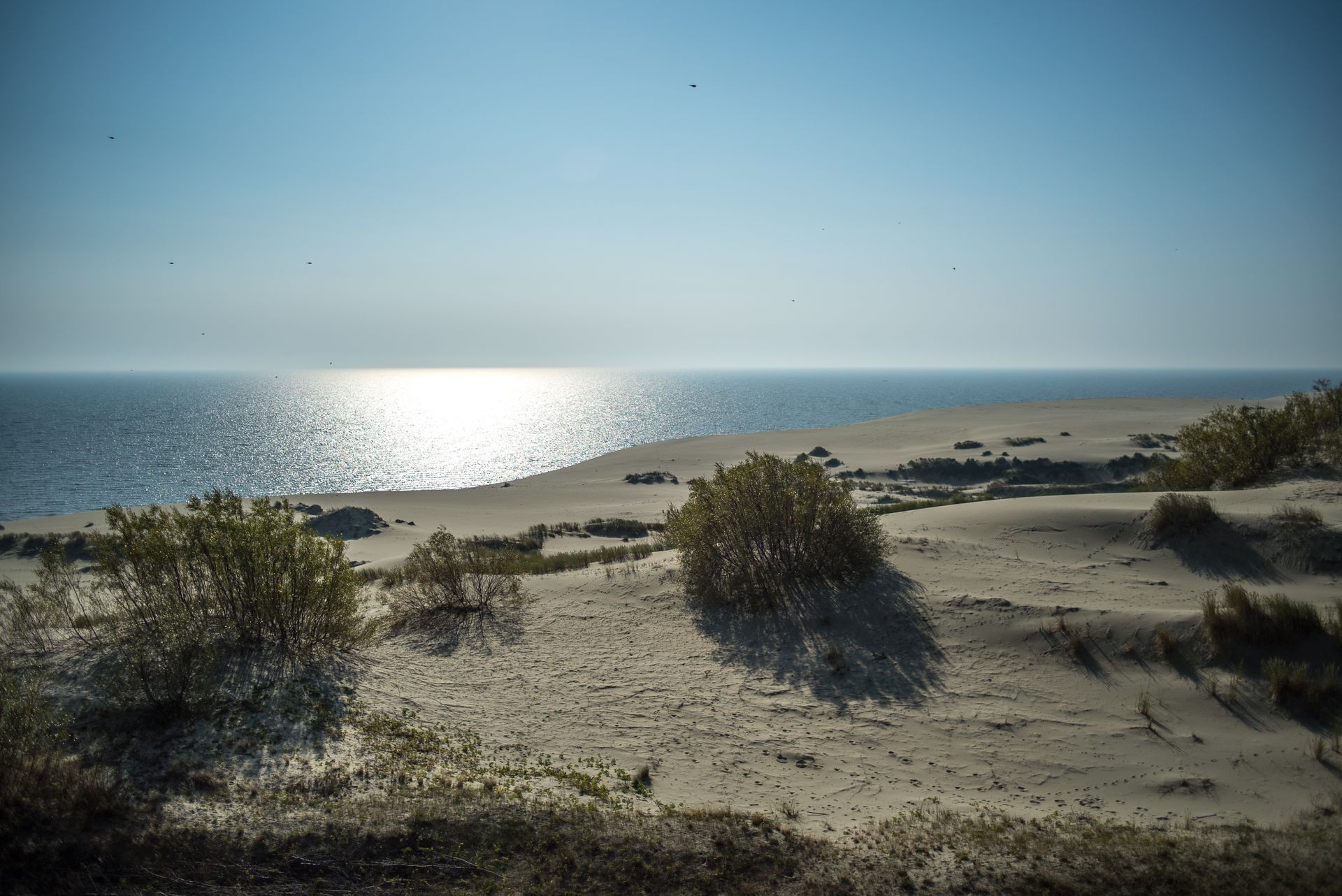
The spit is a strip of sand about 98 kilometres long between the Baltic and the Curonian Lagoon, shared between Russia and Lithuania. The Russian side is a national park, and it’s the most spectacular thing in the region: huge dunes, pine forests, almost empty beaches and one of Europe’s great migratory bird routes.
What to see on the spit
The stops are marked by the kilometre post on the road that runs along the spit, counting from Zelenogradsk:
- Km 23, Fringilla ornithological station: giant nets for ringing birds, in use from April to October. In autumn, thousands of birds pass through every day.
- Km 37, the Dancing Forest: a pine wood with trunks twisted into spirals and loops, for reasons nobody has fully explained. A wooden boardwalk takes you round it in 15–20 minutes.
- Km 42, the Efa Dune (Efa Heights): one of the highest dunes, about 60 metres, with a wooden trail and a viewpoint where you can see the sea and the lagoon at the same time. For me, it’s the best spot on the spit.
- Km 44, Morskoye: the last village before the Lithuanian border.
Stay on the boardwalks: the dunes are fragile and walking on them off the trails is forbidden.
Entrance fee and how to get there
Entry to the national park costs 400 roubles per person since April 2025; there’s no longer a charge for cars. You pay at the checkpoint at the park entrance, and also if you arrive by bus: with the QR code from kkosa.ru or on the bus itself. There are checks on the trails and when you get off the bus, and the fine for not having a ticket is 3,000–4,000 roubles. Watch out, because a lot of websites still quote the old fee.
Without a car, the easiest option is the train to Zelenogradsk and then bus 210, which runs along the spit to Morskoye and stops at the main sights: there are up to ten departures a day, the first at around 6:40 and the last in mid-afternoon. Bus 593 also goes direct from Kaliningrad bus station (next to Yuzhny station), but it only runs about four times a day from April to October and twice a day in winter; it takes two to two and a half hours to reach Morskoye. Check the return times carefully, and if they don’t work for you, the simplest option is an organised tour (from about 2,000–3,000 roubles per person) or a taxi for the whole day.
Important if you’re coming from Lithuania: the Nida–Morskoye border crossing, which runs through the spit, is closed and not an option for getting across. You can’t enter the Russian part of the spit from the Lithuanian side. For the crossings that are open, see my guide to crossing into Kaliningrad by land.
Zelenogradsk, the town of cats
The former Cranz is the easiest trip: the “Lastochka” train takes 25 to 40 minutes from Severny station (about 45 from Yuzhny) and costs around 100 roubles. Trains start early in the morning and the last one back leaves at about nine in the evening, so check the timetable before staying on for the sunset.
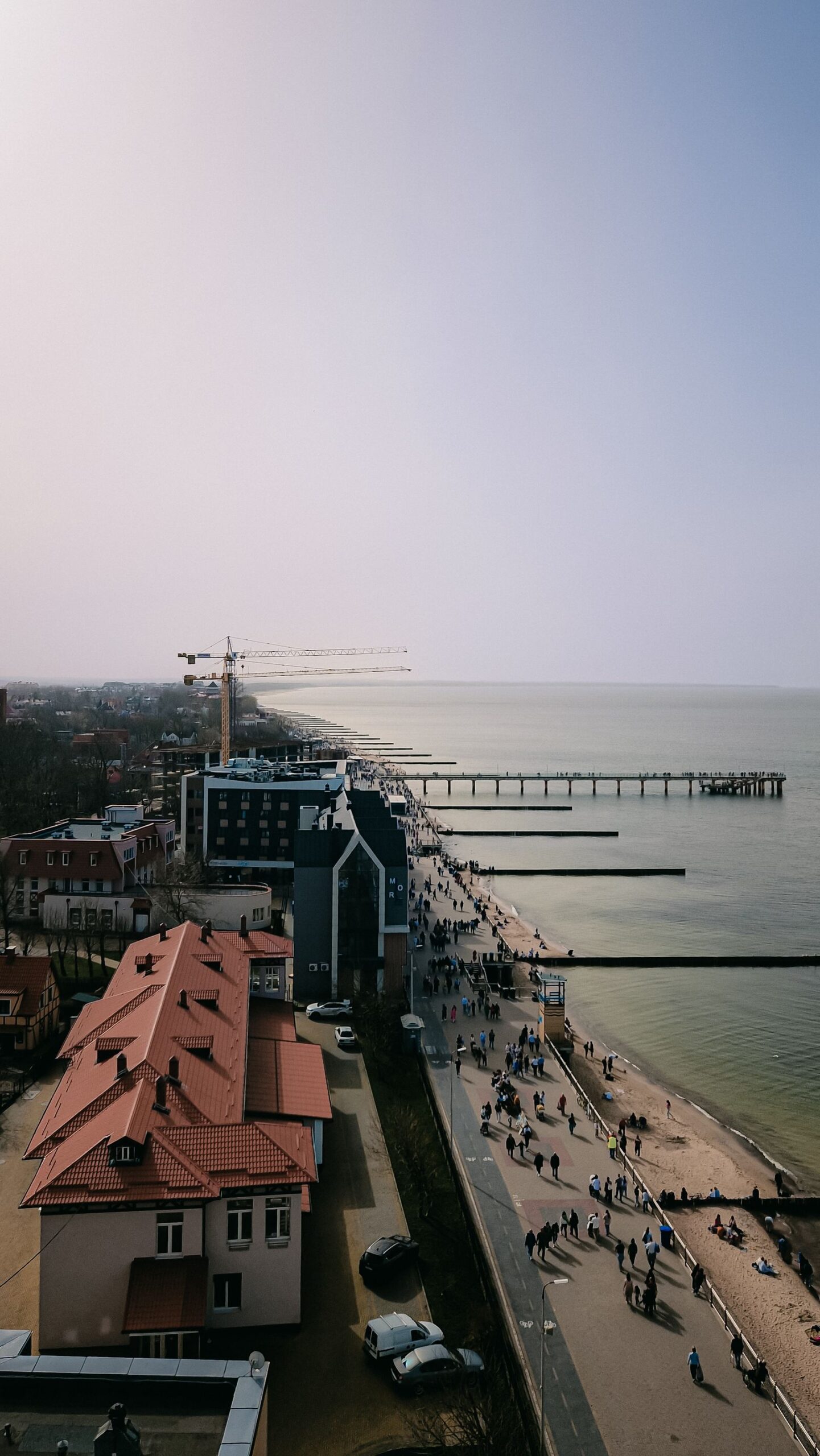
What to do in Zelenogradsk is simple: walk the three kilometres of the promenade, head out onto the pier, eat some fish and look for the cats, which are the town’s symbol. There are cat statues everywhere, little houses for the stray cats and even a museum, the Murarium, in the old water tower (450 roubles). It’s also the gateway to the Curonian Spit, so you can combine the two on the same day.
Svetlogorsk, the Prussian spa town
The former Rauschen is more elegant and quieter than Zelenogradsk. The town sits on top of a wooded cliff, with early 20th-century wooden and half-timbered villas, parks and the old saltwater bathhouse (Vodolechebnitsa). The train from Kaliningrad takes about an hour and costs around 120 roubles.
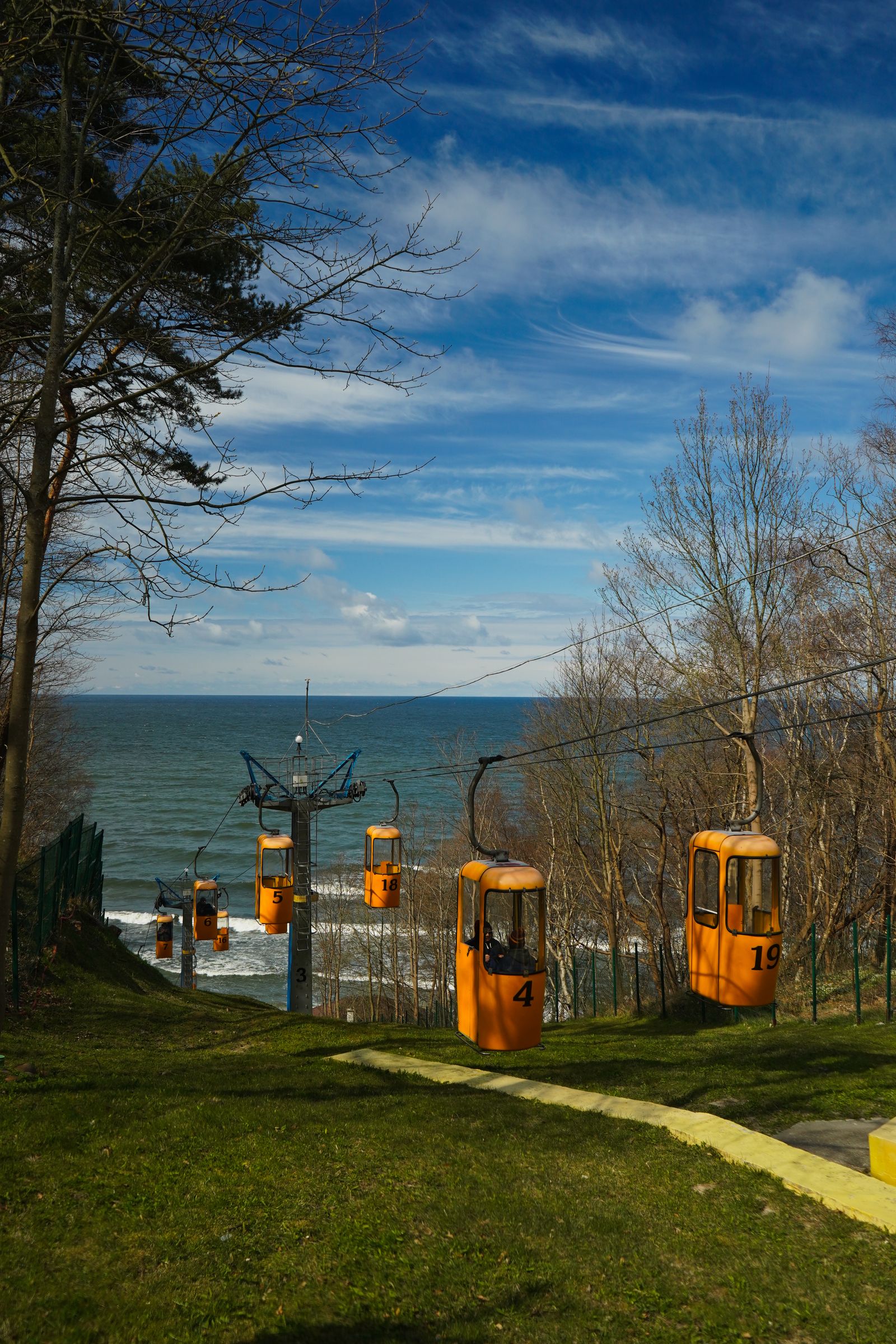
To get down to the beach you have two fun options: the cable car (50 roubles one way; from May to mid-October it runs from 9:00 to 21:00, and in winter it’s closed on Mondays and Tuesdays) or the panoramic lift (120 roubles). At the bottom there’s a long promenade, perfect for a walk, with the sculpture of the Nymph in her shell.
If you like walking, follow the coast: the shoreline between Svetlogorsk and Yantarny is all wooded cliffs and long beaches that are almost empty outside July and August.
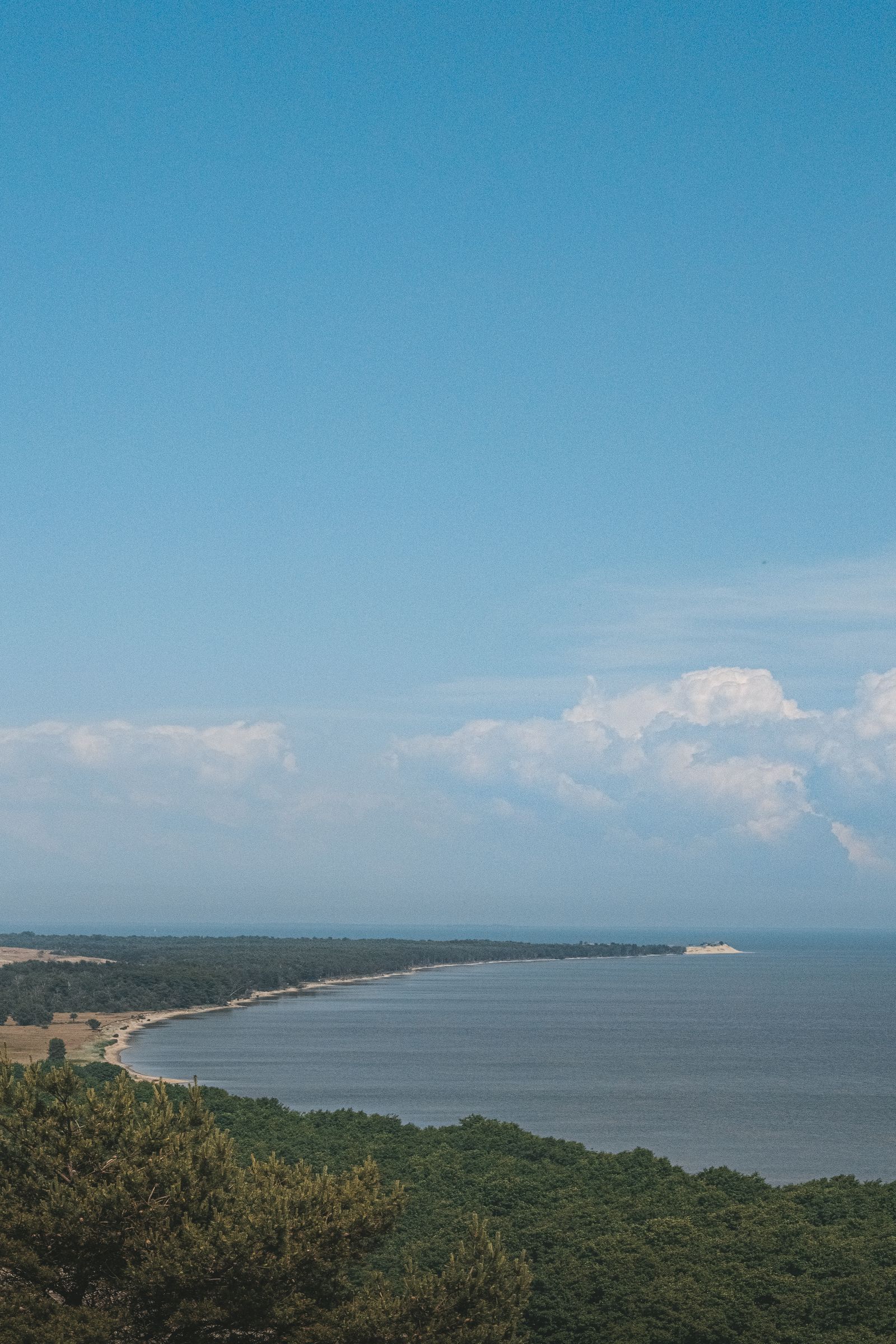
Yantarny, the amber capital
Almost all the amber mined in the world comes from here. Yantarny (the former Palmnicken) is home to the open-pit amber quarry, and from the viewing platform over the quarry you can watch the excavators working at the bottom; entry, together with the Amber Pyramid, costs 300 roubles (May to September, 10:00 to 19:00; the rest of the year, until 17:00). There are also activities where you can dig for amber in the sand yourself.
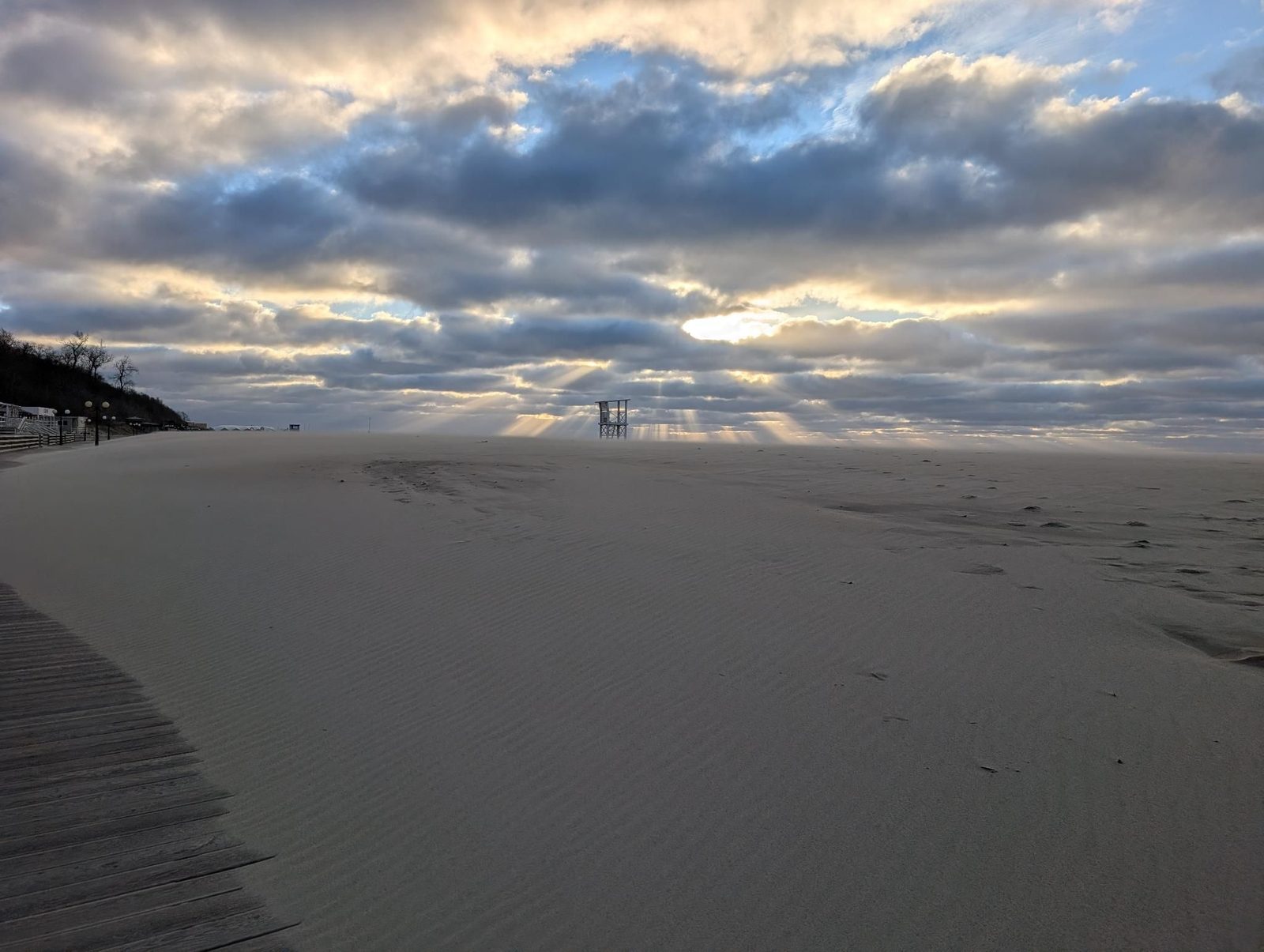
Yantarny beach has Blue Flag status and is one of the best in the region, with fine white sand. After storms, especially in autumn and winter, the sea washes small pieces of amber up onto the shore, and you’ll see people searching for them at dawn. To get there, bus 120 takes about an hour and a half from Kaliningrad.
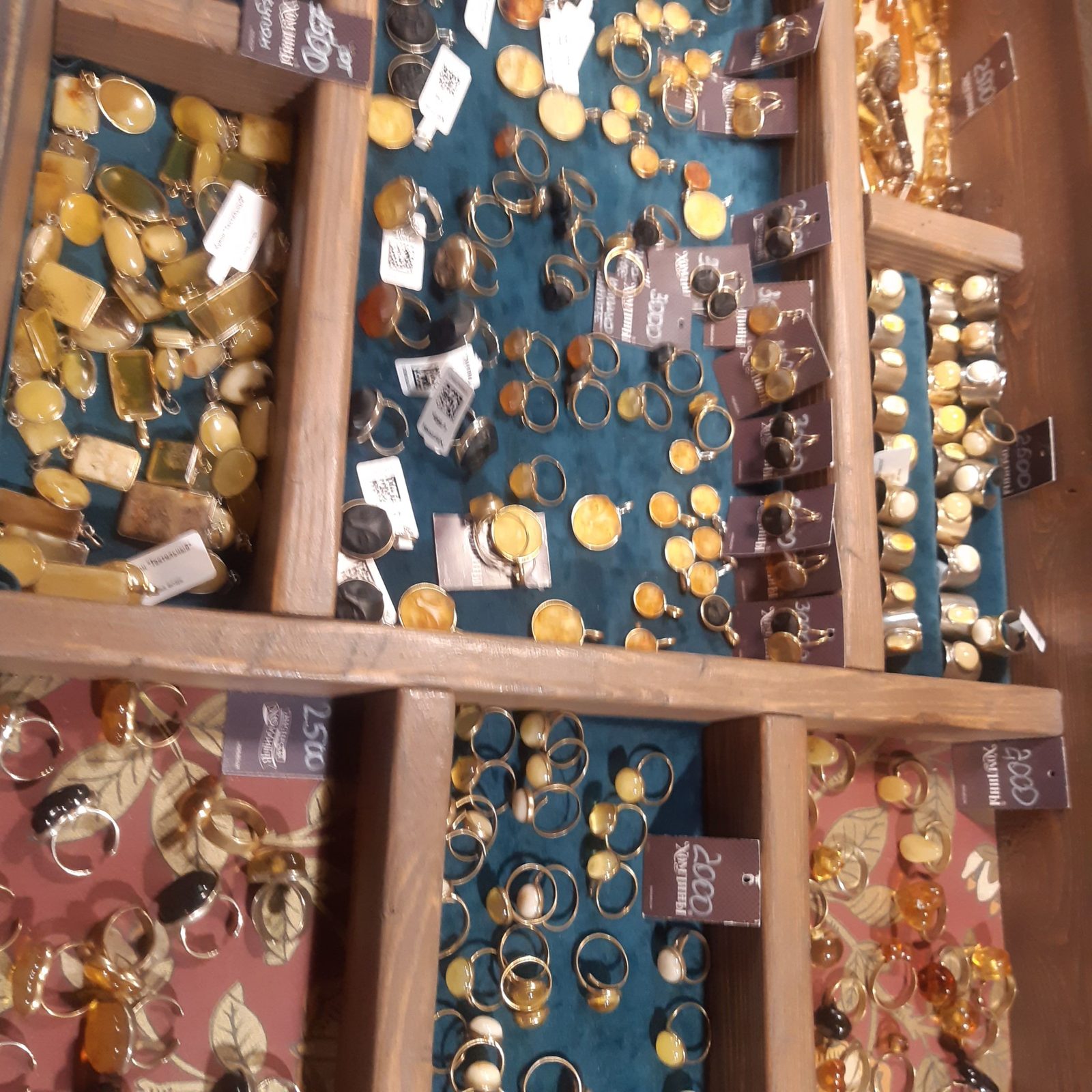
If you buy amber, make sure it’s finished pieces from shops that give you a receipt: raw amber can’t be taken out of Russia, not even pieces you’ve picked up yourself on the beach, and the fines are very high. Customs may ask you for proof of purchase.
Prussian castles in the region
If you have time to spare and you’re into history, the region still has a few Teutonic Order castles, most of them in ruins or being restored:
- Neuhausen (Guryevsk), 15 minutes from Kaliningrad: you can visit it with its own ticket or on organised tours that take in several castles.
- Insterburg (Chernyakhovsk), about 90 km away: it’s looked after by a local association that runs visits; it’s best to call ahead.
- Balga, on the Vistula Lagoon: the oldest ruins in the region, with boardwalks to explore them. It’s close to the Polish border, so ask beforehand whether you can go without a permit.
Areas you can’t visit as a foreigner
Kaliningrad is a heavily militarised region and some places are closed to foreigners without a special permit:
- Baltiysk and the Vistula Spit (Baltiyskaya Kosa): Baltiysk is the base of the Baltic Fleet. Even commercial tours require a Russian passport.
- The border zone with Poland and Lithuania, apart from the official border crossings.
- Military installations and ports: no photos and no drones.
Zelenogradsk, Svetlogorsk, Yantarny and the Curonian Spit have no restrictions at all for tourists.
Stay on the coast or take day trips from the city?
Both work. If you’re going in summer and want the beach, I’d recommend spending a couple of nights in Zelenogradsk or Svetlogorsk: in the evening, once the day-trippers leave, the atmosphere changes completely. If you’re going in autumn or winter, you’re better off basing yourself in Kaliningrad and doing day trips.
To book with your foreign card, see my guide to booking hotels and apartments in Russia. And to have data and maps on your phone from the moment you cross the border, I recommend arriving with your eSIM for Russia already installed: coverage on the coast is good, but without data it’s hard to get a taxi or check timetables.
You’ll find everything I’ve published about the exclave in the Kaliningrad section.
Frequently asked questions about the Kaliningrad coast
How much does it cost to enter the Curonian Spit?
Since 1 April 2025, entry to the national park costs 400 roubles per person. There is no longer a charge for vehicles.
Can I visit the Curonian Spit from Lithuania?
No. The Nida to Morskoye border crossing is closed and not an option for getting across, so the Russian part of the spit can only be visited by entering through Zelenogradsk from the Kaliningrad region.
How do I get from Kaliningrad to Zelenogradsk?
By Lastochka commuter train from Severny station, in 25 to 40 minutes and for around 100 roubles. There are also buses from the bus station next to Yuzhny station.
Can you find amber on the beach?
Yes. After storms, especially in autumn and winter, the sea washes small pieces of amber up onto the shore, particularly in Yantarny. But you can’t take it home: raw amber can’t be taken out of Russia, not even pieces you pick up yourself, and the fines are very high. You can only take out finished pieces, with the receipt.
Can I visit Baltiysk as a foreigner?
Not without a special permit. Baltiysk is the base of the Baltic Fleet and access is restricted for foreigners, as is the border zone.
In This Article
Was this useful? I'll tell you when something changes in Russia
One short email a month with what has changed for travellers (visas, payments, border crossings, apps), based on what readers report to me from Russia. More than 4,000 of us already. No spam: if you ever lose interest, unsubscribing is one click.
Irena DomingoAbout Me
I was born in Russia. I grew up between two worlds: my father was Russian, my mother Spanish — a descendant of the "Children of Russia", the Basque children evacuated to the USSR during the Spanish Civil War. I've worked as a translator, interpreter and Russian teacher for over 30 years, and since 2013 I've been writing this blog to help travellers discover Russia with practical, always up-to-date information. Author of the Russiable Guide. If this blog has helped you plan your trip, you can buy me a coffee ❤️.
 Kaliningrad Visa: The e-Visa, the Border Crossings and the Outdated Information to Ignore
 Twelve Hours at the Mamonovo Border: Саймон’s Kaliningrad Chronicle
 Into Russia via Kaliningrad in Winter: Joseph’s Chronicle