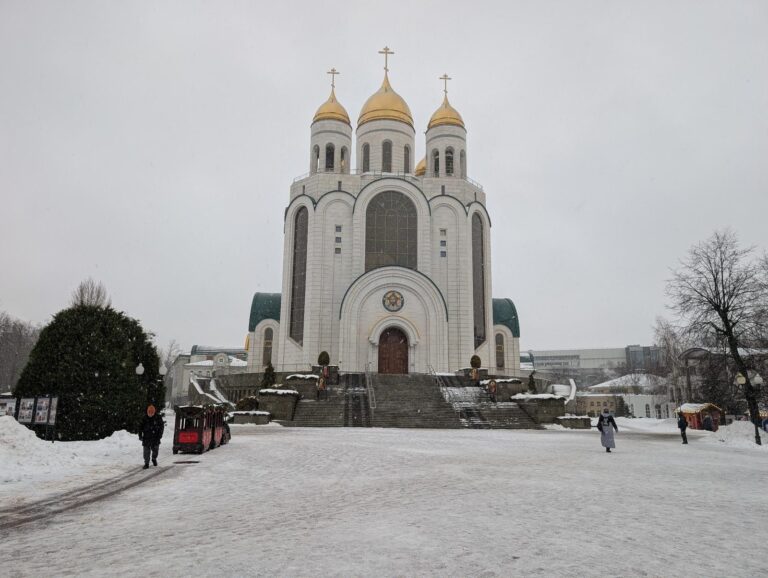
Francesco is Italian, his wife is Russian, and he travels to Russia at least once a year. He’s the kind of traveler who has already run into every practical problem of these past few years — and solved them one by one. In June and July 2026 he was in St. Petersburg, Moscow and Kislovodsk, in the Caucasus, entering with the electronic visa.
His chronicle is, as he puts it himself, more of a “user manual” than a travelogue: SIM, hotels, trains, domestic flights, currency exchange and — above all — a comparison of the four routes he has personally tested to enter Russia (Estonia, Turkey, Armenia and Serbia).
Francesco’s trip at a glance
| Traveler | Francesco — Italian, Russian wife |
| When | June–July 2026 |
| Cities | St. Petersburg, Moscow and Kislovodsk (Caucasus) |
| Visa | Electronic visa (eVisa) |
| How he entered | Via Belgrade with Air Serbia — return via Yerevan (Armenia) |
| Routes tested | Estonia, Turkey, Armenia and Serbia (all four) |
| Trains | Sapsan St. Petersburg → Moscow (TUTU.ru, Western card) |
| Domestic flights | Aeroflot yes with foreign card; Azimut no |
| Money | Euro cash in top condition — exchanged at Kamkombank (St. Petersburg) |
| SIM & internet | Russian SIM; network sometimes suspended due to drones |
This trip’s route, on the map
Approximate route of Francesco’s trip: Italy → Belgrade → St. Petersburg → Moscow → Kislovodsk, returning via Yerevan.
What follows is Francesco’s account, with his tips and his own photos. I’ve shaped his text so it reads smoothly, but everything he tells is his own. Thank you, Francesco, for sharing it.

First things first: I travel with a Russian wife
Let me be upfront: my wife is Russian, so I go to Russia fairly regularly, and some of the logistical headaches that can weigh on “tourists” don’t really affect me. But that’s exactly why I’ve been able to test, year after year, almost every practical solution: what you’ll read here is the fruit of first-hand experience, not hearsay.
SIM and internet: when the network goes dark because of drones
For my phone I usually buy a regular Russian SIM card using my wife’s Russian passport, and it works perfectly. On this last trip, though, we ran into security-related issues: the mobile network was being “cut” because of drones. One day, in Kislovodsk, the sirens even went off.

Hotels: paying on-site without a hitch
With hotels we had no problems at all, neither with the one we booked in St. Petersburg (the “Piter”) nor with the one in Moscow: both accepted the pay-on-arrival option without any fuss. I also know hotels are setting themselves up to take payments via Belarusian banks, which apparently work.

Trains and domestic flights: Sapsan yes, Azimut no
For transport, trains can be booked and paid for through the TUTU.ru website, which accepts payments with “Western” cards: we, for instance, booked the high-speed St. Petersburg–Moscow train (the Sapsan) fairly easily.
For domestic flights, on the other hand, it depends on the carrier. On the Moscow–Mineralnye Vody leg with Aeroflot the “foreign” card worked; on the Mineralnye Vody–Yerevan leg with Azimut it didn’t, and we “made use of” help from family in Russia.

Exchanging euros for rubles: my experience with Kamkombank
On exchange, I confirm it’s better to have new banknotes, and above all with no writing or little tears: in short, they need to be in top condition.
We did really well with Kamkombank, at one of its branches in St. Petersburg: they charge a flat 200-ruble fee per exchange transaction, regardless of the amount, and they were offering a rate above market value. In practice, those days the market rate was around 84 rubles to 1 euro and they were exchanging at about 88. They also accept the “old” euros (the series before the current one) with a small surcharge — if I remember correctly, 0.5 ruble per euro.
I think that higher rate was down to a shortage of euros to resell, ahead of summer, to Russian citizens heading off on holiday in Europe. That’s the situation I ran into: I don’t know whether it was a one-off or the norm. Either way, using Yandex as your search engine and leaning on a translator, you can do a quick search and get a list of banks with their exchange rates.

Yandex, transport and prices
On the “tourist” side I found the usual efficiency and low cost of transport, and the ever-present Yandex covers many needs: the features I find most useful are Yandex Go for taxis and the Yandex translator.
That said, the crisis is increasingly noticeable: many services that used to be very cheap no longer are, or are less so, and restaurant and café prices are getting closer and closer to Italian ones.

Being Italian in Russia
About the people I can’t give you an objective take: having married a Russian, I’ve always been seen as “наш” (one of us) and therefore showered with warmth. And being Italian, in Russia, is always a plus.
By the way: Russia is one of those places where you feel proud to be Italian. Where in any café or restaurant a Celentano or Ricchi e Poveri song suddenly starts playing; where if you talk about Italy you see the people around you light up with interest and admiration; where they know Italian art even better than Italians do, and they love it; where Italian cuisine “IS THE CUISINE.”


The four routes to enter Russia (I’ve tried them all)
Since I go to Russia fairly regularly, at least once a year, I’ve “tested” almost all the routes: Turkey, Armenia, Estonia and, this last time, Serbia. Here are the pros and cons of each.
Estonia: the cheapest (if you’re going to St. Petersburg)
The cheapest option is going through Estonia, worth considering if your destination is St. Petersburg. Pro: as mentioned, the cost. Con: the length of the trip and the transfers. You have to take a flight from Italy to Tallinn, from there a train or bus to Narva (there are other border towns, but I think Narva is the best), queue up to cross the border on foot (the crossing’s opening hours have been cut), and, once on the other side, take a bus from Ivangorod to St. Petersburg — or a taxi, which has the advantage of being faster and taking you all the way to your hotel. As you can see, the journey is long and involved.
Turkey: fast, but watch out for the catches
Going through Turkey would seem like a good solution. Pro: maybe the fastest route, and your luggage is delivered to the final destination. Con: the connections are almost all with Turkish Airlines, with whom you always have to be careful: cancelled flights, unbearable layovers, hidden costs, impossible connections.
Watch out in particular for double layovers in Turkey. For example, on the Istanbul–Antalya route, in Antalya you even have to change airports: you go from the domestic terminal to the international one (or vice versa), which are about 10–15 minutes apart. The cost isn’t the lowest, and if you miss one leg, all the following ones get cancelled — and if I didn’t tell you, you’d only find out at the time of your return flight. It happened to us last year: we missed the Antalya–Moscow leg and they cancelled all our tickets (for 4 people). We found out at the end of the holiday, at one in the morning at Moscow airport, at the baggage claim desk — after they’d even made us do the online check-in. We had to rebuy the tickets (3,600 euros) and in the end they refunded us 97 euros.
Yerevan (Armenia): the balanced solution
Pro: low cost — you reach Yerevan with Wizz Air (low cost) — and it’s great if you plan to visit southern Russia, the Caucasus region. Plus, with a two- or three-day layover you can take the chance to visit the city. Con: the connections aren’t every day of the week and the layover is long: usually you arrive in Yerevan one day and leave the next.
Belgrade (Serbia): the best time/cost balance
The latest connection I’ve tried, on this trip: going through Belgrade with Air Serbia, which flies to St. Petersburg, Moscow, Yekaterinburg, Kazan, Sochi and other cities. Pro: not too expensive if you book at the right time; it’s the most balanced route between time and cost. Con: the connection to Russia is available 2–3 days a week, and the days vary depending on the destination city.

More of a “user manual” than a travelogue
I hope I’ve been helpful by sharing my experiences. These words of mine, more than a travel report, feel like a “user manual” — or at least that’s what I hope: that they can help everyone who, despite the stereotypes and the current situation, wants to take the risk of getting lost and falling in love with this country, which is not only what the news tells, but much, much more.

Have you traveled to Russia recently and want to share your experience? Tell me about your trip here and I’ll publish it in this section, with your name or anonymously, whichever you prefer. Accounts like Francesco’s are the ones that really help people who are preparing their own trip. And if you have questions, you can also ask them on the Russiable forum in English.