
How to Send a Parcel or Letter to Russia in 2026
 By Irena DomingoUpdated on 7 min read
In this article
Sending a parcel or a letter to Russia is still possible in 2026, but not the way it used to be. DHL, UPS and FedEx suspended their shipments to Russia in 2022 and never resumed them, so the big international couriers are out of the picture. What’s left depends heavily on where you’re sending from: from the UK you can still use Royal Mail, from the US the postal service (USPS) has been accepting mail to Russia again since May 2026, and everywhere the sanctions rules and long delays are the same.
In this article I’ll walk you through how to do it step by step, what you can put in the box (and what you can’t, because EU, UK and US sanctions ban far more than you’d think) and a few practical tips so your parcel doesn’t get stuck in customs.
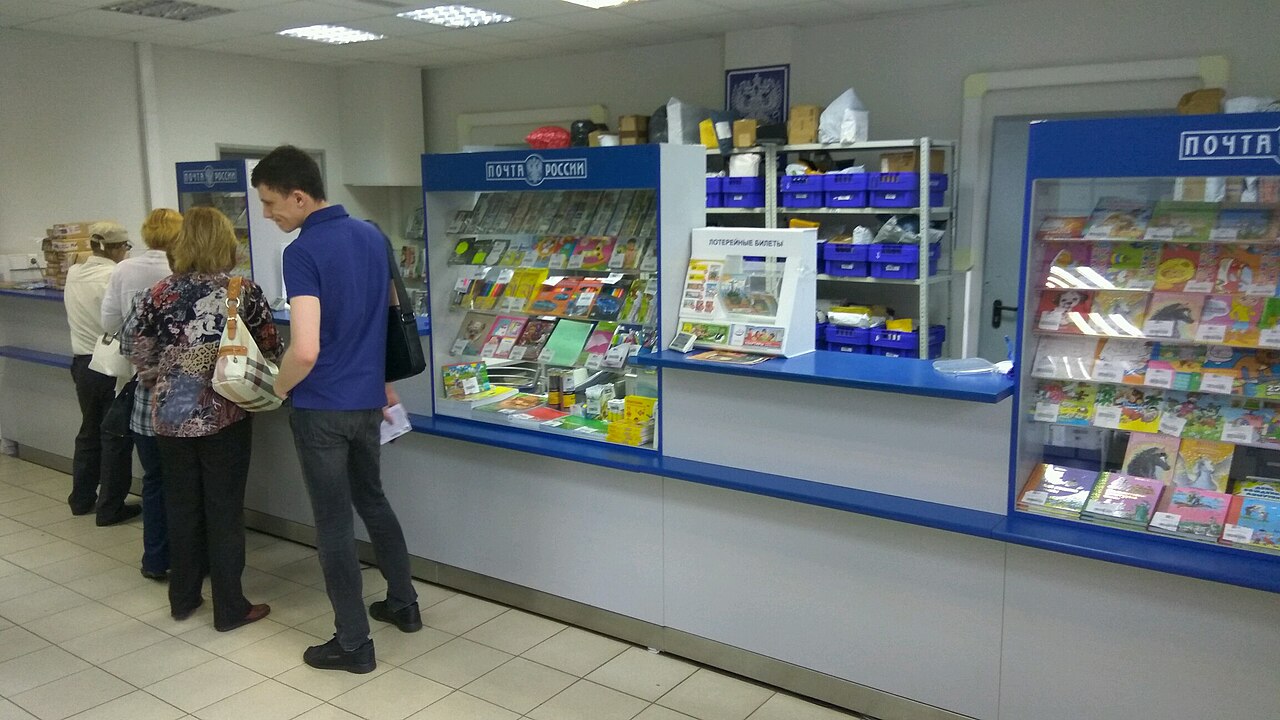
First things first: what you CAN’T send to Russia
Before you pack the box, you need to know that since the start of the conflict in Ukraine, the EU, the UK and the US ban the export of many categories of goods to Russia, and this applies to parcels sent by private individuals too. This isn’t theoretical paperwork: shipments are inspected and, if the contents are on the list, the parcel is held or returned to sender. And you, the sender, are the one legally responsible.
Broadly speaking, here’s what you’re not allowed to send (the full EU list is in the EU Regulation, in English):
- All significant consumer electronics, regardless of value: smartphones, mobile phones, laptops, tablets, computers, smartwatches, fitness trackers, games consoles, headphones, speakers, GPS devices, drones, PC components…
- Clothing and footwear worth more than 300 euros per item (below that value it’s allowed).
- Small household appliances worth more than 750 euros each (hair dryers, vacuum cleaners, humidifiers…).
- Wristwatches (quartz or mechanical), whatever their value.
- Car parts and accessories: oils, filters, brake pads, belts, bearings…
- Weapons and their parts, binoculars, telescopes, generators and any possible dual-use good (civilian and military).
Two more warnings almost nobody knows about. First: used or second-hand items in the sanctioned categories can cause problems, because without a receipt you can’t prove their value to customs. Second: on the customs declaration you have to describe the contents item by item (“one pair of jeans, 2 t-shirts, socks”), not just write “clothes” or “stuff” in general. Russian customs are strict on this and Royal Mail explicitly warns that parcels with insufficient or incorrect CN22/CN23 descriptions are returned to sender.
What can you send without trouble? Clothing and footwear of normal value, books, toys (not radio-controlled), non-perishable food like chocolate or packaged sweets, basic cosmetics, household items… Basically, the kind of things you’d put in a parcel for family. One caveat: dairy and meat products are banned because of the food embargo Russia has had in place since 2014, so no cheese or cured meats. And if you’re interested in the opposite direction (what you can carry in your own suitcase when travelling), I cover that in the article on Russian customs.
From the UK: Royal Mail still ships to Russia
If you’re sending from the United Kingdom, there’s good news: Royal Mail is still despatching postal items to Russia, and confirms it on its international incident bulletin. Here’s what you need to know in practice:
- You can send standard postal parcels, but the express arm Parcelforce has suspended goods to private addresses in Russia after Russian customs changed their clearance rules – documents and shipments to business addresses still go through.
- You must complete a CN22 or CN23 customs declaration describing the contents in detail and their value. With Click & Drop the label and customs data are generated automatically.
- The usual value limit of 200 euros applies for parcels to private individuals in Russia; above that the recipient pays duty on the excess.
- Delays are long and unpredictable: the parcel travels overland through third countries and can take from 3 weeks to 2 months. Tracking often disappears once it leaves the UK and reappears, if you’re lucky, when the item enters the Russian Post system.
From the US: USPS ships to Russia again
If you’re sending from the United States, there’s finally good news. USPS suspended mail to Russia in 2022, but it resumed acceptance on 15 May 2026 for Priority Mail Express International, Priority Mail International, First-Class Mail International and First-Class Package International Service. FedEx, UPS and DHL are still out, so the post office is your route. Thanks to Joey, a reader from Washington State, for flagging the change and sharing the checklist below.
The catch: from the US it’s a paperwork-heavy process, because US export controls and sanctions apply on top of postal and Russian customs rules. Before you go to the counter:
- Check that the service is still running on the USPS service alerts page for Russia.
- Read the USPS country conditions for Russia: alcohol, tobacco, perishables, currency and weapons are banned, and anything with a radio function (Bluetooth, Wi-Fi) or encryption needs a Russian permit.
- Find the 10-digit Schedule B code of every item with the Census Schedule B search. USPS requires it on the customs form for each good sent to Russia.
- Check US export controls on the BIS Russia page: electronics and “luxury goods” (pricier clothing, cosmetics, jewelry, watches) need a licence, which in practice means you can’t mail them.
- If in doubt about the recipient, search their name on the OFAC sanctions list.
- Fill in the customs form item by item: description, quantity, weight, value, country of origin and Schedule B code. Ticking “Gift” doesn’t exempt anything.
- Address in capital Latin letters, with RUSSIAN FEDERATION alone on the last line, and choose a service with tracking.
On the Russian side the usual limits apply: 200 euros and 31 kg per parcel duty-free; above that the recipient pays. And a clerk accepting your parcel doesn’t mean it complies: as the sender, you’re responsible for what you declare.
From the rest of the world
Wherever you’re sending from, the pattern is the same: the big couriers don’t serve Russia, so your only realistic route is your national postal operator – if it still accepts parcels to Russia. Many European posts (Spain’s Correos, Italy’s Poste Italiane, Germany’s Deutsche Post) still do, under the same sanctions rules and long delays described here; others have suspended the service entirely. The only way to be sure is to ask at your local post office before you pack anything, because conditions change with every new sanctions package and not every branch is equally up to date.
And what about private courier companies? There are a few small services specialising in shipments to Russia that operate through third countries, but I haven’t been able to verify their reliability first-hand, so for now I’d rather not recommend any. If you’ve used one and it worked (well or badly), tell me on the contact form: I’ll keep this article updated with readers’ experiences.
Practical tips so your parcel arrives without problems
- Write the address in two alphabets: the recipient’s name and address in Cyrillic (for the Russian postman) and the city and country also in the Latin alphabet (“Moscow, Russia”). Don’t forget the 6-digit Russian postcode and a contact phone number for the recipient.
- Declare the contents item by item and with a realistic value. A moderate declared value avoids duty for the recipient; a false one can get the parcel held.
- Keep the receipts or invoices for what you send, in case customs asks you to prove the value.
- Reinforce the box well: the parcel will pass through many hands and several countries. Rigid box, strong tape and internal padding.
- Don’t be in a hurry: count on a month at best and don’t send anything perishable or urgent.
- Medicines: always ask at the post office first. Some are accepted with a prescription and documentation, but they go through strict customs control.
One last related note: if what you want to get to Russia isn’t an object but money, postal shipping isn’t the way to go. I explain the options that work today in the guide on how to send money to Russia.
Frequently asked questions
Can you send a parcel to Russia in 2026?
Yes, but it depends on where you send from. From the UK, Royal Mail still ships parcels to Russia, only between private individuals and with a customs declaration. From the US, USPS has accepted mail to Russia again since 15 May 2026, with strict export-control and customs paperwork. DHL, UPS and FedEx have not operated with Russia since 2022.
How long does a parcel take to reach Russia?
Delays are long and unpredictable: from 3 weeks to 2 months, because the shipment travels overland through third countries and tracking often disappears once it leaves the sending country.
What is banned from being sent to Russia because of sanctions?
Among other things: smartphones, laptops, tablets and almost all consumer electronics whatever their value, wristwatches, car parts, drones, and clothing or footwear worth more than 300 euros per item. The full list is in the European Union sanctions regulation.
Can I send a letter or documents to Russia?
Yes. Ordinary and tracked letters containing documents still work from countries whose postal operator serves Russia, such as the UK (Royal Mail) and, since May 2026, the US (USPS). Since January 2026, international registered letters in the EU only accept documents, not objects. Delays are longer than before the conflict in Ukraine.
Do DHL, UPS or FedEx ship to Russia?
No. All three companies suspended their services to Russia in 2022 because of international sanctions and have not resumed them. Express couriers such as Parcelforce have also suspended goods to private addresses in Russia.
Was this useful? I'll tell you when something changes in Russia
One short email a month with what has changed for travellers (visas, payments, border crossings, apps), based on what readers report to me from Russia. More than 4,000 of us already. No spam: if you ever lose interest, unsubscribing is one click.
Irena DomingoAbout Me
I was born in Russia. I grew up between two worlds: my father was Russian, my mother Spanish — a descendant of the "Children of Russia", the Basque children evacuated to the USSR during the Spanish Civil War. I've worked as a translator, interpreter and Russian teacher for over 30 years, and since 2013 I've been writing this blog to help travellers discover Russia with practical, always up-to-date information. Author of the Russiable Guide. If this blog has helped you plan your trip, you can buy me a coffee ❤️.
More to Explore
 Send moneyHow to send money to Russia in 2026 (my personal experience)Based on real experience, compare the transfer options that still work in 2026 such as SendNOW, crypto (Bybit+Whitebird), Volet, BestChange, plus quick tips
 Send moneyHow SendNOW Works: Step-by-Step Guide to Send Money to RussiaStep-by-step guide to SendNOW: registration, paying by card via Guardarian, KYC verification, how rubles reach Russia, fees and what to do if your card is declined.
 Send moneyHow to Send Money to Russia with Cryptocurrency in 2026 (USDT + Whitebird)Step-by-step guide 2026 to send money to Russia with crypto (Bybit + USDT + Whitebird), with no risk of bank account blocking. Personally tested.